
Walk into any fabric store, scroll any wallpaper site, or open any design tool, and you'll meet the same problem: patterns have names, and nobody teaches you them. Is that zigzag a chevron or a herringbone? Is that ornate scroll a damask or a brocade? What do you call the teardrop thing on bandanas?
This guide covers every major pattern type in commercial use — what it's called, how to recognize it in two seconds, and where it performs best. Bookmark it; it's the vocabulary sheet for surface design.
Geometric patterns
Geometric patterns are built from shapes and lines rather than drawn subjects. They're the most versatile family — they read as modern or classic depending purely on color and scale.
Stripes. The oldest pattern in the book. Vertical stripes elongate, horizontal stripes widen, and pinstripes whisper "tailoring." Awning stripes are wide and beachy; Breton stripes are the navy-and-white classic. See stripe patterns.
Polka dots. Evenly spaced circles on a plain ground. Small dots read as delicate and vintage; oversized dots go bold and playful. A polka dot pattern is the fastest way to make anything feel friendly.
Chevron. A continuous zigzag of V shapes in alternating colors. High-energy and graphic — big in nurseries, athletic wear, and mid-century revivals. Compare it with herringbone before you name it: chevron patterns meet at clean points.
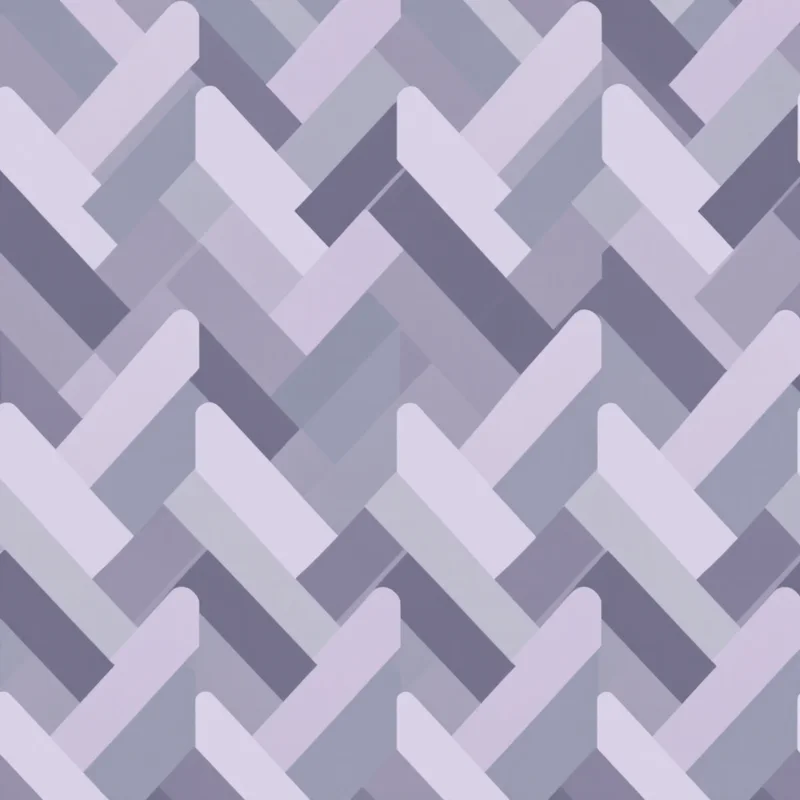
Herringbone. The chevron's tailored cousin. The V shapes break and offset at each column, like the bones of a fish — hence the name. A herringbone pattern in charcoal wool is practically the uniform of classic menswear.
Houndstooth. A broken check of pointed, four-lobed shapes, traditionally black and white. Born in Scottish woven wool, now a fashion-house staple. Houndstooth patterns scale beautifully — tiny for suiting, giant for statement coats.
Argyle. Overlapping diamonds with a thin diagonal overcheck, inseparable from golf sweaters and preppy knitwear. See argyle patterns.
Greek key. An interlocking rectangular meander that ancient Greece put on everything. Greek key patterns still signal "classical luxury" on borders, rugs, and packaging.
Quatrefoil. Four overlapping circles forming a clover-like frame — Gothic architecture's favorite window shape, now a staple of preppy home decor. See quatrefoil patterns.
Checks and checkerboard. Two-color squares in even grids. Checkered patterns run from race flags to picnic tablecloths; the diagonal variant is harlequin.
Heritage textile patterns
These are the patterns with centuries of production history — the ones that instantly signal tradition, luxury, or craft.
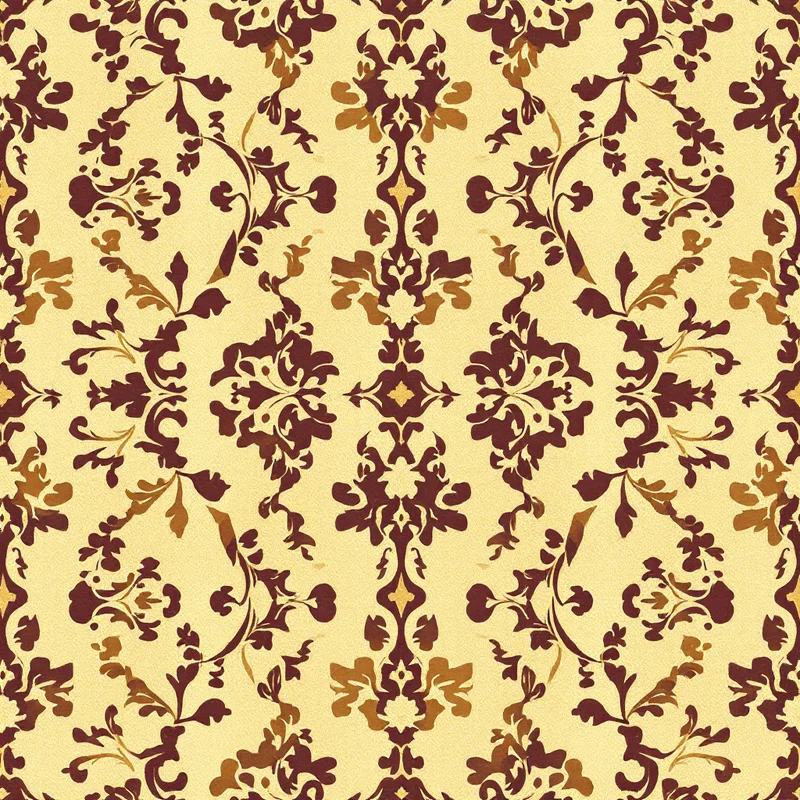
Damask. The king of formal patterns. Damask patterns feature large, symmetrical, ornate motifs — acanthus scrolls, floral medallions — traditionally woven tone-on-tone so the design appears and disappears as light moves across the fabric. Damask owns formal wallpaper, upholstery, and wedding stationery. If it looks like it belongs in a European palace, it's probably damask.
Toile de Jouy. Detailed pastoral scenes — shepherds, gardens, countryside vignettes — printed in a single color on a cream ground. Toile patterns are storytelling patterns; every repeat is a little illustrated world.
Paisley. The teardrop-with-a-curved-tip motif (boteh) from Persia and India, made famous by Kashmir shawls and 1960s psychedelia. Paisley patterns swing from bandana classic to luxury silk depending on density and palette.
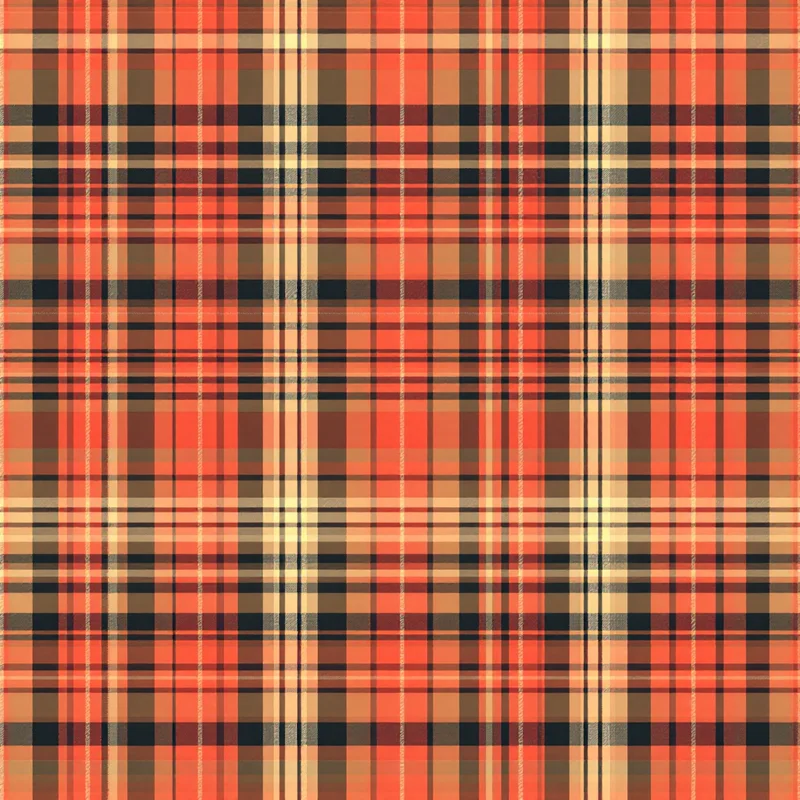
Plaid and tartan. Intersecting horizontal and vertical bands in multiple colors. All tartans are plaids; not all plaids are tartans — tartan patterns are the registered Scottish clan versions. Buffalo plaid is the big two-color check on every winter flannel. Browse plaid patterns for the whole family.
Gingham. Lightweight two-color checks formed by overlapping stripes — picnic tables, summer dresses, farmhouse kitchens. See gingham patterns.
Ikat. Patterns dyed into the yarns before weaving, producing the signature blurred, feathered edges. Ikat patterns bring global-craft warmth to modern interiors.
Pinstripe. Hairline stripes on dark grounds — banking suits, baseball uniforms, and anything that wants quiet authority. See pinstripe patterns.
Floral and botanical patterns
The single most commercially important pattern family. Floral patterns anchor spring fashion collections, bedding lines, and stationery ranges every single year.
Ditsy florals. Tiny, scattered, non-directional blooms. Ditsy prints are forgiving on garments — no matching required at seams — which is why fast fashion loves them.
Chintz and cottage florals. Larger, denser, romantic arrangements, often with birds. The "grandmillennial" revival brought them roaring back.
Vintage florals. Muted palettes and antique drawing styles — see vintage floral patterns — for nostalgia-driven brands.
Tropical florals. Hibiscus, monstera leaves, and saturated color. Tropical floral patterns own swimwear and summer everything.
Botanicals. Leaves and plants without the blooms — eucalyptus, ferns, palms. Calmer than florals, and the default for spa-adjacent and eco-positioned brands.
William Morris style. Dense, flat, interlocking Arts-and-Crafts botanicals. Morris designs from the 1870s still sell wallpaper today — the strongest proof that great patterns don't age.
Animal prints
Animal patterns split into two branches: skins and creatures.
Skins. Leopard, cheetah, zebra, tiger, snakeskin, cow, giraffe, tortoiseshell. Leopard behaves like a neutral in fashion — it pairs with nearly everything. Zebra and tiger are bolder; snakeskin trends in accessories.
Creatures. Drawn animals as repeating motifs — butterflies, birds, bees, foxes. These skew toward children's products, stationery, and whimsical fashion.
Abstract and modern patterns
Abstract patterns carry no recognizable subject — they work through color, texture, and composition.
Terrazzo. Speckled stone chips in cement, translated into print. Terrazzo patterns were everywhere in the 2010s revival and settled into a modern classic.
Memphis. Squiggles, confetti shapes, and clashing brights from the 1980s Milan design movement. Loud on purpose.
Marble and fluid art. Veined stone and poured-ink effects — elegant chaos for packaging and phone cases.
Tie-dye. Radial spirals and dip-dye gradients. See tie-dye patterns — it resurfaces every few years without fail.
Y2K and retro-futurism. Chrome gradients, blobby shapes, cyber grids. Browse retro patterns and 90s patterns — the 1990s revival is one of the strongest pattern trends of the mid-2020s, from grunge plaids to jazz-cup squiggles.
Cultural and regional patterns
Patterns with deep geographic roots. Use them knowledgeably — study the tradition, honor the context.
Moroccan. Zellige tile stars, ogee lattices, and quatrefoil-adjacent trellis work. Moroccan patterns are a wallpaper and rug mainstay.
Aztec and Southwestern. Stepped diamonds, bold earth-tone geometry. See aztec patterns.
Japanese. Seigaiha waves, asanoha hemp-leaf stars, sakura blossoms — precision and restraint. Browse Japanese patterns.
Mandala. Radially symmetric medallions from South Asian traditions, adopted worldwide for boho decor. See mandala patterns.
Star patterns. From Islamic geometric stars to Americana barn stars — see star patterns.
Camouflage. Military disguise turned streetwear staple. Camouflage patterns now come in every palette from woodland to bubblegum.
How to choose the right pattern type
Three questions settle most pattern decisions:
- 1What's the product? Garments favor non-directional patterns (ditsy florals, small geometrics) that survive cutting and sewing. Wallpaper rewards large-scale statements (damask, toile, tropical). Packaging likes tight, small-scale texture.
- 2What's the brand temperature? Heritage and luxury → damask, houndstooth, paisley, Greek key. Friendly and approachable → gingham, polka dots, ditsy florals. Bold and contemporary → Memphis, chevron, animal skins, Y2K.
- 3What's the scale? The same motif whispers at 2 cm and shouts at 20 cm. When in doubt, test the repeat at actual product size before committing.
Make any of these patterns yourself
Every pattern type in this guide can be generated as a production-ready seamless tile — pick the style, set your colors, and export at up to 8K resolution with print-ready formats. Start in the free pattern maker with 5 free credits, browse all pattern styles, or grab ready-made tiles from our free seamless patterns library.
Explore related pattern styles