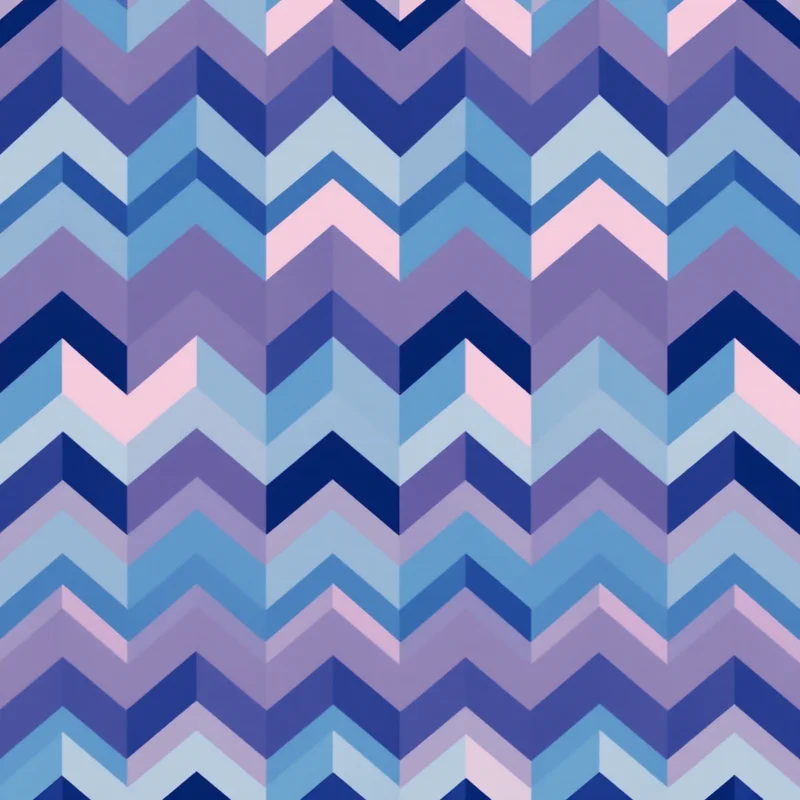
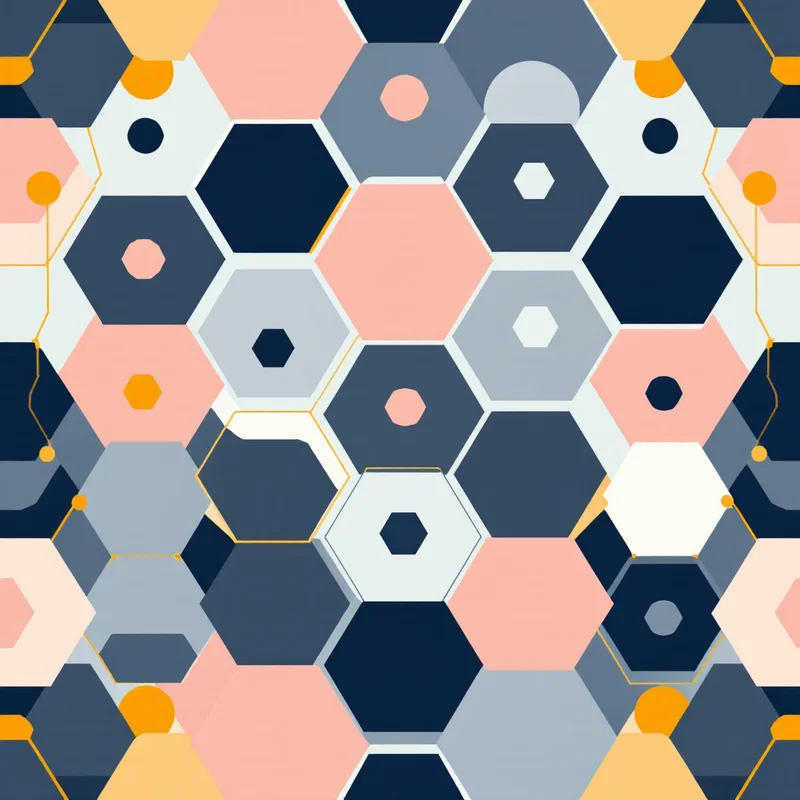
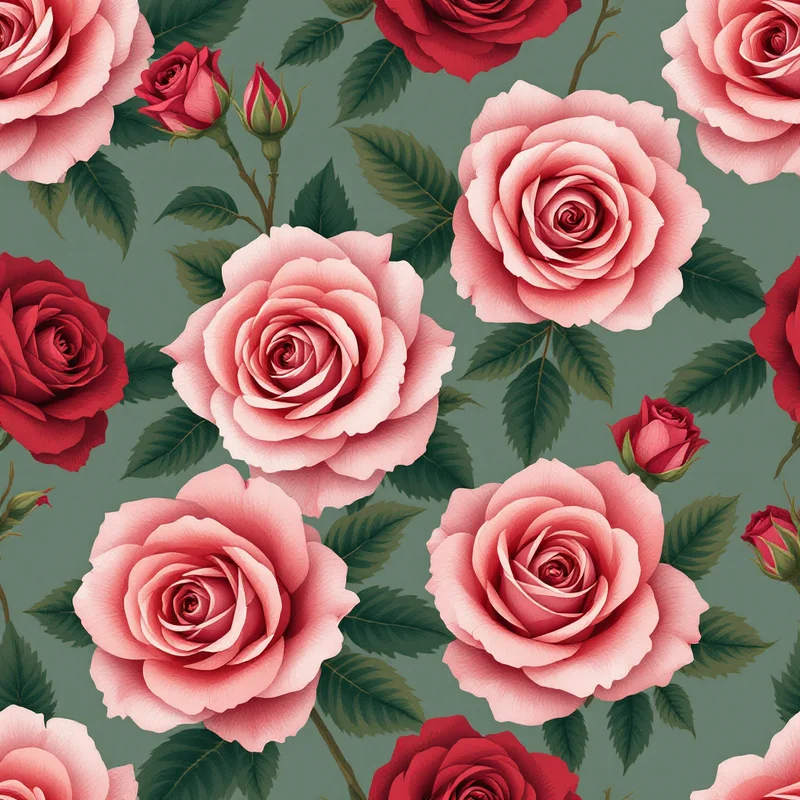


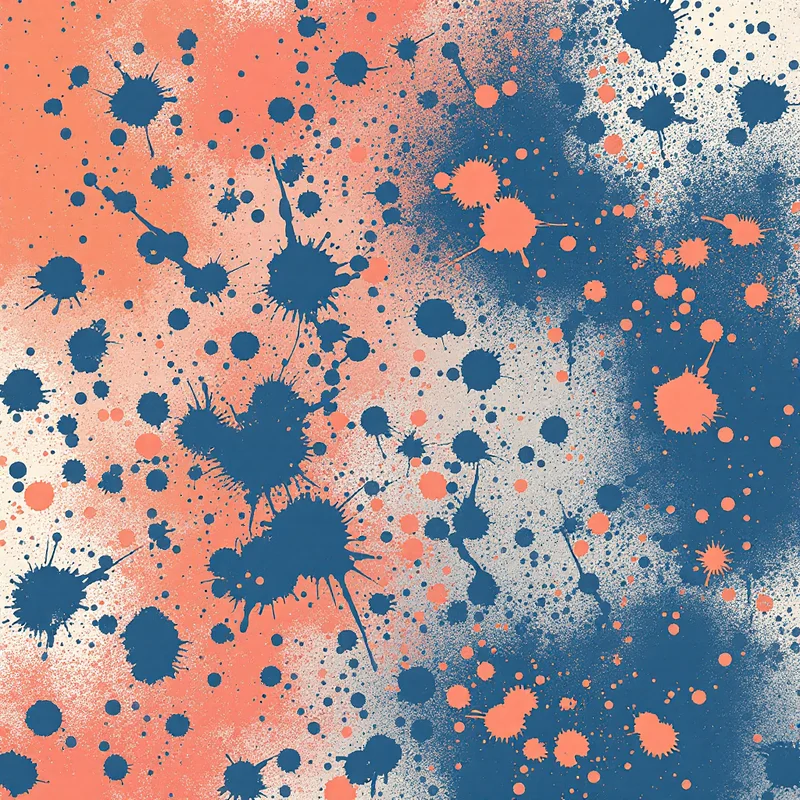
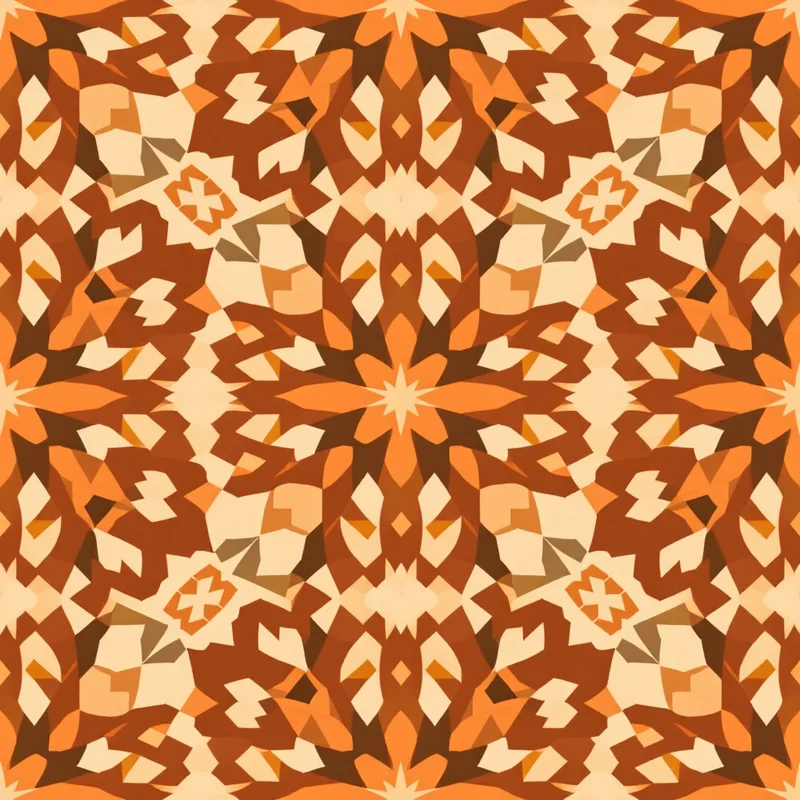
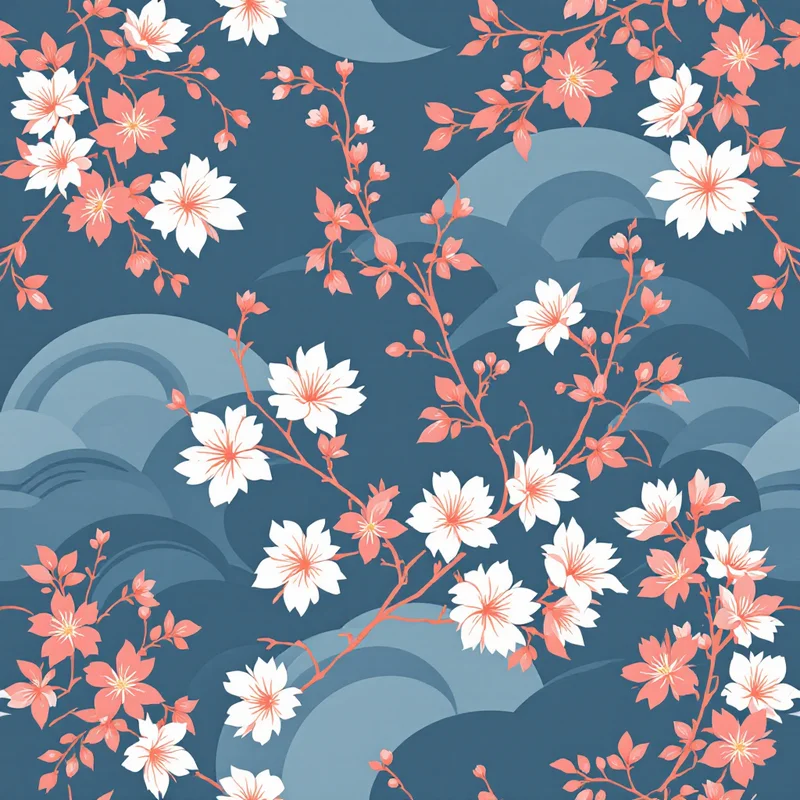

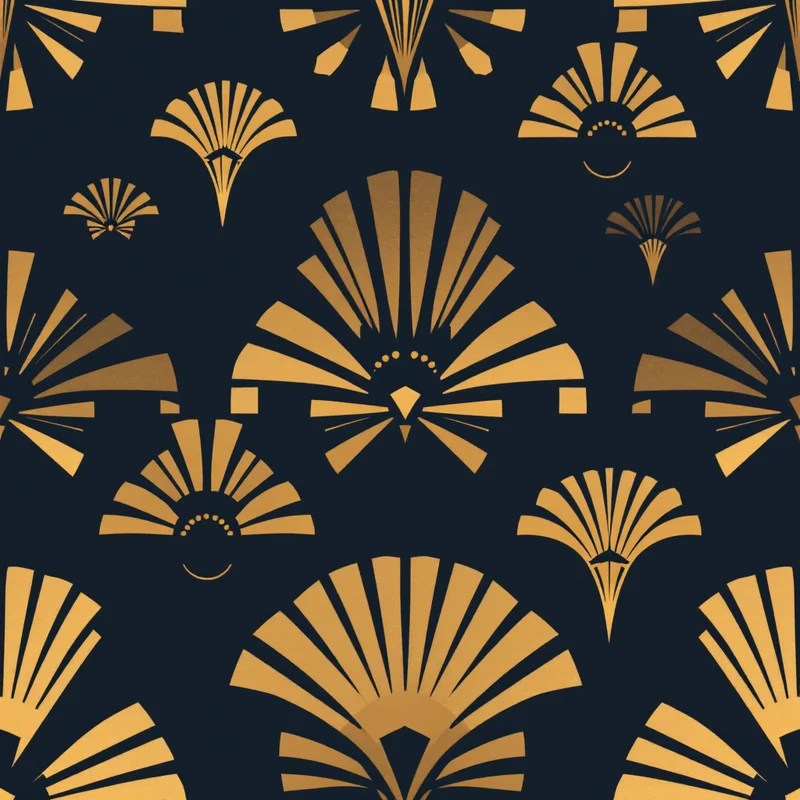

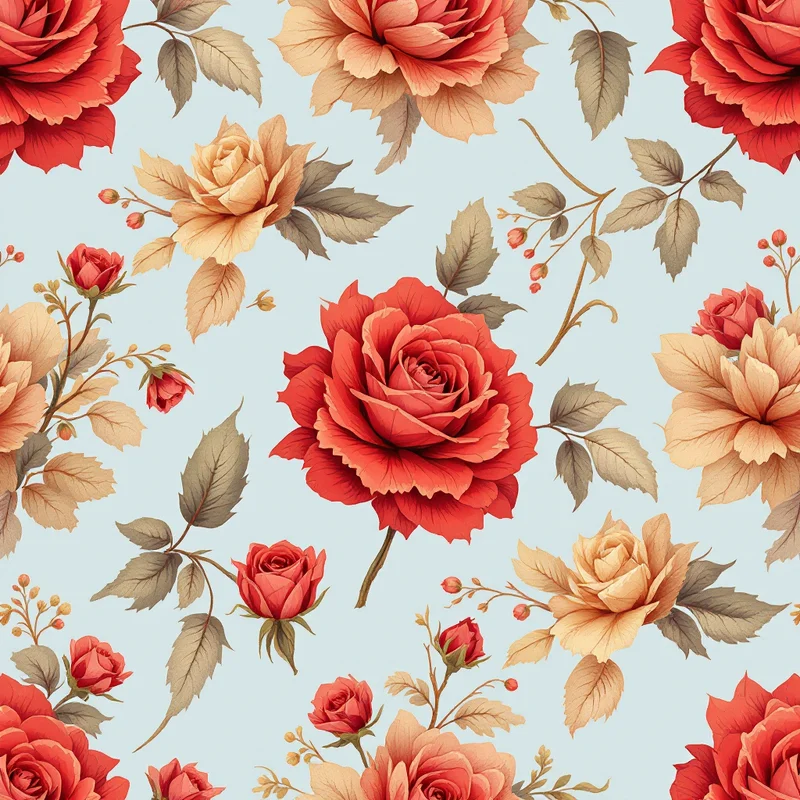
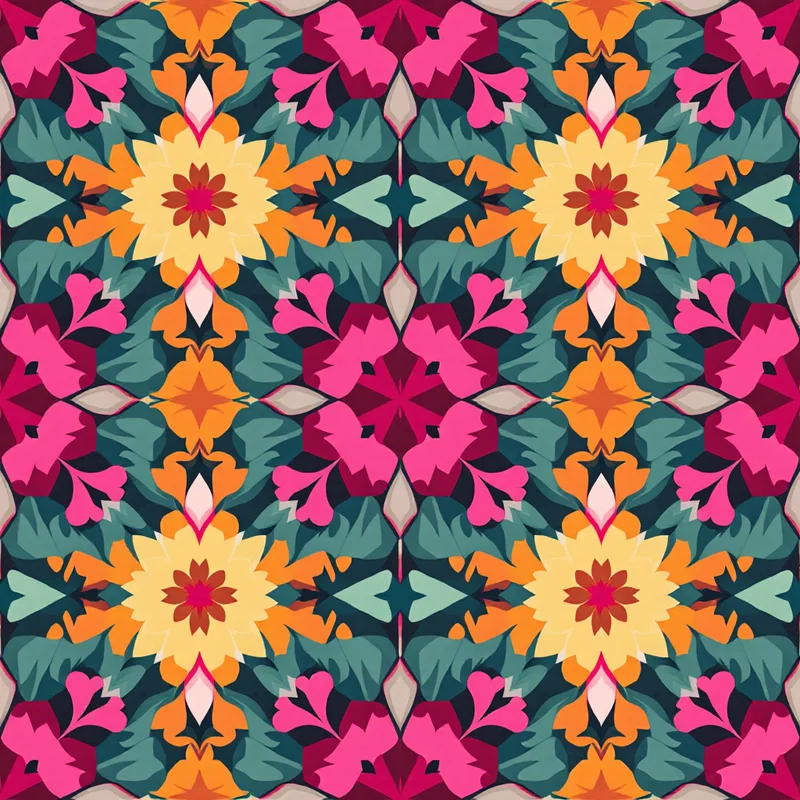
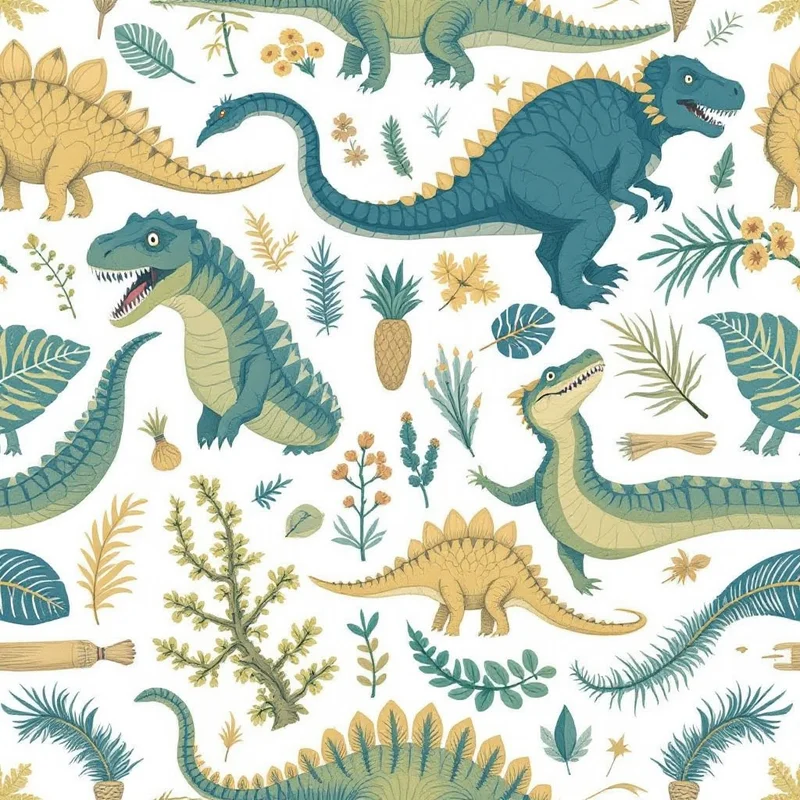


The repeat layout is one of the most important decisions in pattern design. A single tile can look completely different depending on how it is arranged — grid repeats create structured, orderly designs while half-drop repeats create flowing, organic compositions from the same tile. Professional surface designers choose their repeat type based on the motif, the substrate, and the intended mood.
Grid repeats are the simplest arrangement: tiles align in straight rows and columns. This works best for geometric patterns like checks, plaids, and structured grids where the regularity is intentional. Half-drop repeats offset each column by half the tile height, creating a diagonal flow that disguises where one tile ends and the next begins. This is the preferred layout for botanical patterns, florals, and organic motifs.
Brick repeats work like a masonry wall — each row is offset horizontally by half the tile width. This creates horizontal movement and works well for patterns with strong lateral elements. Mirror repeats reflect tiles across axes to create symmetrical, kaleidoscope-like arrangements that are popular in cultural and decorative patterns.
Pattern Weaver lets you switch between layouts instantly and preview the result in real time. Combined with the seamless pattern fixer and pattern upscaler, you can go from raw tile to production-ready repeat in minutes. The tool supports all major export formats at up to 8K resolution for professional printing.