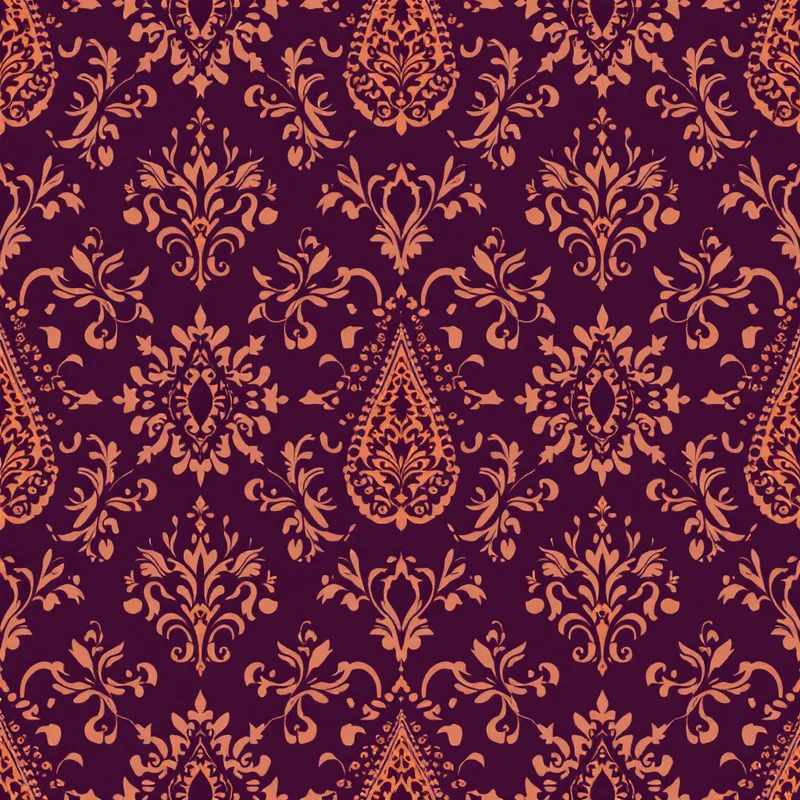
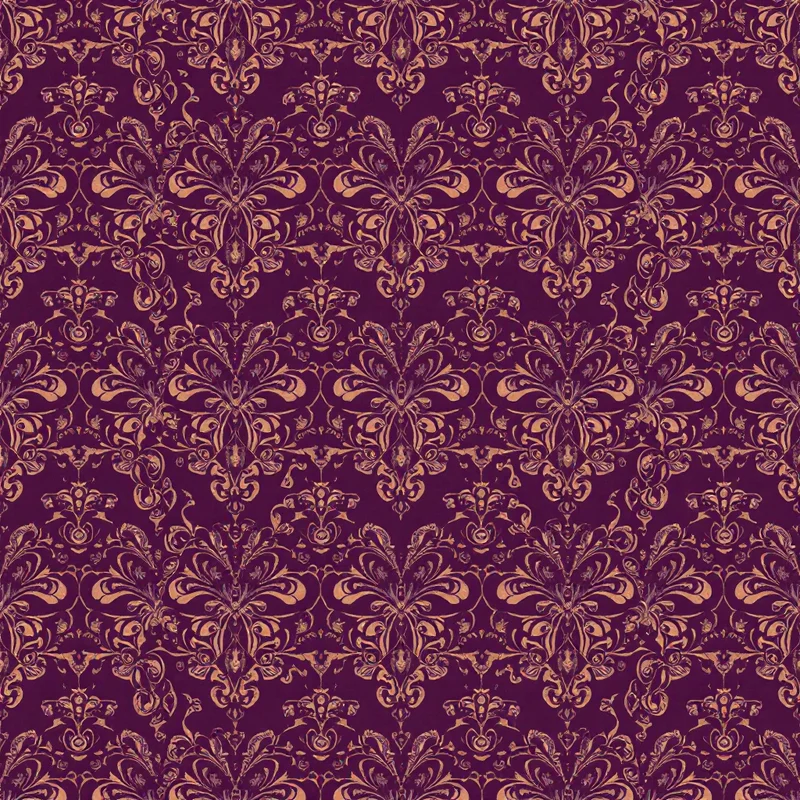
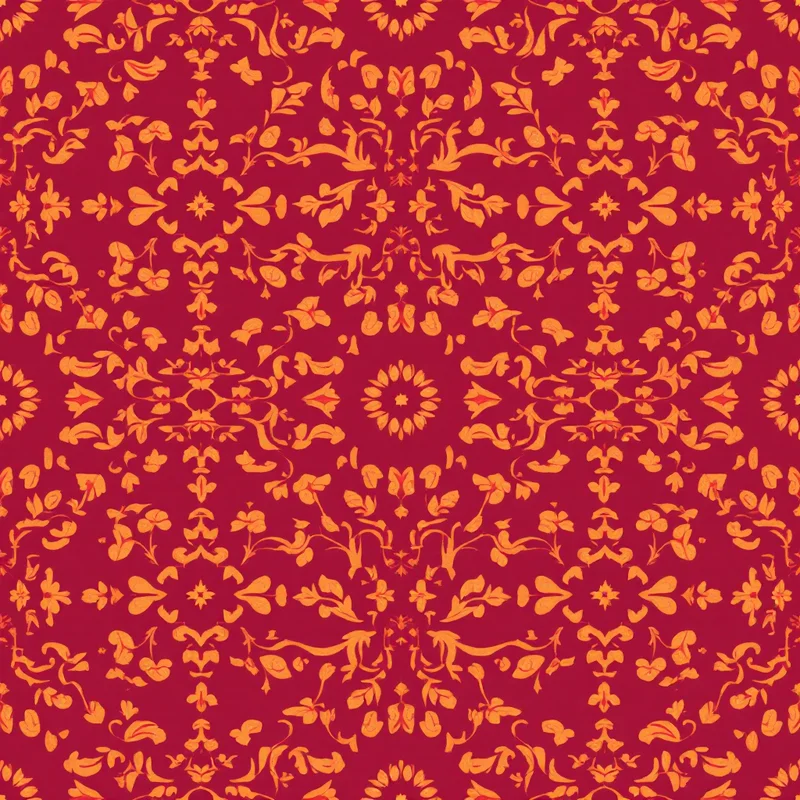
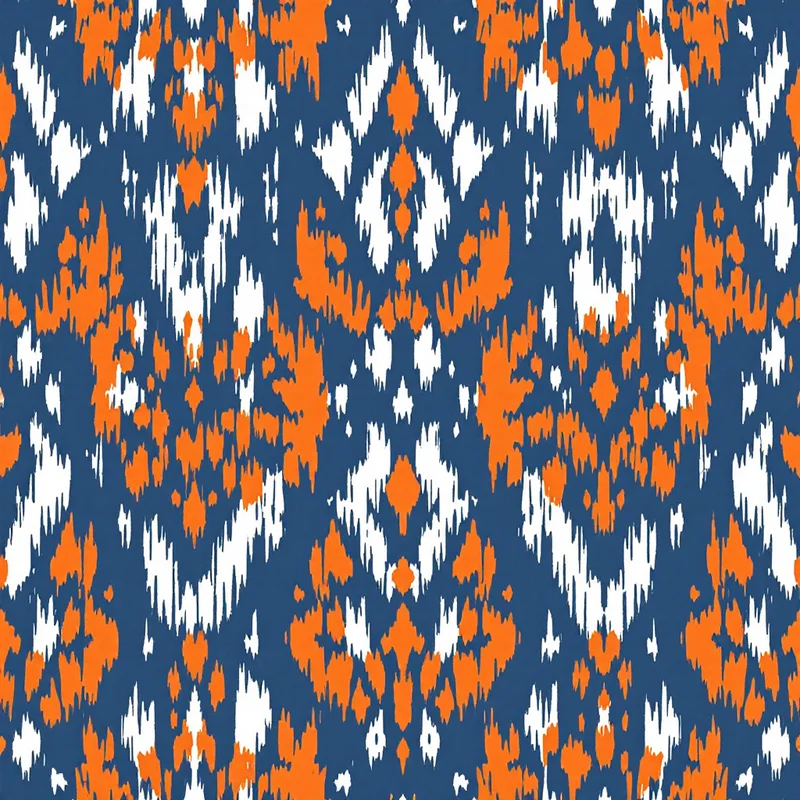
Paisley is the bridge between ancient ornament and contemporary luxury in textile design. The pattern originated not in Paisley, Scotland, but in 16th-century Kashmir, where it decorated royal textiles as the boteh motif — a stylized teardrop filled with elaborate internal ornament. When British merchants imported these shawls in the 18th century, Scottish mills in the town of Paisley began producing their own interpretations, and the name stuck. Today, paisley remains one of the most commercially successful pattern categories across fashion, home furnishings, accessories, and heritage branding.
What makes paisley enduring in textile pattern design is not its complexity alone, but its flexibility. A single paisley pattern can read as maximalist bohemian, classic luxury, contemporary fashion-forward, or heritage-conscious depending entirely on color, density, and ornamental detail. Understanding the underlying structure — the teardrop form, the internal hierarchy of fills, the spatial relationships between motifs — is the foundation for creating patterns that feel authentic rather than imitative.
The Defining Elements of Paisley Patterns
Paisley's visual language is built on a few core geometric and ornamental principles that recur across centuries and cultures. These elements, when combined thoughtfully, create the distinctive visual rhythm that makes a pattern read unmistakably as paisley.
The Teardrop Form
The boteh motif at paisley's heart is a teardrop or comma shape — pointed at one end, rounded at the other. The proportions matter. A teardrop that is too squat reads as a pebble or leaf. One that is too elongated reads as a feather or flame. Authentic paisley sits in the middle: roughly twice as long as it is wide at the broadest point, with a curved point that is never actually sharp.
The teardrop's orientation typically angles upward or outward from the pattern's center, creating a sense of expansion or growth. In traditional Kashmir paisley, the teardrop often tilts at approximately 30 to 45 degrees from vertical. This angle is surprisingly critical — it conveys movement and prevents the pattern from feeling static.
Ornamental Infill
What distinguishes a paisley motif from a simple teardrop is the ornament contained within it. Traditional paisley teardrops are densely packed with smaller geometric and botanical elements: scrolls, vines, stippling, floral sprigs, and angular geometric divisions. The infill is not random — it typically has a hierarchical structure, with larger shapes filling the main body and progressively smaller elements clustered near the point.
Modern interpretations sometimes simplify this. Contemporary paisley patterns might feature teardrops with single-color fills, simple linear divisions, or minimalist botanical sketches inside — close in spirit to the trailing stems used in floral vine patterns, which use the same hand-drawn ornament vocabulary at lower density. What remains essential is the presence of some internal visual interest — a teardrop outline with blank space inside will not read as paisley.
Clustering and Density
Paisley patterns achieve their characteristic visual richness through density. Teardrops are packed closely together, often oriented in slightly different directions within a cohesive overall composition. The spaces between teardrops are typically filled with smaller complementary elements: leaves, scrolls, dots, or secondary smaller teardrops.
Traditional paisley is almost never sparse. Even "open" interpretations maintain enough density that the pattern reads as layered and ornate rather than scattered and light. This density is both a visual and commercial strength — a paisley pattern reads as premium precisely because it appears labor-intensive.
Historical Origins and Cultural Context
The paisley pattern's history is a literal East-to-West textile trade narrative. The boteh motif appears on Iranian ceramics as early as the 4th century, but the pattern reached its visual peak in Mughal India during the 16th and 17th centuries. Kashmiri artisans wove elaborately decorated shawls — often from pashmina or silk — that featured intricate boteh patterns in multiple colors on densely patterned grounds.
These Kashmir shawls became status symbols across European courts in the 18th century. Supply could not meet demand, so Scottish manufacturers in the town of Paisley — an established textile center — began producing machine-made imitations in the 1780s. The irony of machinery replicating hand-woven ornament is not lost; it is precisely what made paisley accessible to a broader market. The Scottish version often simplified the Kashmiri intricacy, using fewer colors and less elaborate internal infill, but the essential teardrop structure remained.
By the 19th century, paisley had become thoroughly domesticated into Western fashion and home furnishings. It lost its exotic mystique and gained canonical status as a "classic" pattern — appearing on shawls, wallpapers, fabrics, and ceramics across Europe and America. This democratization is why paisley persists: it is old enough to feel heritage-connected, versatile enough to adapt to contemporary contexts, and ornate enough to maintain an aura of craftsmanship.
Color Palettes: From Monochrome to Maximalist
Paisley's color story is one of its greatest strengths. The pattern works across an enormous range of color combinations, from single-color monochromes to dense multi-hue compositions.
Classic Luxe: Indigo and Gold
Deep indigo backgrounds with gold or cream paisley teardrops represent the heritage direction. This palette references the original hand-dyed indigo of Kashmir shawls and maintains strong commercial presence in luxury home furnishings and heritage fashion. The high contrast between the cool indigo and warm gold creates visual impact without complexity.
Maximalist Heritage: Multi-Hue Traditional
The approach closest to authentic Kashmiri patterns employs four to six colors minimum — typically burgundy, teal, gold, cream, and burnt orange on a deep navy or black ground. These palettes appear dense and traditional precisely because they embrace multiplicity. This direction suits high-end upholstery, statement wallpapers, and luxury fashion pieces.
Contemporary Jewel Tone
A middle path that maintains richness without overwhelming maximalism: a single clear jewel-tone ground (emerald, sapphire, or burgundy) with two to three metallic or contrasting accents. This feels luxurious and intentional while remaining production-friendly and contemporary. It dominates current high-street fashion and mid-market home furnishings.
Romantic Vintage: Soft and Faded
Dusty rose, soft gray-blue, warm cream, and muted taupe represent the "aged textile" direction. This palette mimics naturally faded historical paisley, reading as heirloom and nostalgic rather than maximalist. It has strong appeal in vintage-inspired interior design and contemporary romantic fashion.
Modern Minimalist: Two-Color Paisley
Some contemporary interpretations pair a single paisley color against a neutral ground — deep charcoal paisley on cream linen, or cream paisley on black cotton. This removes the ornamental density visually (though the paisley itself remains internally complex) and reads as modern, restrained, and understated. It works particularly well for menswear, minimal interior design, and contemporary accessories.
Commercial Applications and Market Demand
Paisley's market reach is genuinely broad. Unlike styles that occupy a narrow niche, paisley appears across luxury and mainstream segments simultaneously.
Fashion and Accessories
Paisley is foundational in men's fashion, particularly in ties, pocket squares, and dress shirts. The pattern's geometric stability makes it work at small scales in woven silk goods without degrading visually. In women's fashion, paisley sees consistent use in scarves, dresses, blouses, and evening wear. The bohemian connection also makes it central to contemporary bohemian and indie fashion brands.
Home Furnishings and Wallpaper
Paisley wallpaper remains a steady high-margin product across heritage wallpaper brands. The pattern's intricacy commands pricing premium compared to simpler geometric alternatives, and many of the same buyers cross-shop heritage chintz patterns for coordinated rooms that mix glazed florals with traditional boteh. In upholstery, paisley appears on high-end sofas, chairs, and ottoman covers, often paired with solid-colored companion pieces. Bedding and linens featuring paisley are perennial bestsellers.
Interior Design and Heritage Branding
Boutique hotels, high-end restaurants, and heritage brands leverage paisley specifically for its cultural associations. Paisley suggests craftsmanship, global taste, and timeless elegance — valuable signals in hospitality and luxury sectors. Design firms use paisley as an accent pattern or thematic element to anchor cohesive interior narratives.
Home Accessories and Textiles
Decorative pillows, throws, scarves, table linens, and small textile goods featuring paisley have strong repeat purchase and gift market appeal. The pattern's association with both heritage and contemporary design makes it commercially versatile.
Creating Authentic Paisley Patterns
Designing paisley manually requires attention to ornamental detail and structural balance. The easiest mistake is creating patterns that are either too sparse (feeling unfinished) or too chaotic (lacking visual hierarchy). The goal is controlled density — the pattern should feel intricate but organized.
Traditional Approach
Hand-drawing paisley requires understanding the teardrop's proportions, developing a vocabulary of infill elements (scrolls, botanical motifs, geometric fills), and arranging these in hierarchical layers. Digital tools like Illustrator or Procreate make this faster, but it remains time-intensive. The advantage is complete control — every motif can be hand-crafted and unique.
Contemporary AI-Assisted Generation
Tools like Pattern Weaver now allow designers to specify paisley styles and let the system generate seamless tiles with internal motif variety and density balancing. The structured approach — selecting cultural style (Kashmir, Scottish, Contemporary) and ornament density — typically produces more consistent ornamental complexity than free-text prompts. This approach is particularly valuable for commercial applications where multiple pattern variations are needed quickly.
Color Application Strategy
Once the grayscale paisley structure is established, color strategy becomes critical. Apply the darkest color first (the ground), then layer the paisley in the primary accent color, then add secondary and tertiary colors to internal motif details. This hierarchy ensures the teardrop form reads clearly while the ornamental infill rewards close attention.
Contemporary Paisley: Modern Interpretations
Modern paisley design exists on a spectrum from "heritage revival" (maximalist, multi-hue, heavily ornamental) to "contemporary minimalist" (two-color, simplified infill, understated density). Both are commercially viable and aesthetically legitimate.
Contemporary designers often reference paisley structurally while departing from traditional ornament. Instead of scrolls and botanical infill, modern teardrops might contain geometric divisions, abstract mark-making, or botanical elements rendered in contemporary illustration styles. This approach maintains paisley's visual identity while updating it for current design sensibilities.
The strongest contemporary paisley patterns tend to make a single clear decision: either embrace the full ornamental density of heritage paisley (going maximalist and unambiguous) or deliberately simplify (going minimal and restrained). The awkward middle — attempting heritage complexity but executing it poorly — is where paisley patterns most often fail commercially.
Paisley's persistence across four centuries of design history speaks to its underlying structural strength. The teardrop form is optically stable, the ornamental tradition is deep enough to support infinite variation, and the color flexibility allows adaptation to any cultural context or contemporary aesthetic. For designers working with seamless pattern generation, paisley represents a direct connection to textile history while remaining completely relevant to current market demand.
Paisley Fabric: Bandana, Tie, Scarf, and Upholstery Applications
Paisley fabric occupies more product categories than almost any other heritage pattern, and each category carries its own substrate, scale, and color expectations that a designer needs to honor before exporting yardage. Pattern Weaver treats paisley as a motif category with adjustable density and infill complexity, which means the same source pattern can be retuned for bandanas one week and silk scarves the next without redrawing the boteh.
Bandanas are the most recognizable paisley product in the West. Standard bandana cloth is 100 percent cotton in the 110 to 140 GSM range, finished as a 22 inch square hemmed on four sides. The classic red and navy bandana paisleys use a two-color discharge print on cotton lawn, with the paisley itself sitting at roughly 1.5 to 2 inches across the longest dimension. Repeats need to read clearly from across a room because bandanas are folded, knotted, and pocket-square folded — visible motif fragments matter more than full repeat integrity. Pattern Weaver designers building bandana files export at 6600 by 6600 pixels for a 22 inch square at 300 DPI, then add the iconic border band manually in CAD before sending to the print bureau.
Ties and pocket squares run on lighter silk twill, silk satin, or silk crepe in the 14 to 19 momme weight band. Paisley scale shrinks dramatically here — a 60 mm wide tie blade needs paisley motifs in the 8 to 18 mm range to read as ornamental rather than chaotic. Tie silk takes digital textile printing cleanly when the print bureau uses a sublimation or pigment-on-silk workflow, and the boteh ornament holds detail down to the 6 mm motif if line weights are kept above 0.3 mm. The classic seven-fold tie market still pulls woven jacquard paisley, but the printed segment has expanded faster because color and scale iteration costs nothing on a digital press.
Scarves and shawls return to larger scale. A 90 cm square silk scarf carries paisleys in the 4 to 8 cm range with elaborate corner and border framing. Pashmina and wool challis shawls for the cooler season market push to 130 by 200 cm rectangular cuts with paisleys that can climb above 12 cm. Density matters here because shawls drape rather than lie flat, and the eye reads the motif at varied distances as the cloth folds.
Upholstery paisley sits in a different production reality. Cloth weight climbs to 240 to 360 GSM in cotton, linen union, or polyester-cotton blends. Repeats grow to 35 to 70 cm to suit furniture-scale visibility. The boteh ornament gains internal complexity at this scale because the viewer is close enough to read every scroll and infill curl. Pattern Weaver designers working on upholstery commissions typically build the paisley at maximum 8K export resolution, then step the repeat across the bolt width in textile pattern design layout software before final print.
Paisley Fabric Color Palettes for 2026
Paisley's color flexibility is the reason it keeps showing up in trend forecasts long after other heritage motifs cycle out. The 2026 palette environment has moved away from the saturated jewel-tone paisley that dominated 2023 and 2024, toward two distinct directions that production designers should track.
The first 2026 direction is what trend forecasters are calling earthbound paisley — warm clay, faded saffron, dusty olive, and bone white. This palette responds to the broader interior trend toward biophilic and quiet-luxury aesthetics. The boteh motifs render in clay and saffron on a bone ground, with secondary infill in olive and a soft graphite outline. The palette photographs warm under both daylight and incandescent lighting, which makes it commercially friendly across e-commerce and physical retail. Pattern Weaver's compiler handles this palette well when designers pin the ground color first and let the generator distribute the warm accent family across motif infill.
The second direction is monochrome paisley in deep oxblood, ink black, or forest. These near-single-color paisleys lean into the menswear and unisex tailoring market and pair well with the broader return of formal tailoring in 2026 collections. The technical challenge with monochrome paisley is maintaining motif readability when the tonal range collapses. The fix is the same one that works for damask — widen the L\* gap between motif and ground by 6 to 10 percent at the design stage to survive digital textile printing compression on natural fibers.
For womenswear, the 2026 paisley palettes are skewing toward soft duochromes — peach and rust, pistachio and slate, lilac and ochre. These two-color paisleys feel modern without abandoning the ornamental heritage of the boteh motif, and they suit the contemporary fashion market's preference for patterns that read as patterned but not loud. Pattern Weaver users producing seasonal capsule collections often build one master paisley repeat, then re-color it across six to eight palette variants through the color swap workflow, generating a coordinated drop within a single afternoon.
CMYK production considerations matter regardless of palette direction. Reactive print on cotton compresses warm reds toward orange, so the earthbound clay tones need a pre-shift toward magenta during soft-proof to land where the designer intended on cloth. Sublimation on polyester does the opposite — it pushes reds toward magenta, so designers shift toward orange in the source file. Pigment print on linen is the most predictable across the warm palette, which is why so much of the 2026 paisley product mix has migrated to pigment-on-linen for boutique runs. The fabric pattern generator outputs in standard color spaces (sRGB and AdobeRGB), and the bureau ICC profile handles the rest of the conversion if soft-proof discipline is followed before committing yardage.
Explore related pattern styles
Patterns for