Every working textile designer today is standing on someone's shoulders. The repeat structures we take for granted, the color stories we sample without thinking, the licensing models that let an indie designer make a living from a laptop — none of it appeared spontaneously. It was built, decade by decade, by a small number of textile designers who either invented a vocabulary or commercialised one so successfully that the rest of the industry had to catch up.
This is a working profile of twelve of them. Not a museum tour. The criteria for inclusion: their motif vocabulary still shows up in current collections and on every serious textile design portfolio, their business model still informs how indie designers operate, or their technical innovations changed what was possible on cloth. Mix of historical and contemporary, mix of regions, mix of disciplines from wallpaper to quilting cotton. If you only know two or three of these names, the gaps are worth closing — knowing the lineage of your field is how you stop accidentally reinventing things that already exist.
Why studying historic textile designers still matters
Before the profiles, a quick note on why this is more than nostalgia. The motifs that dominate fast fashion right now — the chinoiserie florals, the bold mid-century geometrics, the Memphis revival, the maximalist wallpaper-on-fabric trend — are all direct descendants of work done by the textile designers listed below. When a buyer asks you for "something Morris-ish but cleaner" or "Marimekko energy but smaller scale," they are using these names as shorthand for an entire visual grammar. You cannot have that conversation fluently if you don't know the source material.
There is also a practical commercial reason. Many of these designers' estates and archives license their work, and brands routinely commission new collections "in the style of." If you understand the underlying structure — Morris's mirrored stem layouts, Day's asymmetric grid, Frank's botanical density — you can pitch credibly to that textile pattern design brief instead of guessing. The textile design discipline rewards designers who can talk about lineage and reference, not just trend.
1. William Morris (1834–1896)
The unavoidable starting point. Morris was the central figure of the British Arts & Crafts movement and the textile designer most directly responsible for the idea that a domestic interior could be a unified work of art. His firm — Morris & Co. — produced wallpapers, woven fabrics, embroideries, tapestries, and printed cottons that are still in continuous production today, which is itself remarkable.
What he made famous: dense, mirrored botanical layouts built from a tight vocabulary of acanthus, willow, strawberry thief birds, marigold, and honeysuckle. His repeats are mathematically tight but feel hand-drawn because they were — every design was hand-blocked from carved pearwood blocks, sometimes requiring thirty separate impressions per repeat.
Why he matters now: Morris invented the modern relationship between pattern and interior. He also pioneered the idea that a textile designer is a creative author, not an anonymous mill technician — a shift that made the careers of everyone below him possible. If you want to see his work in person, the William Morris Gallery in Walthamstow holds the largest public collection, and the V&A's textile rooms in London hold the historic samples.
His mirrored-stem structure remains the template for almost all serious damask patterns produced since.
2. Lucienne Day (1917–2010)
Day was the textile designer who dragged British domestic design into the post-war modernist era. Her 1951 print Calyx, produced for Heal's and shown at the Festival of Britain, is the design textbook entry for early mid-century patterns — abstract pod-and-stem forms in mustard, olive, and burnt orange on a charcoal ground, arranged in an open asymmetric grid.
What made her work distinct was the spacing. Where Morris filled every square inch, Day left air. The motifs read as drawn objects floating on a coloured field, more like a painter's composition than a textile repeat. This was a radical idea in 1951 and it set the template for fifty years of Scandinavian-adjacent print design.
She designed for Heal's Fabrics, Rosenthal, and German manufacturer Thomas, and her later silk mosaics now hang in major institutions. The Robin and Lucienne Day Foundation maintains the archive and licenses reproductions, and you can see her work at the V&A and the Whitworth in Manchester.
3. Vera Neumann (1907–1993)
Vera — she signed every piece with her first name only — was the American textile designer who proved that a print archive could be a brand. She started in 1942 silk-screening tablecloths in her New York apartment using scrap parachute silk left over from the war effort, and built it into a licensing empire that put her signature on scarves, dresses, sheets, ceramics, and home textiles sold through every major American department store by the 1970s.
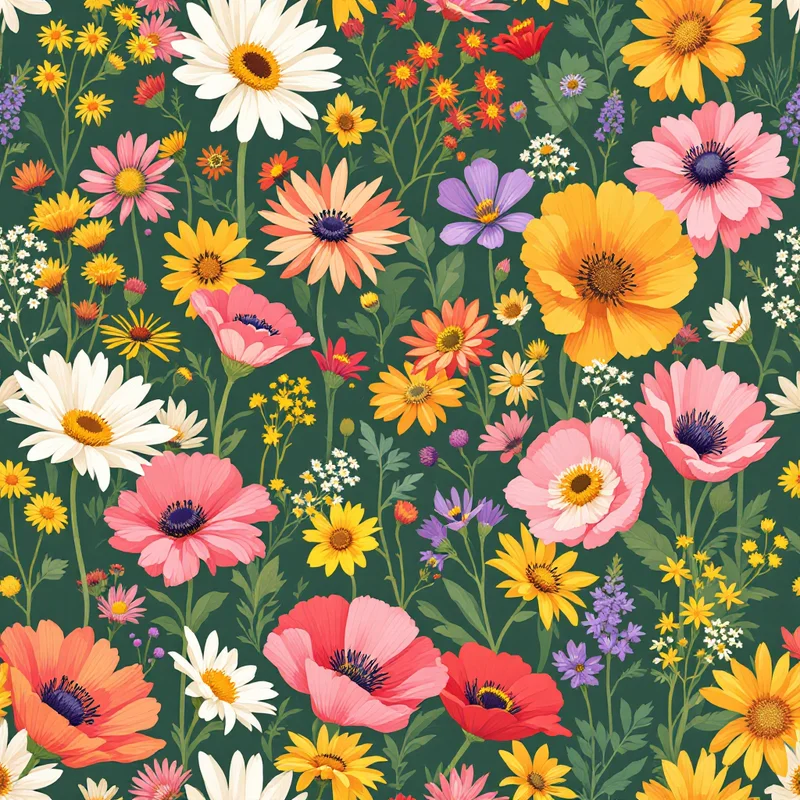
Her motif vocabulary was deliberately broad: loose painterly florals, bold geometrics, citrus and lemon prints, abstract brushwork. The unifying quality was the visible hand — every design read as a painting reproduced on fabric, not a clinical repeat.
Why she matters: Vera invented the modern licensing model that every contemporary textile designer working with print-on-demand or signed-licence deals in textile design is still using. The Vera Company continues to license the archive, and the Cooper Hewitt holds extensive holdings.
4. Armi Ratia & Vuokko Eskolin-Nurmesniemi (Marimekko founders)
Marimekko, founded in Helsinki in 1951, was less a company than a project. Armi Ratia, the founder, hired young Finnish artists with no textile training and gave them oversized screens and the brief to design prints that could be made into simple loose-cut dresses. The strategy worked because Vuokko Eskolin-Nurmesniemi, the first head of design, brought a graphic-arts sensibility — flat shapes, strong colour fields, no shading, oversized scale — that nothing else on the market had.
Vuokko's stripe-and-block prints from the 1950s — Piccolo, Galleria, the early Tasaraita stripe — established Marimekko's visual signature: confidence at scale, restricted palettes, and the deliberate refusal of decorative detail. Her work in particular set up the entire Finnish design export industry.
Both women are essential reference points for any designer working in bold colour-field print. The Marimekko archive in Helsinki and the Designmuseo hold the early collections, and the Marimekko ready-to-wear line remains in continuous production.
5. Maija Isola (1927–2001)
Isola deserves her own entry because she designed Unikko, the giant poppy print released by Marimekko in 1964, which is probably the single most commercially successful textile pattern of the twentieth century. The story is famous: Armi Ratia had publicly stated Marimekko would never print floral patterns. Isola, in protest, drew an entire collection of large-scale flowers anyway. Ratia put them into production. Unikko has not been out of catalogue since.
Beyond Unikko, Isola produced over 500 designs for Marimekko across a forty-year career, working through phases that included abstract Karelian-inspired folk art patterns, optical geometrics, and naturalistic foliage. Her ability to keep reinventing her own vocabulary inside a single house style is what makes her the working textile designer's textile designer.
Her archive is held by Marimekko and her daughter Kristina Isola, who continued the practice. The Finnish Design Shop and Marimekko stores worldwide sell current production, and the Designmuseo Helsinki holds historic samples.
6. Florence Broadhurst (1899–1977)
Broadhurst is the maximalist's patron saint. An Australian who spent decades reinventing her own biography — vaudeville singer in Shanghai, Mayfair gallerist, Sydney wallpaper magnate — she founded her studio in 1959 and produced over 530 designs across hand-screened wallpapers and textiles before being murdered in her studio in 1977. The crime was never solved.
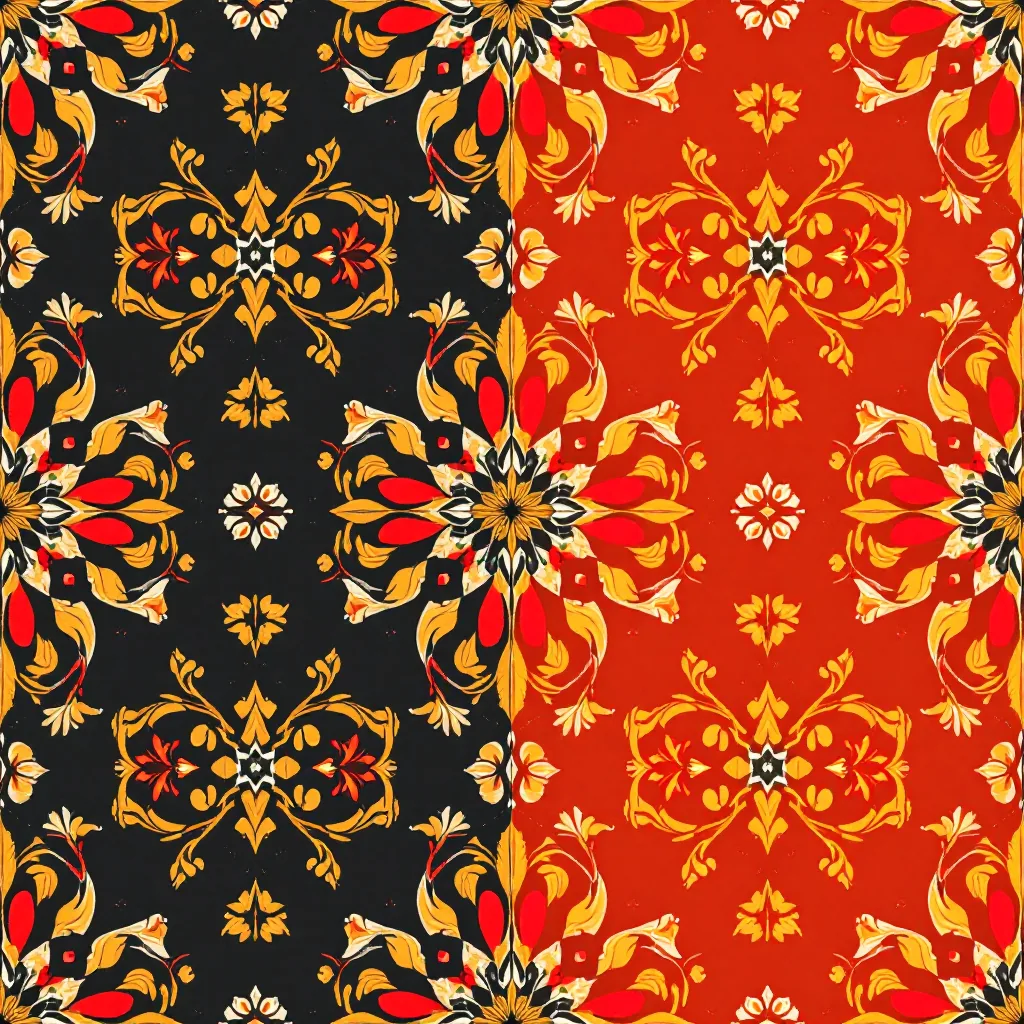
Her motif library is enormous and stylistically promiscuous: oversized peacock feathers, Japanese cranes, bamboo lattices, chinoiserie florals, Art Deco fans, op-art geometrics. The unifying logic is scale — Broadhurst designed wallpapers to be seen across a room, so motifs were sized for impact rather than domesticity.
The archive was rescued and is now licensed by Signature Prints in Sydney, who still hand-screen the original designs. Kate Spade, Akris, and Karen Walker have all run Broadhurst collaborations. Her work is the reference point for any contemporary maximalist surface pattern design brief.
7. Josef Frank (1885–1967)
Frank was an Austrian-born architect who fled to Sweden in 1933 and spent the rest of his career designing furniture and textiles for Svenskt Tenn in Stockholm. He produced around 160 textile patterns, and Svenskt Tenn still prints roughly 50 of them. They have never been discounted, never been sold through department stores, and never been out of style.
What makes Frank's work distinctive is botanical density combined with painterly looseness. His prints — Hawai, Aralia, Mirakel, Manhattan, Anakreon — pack vegetation, fruit, animals, and architectural fragments into compositions that should feel chaotic but instead feel like a botanical garden seen from above. He drew almost everything in watercolour, and the printed fabrics retain that quality.
Frank is the bridge between Arts & Crafts density and modernist colour. If you are working on dense botanical repeats and want to study how to keep them readable, his archive is the master class. Svenskt Tenn in Stockholm sells current production and runs a museum-quality showroom; the Bard Graduate Center in New York and MAK in Vienna have held retrospectives.
8. Sonia Delaunay (1885–1979)
Delaunay was a fine artist who treated textile design as an equal practice. Working in Paris from the 1910s onward, she co-developed (with her husband Robert Delaunay) the abstract movement they called Simultanism, built on the optical interaction of pure colour fields. She then applied that vocabulary to dress design, theatre costume, book bindings, car liveries, and printed textiles for Casa Sonia and her own atelier.
Her textile work — concentric arcs, segmented colour wheels, jagged geometric repeats in saturated primaries — bridged the flowing organic Art Nouveau patterns of the prior generation and arguably caused the Art Deco textile boom of the 1920s. She designed prints for couturiers including Jacques Heim and ran her own boutique selling co-ordinated abstract-print dresses.
Why she matters to a working textile designer today: she is the proof that you can move between fine art and applied print without diluting either. Her archives are held at the Bibliothèque nationale de France and the Cooper Hewitt, and major retrospectives have toured the Tate Modern and Cooper Hewitt in recent years.
9. Orla Kiely (b. 1963)
Kiely is the textile designer who proved that a single signature motif — her stylised stem-and-leaf — could anchor a global lifestyle brand. The Irish designer founded her studio in 1995 starting with hats, expanded to handbags, and by the 2000s had licensed her prints across stationery, wallpaper, home textiles, kitchenware, and a fashion line.
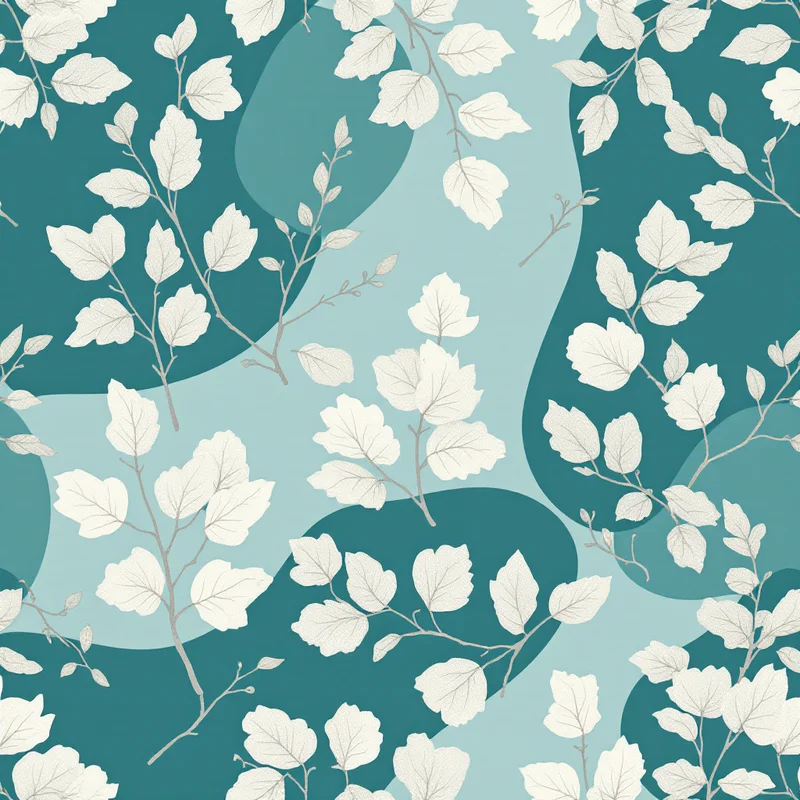
Her vocabulary is deliberately tight: flat-colour leaves, abstract pears, cars, dogs, and acorns rendered in a 1960s palette of mustard, olive, tomato, and chocolate. The repeats are simple drop-grids. The success comes from absolute consistency of style across every product touchpoint, which is the licensing lesson every contemporary designer working with print-on-demand should study.
The fashion arm closed in 2018, but Orla Kiely Home continues and the print archive remains in continuous licensing. Her work is the modern template for building a recognisable house style — useful reference if you are training a personal style on an AI pattern generator and trying to figure out what consistency actually looks like at scale.
10. Anna Maria Horner (b. 1972)
Horner represents the modern American quilting-cotton designer — a category that barely existed before 2000 and is now a multi-billion-dollar segment. She started designing for FreeSpirit Fabrics in 2006 and has produced dozens of collections since, alongside her own pattern line, books, and yarn lines.
Her motif vocabulary is painterly florals, folkloric figures, and large-scale botanicals in saturated colour stories. What separates her from a generic floral designer is her willingness to use unusual scale combinations within a single collection — a six-inch focal floral next to a quarter-inch dotted blender — which is exactly how quilters actually use fabric.
She matters because she helped invent the modern quilting-cotton release model: 15–20 SKUs per collection, two collections a year, sold through independent fabric stores and online retailers. That cadence is what every aspiring quilting-fabric designer is now competing inside. Her collections rotate through FreeSpirit's catalogue, and her studio in Nashville is the visible centre of the American modern quilting scene.
11. Tula Pink (b. 1976)
Pink is the textile designer who scaled the indie quilting-cotton model further than anyone, and she did it largely on social media. She designs for FreeSpirit Fabrics and has built a line that now includes printed cottons, linens, sewing machines, thread, and accessories. Her annual collections sell out at preorder.
Her motif vocabulary is unmistakable: heavily stylised animals (foxes, deer, hummingbirds, sea creatures, cats) embedded in dense botanical fields, drawn with a slightly gothic line and coloured in saturated juicy palettes. The work is detailed enough to reward close inspection but reads at distance — the technical sweet spot for quilting cotton.
Pink matters as a business case as much as a design one. She demonstrated that a single textile designer, working from a studio in rural Missouri with no traditional fashion-industry connections, could build a household name in the quilting world through direct social media engagement and a relentless release calendar. Her work and tutorials are extensively documented on her own site and on the FreeSpirit and Aurifil channels.
If you sell on print-on-demand and want to understand the bar for finished quilting-cotton-ready files, look at her line first. Compare to the kind of work being sold as Spoonflower-ready fabric patterns and the quality gap becomes immediately visible.
12. Maija Louekari (b. 1982, Finland)
The contemporary anchor of the list. Louekari has designed for Marimekko since 2007 and is responsible for some of the brand's most-licensed prints of the 2010s and 2020s — the Hetkiä cityscape series, the Räsymatto rag-rug print, the Kompotti graphic still-life. Her work proves Marimekko's house style is a living tradition, not a heritage exercise frozen in the 1960s.
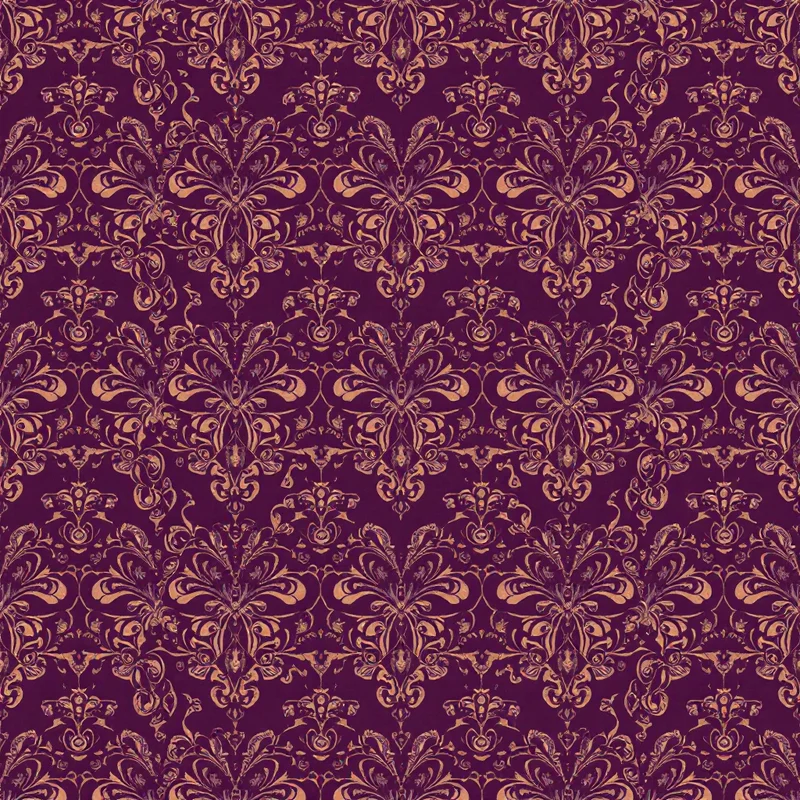
What makes Louekari worth studying is her relationship with scale. She moves a print from postcard-sized illustration to wall-scale upholstery without losing the linework that defines her hand. That skill — designing one drawing that survives extreme scale shifts — is one of the hardest jobs in modern textile design, and it is the same skill any indie designer building cross-product collections (apparel, home textiles, paper goods) now has to master.
A few other contemporary textile designers worth tracking outside this twelve: Aino-Maija Metsola (also Marimekko, watercolour-led florals); Bonnie Christine (American surface pattern designer with a substantial teaching following); Helen Dardik (Canadian-Israeli, folkloric mid-century vocabulary); and the Charley Harper estate, which continues to license his graphic-modernist wildlife prints to enormous commercial success. The current generation is collectively redefining what a working textile designer's career can look like, with paths that did not exist for any of the historical figures above.
What the lineage actually teaches
Twelve names is not a definitive list. There are obvious omissions — Liberty's in-house designers, the Wiener Werkstätte textile artists, the entire Japanese tradition from Yuzen to Mingei, the Indian and West African master block-printers whose vocabulary the Western industry has spent two centuries borrowing. Each deserves its own profile.
But the pattern across these twelve is consistent. The textile designers who shaped the industry shared four things:
- A tight, repeatable motif vocabulary they could recognise as their own
- A willingness to design at scale before the market told them what scale was correct
- Deep knowledge of the production process — block printing, screen printing, weaving — even when they handed off execution to a mill
- A commercial model that matched their work, whether that meant Morris & Co.'s vertical integration, Vera's licensing, or Tula Pink's direct-to-quilter social calendar
The technology has changed. The shoulders are still the same shoulders. If you are building a body of work using a seamless pattern maker, the question to keep asking yourself is the one Morris, Day, Frank, and Isola all asked first: what is the vocabulary I am going to be known for, and what is the discipline that will let me build a decade of work inside it.
That is the conversation the industry has been having with itself for 150 years. Worth knowing the participants before you join in.
Explore related pattern styles
Patterns for