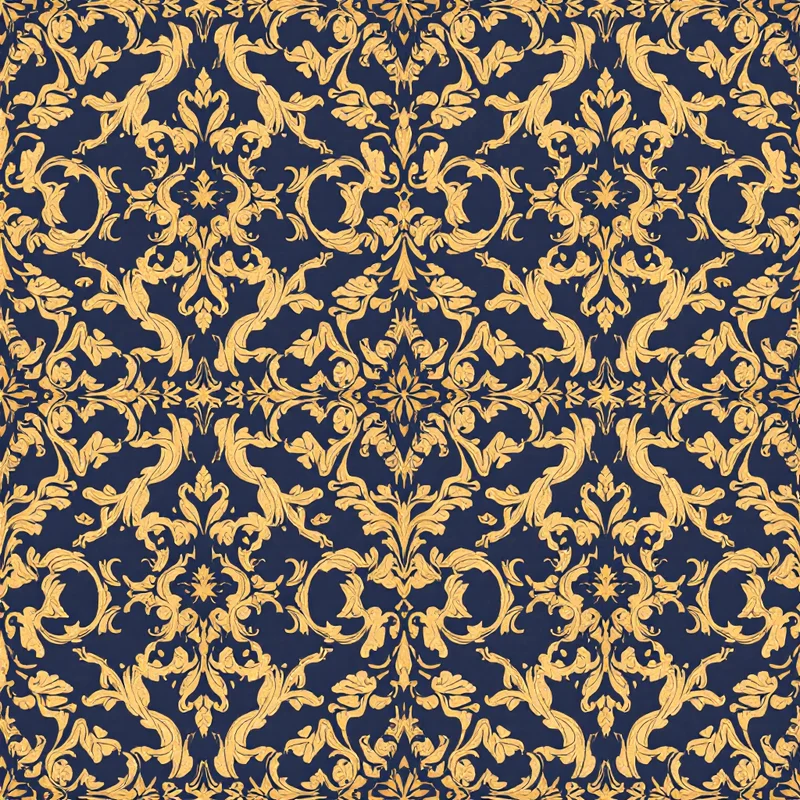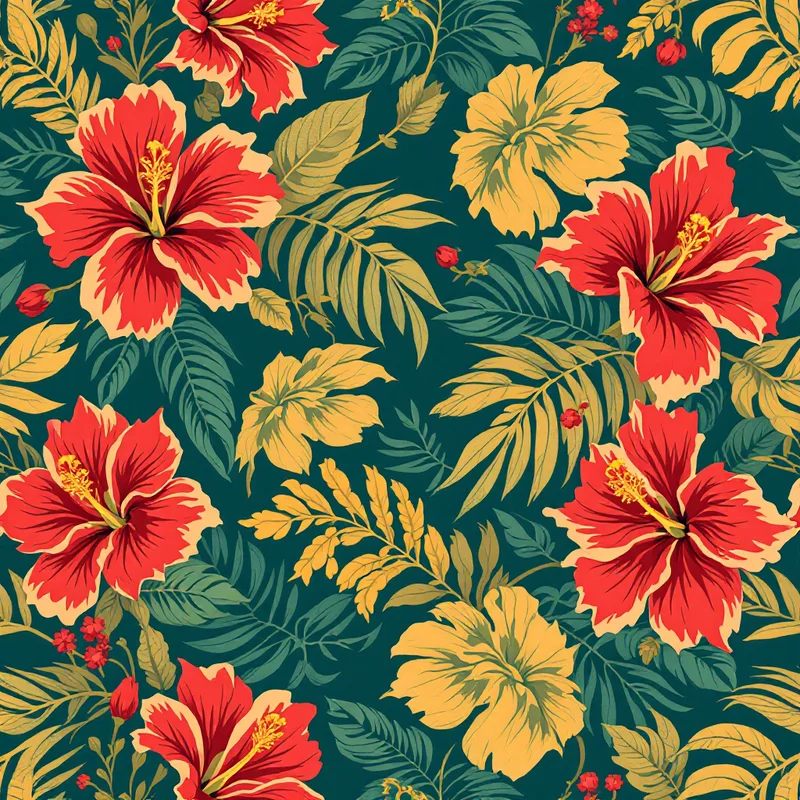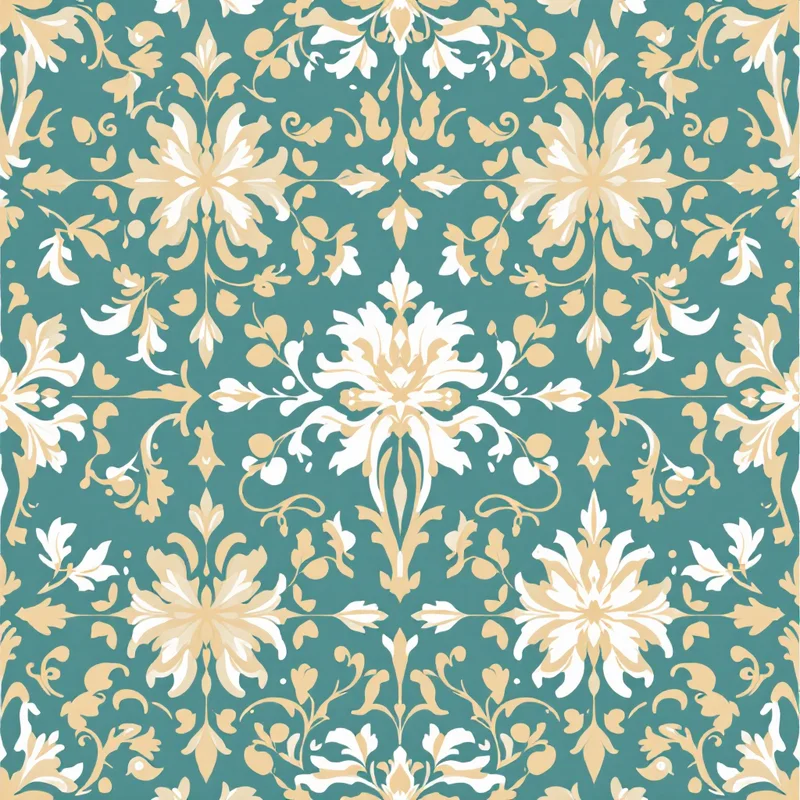
William Morris did not work alone, and the Arts and Crafts look is better understood as a group style than a one-man brand. The name itself comes from the Arts and Crafts Exhibition Society, formed in 1887, with the bookbinder T. J. Cobden-Sanderson credited for coining it. For Morris himself, see William Morris pattern inspiration; this post covers the people around him and the pattern ideas they pushed.
The circle around Morris
Philip Webb (1831-1915). An architect and Morris's close friend, Webb designed Morris's Red House and drew the birds in Morris's Trellis wallpaper. His contribution to pattern was drawing: animals and birds that look observed, not copied from a pattern book.
John Henry Dearle. He started working in the Morris firm's shop and became its chief designer and art director after Morris died in 1896. Dearle's designs keep Morris's dense, flowing growth, often with small flowers and leaves tucked into the gaps.
May Morris (1862-1938). William's daughter ran Morris & Co.'s embroidery department from 1885 and wrote Decorative Needlework (1893). See women who shaped textile design for more.
The pattern theorists
Walter Crane (1845-1915). Illustrator, socialist and wallpaper designer, Crane brought storybook figures into flat pattern. His wallpapers and C.F.A. Voysey's are compared in famous wallpaper designers.
Lewis F. Day (1845-1910). Day designed textiles and wallpapers, but his lasting influence is as a writer. His books The Anatomy of Pattern (1887) and Nature in Ornament (1892) taught designers how repeats are constructed and how a plant becomes an ornament. If you want a printed reference from the period, start here.
Independent voices
Arthur Heygate Mackmurdo (1851-1942). He founded the Century Guild in 1882. His printed fabric Cromer Bird (1884) has long, swaying stems and curling forms that look ahead to Art Nouveau. See Art Nouveau pattern ideas for where that went next.
Phoebe Anna Traquair (1852-1936). Born in Ireland and working in Edinburgh, Traquair made embroidery, enamels and painted murals. Her work shows how the movement crossed between media: one visual language for a wall hanging, a book page and a jewel.
Charles Rennie Mackintosh and Margaret Macdonald. The Glasgow Style used tall, elongated lines and a stylized rose with a flat, rounded outline. It is a cousin of Arts and Crafts, not identical to it, and it is instantly recognizable.
Candace Wheeler (1827-1923). In the United States, Wheeler co-founded Associated Artists in 1883, with Louis Comfort Tiffany among others, producing woven and embroidered textiles for American homes.
- A visible armature. Trellises, branches and stems organize the design and hide the repeat.
- Observed nature. Plants and birds are drawn from looking, then simplified, not decorated beyond recognition.
- Flat color and outline. Shapes are filled with color and defined by a darker line, with little shading.
- Natural dyes. Indigo, madder and weld give a deep but slightly muted palette.
Adapting the look to products
The same ideas scale across surfaces. For wallpaper and curtains, let the stems run the full height of the repeat so the eye travels upward. For cushions and stationery, take a single bird or flower from the pattern and use it as a spot motif inside a narrow border. For upholstery, enlarge the leaves and reduce the number of colors, because a sofa shows pattern at a distance.
Try it: an Arts and Crafts palette and layout
| Role | Color | Hex |
|---|---|---|
| Ground | Cream | #EDE5D0 |
| Blue | Indigo | #25365F |
| Red | Madder | #9E3B32 |
| Yellow | Weld | #D2A93A |
| Green | Sage | #7A8D65 |
Build the repeat on a branching armature: two stems that cross, with leaves of three sizes (about 2, 3 and 5 inches, or 5, 8 and 13 cm), and a few birds or flowers tucked into the gaps. Let the stems carry the eye diagonally so the repeat disappears.
The botanical patterns and vintage floral patterns categories are good starting points, and the Victorian patterns category shows the style these designers reacted against. In Pattern Weaver you can start from Browse Styles and restyle the finish to a flat, printed look.
Explore related pattern styles