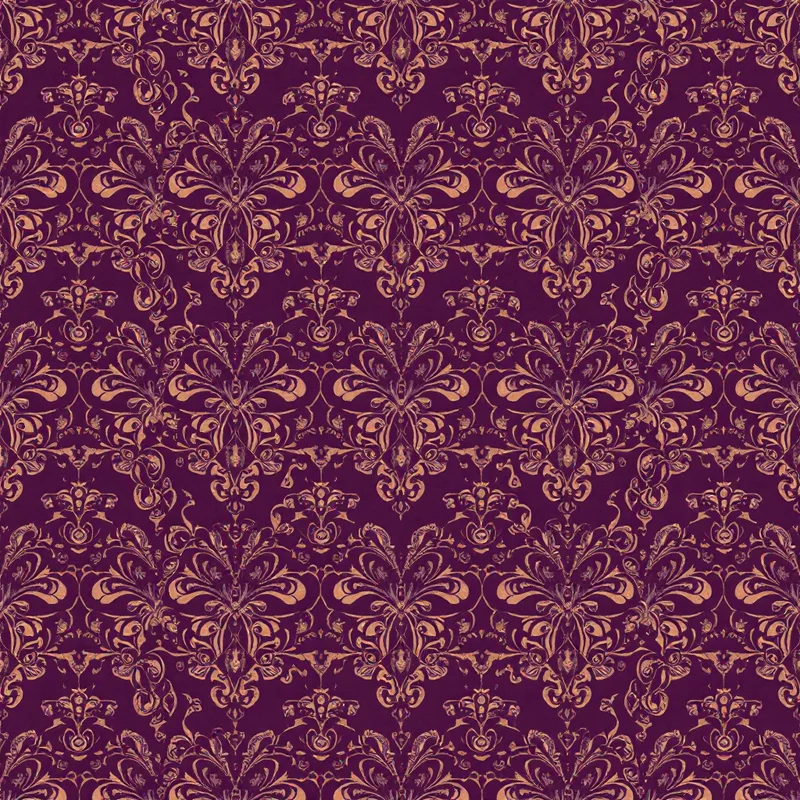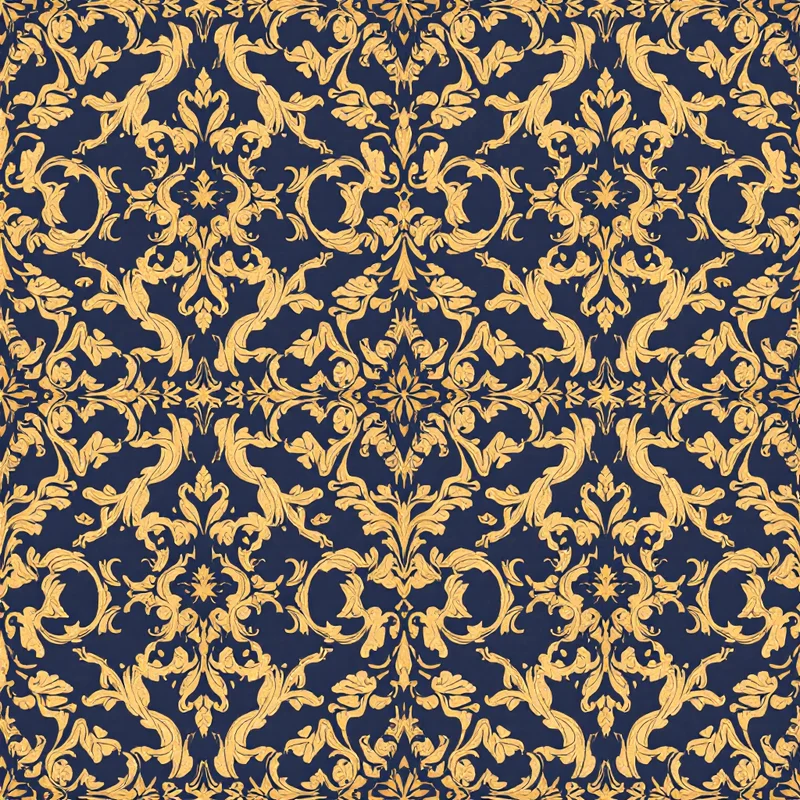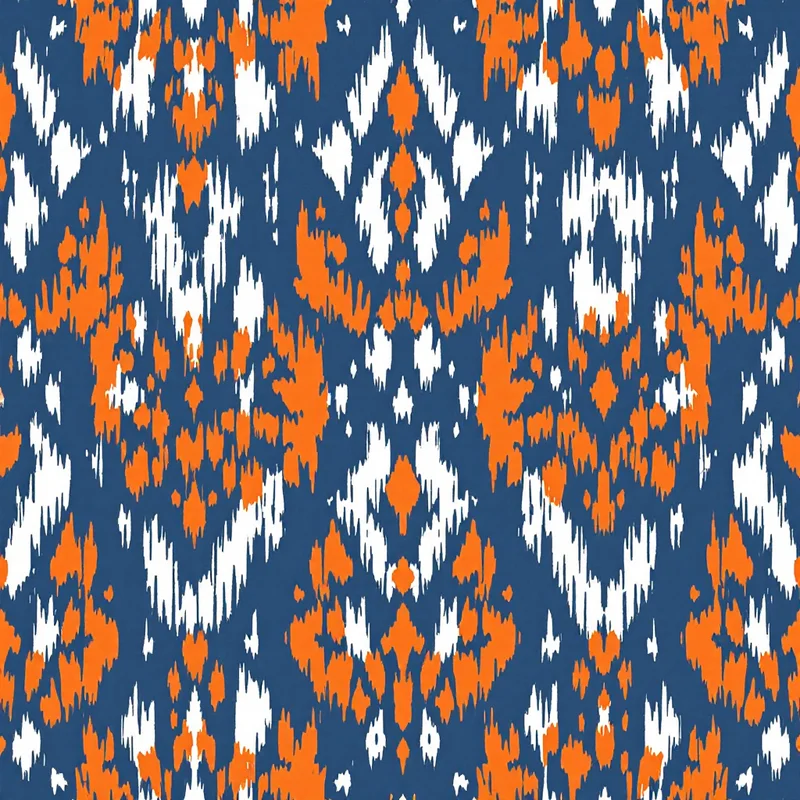
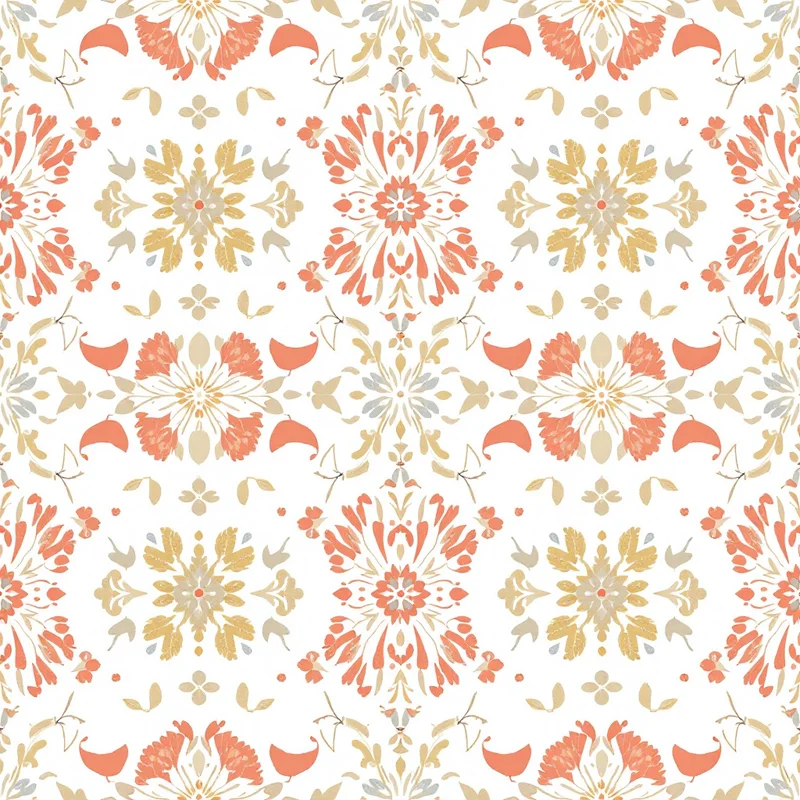
Most of what we recognize as wallpaper style was settled by a small group of people working between the 1780s and the 1890s. They decided whether a wall should look flat or deep, whether flowers should be realistic or drawn, and how large a repeat could get before a room felt crowded. Here are ten of them, with the move each is remembered for.
Paris and Alsace: wallpaper as luxury
Jean-Baptiste Réveillon. His Paris manufactory in the 1780s made papers with slender arabesque borders and classical ornament in soft colors. The factory was attacked and sacked in the riots of April 1789, one of the early flashpoints of the Revolution. The move: delicate, symmetrical arabesques on pale grounds.
Jean Zuber. Zuber & Cie opened in Rixheim, Alsace, in 1797 and became famous for scenic panoramas, each printed from many hundreds of woodblocks. The company still prints from its original blocks. The move: a design that reads as one continuous landscape instead of a repeat. More on these in famous wallpapers in history.
Victorian reformers
A.W.N. Pugin (1812-1852). The Gothic Revival architect designed wallpapers for the Palace of Westminster, among other commissions. His walls are flat, heraldic and stylized, built from tracery, crowns and foliage. He argued that a flat wall deserves flat pattern, not painted illusions of depth. The move: strong outlines, no shading.
Owen Jones (1809-1874). The Grammar of Ornament (1856) collected ornament from Greek, Egyptian, Islamic, Indian, Chinese and many other traditions, and argued that natural forms should be conventionalized, not copied. His wallpapers follow that rule. The move: geometry underneath, stylized flowers on top.
Christopher Dresser (1834-1904). Trained as a botanist, Dresser designed wallpapers and textiles that reduce plants to flat, rhythmic repeats. He traveled to Japan in 1876-77, and Japanese design fed into his later work. The move: plant structure simplified until it becomes a rhythm.
The Arts and Crafts generation
William Morris (1834-1896). Trellis was designed in 1862 and issued in 1864, with the birds drawn by his friend Philip Webb. Morris printed from carved blocks and built dense, trailing growth that hides its own repeat. Our William Morris pattern inspiration post goes deeper. The move: cover the ground so completely that the repeat disappears.
Walter Crane (1845-1915). Better known as a children's book illustrator, Crane designed wallpapers with figures, swans and water plants, including the dado design Swan, Rush and Iris (1875). The move: storybook figures set inside flat pattern.
C.F.A. Voysey (1857-1941). Voysey, an architect, drew birds, stylized trees and hearts in flat color, often at generous scale. The move: three or four colors, large simple shapes, no clutter. His circle is covered in Arts and Crafts movement designers.
Industry and the twentieth century
Frederick Walton (1834-1928). Walton, who also invented linoleum, patented Lincrusta in 1877: an embossed, washable wallcovering with deep relief. It turned pattern into texture. The move: a repeat you can feel as well as see.
Florence Broadhurst. An Australian who built a hand-screen-printing studio in Sydney in the late 1950s, Broadhurst designed oversized peacock feathers, lattices and metallic-ground geometrics for walls viewed across a room. Her profile is in famous textile designers. The move: design for the whole room, not the swatch.
Palettes to borrow from the list
| Designer | Try this palette |
|---|---|
| Pugin | Oxblood #6B1F2A, gold #C8A24A, deep green #2F4F3A |
| Morris | Indigo #2E3F6B, madder #A14B3A, olive #7A8450 |
| Voysey | Cream #EFE6CF, sage #8A9A6B, brick #A9503B |
What the ten agree on
- Choose flat or deep on purpose. Pugin and Dresser wanted a flat wall. Réveillon and Zuber wanted a window.
- Plan for the drop. Wallpaper hangs in strips, so the repeat must match across the seam, either straight or half-drop.
- Size for distance. A motif that looks right in a 4 in (10 cm) swatch can disappear on a wall; test at room scale.
The vintage wallpaper, Victorian wallpaper and damask wallpaper categories are good places to start your own version. With Describe It in Pattern Weaver you can write a prompt in your own words, such as "flat stylized birds among trailing branches, three colors", and get a seamless tile in about 20 seconds.
Explore related pattern styles