Otomi embroidery — sometimes called Tenango embroidery after the town in Hidalgo state where it is most famously produced — is one of the most visually distinctive folk art traditions in Mexico. Vibrant animals, mythological creatures, flowers and figures are embroidered onto white or cream cotton in a hand-stitched satin technique that produces lush, joyful compositions readable from across a room. The tradition has deep indigenous roots in the Otomi people of central Mexico and has become one of the most internationally recognised Mexican folk art forms, with original tenangos appearing in design publications, museum collections and interior design across the world.
For contemporary surface pattern designers, Otomi has become a significant reference point — and a category that demands particular respect and care. The visual vocabulary is so distinctive that imitation is straightforward, but doing so well requires understanding the cultural context, the meaning behind the motifs, and the appropriate ways to draw on this tradition without flattening or appropriating it. This guide examines both the design tradition itself and the considerations involved in creating pattern work that draws on Otomi inspiration.
Origins and Cultural Context
The Otomi people are an indigenous group of central Mexico, with significant populations in Hidalgo, Querétaro, Mexico State and Puebla. The embroidery tradition that contemporary design calls "Otomi" comes specifically from the town of Tenango de Doria in Hidalgo, where the practice developed in its current form in the mid-twentieth century. Earlier indigenous textile traditions in the region used different techniques, but the distinctive Tenango embroidery style — densely embroidered animals and figures on undyed cotton — emerged through a combination of older symbolic vocabulary and adapted technique.
The motifs draw on rock paintings, traditional storytelling, indigenous cosmology and the natural environment of the region. Animals are central: deer, rabbits, birds of many species, fish, insects and various mythological hybrid creatures populate the compositions. Florals appear extensively, often stylised in ways that emphasise rhythmic decorative effect over botanical accuracy. Human figures and scenes from village life appear in some traditional tenangos.
The colour palette in traditional tenango embroidery is highly variable, ranging from monochromatic embroideries in single-colour thread (typically deep red, navy blue or black) to spectacularly multicoloured compositions using essentially every available thread colour. The unifying characteristic is the white or cream cotton ground that provides the field against which the colour embroidery reads.
The work is produced by Otomi women in the region who have practiced the technique for decades or generations, and the original tenangos remain among the most sought-after Mexican folk art items in international collector markets. The contemporary success of the Otomi aesthetic in design has both raised the international profile of the originating community and created concerns about appropriation, fair attribution and the economic share that flows back to the originating producers.
The Visual Vocabulary
Otomi compositions share several characteristic visual elements that make the tradition immediately recognisable. The density of motif distribution is extreme — successful tenangos pack the available field with figures, animals and florals to the point of near-saturation, leaving relatively little open field. This density is part of what makes the tradition visually distinctive and what gives the embroideries their lush, abundant character.
The figures and animals are rendered in flat colour planes with little or no shading, with internal detail provided by line stitching or by the edge contours of the embroidery. This flat treatment, combined with the bright thread colour against the cream ground, gives Otomi work its characteristic graphic readability.
Compositions typically distribute motifs across the entire field without a clear single focal point. The eye moves across the surface from figure to figure, encountering animals, florals and figures with relatively equal weight. This distributed compositional logic differs from European decorative traditions that often build around a central focal element with surrounding supporting motifs.
The motif vocabulary includes animals oriented in various directions — not all facing the same way, not arranged in clear rows or columns, but distributed across the surface with intentional but not strict rhythm. This loose distribution gives the work a feeling of organic abundance rather than mechanical arrangement.
Animal motifs frequently include creatures with hybrid features — birds with elaborate decorative tails, animals with floral elements emerging from their bodies, figures that combine features of multiple species. These hybrid forms reflect both the imaginative tradition and the artistic license that has characterised the tradition.
Contemporary Design References
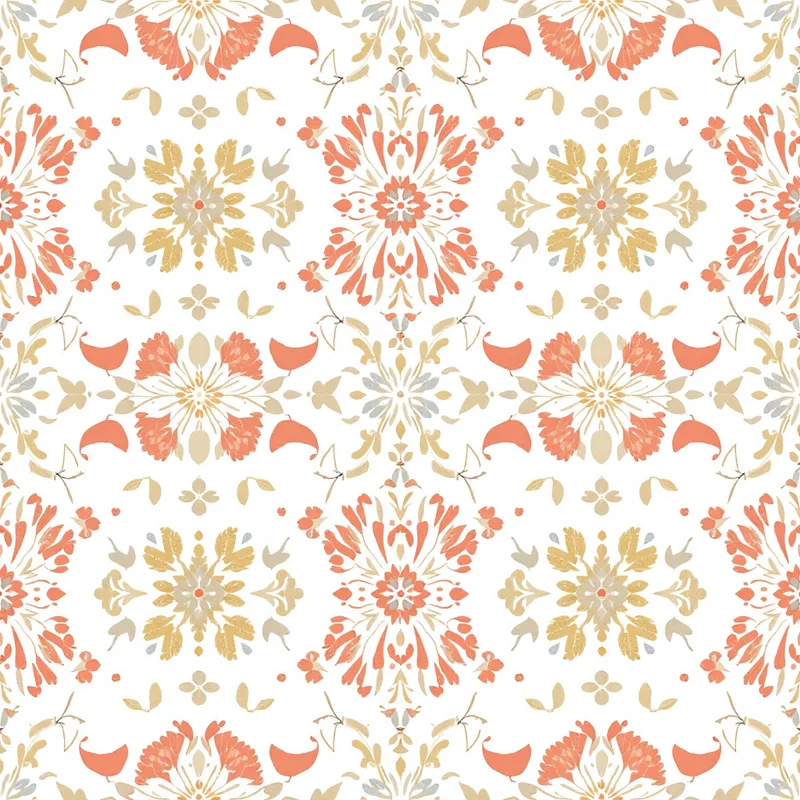
Contemporary designers who reference Otomi work in their pattern designs typically focus on either single-colour or limited-palette interpretations that read more clearly as design references than as direct imitations. A single-colour Otomi-influenced pattern in navy blue on cream, or in burgundy on cream, retains the compositional logic and motif vocabulary while clearly signalling that it is a design interpretation rather than a reproduction of original tenango work.
The motif vocabulary that translates effectively into contemporary surface pattern design includes the densely distributed animal figures, the stylised floral elements, the flat colour treatment and the cream or off-white field. Designers working in this vocabulary typically draw their own animal and floral motifs in styles that reference the Otomi tradition without directly copying specific traditional motifs.
The scale at which the compositions translate into surface pattern depends on the application. Otomi-influenced wallpaper benefits from larger motif scale that allows individual figures to read clearly across a room. Otomi-influenced fabric and textile applications often work at medium scale where the dense pattern can repeat effectively across the surface. Smaller-scale Otomi-influenced applications work for stationery, packaging and accessory products.
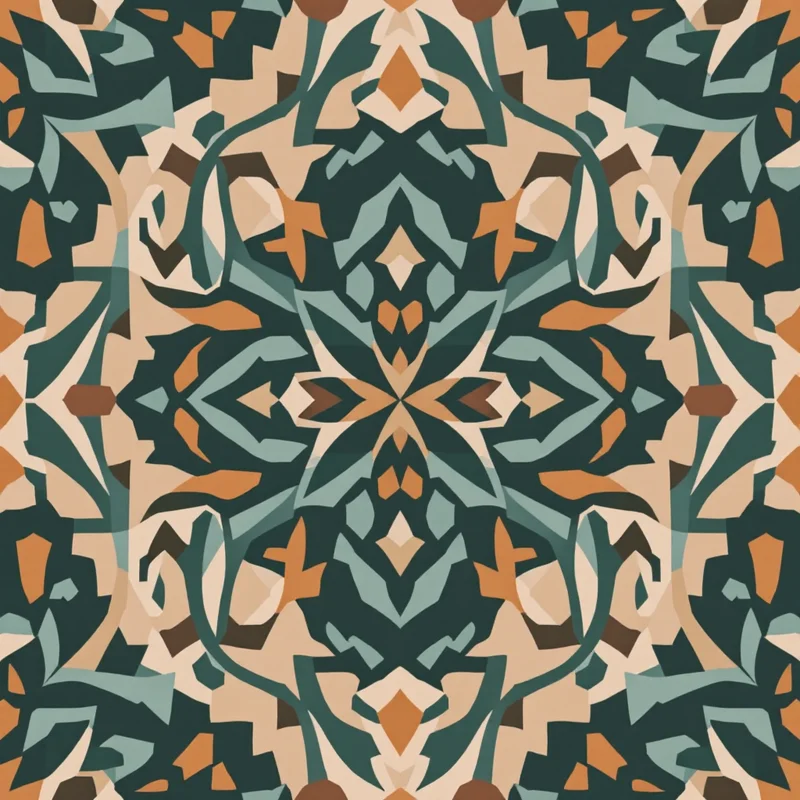
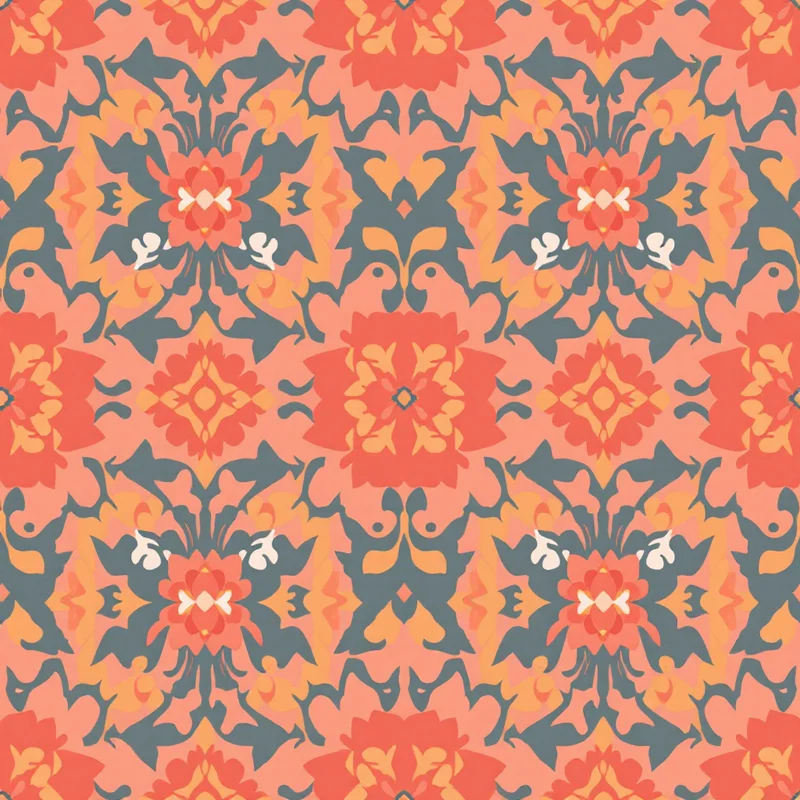
The palette strategies for contemporary Otomi-influenced work include the single-colour-on-cream approach mentioned above, multi-colour interpretations that use limited palette of three to five colours rather than the full multi-colour traditional palette, and modern interpretations that translate the Otomi compositional logic into contemporary colour vocabularies (sage green and terracotta, for example, rather than traditional bright thread colours).
Considerations for Respectful Reference
For designers drawing on Otomi as a reference for contemporary pattern work, several considerations support respectful and responsible practice. Acknowledging the source tradition openly in marketing, packaging and product copy is important — Otomi-influenced designs that are marketed as if they were original aesthetic inventions rather than drawing on a specific cultural tradition do not honour the source.
Avoiding direct copying of specific traditional motifs makes a clear distinction between drawing inspiration from the tradition and producing what would amount to a reproduction. The original tenangos are the work of identifiable producers and reproducing specific motifs is closer to copying than to inspiration.
Supporting the originating community materially is one of the most important considerations. This can take the form of purchasing original tenangos for reference and personal use, supporting fair-trade Otomi cooperatives, donating a portion of proceeds from Otomi-influenced commercial work to community organisations, or licensing original tenango designs through fair-trade arrangements rather than producing inspired-by interpretations.
Avoiding cliché or stereotype in the rendering and presentation is important. Otomi work is sometimes flattened in commercial design contexts into a generic "Mexican folk" aesthetic that does not respect the specific tradition. Treating Otomi as a serious design tradition with its own internal logic and history, rather than as a vague reference to broader Mexican folk art, produces work that honours the source more effectively.
For designers who specifically want to work in this aesthetic vocabulary at scale, consider whether the work would be more honourable as a collaboration with Otomi producers, as a fair-trade licensing arrangement with the originating community, or as work that explicitly funds and supports the originating tradition.
Applications and Markets
Otomi-influenced patterns have strong commercial presence in several application categories. Home decor textiles — throw pillows, blankets, drapery, table linens — have used Otomi influence extensively in contemporary home decor positioning. The bold visual statement, distinctive palette and clear cultural reference all support commercial success in this category.
Wallpaper applications in Otomi-influenced design have grown substantially in recent years, with the bold compositions translating effectively to feature walls and accent applications in contemporary interiors.
Stationery and gift goods use Otomi-influenced patterns for distinctive seasonal collections and gift wrap applications. The cultural reference and visual richness support premium positioning.
Fashion applications in Otomi-influenced design include both direct references in resort wear and accessories and more abstract references in contemporary textile collections.
Drawing on Otomi in Practice
For pattern designers building work that draws on Otomi tradition, the practical approach involves studying authentic tenangos in collections, books and academic sources to develop deep familiarity with the original visual logic. Working with motif vocabulary that references the tradition without copying specific motifs preserves the distinction between inspiration and reproduction. Selecting palette and compositional strategies that signal design interpretation rather than reproduction helps maintain that distinction visually. Acknowledging the source in marketing and commercial presentation provides the appropriate cultural attribution.
The category rewards designers who treat the source tradition with serious attention and respect. Otomi is not a quick aesthetic reference to be appropriated and moved past — it is a living tradition with identifiable producers, cultural meaning and contemporary economic significance. Contemporary design work that draws on this vocabulary at its best contributes to the broader recognition and respect for the originating tradition while producing distinctive commercial work that draws from a deep visual well.
Explore related pattern styles
Patterns for