Hawaiian pattern design has a deeper and more sophisticated tradition than the tourist aloha shirt aesthetic that dominates international perception of the category. Beneath the bright commercial florals lies a substantial textile tradition rooted in indigenous Hawaiian kapa cloth, geometric tattoo and woodcarving traditions, and a contemporary design culture that continues to evolve in dialogue with both ancestral practice and global design movements. For surface pattern designers, understanding the depth of Hawaiian design tradition opens up significantly more sophisticated commercial possibilities than the surface-level tropical aesthetic.
This guide examines both the broader Hawaiian design tradition and the contemporary commercial applications, with attention to the cultural respect required when working with indigenous cultural vocabularies. The same considerations of attribution and cultural respect that apply to Otomi, Suzani and Ankara apply to Hawaiian design — perhaps even more so, given the specific history of colonial appropriation and commercial commodification of Hawaiian culture by external markets.
The Kapa Tradition
Before contact with European and American traders in the late eighteenth century, Hawaiian textile traditions centred on kapa — bark cloth produced from the inner bark of the wauke (paper mulberry) and other native trees. Kapa was the universal Hawaiian textile, used for clothing, bedding, ceremonial cloth and religious objects. The production process involved harvesting, soaking, beating and joining strips of bark into larger pieces of cloth, with the finished kapa being decorated through dye, stamping and freehand painting.
The visual vocabulary of kapa decoration drew on a rich tradition of geometric and abstracted natural motifs. The motifs were sometimes related to the kapa's intended use, sometimes to the family or community of the maker, sometimes to specific natural references like ocean waves, stars, plant forms or land features. The technical execution involved bamboo stamps, freehand painting and natural dyes derived from local plants and minerals.
Kapa production declined significantly through the nineteenth century as imported cotton and synthetic textiles replaced the labour-intensive native cloth. By the early twentieth century kapa production had become primarily a heritage practice, though it never disappeared entirely. The contemporary revival of kapa production by Native Hawaiian practitioners has brought renewed attention to the tradition and its visual vocabulary.
For contemporary surface pattern designers, the kapa tradition offers a rich vocabulary that extends well beyond the tropical floral conventions of commercial Hawaiian design. Geometric motifs, abstracted natural references, careful colour relationships and meaningful symbolic content all sit within the kapa tradition and provide reference for contemporary work.
The Aloha Shirt Tradition
The commercial aloha shirt emerged in the 1930s and 1940s as Hawaiian businesses produced printed cotton shirts featuring tropical and locally-inflected motifs for sale to tourists and local residents. The early aloha shirts drew on Japanese kimono cloth, Polynesian and Asian textile motifs, and locally specific botanical and pictorial references. The shirts became commercially successful and evolved into the international "Hawaiian shirt" aesthetic recognised globally today.
The aloha shirt tradition has internal sophistication that surface-level perception often misses. Premium aloha shirts from established Hawaiian producers feature carefully designed prints with specific botanical accuracy, considered palette and refined compositional logic. The mass-market "Hawaiian shirt" aesthetic that dominates international perception represents a flattened commercial interpretation of this deeper tradition.
For contemporary designers drawing on Hawaiian commercial textile tradition, the distinction between premium aloha shirt design and mass-market tropical aesthetic matters significantly. The former offers a serious commercial design tradition with refined conventions and accurate botanical knowledge; the latter offers stereotyped imagery that often misrepresents both Hawaiian aesthetics and Hawaiian cultural context.
Hawaiian Botanical Vocabulary
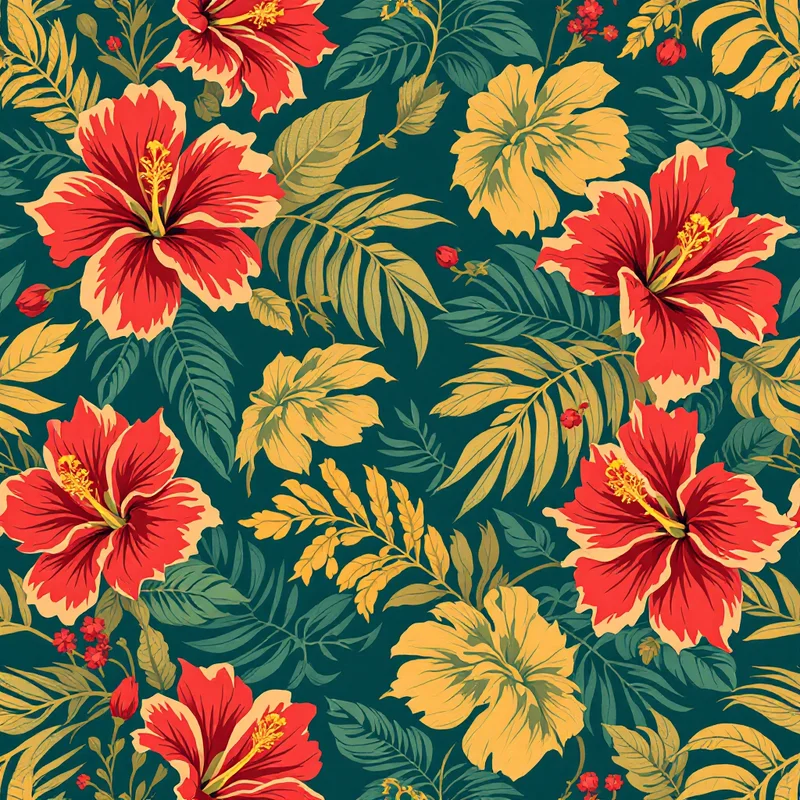
The botanical vocabulary specific to Hawaiian design draws on the islands' distinctive flora. Plumeria — the fragrant flower commonly associated with leis — appears extensively in Hawaiian botanical design. Hibiscus — particularly the yellow hibiscus that is Hawaii's state flower — appears extensively as well. Bird of paradise, anthurium, ti leaves, taro leaves, palm fronds and various tropical fruits provide additional botanical vocabulary.
Native and traditional Hawaiian plants that appear less frequently in commercial tropical aesthetic but with significant cultural meaning include lehua (the red flower of the ohia tree), maile (a leafy vine used in ceremonial lei), pikake (a small fragrant flower), and various species specific to specific Hawaiian regions.
For designers building serious Hawaiian botanical design work, accurate botanical reference matters. The plumeria, hibiscus and other Hawaiian botanicals have specific visual characteristics — petal count, internal structure, leaf shape, plant habit — that distinguish them from similar tropical species elsewhere. Generic tropical imagery that does not distinguish between Hawaiian and other tropical botanicals fails to honour the specific aesthetic tradition.
The Hawaiian botanical palette is distinctive. The colours of Hawaiian flowers tend toward warm tones — yellow, orange, deep red, pink, occasionally white and purple — that reflect the actual visual character of Hawaiian flora. The greens of Hawaiian foliage tend toward warm greens with some red, brown and gold undertones rather than the cool greens common to temperate botanical design.
Geometric and Cultural Motifs
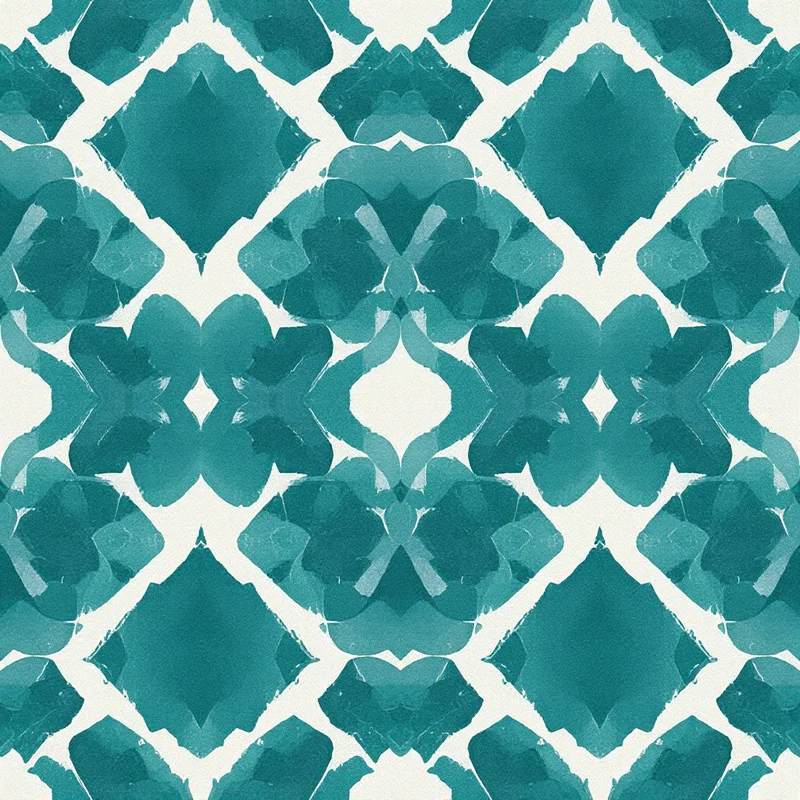
Beyond the botanical vocabulary, Hawaiian design tradition includes geometric and culturally specific motifs that warrant particular attention. Kapa stamp patterns include diamond, triangle, line and curve combinations that produce distinctive geometric vocabularies with internal compositional logic.
Polynesian tattoo and woodcarving traditions, shared across Pacific cultures including Hawaii, include geometric vocabularies with specific cultural meaning. These motifs — abstract triangles, line patterns, curved geometric elements — carry serious cultural significance and should be approached with particular care. Direct appropriation of specific tattoo or carving motifs without cultural connection or permission is increasingly recognised as inappropriate within Pacific cultural conversations.
For contemporary designers building Hawaiian-inspired design work, the broader Pacific geometric vocabulary provides reference but requires care. Drawing on the visual sensibility of Pacific geometric design — strong line work, considered symmetry, balanced negative space, meaningful symbolic content — without copying specific culturally significant motifs is one productive approach.
Considerations for Respectful Reference
Hawaiian culture has a specific colonial history that affects how contemporary design should engage with the tradition. The overthrow of the Hawaiian monarchy in 1893, the American annexation of Hawaii in 1898, and the subsequent suppression of Hawaiian language, culture and religious practice through much of the twentieth century created an ongoing context in which Hawaiian cultural elements have been commodified and appropriated by external markets without economic or recognition benefits flowing to Native Hawaiian communities.
For contemporary designers drawing on Hawaiian design tradition, several considerations support respectful practice. Acknowledging the source tradition specifically in marketing and product copy is important. Distinguishing between drawing on Hawaiian design tradition and producing generic tropical aesthetic matters significantly — the latter often appropriates Hawaiian visual vocabulary without acknowledging the source.
Supporting Native Hawaiian designers, producers and cultural organisations materially is the most direct way to participate responsibly. This can include licensing original Native Hawaiian designs through fair-trade arrangements, supporting Hawaiian cultural institutions financially, sourcing materials from Hawaiian producers when appropriate, and considering collaboration with Native Hawaiian designers rather than producing inspired-by interpretations independently.
Avoiding direct copying of culturally significant elements — specific tattoo motifs, specific kapa designs, specific ceremonial imagery — is important. Working with the broader visual sensibility of Hawaiian design while creating original motif vocabulary preserves the distinction between inspiration and appropriation.
Contemporary Commercial Applications
Hawaiian-influenced patterns have significant commercial presence across several categories. Resort wear and tropical apparel — beachwear, casual shirts, vacation collections — use Hawaiian-influenced design as a foundational vocabulary. The category supports both literal tropical aesthetic and more sophisticated contemporary interpretation.
Home decor textiles use Hawaiian botanical references for distinctive tropical and biophilic interior design. The category supports throw pillows, drapery, table linens and statement pieces with Hawaiian botanical reference.
Stationery and paper goods use Hawaiian botanical references in seasonal collections, particularly for summer and tropical vacation-themed products. The category supports both literal tropical references and more sophisticated botanical interpretations.
Fashion accessories — scarves, totes, beach bags — use Hawaiian-influenced design extensively. The category supports both casual resort positioning and more sophisticated contemporary interpretations.
Premium and design-forward Hawaiian-influenced work has grown substantially in recent years, with designers producing collections that draw on Hawaiian aesthetic tradition with serious botanical accuracy, refined compositional logic and respect for the source culture. This positioning offers more interesting commercial opportunities than mass-market tropical aesthetic and avoids the cultural appropriation concerns of less considered work.
Practical Approach
For pattern designers building Hawaiian-influenced commercial work, the practical approach involves studying authentic Hawaiian botanical sources, examining kapa textile examples in museum collections, learning from contemporary Native Hawaiian designers and producers, and developing motif vocabulary that draws on Hawaiian tradition without directly copying culturally significant or named elements.
Acknowledging the source tradition in marketing and product copy provides appropriate attribution. Supporting Native Hawaiian designers and cultural organisations materially provides economic recognition. Maintaining botanical accuracy in Hawaiian-specific motifs and avoiding generic tropical confusion respects the specific aesthetic tradition.
Hawaiian design tradition rewards designers willing to engage seriously with its conventions, history and contemporary cultural context. The broader Polynesian and Pacific design vocabulary that surrounds Hawaii provides additional reference and inspiration. The combination of serious botanical accuracy, refined compositional sensibility, respect for cultural context and acknowledgment of the source produces commercial work that contributes to broader recognition of the tradition while building sustainable commercial practice.
Explore related pattern styles
Patterns for