On Peru's dry southern coast, embroidered mantles some two thousand years old have survived with their reds, blues and golds still readable. That is the first thing to understand about Andean weaving: it is one of the longest-running textile traditions on earth, and cloth was never only decoration. In the Inca state, fine cloth was a form of wealth, a gift and a mark of rank.
Four layers of one tradition
Paracas. Burial mantles from the Paracas culture on the south coast carry embroidered figures in saturated color, with outlines that read almost like modern vector shapes. The color survived because the desert climate protected the fiber.
Inca. Fine cloth, often called cumbi, was woven by specialists. Elite tunics carry rows of small geometric designs called tocapu. Scholars still debate what the tocapu meant, so treat any confident decoding with suspicion.
Highland communities today. Quechua-speaking weavers in the Cusco region and around Lake Titicaca continue the tradition, and communities are often recognizable by their characteristic patterns and colors. Garments include the lliclla (a shawl-like cloth worn across the shoulders), ponchos, belts and carrying cloths, plus knit chullo hats with ear flaps.
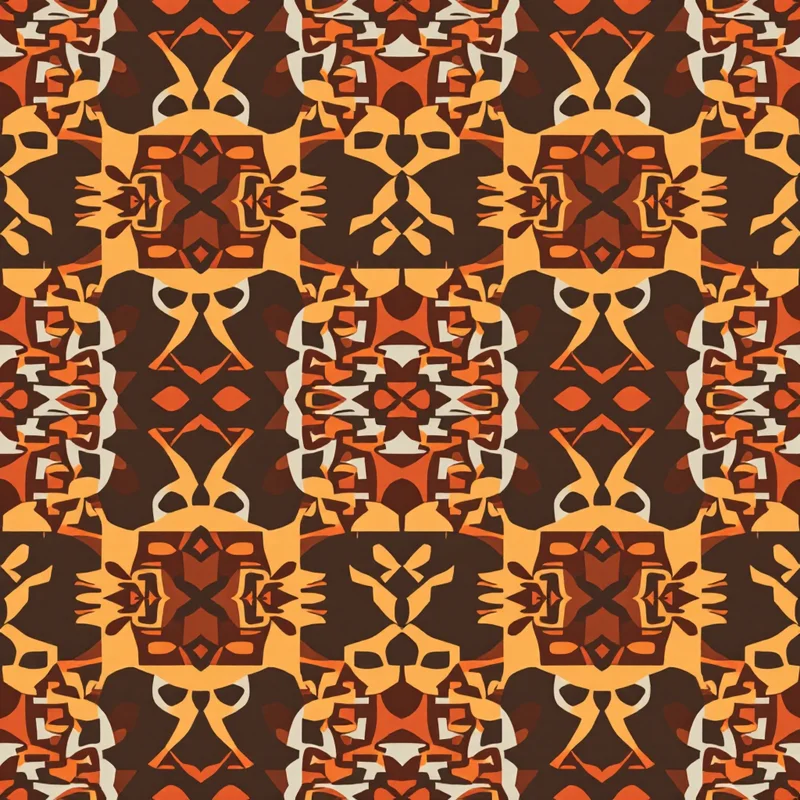
Commercial "Peruvian" prints. Much of what is sold as Peruvian or Inca pattern is a loose, machine-made imitation. It is worth knowing the difference before you borrow from it.
How the cloth is made
- Fibers. Alpaca and llama from the highlands, cotton on the coast.
- Dyes. Cochineal for red, indigo for blue, and plant dyes for yellows, greens and browns.
- Loom. Many highland weavers use a backstrap loom, with one end tied to a post and the other to the weaver's waist, which keeps the web at the weaver's own tension.
- Layout. Patterned bands (pallay) alternate with plain bands (pampa), often mirrored around a central seam so the cloth is symmetrical when two halves are joined.
Because the figured bands are built thread by thread, motifs are naturally blocky. Birds, llamas, flowers, zigzags and stepped shapes all have the stair-step edges that weaving produces, and those edges are part of the look.
A palette taken from the dye pot
| Color | Hex | Source in the tradition |
|---|---|---|
| Cochineal red | #9E1B32 | Insect dye |
| Indigo | #1F3A6E | Indigo plant |
| Marigold | #E3A72F | Plant dyes |
| Moss green | #5B7B3A | Overdyed plant colors |
| Natural alpaca brown | #3B3633 | Undyed fiber |
| Cream | #EDE3D0 | Undyed fiber |
Keep the neutrals generous. Highland cloth gets its punch from a few saturated colors set against dark and cream, not from using every hue at once.
What a designer can take from the structure
- 1Band layouts. Stack horizontal strips of different widths, from half an inch to several inches, and alternate busy bands with quiet ones.
- 2Stair-step drawing. Draw motifs on a grid and let the pixels show. It gives you the authentic weave edge without copying anyone's motif.
- 3Mirror symmetry. Reflect the pattern across a center line, then repeat the whole panel. The mirror repeat tutorial walks through the setup.
- 4Weave logic. Read about how floats and twills produce diagonals and diamonds in the guide to weave patterns.
Where banded layouts work
Band-and-field layouts suit scarves, table runners, rugs and blankets, where a long format lets the stripes breathe. For a cushion or a tote, use two or three bands around a plain field. Keep the plain bands generous: the resting space is what makes the figured bands read as special.
Respect and attribution
Many motifs belong to specific communities, and weavers there depend on selling their work. Do not copy a community's design and sell it as your own, do not use "Inca" or "Peruvian" as a vague label for any zigzag, and buy from weavers' cooperatives and Peruvian makers when you want authentic cloth. For how meaning shifts from one culture to the next, see pattern symbolism around the world.
For reference as you study, browse Peruvian patterns, woven patterns and Inca patterns. When you are ready to make something original, Describe It in Pattern Weaver lets you write a prompt in your own words, such as "stepped bird bands in cochineal red and indigo," and each result arrives as a seamless tile in about 20 seconds.
Explore related pattern styles