


In much of Europe and North America a bride wears white. In China, white is traditionally the color of mourning, and red is the color of weddings and New Year. Same color, opposite message. That is the central fact about pattern symbolism: meaning belongs to a culture, not to a shape.
Same symbol, different readings
The dragon. In China the dragon is an auspicious, powerful figure tied to imperial authority, rain and good fortune. In medieval European tradition, dragons were often monsters to be slain. A dragon print aimed at one market may land very differently in another.
The swastika. For thousands of years the swastika has been an auspicious symbol in Hindu, Buddhist and Jain traditions, with a name from a Sanskrit word for well-being. In Europe and the Americas it is overwhelmingly read through its use by the Nazi regime. Avoid it in commercial pattern work.
Symbols rooted in one tradition
| Motif | Tradition | Commonly read as |
|---|---|---|
| Mandala | Hindu and Buddhist | A sacred diagram of the cosmos, used for meditation |
| Endless knot | Buddhist | Interdependence and the continuity of wisdom |
| Adinkra symbols | Akan, Ghana | Proverbs and concepts, each with its own name |
| Koru | Māori | Unfurling fern frond: new life, growth |
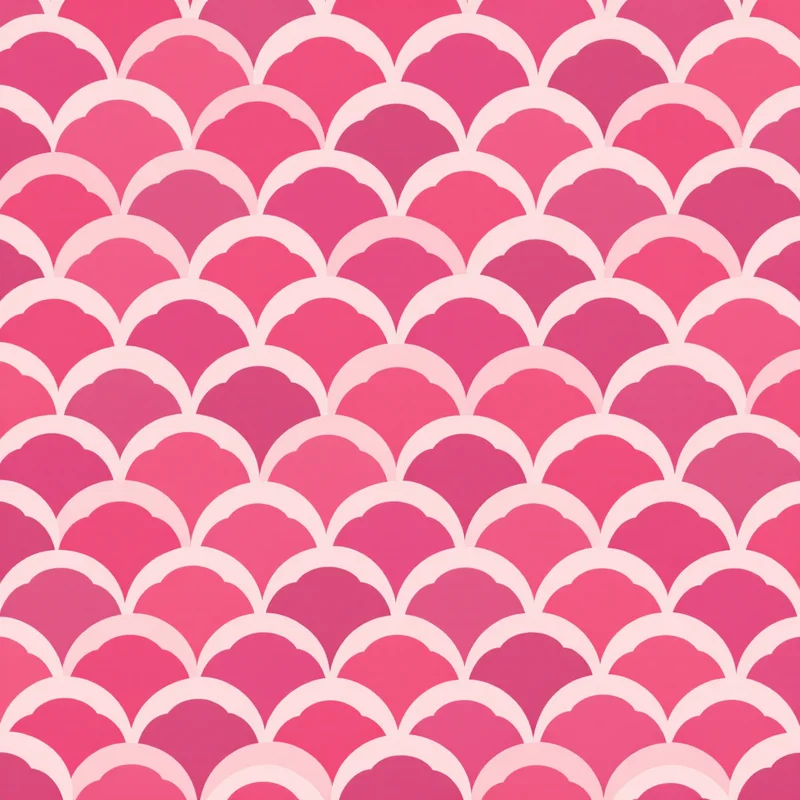
| Seigaiha | Japanese | Overlapping waves: good fortune, calm |
| Asanoha | Japanese | Hemp leaf: healthy growth, often used for children |
| Crane | Japanese, Chinese | Longevity |
| Hamsa and nazar | Middle East, North Africa, Turkey, Mediterranean | Protection from the evil eye |
| Greek meander | Ancient Greek | Continuity, from the winding Maeander river |
Mandala. The word is Sanskrit for circle. Tibetan sand mandalas are made from colored sand, grain by grain, and then swept away as a teaching about impermanence. Using a mandala as a purely decorative circle is common, but it helps to know what you are borrowing. The types of mandala patterns guide separates the decorative from the sacred.
Endless knot. One of the Eight Auspicious Symbols of Buddhism, along with the lotus, conch shell, wheel, parasol, treasure vase, pair of golden fish and victory banner.
Adinkra. Stamped symbols from the Akan peoples of Ghana, each with a name and a meaning tied to a proverb or concept. One of the best known is Gye Nyame, usually translated "except for God." They are meaningful marks and not decorative filler.
Koru. The spiral of an unfurling fern frond appears throughout Māori carving and art, associated with new life and renewal. It is closely tied to Māori identity, so approach it as something to learn about, not a free-floating swirl.
Seigaiha and asanoha. Japanese waves and hemp-leaf stars carry hopes for good fortune and for children's healthy growth. The Japanese pattern guide shows how they are drawn.
The evil eye. The hand-shaped hamsa and the blue glass eye bead called the nazar are protective charms found across Turkey, the Middle East, North Africa and the Mediterranean.
Greek key. The meander is named for the River Maeander, a winding river in what is now Turkey, and is often read as continuity. See the Greek key guide.
Symbols with borrowed meanings
Some meanings are newer than they look. Celtic knots, for example, come from medieval interlace in manuscripts and stone carving, and many of the meanings attached to them today, such as eternity or loyalty, are modern interpretations. The Celtic pattern design guide covers the style in depth. Flowers also have regional meanings, which are covered in flower meanings in pattern design.
Using symbols responsibly
- 1Name the source. Say "inspired by seigaiha," not "oriental" or "tribal."
- 2Learn the meaning first. If you cannot say what a motif means to the people who use it, keep it out of commercial work.
- 3Mind the context. Sacred and ceremonial symbols do not belong on throwaway items, doormats or novelty products.
- 4Do not blend unrelated traditions. A single "ethnic" print mixing Māori, Andean and African motifs flattens everything.
- 5Credit and consult. Where you can, work with or buy from makers from the tradition.
- 6Make new motifs. Use the logic of a tradition, such as symmetry, bands and flat color, to draw an original one.
Where to start
Browse cultural patterns as a reference library, and read the tradition behind each before you use it. If you want original motifs, Describe It in Pattern Weaver lets you write a prompt in your own words, so you can invent a symbol system of your own rather than borrowing one.
Explore related pattern styles