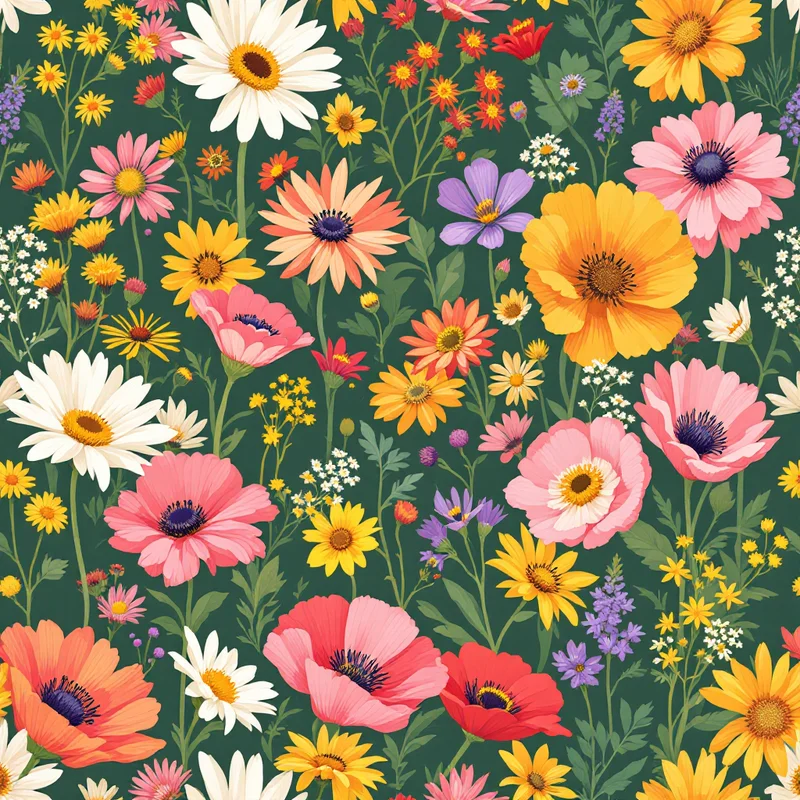
A rose on a wedding invitation and a rose on a sympathy card are the same flower doing two jobs. Flowers arrive in a pattern with meanings attached, and those meanings change with the culture that is looking. Knowing the common associations lets a designer choose flowers deliberately, and avoid the awkward mismatch.
One caution first. Victorian "language of flowers" books made meanings fashionable, but the published lists disagreed with each other. What follows are widely recognized associations, not decoder rings.
Europe and the Western tradition
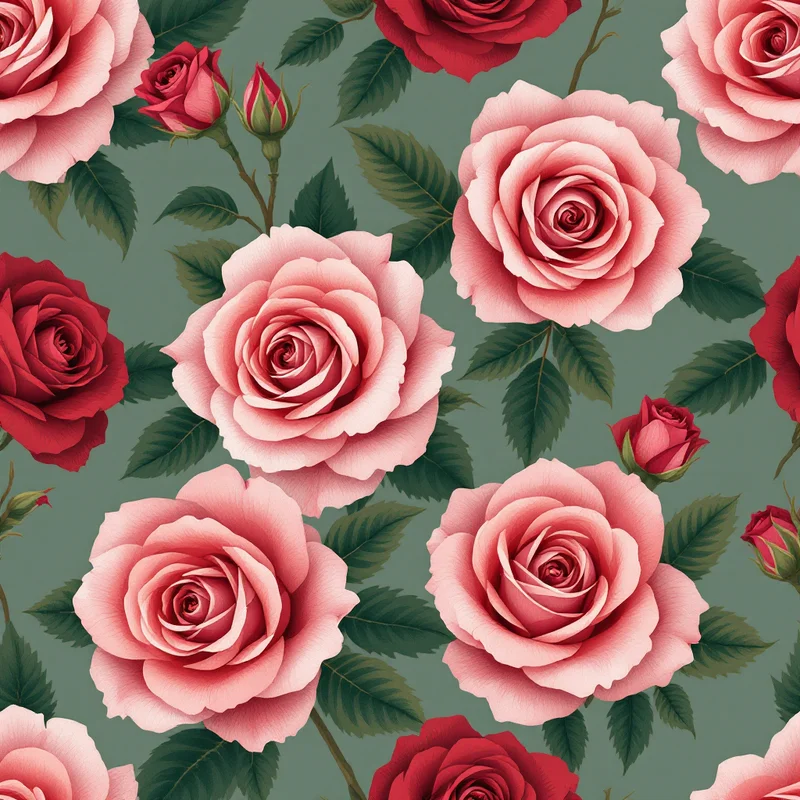
Rose. Love and romance, a link that goes back to the Greek and Roman goddesses of love. England's Tudor rose combines the red rose of Lancaster and the white rose of York, so the rose also carries a political history there. See rose patterns.
Lily. In Christian art, the white lily stands for purity and is closely tied to the Virgin Mary.
Poppy. Remembrance of those who died in war in many countries, tied to the First World War poem "In Flanders Fields." A red poppy print can read as solemn.
Forget-me-not. Remembrance and faithful love, as the name suggests.
Tulip. Central to Ottoman art and gardens, and to Dutch trade, including the speculative tulip mania of the 1630s.
Sunflower. A national symbol of Ukraine, and in wider use a sign of warmth and summer.
East Asia
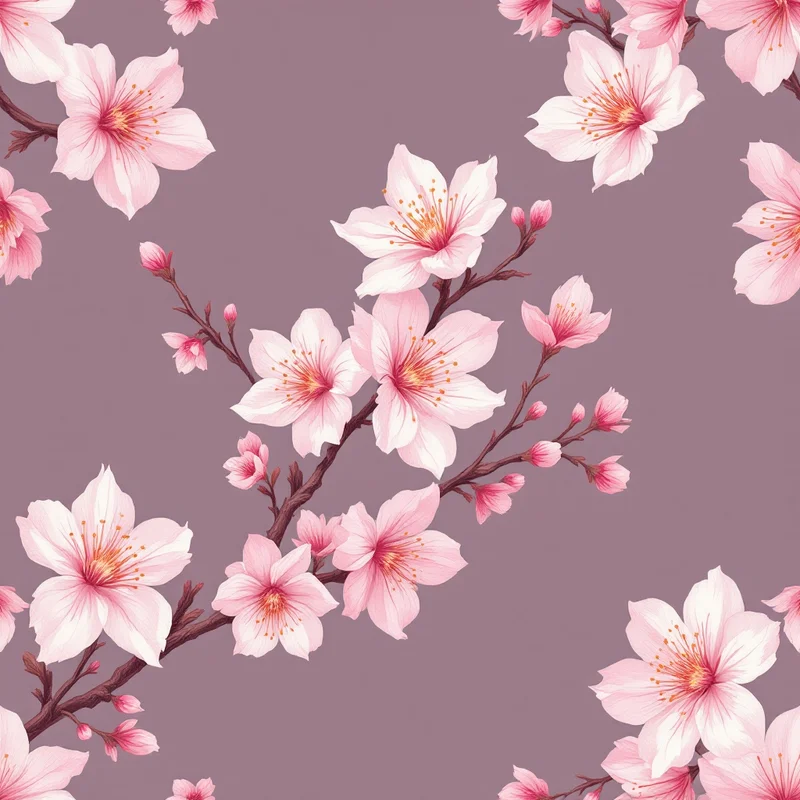
Cherry blossom. In Japan, cherry blossoms stand for the beauty of fleeting moments, and families gather for hanami, blossom viewing, each spring. They suit seasonal and gifting products. Browse cherry blossom patterns.
Chrysanthemum. Japan's imperial seal is a chrysanthemum. In China it is one of the Four Gentlemen, with plum blossom, orchid and bamboo, linked to endurance and refinement. In France, Italy and Poland, however, chrysanthemums are tied to funerals and All Saints' Day.
Peony. In China the peony stands for wealth, honor and prosperity, and is often called the king of flowers. It is a favorite for weddings and celebrations.
Plum blossom. It flowers in late winter, so it stands for resilience.
South Asia, Egypt and the Buddhist world
Lotus. In Hindu and Buddhist traditions the lotus signals purity and spiritual awakening, because it rises clean from muddy water. It is India's national flower. In ancient Egypt the blue lotus was tied to the sun and rebirth, since it opens by day and closes at night. Because of its sacred role, keep lotus imagery respectful, and avoid placing it on disposable or demeaning items. See lotus patterns.
Marigold. In India, marigold garlands are used in worship and at weddings.
Mexico, Hawaii and the Americas
Marigold (cempasúchil). In Mexico, marigolds mark Day of the Dead altars and are thought to guide spirits home with their color and scent.
Hibiscus. Closely tied to Hawaii, where the yellow hibiscus is the state flower.
Quick reference
| Flower | Common association | Watch out for |
|---|---|---|
| Rose | Love, romance | Color changes tone |
| Lily | Purity | Strong religious tie |
| Poppy | Remembrance | Reads solemn |
| Cherry blossom | Fleeting beauty | Seasonal, Japanese cultural context |
| Chrysanthemum | Longevity in China, imperial in Japan | Funerals in parts of Europe |
| Peony | Wealth, honor | Celebratory in China |
| Lotus | Purity, rebirth | Sacred in several faiths |
| Marigold | Worship, remembrance | Day of the Dead context in Mexico |
Using meanings in design
- 1Match flower to occasion. Roses and peonies suit weddings. Poppies and forget-me-nots suit remembrance. Sunflowers and daisies suit warm, casual products.
- 2Check the market. If a collection is going into stores in several countries, check each flower's local associations before you commit.
- 3Mix with care. A bouquet is a sentence. Pair flowers whose meanings agree, such as roses and peonies for celebration.
- 4Respect sacred imagery. Lotus, marigold garlands and chrysanthemum seals have religious or imperial associations in their home cultures.
- 5Do not overclaim. If you cannot source a meaning, leave it off the product copy.
For symbols beyond flowers, pattern symbolism around the world covers shapes, animals and color. For a design-trade look at wedding florals, see wedding pattern design trends. Browse floral patterns when you are ready to pick a bloom.
If you want to build a collection around one flower, Describe It in Pattern Weaver lets you write a prompt in your own words, and each pattern comes back as a seamless tile in about 20 seconds.
Explore related pattern styles