
Most pattern names are travel souvenirs. A teardrop motif from Persia carries the name of a Scottish town, a checked cotton carries a Malay word, and a fabric once sold in a London horse market lent its name to a check. Knowing the sources makes you a more accurate namer of collections, and it makes it harder to confuse a pattern with its look-alikes.
Named for places
| Name | Place | What happened |
|---|---|---|
| Paisley | Paisley, Scotland | Mills there wove shawls with the teardrop motif in the 1800s, imitating Kashmir shawls |
| Damask | Damascus, Syria | The figured, reversible weave was long associated with Damascus |
| Calico | Calicut, India | The port that shipped Indian cotton cloth to Europe |
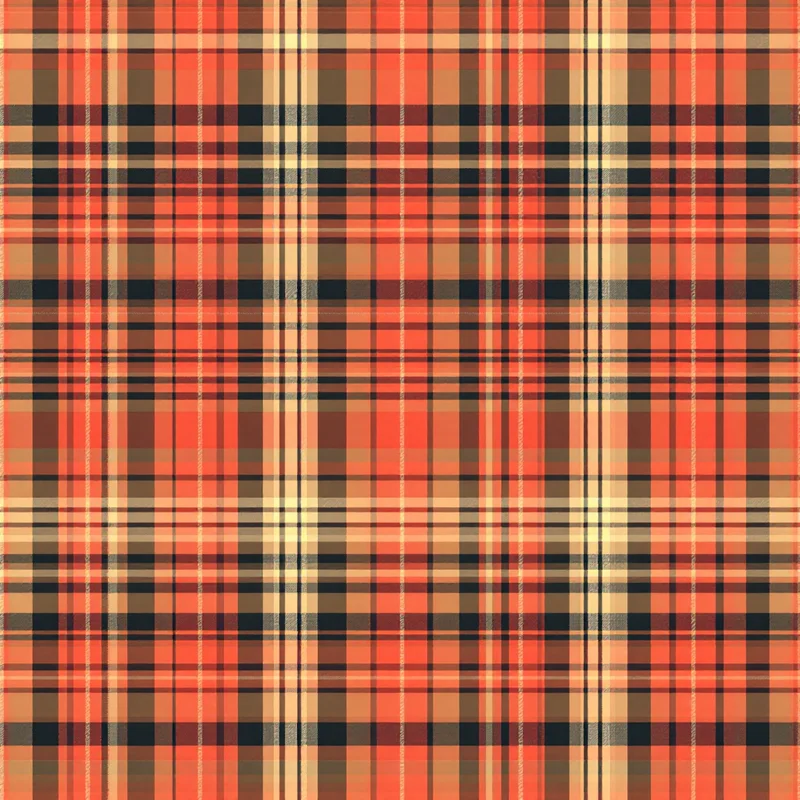
| Madras | Madras (now Chennai), India | A lightweight plaid cotton associated with the city |
| Argyle | Argyll, Scotland | Taken from the tartan of the Campbells of Argyll |
| Fair Isle | Fair Isle, Shetland | The stranded colorwork knitted on the island |
| Toile de Jouy | Jouy-en-Josas, France | A printed cotton factory opened there in 1760 |
A note on paisley: the motif is not Scottish. It comes from Persia and India, and Paisley became the name because its mills were so successful at producing it. The paisley guide covers the motif's history, and the damask and argyle guides cover their patterns.
Named for what they look like
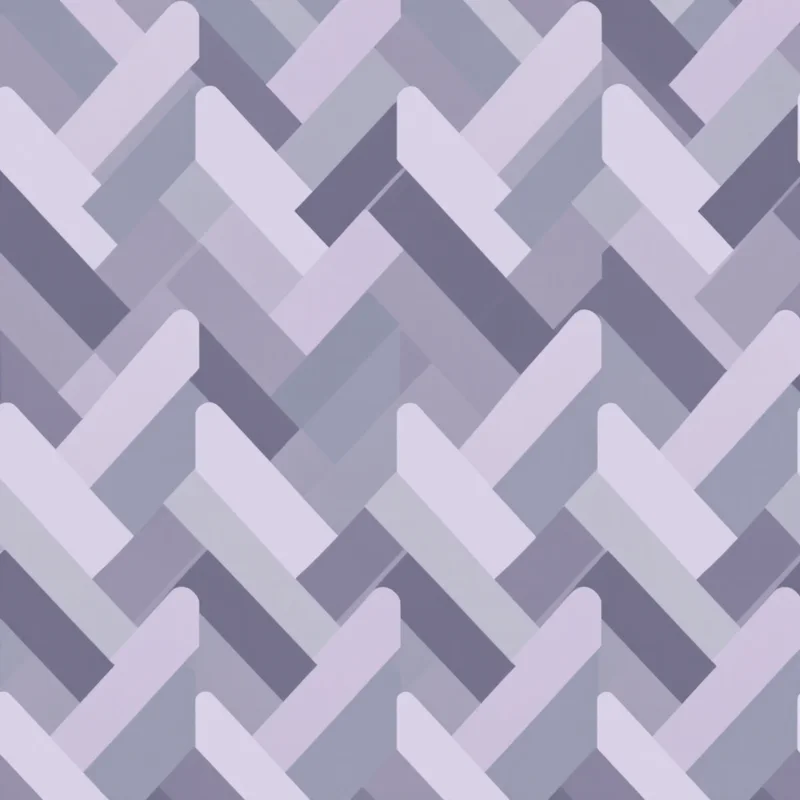
- Herringbone. The V shapes look like the bones of a herring.
- Houndstooth. Pointed, broken check shapes like a hound's teeth, also called dogtooth.
- Chevron. From the French word for rafter, the V-shaped beams of a roof.
- Quatrefoil. From French for four leaves, a four-lobed shape.
- Pinstripe. A line as fine as a pin.
- Tattersall. A check of fine lines in two colors, named in the usual account for Tattersalls, the London horse market founded in 1766, where horse blankets in this check were used.
The visual names are the easiest ones to remember, and they also tell you how to draw them: break the check, offset the V, add the fourth lobe.
Words that arrived along trade routes
| Word | From | Meaning there |
|---|---|---|
| Gingham | Malay, through Dutch | Striped |
| Chintz | Hindi | Spotted or variegated |
| Ikat | Malay and Indonesian | To tie or bind |
| Seersucker | Persian, through Hindi | Milk and sugar |
| Bandana | Hindi | Tying, from the tie-dye technique |
Gingham. The word began as a striped cotton and later settled on the checked version. See the gingham design guide.
Chintz and calico. Both come from Indian cotton, and both left India as fashionable imports. Their later development in Europe is told in types of vintage floral patterns.
Ikat. The name describes the technique: threads are tied in bundles before dyeing, then woven, which gives the blurred edge.
Seersucker. The Persian words for milk and sugar, an image of the smooth and bumpy stripes together.
Bandana. From a Hindi word relating to tying, as the original cloths were tie-dyed.
Named for people, things and accidents
- Jacquard. Joseph Marie Jacquard developed the loom that controls individual threads, in the early 1800s, and the word now describes any complex woven design.
- Polka dot. Named in the 19th century for the polka, a popular dance. The dots and the dance have no other connection.
- Terrazzo. Italian for terrace, the name given to the chip-and-cement flooring that began in Italy.
- Memphis. The design group formed in Milan in 1981, and in the usual account took its name from a Bob Dylan song playing at an early meeting.
- Tweed. The usual account is that the Scots word tweel, meaning twill, was misread as tweed, helped along by association with the River Tweed.
- Plaid. From the Scottish Gaelic word for a blanket. In Scotland, a plaid is a length of cloth worn over the shoulder, while in North America it names the pattern. All tartans are plaids in the American sense, and not all plaids are tartans.
Why names matter in practice
- 1Search terms. Buyers search for "damask" or "houndstooth," not for a description of the weave. The right name is the right keyword.
- 2Accuracy. Calling any teardrop "paisley" is fine. Calling any Scottish-looking check "tartan" is not, since tartans are registered sets for specific clans and districts.
- 3Collection names. A collection named after a real origin, such as a Fair Isle band or an Argyll diamond, sounds more convincing than a made-up label.
For a broader map of the vocabulary, the types of patterns guide sorts every major pattern into families.
If you want to try a heritage pattern with your own twist, Browse Styles in Pattern Weaver lets you pick from 44 categories and 5,700+ styles.
Explore related pattern styles