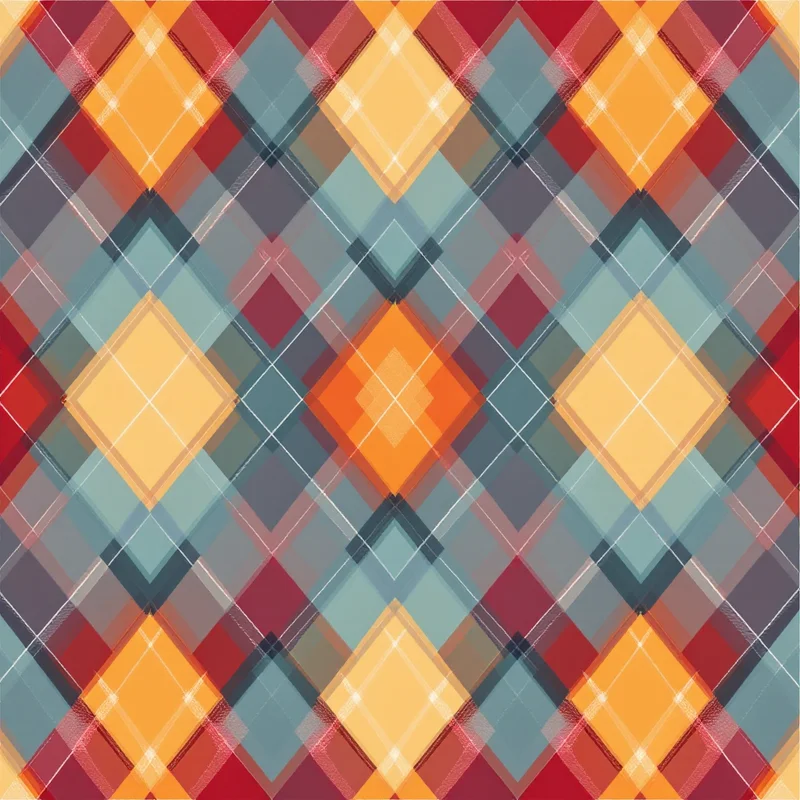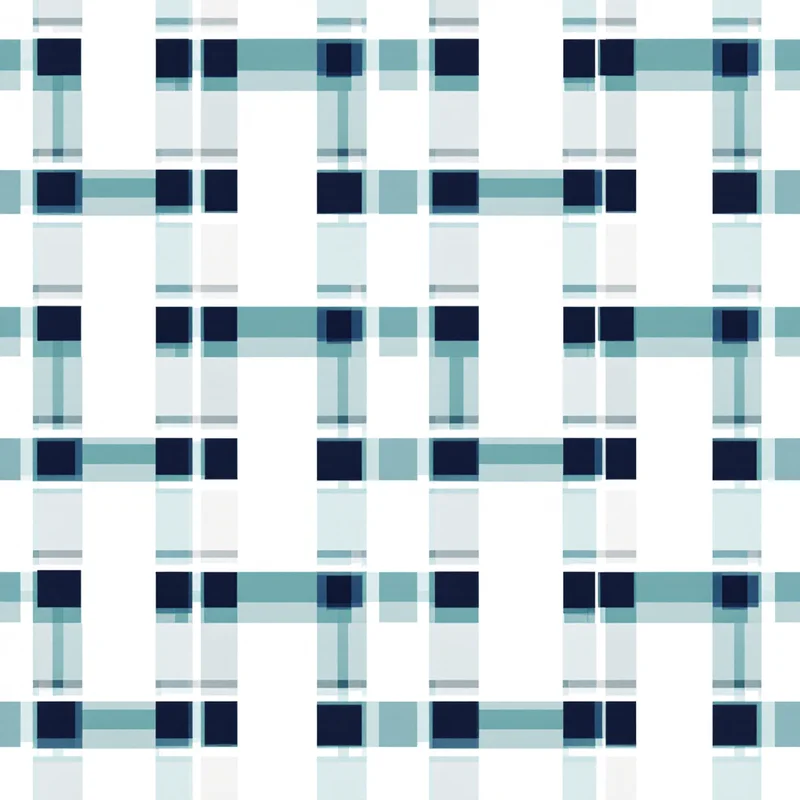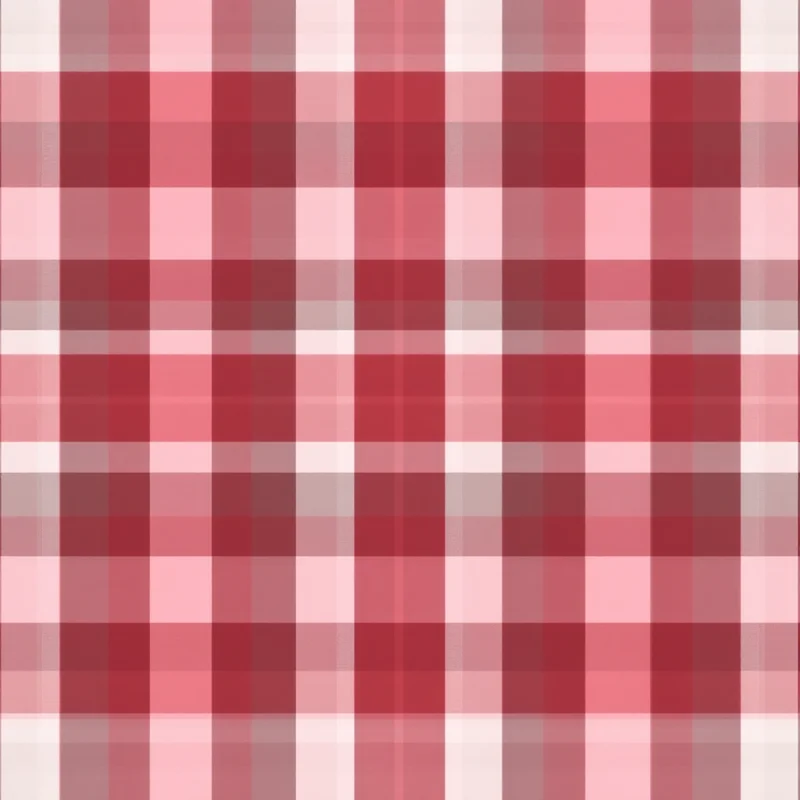
Gingham is one of the most reliable commercial pattern vocabularies in surface design. The simple two-colour check pattern — alternating equal-sized squares of white and a single colour, with intermediate squares produced by the overlap of warp and weft threads — has anchored picnic cloths, summer shirts, kitchen textiles, country-aesthetic interiors and increasingly contemporary fashion across many decades. The pattern is simple enough to read instantly and structured enough to support significant variation through scale, palette and contextual application.
Understanding gingham structurally — how the three-tone optical effect emerges from the two-colour weave, why scale dramatically affects character, what palette and proportional choices produce successful contemporary designs — provides the foundation for using this vocabulary effectively in contemporary commercial work.
The Structural Anatomy
True gingham emerges from a specific weave structure. The fabric uses two colours of thread — typically white and a single contrasting colour such as red, blue, green or black — woven in alternating equal-width stripes in both warp and weft directions. The result is a checked pattern with three visible tones: areas where white warp and white weft overlap appear pure white; areas where coloured warp and coloured weft overlap appear in the full colour; areas where one colour and white intersect appear in an intermediate tone produced by the optical mixing of the two threads.
This three-tone optical structure is essential to authentic gingham character. Designs that use only two flat colours without the intermediate mixing tone read as basic checkered patterns rather than as gingham. The intermediate tone provides the visual softness and the woven character that makes gingham distinctive.
The proportions of squares are also essential. True gingham uses equal-width stripes in both directions, producing perfectly square checks. Designs that use rectangular checks (taller than wide, or wider than tall) shift away from gingham toward other check patterns. The equal proportions of true gingham give the pattern its characteristic visual regularity.
The colour relationships within gingham follow simple but specific conventions. The two original thread colours are typically one strong colour and white, with the intermediate mixed tone falling at approximately fifty per cent value between the two. The relative balance of the two colours across the surface produces consistent visual rhythm.
Scale Strategy
Gingham scale dramatically affects the pattern's character and commercial application. Micro-gingham — individual checks roughly 2 to 4 millimetres — reads as a textural fabric pattern at typical viewing distances and approaches the visual character of a heathered or melanged textile. This scale is traditional for fine men's shirting and contemporary refined fabric applications.
Small gingham — individual checks roughly 5 to 10 millimetres — reads as a distinct gingham pattern while remaining textural rather than statement. This scale is traditional for casual shirting, summer dresses, kitchen textiles and various everyday applications.
Medium gingham — individual checks roughly 12 to 25 millimetres — reads as a recognisable decorative gingham pattern. This scale is typical for casual home decor textiles, contemporary fashion applications, picnic accessories and gift wrap.
Large gingham — individual checks roughly 30 to 60 millimetres — reads as a statement pattern with explicit gingham character. This scale is typical for contemporary statement fashion, oversized accessories, casual home decor statement pieces and contemporary wallpaper applications.
Oversized gingham — individual checks above 80 millimetres — reads as a graphic interpretation of gingham, often used in contemporary wallpaper, statement upholstery and design-forward home decor where the gingham character serves as cultural reference for distinctive visual statement.
Palette Strategy
The traditional gingham palette of a single saturated colour with white provides the foundational vocabulary and the strongest commercial reliability. Red gingham reads as classic picnic and country aesthetic. Blue gingham reads as casual coastal and preppy aesthetic. Green gingham reads as gentle country garden aesthetic. Black gingham reads as modern graphic aesthetic. Pink gingham reads as feminine country aesthetic.
The specific saturated colour affects the pattern's character significantly. Bright red gingham reads as picnic-themed; deep burgundy gingham reads as autumn-themed and slightly more sophisticated. Bright sky-blue gingham reads as summer casual; deep navy gingham reads as preppy or contemporary sophisticated.
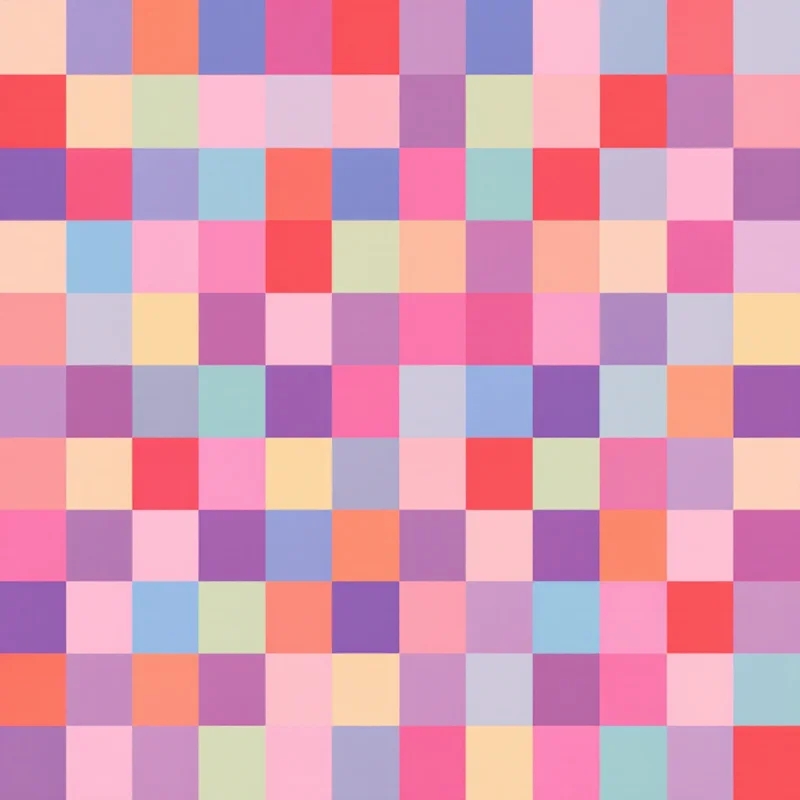
Contemporary fashion has expanded the gingham palette substantially. Pastel gingham — soft pink, sage, lavender, peach with white — produces patterns with feminine and contemporary character that work well in summer fashion and contemporary home decor. Earth-tone gingham — terracotta, ochre, sage with cream rather than pure white — produces patterns with grounded autumnal character that work in seasonal collections.
Monochrome gingham variations — grey with white, charcoal with white — provide neutral options that coordinate easily with surrounding palette choices and work particularly well in contemporary home decor and stationery applications.
The intermediate mixed tone in each palette should be considered. For black gingham, the intermediate tone is a mid-grey. For red gingham, the intermediate is a soft pink. For navy gingham, the intermediate is a dusty light blue. The intermediate tone significantly affects the overall visual character of the design, and designers should make deliberate choices about how to render this tone rather than treating it as automatic.
Contemporary Applications
Fashion textiles use gingham across all seasons and gender positioning. Casual summer shirts in red, blue or green gingham remain perennial sellers. Contemporary womenswear uses gingham in dresses, blouses, skirts and accessories in palette variations spanning traditional and contemporary. Children's wear has used gingham extensively for decades and continues to support significant volume in the category.
Home decor textiles use gingham across throw pillows, table linens, kitchen textiles, drapery and bedding in both traditional country positioning and contemporary applications. The category spans from literal country-aesthetic gingham through contemporary sophisticated palette variations to design-forward oversized statement applications.
Kitchen textiles — tea towels, aprons, oven mitts, table linens — use gingham as a foundational vocabulary. The pattern's strong association with country kitchen aesthetic supports consistent commercial performance in this category.
Stationery and paper goods use gingham in casual and country-aesthetic positioning. Gift wrap, greeting cards and journals in gingham have strong commercial presence in spring and summer seasonal collections and in country aesthetic positioning year-round.
Wallpaper applications include both traditional small-pattern gingham wallpaper and contemporary oversized statement applications. The category has grown in recent years as design-forward homeowners use gingham wallpaper for accent walls and statement applications.
Common Pitfalls
Several pitfalls recur in contemporary gingham design. The first is omitting the intermediate mixed tone. Designs that use only two flat colours produce basic checkered patterns rather than gingham, and the resulting pattern lacks the optical softness and woven character that gives gingham its distinctive appeal. Including the intermediate tone — even as a digital simulation of the woven optical effect — is essential for authentic gingham character.
The second pitfall is incorrect proportions. True gingham requires equal-width stripes in both directions, producing perfectly square checks. Designs with rectangular checks read as different check patterns rather than as gingham. Designers should verify the proportions at the production output to ensure squares remain square through any scaling operations.
The third pitfall is poor scale choice for application. Small-scale gingham on a large-format wallpaper application reads as visual noise; oversized gingham on a small accessory reads as awkward. Designers should match scale to application carefully.
The fourth pitfall is excessive contrast between the two field colours. Very high contrast between the colour and white can read as visually aggressive at certain scales and applications. Slightly softer contrast often produces patterns with broader commercial appeal, particularly in home decor and contemporary fashion contexts.
The fifth pitfall is misalignment of horizontal and vertical stripes. The checks must align precisely at the intersections for the pattern to read as proper gingham. Designs with even slight misalignment read as visually unsettled and produce patterns that look amateurish even when other elements are correctly handled.
Practical Production Notes
For file delivery, gingham can be delivered as either CMYK or RGB depending on the production process. The intermediate mixed tone should be specified as a separate colour rather than as a digital effect, so the production house can verify the correct tone in proofing.
For large-scale and oversized gingham applications, file resolution must accommodate the printing process and viewing distance. A 300 DPI file at the actual print size is reliable for most applications.
Gingham is a pattern vocabulary that rewards designers who respect its specific structural conventions. The intermediate tone, the equal proportions, the consistent rhythm and the considered palette all contribute to designs that read as proper gingham rather than as generic check patterns. The reward for this attention is access to one of the most commercially reliable vocabularies in surface pattern design — a pattern that works across centuries of cultural tradition while remaining current in contemporary applications.
Explore related pattern styles
Patterns for