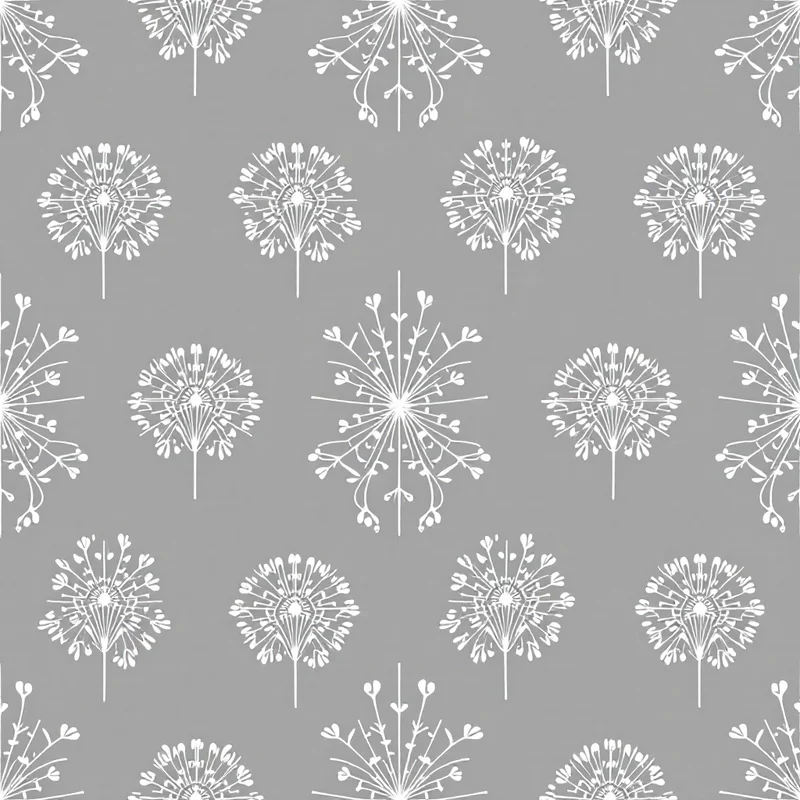
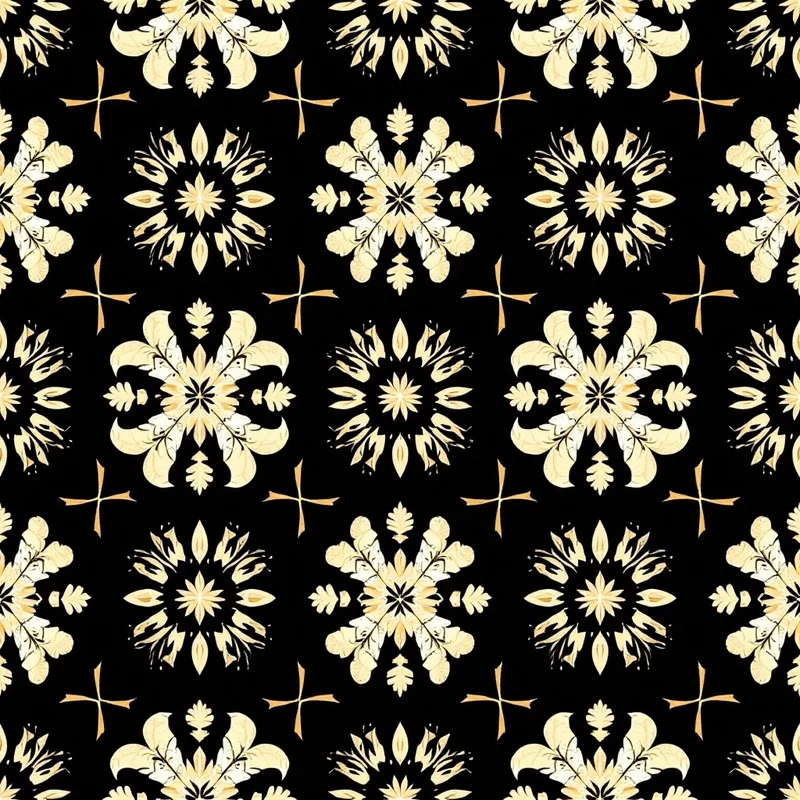
If you are reading this, you have probably already googled three or four variations of "how to become a textile designer" and waded through pages that read like they were written by someone who has never met a print stylist or seen a strike-off. This guide is different. It is written for people who are seriously considering the work — design students about to commit to a major, illustrators eyeing surface design, graphic designers tired of pixel-pushing in adland, and self-taught makers trying to figure out if a portfolio is enough.
The good news: it has never been easier to enter the field. The hard news: it has never been more competitive, and the role itself has shifted significantly in the past 24 months. AI did not kill the textile designer. It killed the manual tile-builder. There is a difference, and understanding it is the first thing you need to internalize before you spend a single euro on a degree or a Wacom tablet.
What a textile designer actually does day-to-day
Strip away the Instagram aesthetic of paint-stained aprons and sketchbooks in cafés. Here is what the job actually looks like.
A working textile design practitioner creates surface artwork that gets printed, woven, knitted, or embroidered onto fabric. That fabric becomes apparel, upholstery, bedding, wallpaper, scarves, swimwear, packaging — anywhere a repeating pattern lives on a surface. The deliverable is rarely "art." It is a repeat-ready file, sized to a specific cylinder or rotary screen, in a specific colorway count, with separations the mill can actually print.
Day-to-day, depending on your seat, you are doing some mix of:
- Researching trend direction (WGSN, trade shows like Première Vision, Heimtextil, NY Now, plus competitive shopping)
- Sketching motifs by hand or in Procreate
- Building repeats in Illustrator or Photoshop, or in industrial software like Pointcarre or NedGraphics
- Cleaning artwork into separations for printing (CMYK conversions, channel separations, registration marks)
- Coordinating colorways — usually 3 to 8 alternates per design
- Sending CADs to mills, reviewing strike-offs, correcting color drift
- Building presentation decks for buyers
- Filing artwork into the brand's library with the correct naming convention
The romantic version sells "I sketch flowers." The real version is "I build a 12-colorway range for the SS27 swim line, deliver print-ready TIFFs in 36cm and 64cm repeat sizes, and turn around buyer revisions in 48 hours." Both can coexist, but if you only want the first one you will struggle.
The three career modes
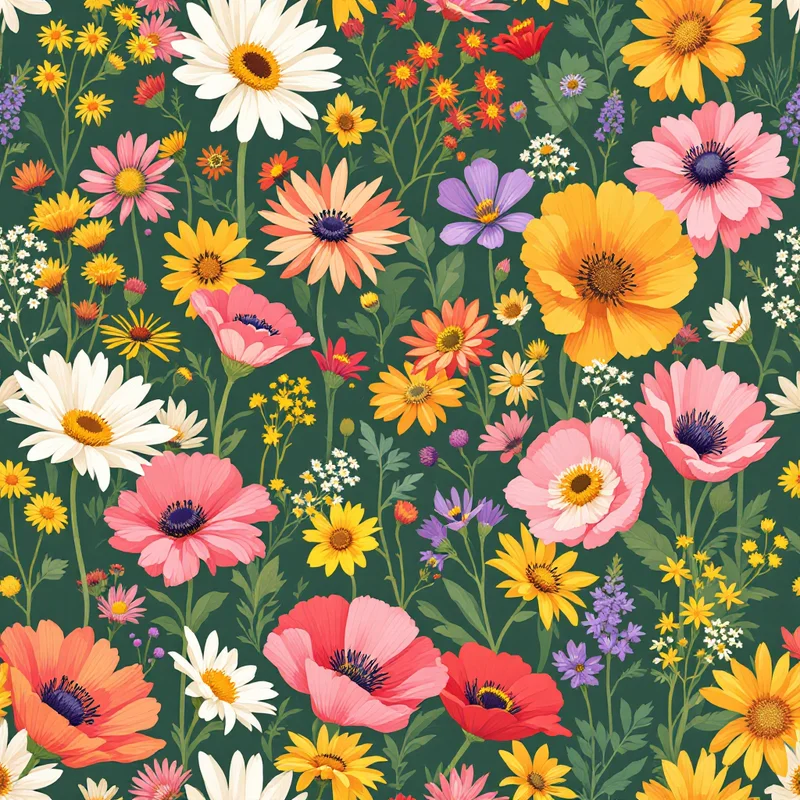
Almost every working textile designer falls into one of three modes. Pick the one that matches your temperament before you pick a school.
In-house at a brand or mill
Most in-house textile design jobs place you as a salaried employee on a print team. You report to a print director or design manager. You work to seasonal calendars (SS and AW deliveries), you do not own your artwork (the brand does), and your output is steady and high-volume. Brands like Zara, H&M, Anthropologie, Liberty, and any large home-textiles brand employ in-house teams. Mills — Italian silk mills, Indian print houses, Turkish home-textile mills — also hire designers directly.
Salary range, mid-career, in major markets: 45–75k EUR/USD. Senior print director at a large brand: 90–140k. The work is consistent, the brief is given to you, and you learn faster than anywhere else because you are surrounded by people who have been doing it for 15+ years.
Freelance studio designer
You sell artwork piece by piece, either directly to brands or through agents and studios (Patternbank, Pattern Observer, the bigger London and New York agents). A design sells for anywhere between 250 and 1,500 EUR depending on exclusivity and end-use. You manage your own taxes, your own pipeline, and your own taste. Income is lumpy. Senior freelancers in textile design clear six figures, but it takes 3–5 years of consistent output and relationship-building.
Indie / POD / direct-to-consumer
You sell your own designs on Spoonflower, Society6, Redbubble, Etsy, or through your own Shopify. You retain ownership, you take print royalties, and you build a brand audience. Margins on individual sales are small (Spoonflower royalties hover around 10%), so this mode rewards volume and a distinct identity. The upside is you build an asset — a brand, an audience, a back catalog — that compounds over years.
Most working designers blend modes. A common pattern is: 2–4 years in-house to learn the production reality, then go freelance or indie with a real network.
Essential skills
The skills below are non-negotiable. They are what hiring managers and clients test for, explicitly or implicitly.
Drawing
You do not need to draw like John Singer Sargent. You need to draw confidently enough to develop motifs from scratch — florals, geometrics, conversationals, paisley boteh, animal figures. Most working designers are competent rather than brilliant draftspeople, and lean heavily on tracing photographs and reference. That is normal. What is not negotiable is the ability to draw something that does not exist yet, on demand, in a brand's voice.
Color theory and color management
This is where 80% of self-taught designers fall down. You need to understand:
- The difference between additive (RGB) and subtractive (CMYK) color
- Why your screen lies to you about how a print will look
- Pantone TPX, TCX, and TPG systems and when to use which
- Colorway construction — how to build a base colorway and then derive 4–7 alternates that read as a coherent range
- Spot color separation for rotary print (each color becomes a screen)
Repeat construction
A repeat is the mathematical core of surface pattern design. A pattern that does not tile cleanly is unusable for production. You need fluency in straight repeats, half-drop, brick, mirror, and tossed (random-looking but deliberately constructed) layouts. You need to understand repeat size — what fits a 36cm rotary screen versus a 64cm flat-bed versus an unrestricted digital print.
Software literacy
The current production stack is covered below in detail. At minimum you need Illustrator for vector motifs and Photoshop for raster artwork and separations.
Print production basics
Know the difference between rotary print, flat-bed screen print, sublimation, pigment print, reactive print, and digital direct-to-fabric. Each one imposes constraints — color count, repeat size, fineness of line, registration tolerance. A designer who hands a mill a 14-color hand-drawn artwork without flattening it is a designer who gets called once.
Educational paths
There is no single right path. There are several legitimate ones.
The traditional BA / MA route
A degree in textile design from a serious school is a genuine accelerator if you can afford it. The schools that consistently produce hired graduates:
- Royal College of Art (RCA), London — MA only, the gold standard for European print and woven
- Central Saint Martins, London — BA and MA, strong in fashion print
- Chelsea College of Arts, London — BA in Textile Design, strong technical foundation
- Fashion Institute of Technology (FIT), New York — BFA in Textile/Surface Design, very industry-connected
- Rhode Island School of Design (RISD) — BFA in Textiles, broader fine-art lens
- Pratt Institute, New York — strong in fashion print and surface
- Parsons — BFA in Fashion Design with textile focus
- Polimoda and Istituto Marangoni, Italy — strong for silk and luxury markets
The value of these programs is not the diploma. It is the studio time, the critique culture, the access to print labs and weaving looms, and the industry visits. RCA and CSM graduates get interviewed at brands they would otherwise never reach. Whether that is worth 60k of debt is a personal calculation.
Online and short courses
Pattern Observer, Make It in Design, Domestika, Skillshare, and the Bonnie Christine courses all have legitimate value. They are not a degree substitute, but for someone changing careers from graphic design or illustration, they fill specific gaps fast — particularly repeat construction and the business side. Pattern Observer's "Textile Design Lab" and Bonnie Christine's "Immersion" are the two I hear cited most often by working freelancers.
Self-taught with a strong portfolio
Entirely viable. The market does not care where you went to school if your portfolio sells. The downside of self-taught is that you skip the cultural-historical foundation — the difference between a Pucci print and a Liberty print, the lineage of Indian block printing, the woven heritage of Como and Lyon — and that lack of literacy shows up in the work. Compensate by reading. Susan Meller's "Textile Designs," Drusilla Cole's "Patterns," and "The Textile Reader" from Bloomsbury are starting points.
The software stack textile designers actually use
This list reflects the textile design software that working studios run in 2026, not what tutorials from 2018 recommend.
Adobe Illustrator — still the backbone for vector repeats, especially geometrics, paisley boteh, and anything with crisp edges. The pattern preview panel and the recolor artwork tool are the daily-driver features.
Adobe Photoshop — raster artwork, watercolor florals, channel separations for print, color correction on scanned-in work. The "Pattern Preview" mode (View → Pattern Preview, added in 2021) replaced the old offset-filter workflow.
Procreate on iPad — where most hand-drawn motif development happens now. Roughly 80% of working print designers I know start in Procreate before moving the file to Photoshop or Illustrator for repeat construction.
Pointcarre and NedGraphics — industrial-grade textile CAD. You will only touch these if you work in-house at a mill or large weaving house. They handle jacquard, dobby, knit structures, and complex color reduction. If you see a job posting that requires them and you do not have access, the mill will train you.
AI pattern generation tools — this is where the role has shifted most. The current generation of tools, including the AI pattern generator we make, are used by working designers as a creative-direction layer. You compile a brief — style, motifs, palette, density — and the tool produces seamless tile variations in seconds. The designer then curates, adjusts, recolors, and finalizes for production. This is genuinely faster than building every variation manually, and it is now standard practice in fast-fashion print teams.
Color management — X-Rite i1Display for monitor calibration, a Pantone Color Bridge guide for spot-to-process translation. Skipping this is the most common mistake new designers make.
Building a portfolio that actually books work
The single biggest mistake aspiring textile designers make is presenting individual designs instead of collections inside a working textile design portfolio. Buyers do not buy designs. They buy stories.
A collection is 6–12 designs that share a coherent palette, motif family, mood, and end-use. For example, a "Coastal Botanicals" collection might include a hero floral, a small-scale coordinating ditsy, a stripe, a geometric blender, and a textured plain. All in the same 5–7 color palette, all sized appropriately for apparel or home.
When a buyer at a home-textiles brand opens your portfolio and sees three collections like that, they immediately know they could place an entire SS27 bedding range from your work. That is what gets you hired.
Practical advice:
- 1Build three collections, not thirty designs
- 2Show each collection on mockups (a pillow, a dress, a wallpaper roll) — Photoshop mockups or Mockup Editor templates work fine
- 3Include the flat repeat tile alongside the mockup
- 4Show colorways — minimum three per hero print
- 5Caption with end-use ("Apparel — woven cotton — 24cm repeat")
Portfolio platforms: a custom site (Squarespace or Cargo) for the main shopfront, Behance for SEO, Instagram for discovery, and a PDF deck you can email to art directors. Studios like Patternbank, Pattern Observer, and Eye of the Needle review submissions if you want their distribution.
For the production side of getting work onto fabric, our Spoonflower-ready fabric patterns guide covers the file-prep specifics POD requires.
Pricing and income realities
We have written a long piece on pricing pattern designs that goes deep on this, so I will keep it short here.
Rough benchmarks for 2026:
- Single non-exclusive print sale through an agent: 250–500 EUR
- Exclusive print sale to a brand: 500–1,500 EUR
- Repeat development for a large brand on contract: 600–1,200 EUR per artwork
- In-house junior designer: 32–45k EUR/USD
- In-house mid-level: 45–75k
- Senior / print director: 80–140k+
- Indie POD royalties on Spoonflower: typically 100–800 EUR/month after 2 years, much wider distribution at the top
Freelance income takes 18–36 months to stabilize. Plan accordingly.
How AI has shifted the role in 2024–2026
This is the part of the post that did not exist in 2022, and it changes what becoming a textile designer means in practice. The compressed version: AI replaced the manual tile-construction grunt work, not the taste, the brand voice, the production literacy, or the buyer relationships. The longer treatment of what changed and what survived sits in What Is Textile Design? — read that for the full picture.
What it means for a person becoming a textile designer today: your hours-per-design have collapsed, but the bar on point of view has risen. Designers who built their entire offer around manual tile production with no editorial perspective are losing work. Designers who used the time AI freed up to deepen their cultural literacy, their motif vocabulary, and their client relationships are thriving.
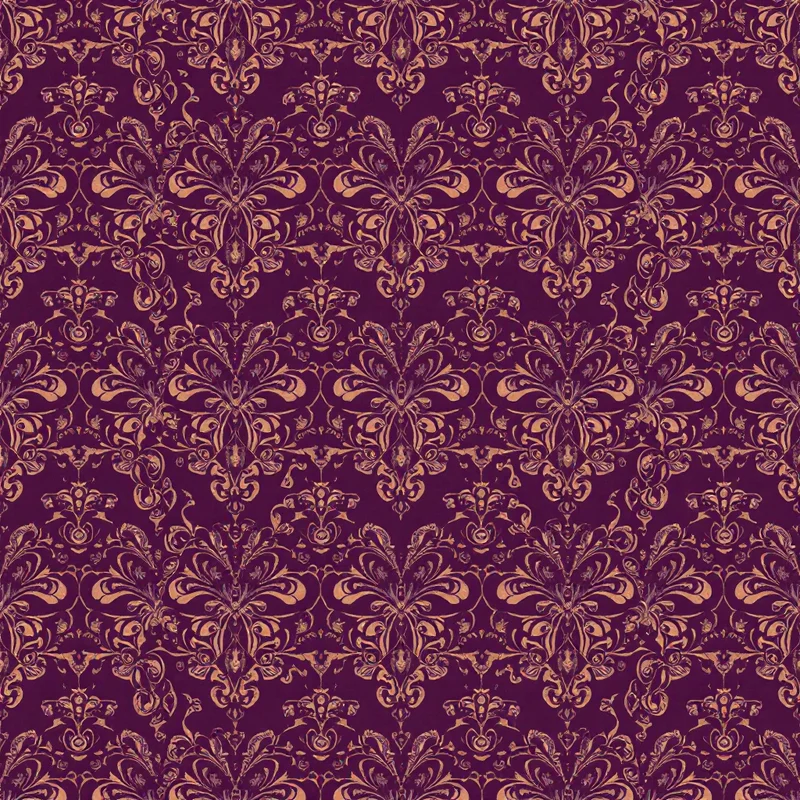
If you want to experience the new workflow firsthand, generate a small collection through a seamless pattern maker — try classic categories like paisley patterns and damask patterns — and then take the output into Photoshop and finish it as if it were going to a mill. That round-trip teaches you more about where AI fits in a working textile designer's day than any career-advice article.
Common pitfalls and what stops people from making it
After watching a lot of careers begin and a fair number stall, these are the patterns I see most.
Pretty motifs, no repeat literacy. Beautiful florals that do not tile. Buyers can spot this in three seconds and put your portfolio down.
No collections. Single designs read as hobby. Six coordinated designs read as professional.
Avoiding the production side. Designers who refuse to learn CMYK separations, repeat sizing, and color management cap themselves at "I sell to Spoonflower" forever.
Ignoring trend research. The best textile designers read trend reports the way traders read Bloomberg. WGSN, Trendstop, Première Vision color reports. If your palette is what looked good to you in 2024, you are already late.
Pricing too low. Underpricing one piece sets your floor for every future buyer at that house. Use the existing benchmarks. Charge them.
Refusing AI tools out of principle. I understand the instinct. It is also a way to make yourself 5x slower than the designer down the street who is using them. The tools are not the threat. The designers who use them well are.
Waiting for permission. The textile designers who make it start submitting to studios, agents, and brands before they feel ready. They build a portfolio in public, take rejections, iterate, and ship the next collection. Six rejections is not a sign to quit. It is sign two of a normal career.
If you take one thing from this guide, take this: the title "textile designer" still means what it has always meant — somebody who makes the pattern on the thing you are wearing or sleeping under. The tools have changed, the timelines have compressed, and AI has reshuffled what is valuable. But the core trade — taste, motif development, color, repeat construction, production literacy, and a point of view — is more in demand than it has been in a decade. Build the skills, build three real collections, and start sending the email.
Explore related pattern styles