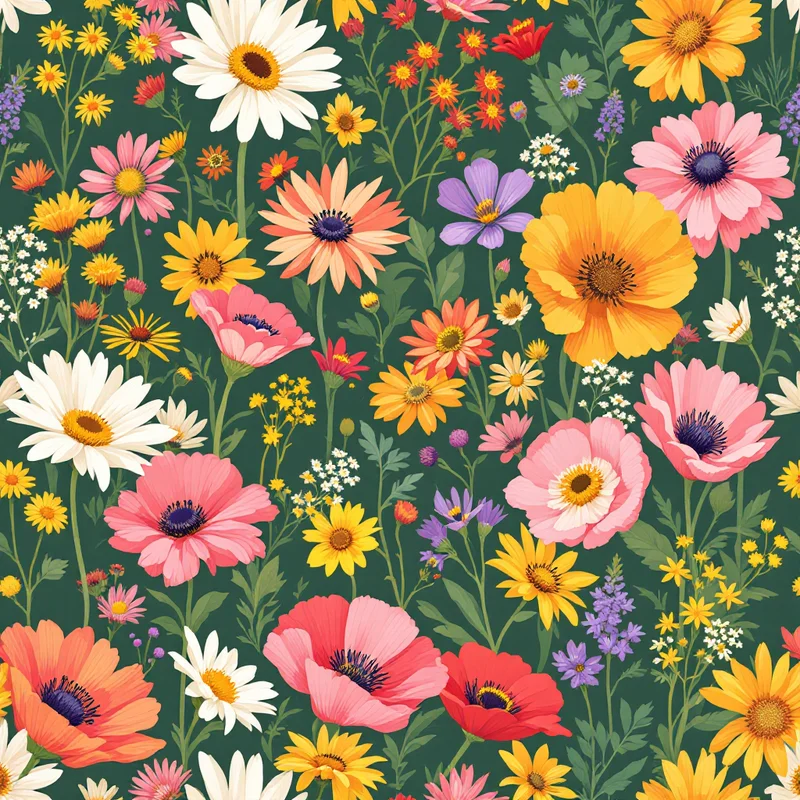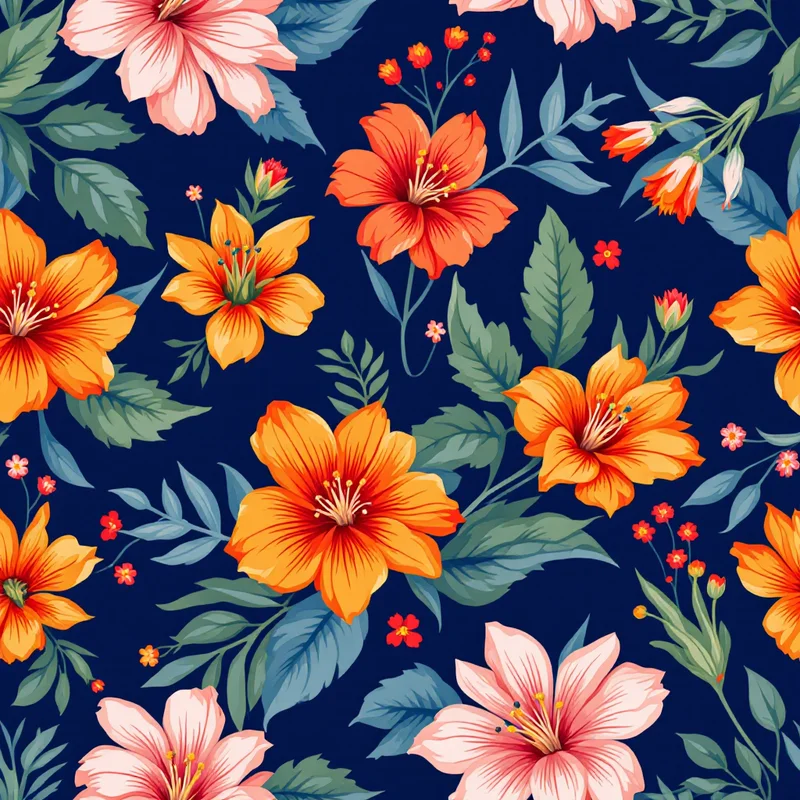
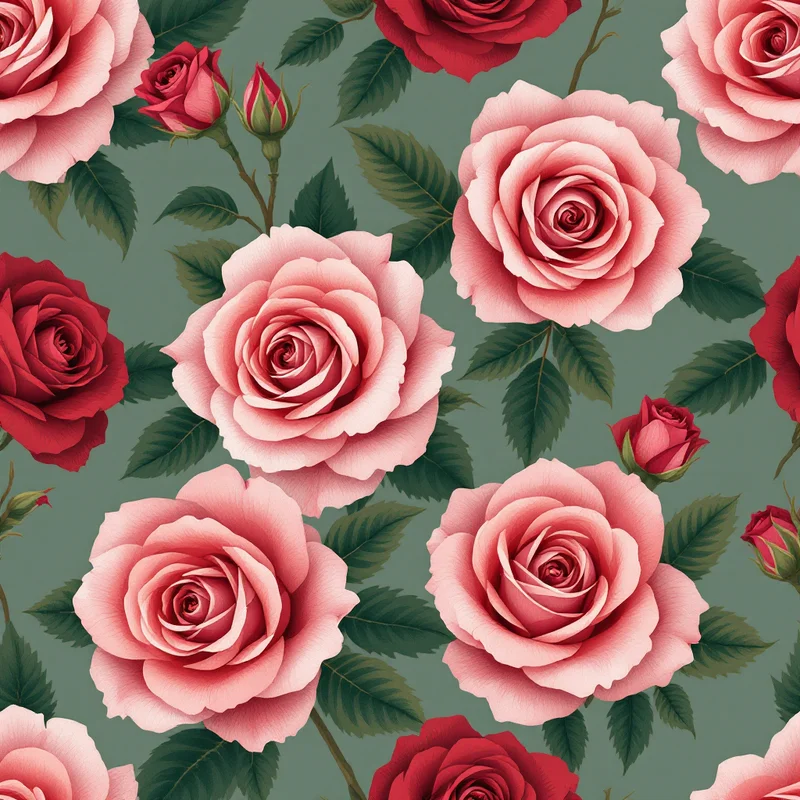
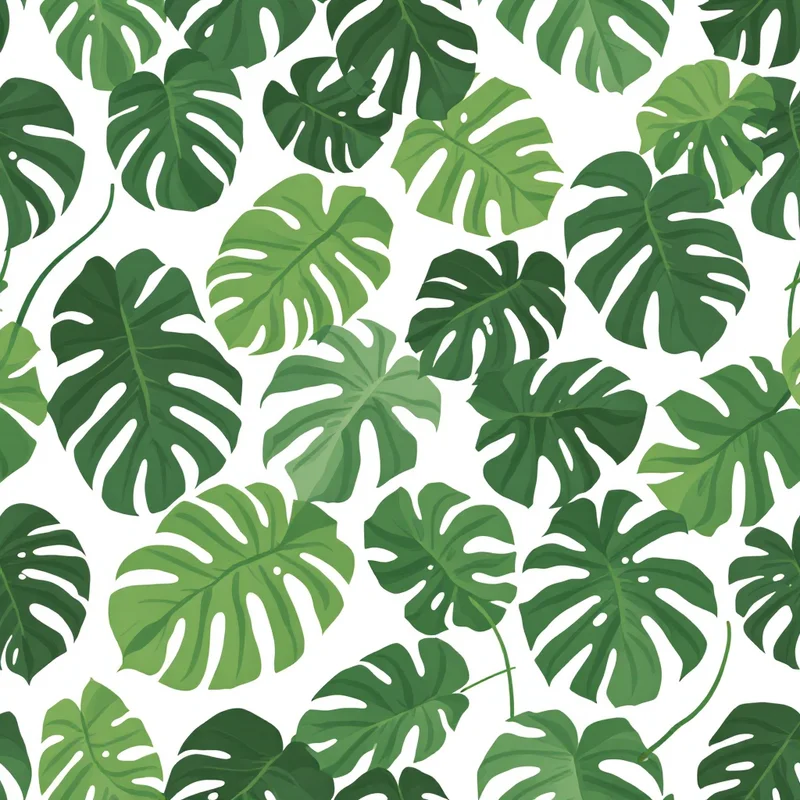
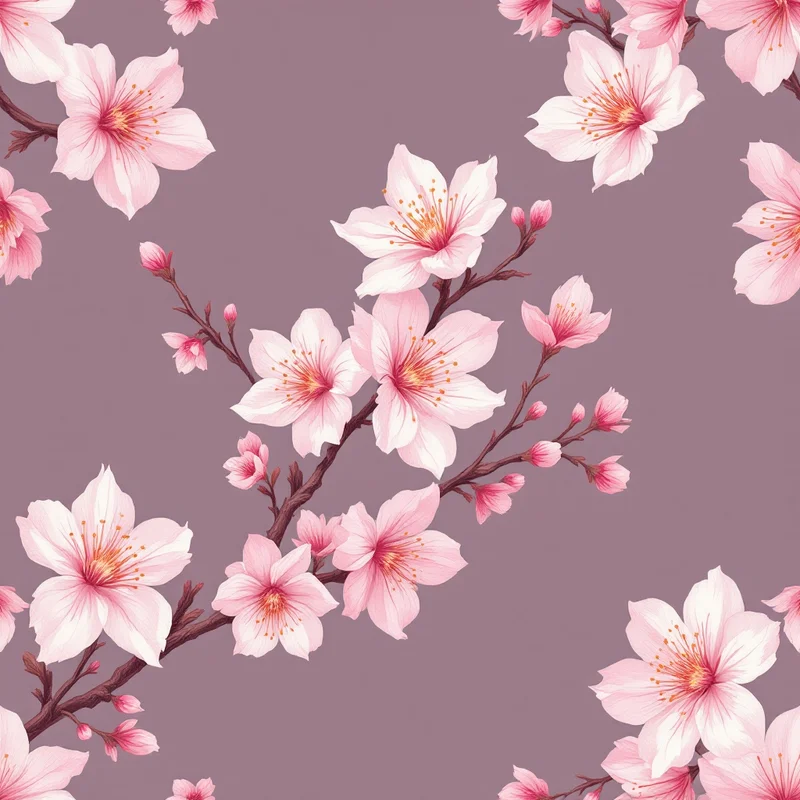
"Tropical" covers a lot of ground. A hibiscus on a 1950s shirt, a single banana leaf on a white wall and a jungle thick enough to hide a jaguar are all tropical, and they have almost nothing in common as designs. Here are eight styles, sorted by how they actually look.
1. Aloha florals
Large, tossed hibiscus, plumeria and monstera in saturated color, often on cotton or rayon. The aloha shirt began in Hawaii in the 1930s, and its prints carry that history, so see the Hawaiian pattern guide before borrowing the label. Drawing is flat and bold with clear outlines. Palette: hibiscus red (#D7263D), palm green (#1E6B4A) and sunny yellow (#F6C026) on navy or cream.
2. Banana leaf and palm
Large leaves in diagonal arrangements, usually with a lot of ground showing. Banana leaves are broad paddles with a strong center rib, and palm fronds are feathered or fan-shaped. These are graphic, architectural and sophisticated, and they work on wallpaper, cushions and swimwear. See hibiscus patterns when you want flowers added.
3. Dense jungle
Layered foliage with almost no ground visible: monstera, ferns, palms and vines overlapping. The compositional idea echoes the jungle paintings of Henri Rousseau around 1900, with leaves stacked in layers and animals peeking out. Use dark grounds (forest green #14352A) and several greens in a range of lightness so the layers separate. Best on wallpaper and statement upholstery.
4. Tonal and monochrome leaves
One color, several values: palm silhouettes in dark green on a lighter green, or sand on cream. Quiet and elegant, and easier to coordinate with other products. A strong choice for hotels, spas and bedding.
5. Tropical fauna
Toucans, parrots, flamingos, butterflies and tropical fish, often paired with leaves and flowers. These are playful and sell well in kids' goods, stationery and summer apparel. Keep birds large enough to be recognized, and use the leaf layer to hide any awkward gaps in the repeat.
6. Tropical fruit
Pineapples, bananas, coconuts, mangoes and papayas, drawn as flat shapes or cross-sections. A fruit-led tropical is brighter and more casual than a flower-led one. The types of fruit patterns guide covers drawing and palette in detail.
7. Line-art tropicals
Thin outlines of leaves and flowers, with little or no fill. They feel contemporary and airy, a good match for minimalist interiors, stationery and tote bags. Draw with a single consistent line weight.
8. Watercolor tropicals
Soft washes of green and pink with visible pigment edges. Gentler than the aloha style, and well suited to wedding goods and baby products. Add paper texture so the washes look real.
How they compare
| Style | Density | Ground | Typical use |
|---|---|---|---|
| Aloha floral | Medium | Navy or cream | Shirts, resort wear |
| Banana leaf and palm | Low | White or pale | Wallpaper, cushions |
| Dense jungle | Very high | Dark green | Wallpaper, upholstery |
| Tonal leaves | Medium | Same hue | Bedding, hotels |
| Fauna | Medium | Light or mid | Kidswear, stationery |
| Line art | Low | White | Totes, stationery |
Scale and layout
- Leaves. Four to twelve inches for wallpaper and curtains, two to five for apparel.
- Flowers. Three to six inches, with the biggest bloom as the focal point.
- Direction. Tropical leaf prints often lean on a diagonal. Check that the tile does not cut a leaf awkwardly at the edge.
- Overlap. Let leaves pass in front of and behind each other, with darker shadow tones underneath. This depth is what separates jungle from a flat scatter.
Common mistakes
- Too many hues. A tropical print can hold a lot of color, but give it a base of two greens and a single flower color.
- Identical leaves. Rotate, flip and resize every leaf so the foliage looks grown, not stamped.
- Awkward cuts at the edge. A leaf sliced by the tile boundary should continue cleanly on the opposite side.
- Flat lighting. Add a darker tone where leaves overlap, even in a simple flat style.
What to read next
The tropical pattern design guide covers history, color and commercial applications, and the leaf patterns guide breaks down leaf shapes in more detail. Browse tropical floral patterns for references.
Pattern Weaver generates each seamless tile in about 20 seconds, and Restyle changes the finish so you can see a monstera design as watercolor, line art or flat color.
Explore related pattern styles