Floral is the single most commercially important pattern family in textile design — it anchors spring collections, bedding lines, and stationery ranges every year without fail — but "floral" covers genuinely distinct sub-styles that behave differently in production and sell to different buyers. Here's the actual breakdown.
Ditsy florals
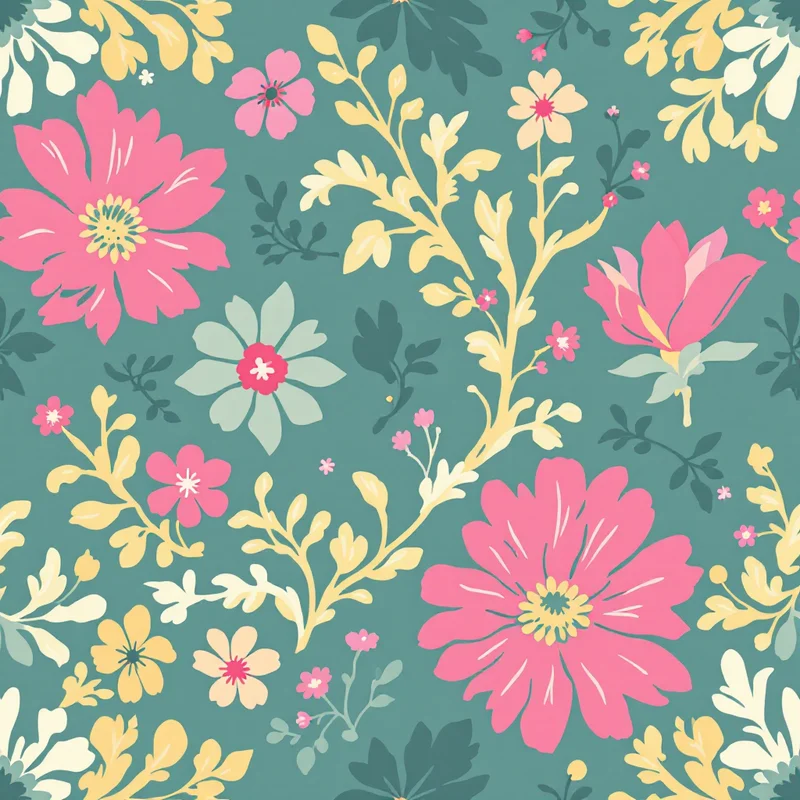
Small, scattered, non-directional blooms with generous space between them. Ditsy florals are the most forgiving pattern type in garment production — because there's no large motif to match at a seam, they survive cutting and sewing without visible pattern breaks, which is exactly why fast fashion leans on them so heavily.
Chintz and cottage florals
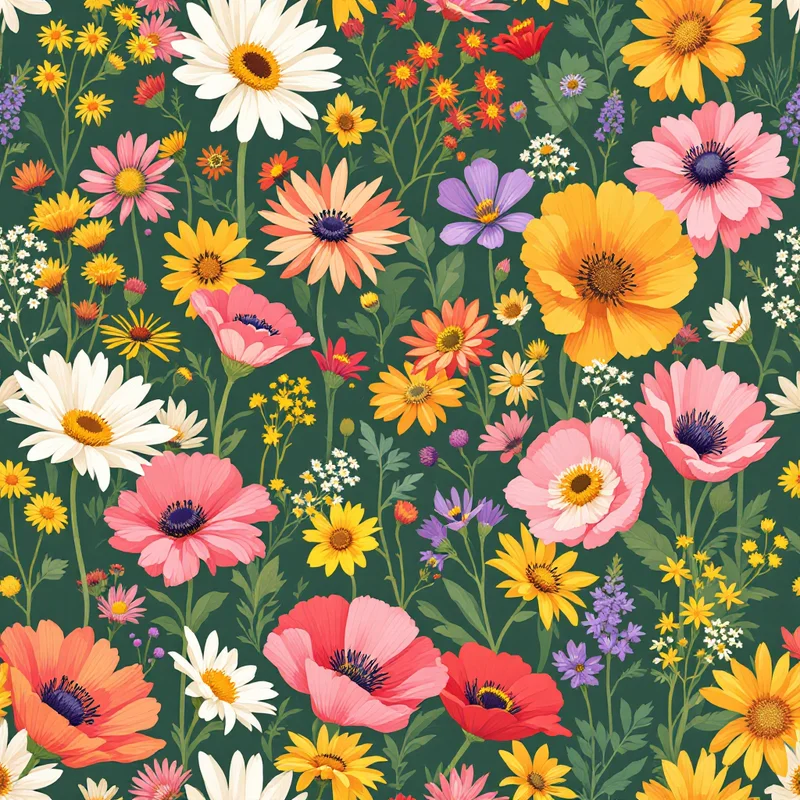
Larger, denser, more romantic arrangements, often layered with birds, ribbons, or trailing vines. Chintz reads traditional and slightly formal — it's the print behind the "grandmillennial" interior revival, and it works best at a scale generous enough to show its detail, which rules it out for small products like phone cases.
Vintage florals
Muted, antique-feeling color palettes paired with a slightly worn or hand-painted illustration style. Vintage florals trade the crispness of a modern floral for nostalgic warmth, and they're the reliable choice for any brand leaning into heritage or nostalgia positioning.
Tropical florals
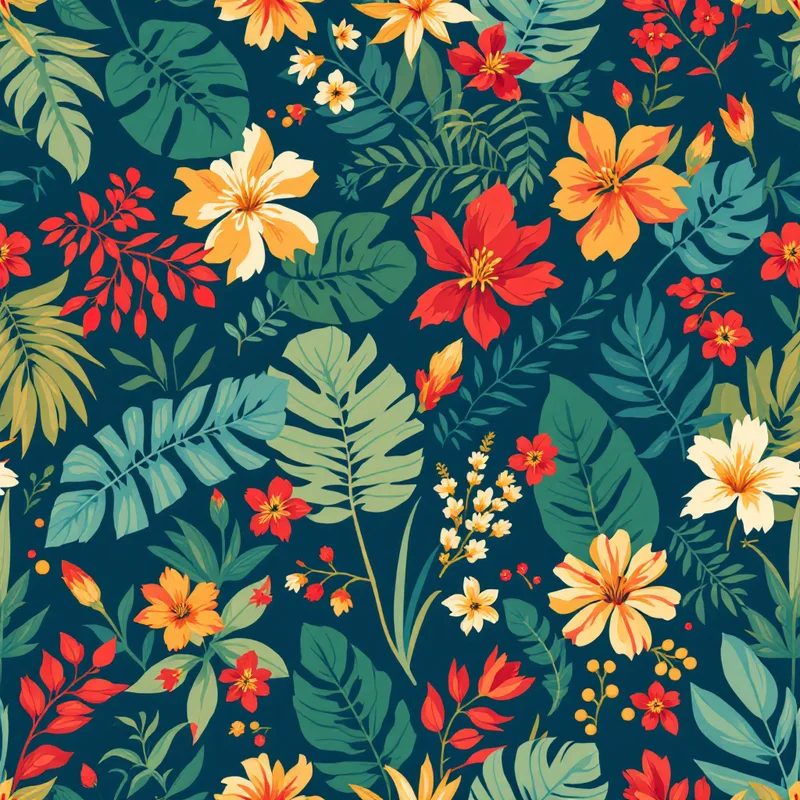
Hibiscus, monstera leaves, birds of paradise, saturated warm color. Tropical florals own swimwear, resort wear, and summer product lines almost by default — the palette and motif combination signals "warm climate" faster than almost any other pattern family.
Botanicals
Leaves and plant structure without the bloom taking center stage — eucalyptus, ferns, palms, grasses. Botanicals read calmer and more restrained than floral-forward patterns, which makes them the default choice for spa, wellness, and eco-positioned brands that want a natural feel without floral's more decorative connotation. Browse botanical patterns for the full range.
William Morris style
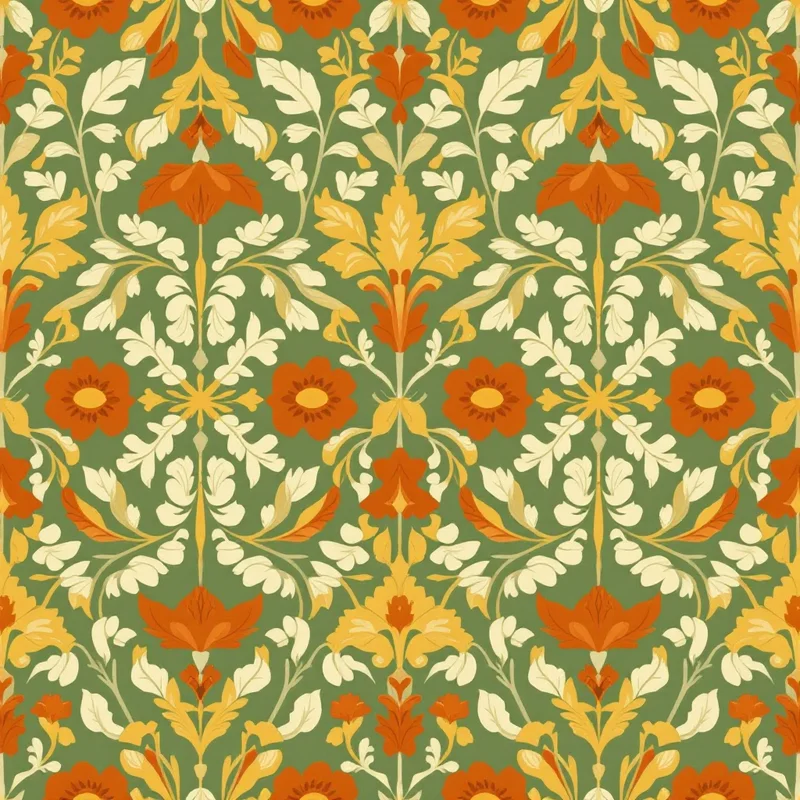
Dense, flat, deliberately interlocking Arts-and-Crafts botanicals, defined by William Morris's original 1870s textile designs and still selling as wallpaper and fabric today. William Morris-style patterns prove a genuinely great repeat design can outlast the century it was drawn in.
Choosing between them
Match the floral type to the product's forgiveness for large motifs — ditsy for anything cut and sewn, chintz and botanical for wallpaper and larger flat-goods where the detail can breathe, tropical for anything warm-weather, and vintage or William Morris style for anything leaning into heritage positioning.
Every floral family here can be generated as a seamless, production-ready tile with full control over scale, density, and color. Start in the free pattern maker with 3 free credits, or browse pattern styles for the full range.
Explore related pattern styles