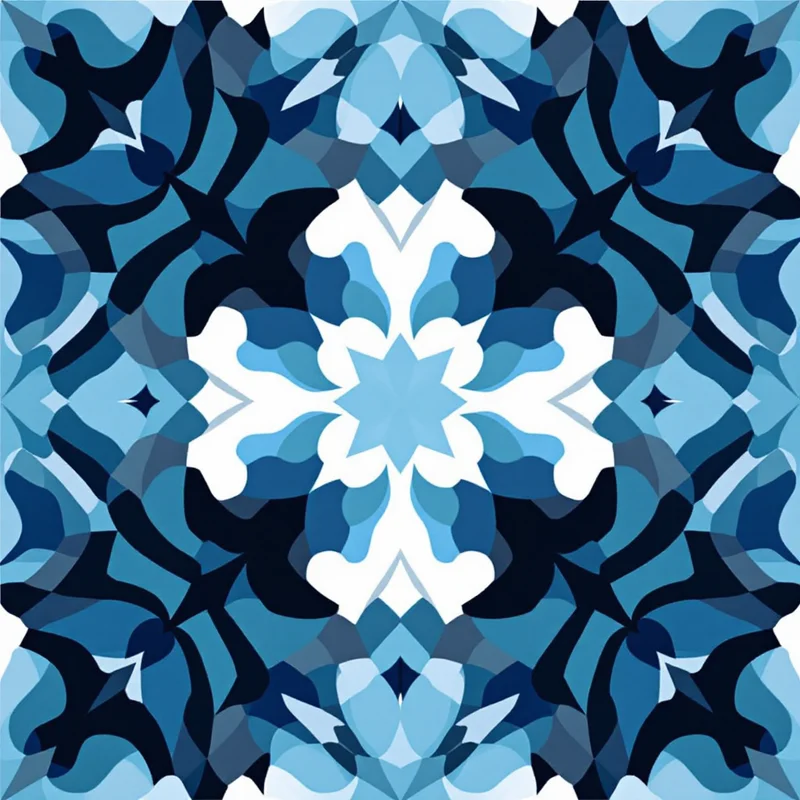
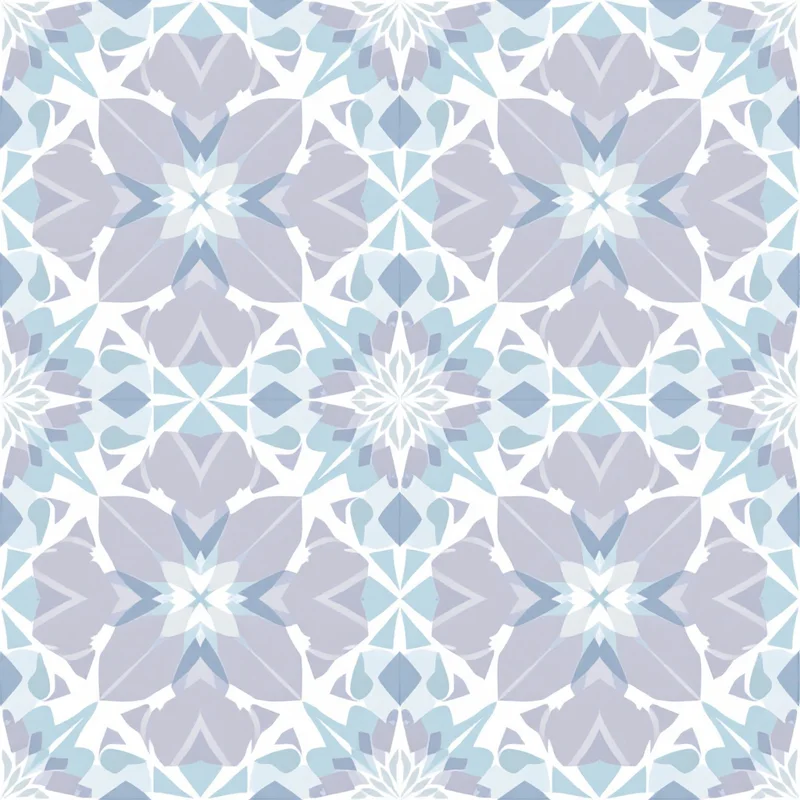
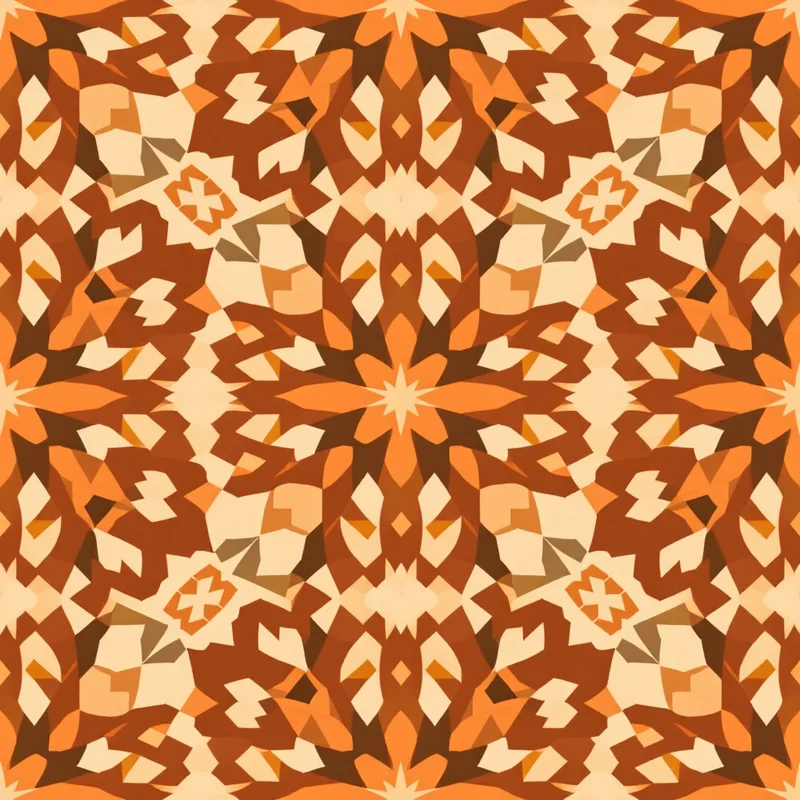
Moroccan pattern design has reached permanent fixture status in global textile design and surface design. The combination of intricate geometry, rich color traditions, and architectural heritage gives Moroccan patterns a presence that few other cultural traditions match. For pattern designers, mastering the authentic Moroccan vocabulary unlocks markets in luxury home goods, boutique interiors, custom tile production, and high-end wallpaper — all commanding premium prices.
Key takeaway: Authentic Moroccan patterns respect mathematical precision. Unlike loose boho interpretations, real Moroccan designs like zellige follow strict geometric rules that took centuries to codify. Honor the geometry and your patterns stand out.
The Zellige Tradition
Zellige — the terracotta tilework found throughout historic Moroccan architecture — is the foundation of Moroccan pattern design. The tradition dates to the 10th century and reached full refinement in the 14th. The patterns are mathematically generated, based on polygonal tessellations that fit together without gaps and without overlap.
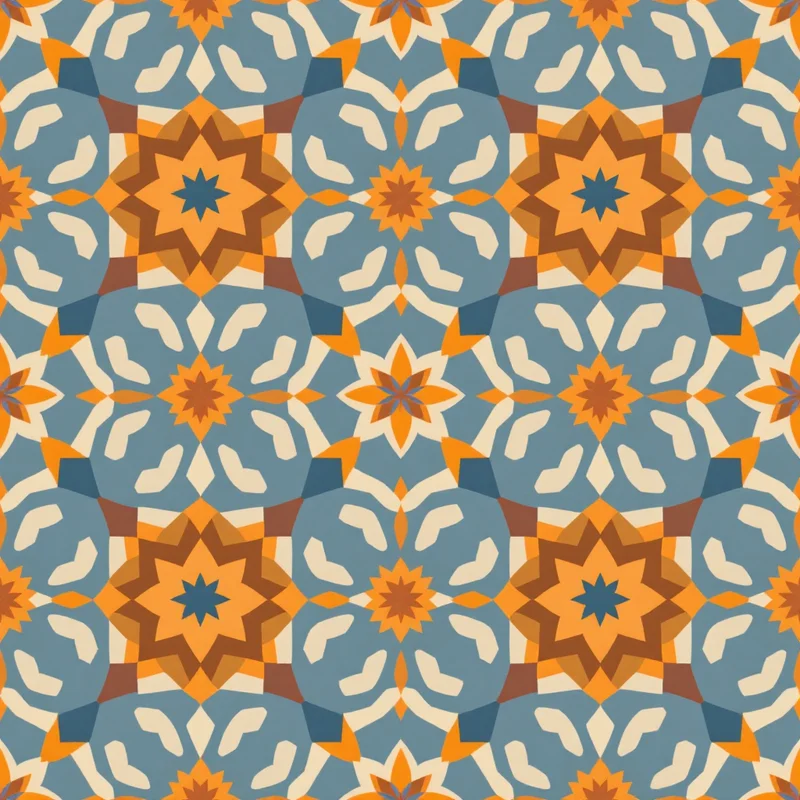
The characteristic zellige motif is the eight-point star, created by overlapping two rotated squares. Variations include twelve-point stars, sixteen-point stars, and composite patterns where multiple star sizes interlock. The geometry is precise — every angle has a reason, every proportion relates to adjacent shapes.
For pattern generation, the geometric patterns category paired with cultural substyles produces zellige-style output. The mosaic render style reinforces the tile-based feeling.
Traditional Color Palettes
Historic Moroccan zellige used a narrow palette determined by available mineral glazes: cobalt blue (from cobalt oxide), terracotta (from clay itself), forest green (from copper), yellow ochre (from iron oxide), and white (from tin glazes). These five colors form the traditional Moroccan palette.
Contemporary Moroccan-inspired patterns have expanded the palette but still benefit from restraint. A 3–4 color palette drawn from the traditional five produces more authentic-feeling patterns than a modern rainbow approach. The one modern addition that reads as Moroccan is deep aubergine purple, which entered the vocabulary in the 20th century.
Motifs Beyond Zellige
Moroccan pattern design extends beyond zellige tiles into several other traditions:
Arched doorway shapes — the keyhole and horseshoe arches characteristic of Moroccan architecture translate into repeating pattern elements. Arches can function as enclosures for smaller motifs or as standalone geometric shapes.
Lantern motifs — Moroccan brass and colored-glass lanterns translate beautifully into pattern elements. Often rendered as silhouettes or simplified geometric forms.
Palm and botanical influences — date palm leaves, orange blossoms, and desert botanicals appear in Moroccan textile traditions alongside the geometric work. These softer motifs balance the precision of zellige.
Calligraphy and script — Arabic calligraphic forms have historically been integrated into Moroccan pattern design. For secular commercial work, decorative script-inspired flourishes work well; avoid literal religious text unless specifically appropriate.
Kilim and Berber rug patterns — the geometric rug traditions of the Atlas Mountains offer a different but related vocabulary. Diamonds, zigzags, and stepped patterns in wool-dyed palettes. See the tribal patterns library.
Texture and Rendering
Moroccan patterns benefit from rendering that evokes the materials of the original tradition — ceramic glazes, hand-woven wool, and hand-pressed metalwork. The mosaic render style, stained-glass render, and linocut all produce convincing results.
For wallpaper and digital applications, slightly textured renders outperform flat colors. A pattern that shows the "imperfections" of handmade ceramic — slight crazing, color variation, edge softness — reads more authentic than a perfectly flat vector version.
Scale and Layout
Moroccan patterns traditionally work at multiple scales simultaneously. A single zellige composition might have a large eight-point star surrounded by smaller star clusters, with smallest tesserae filling the gaps. This multi-scale density is essential to the aesthetic.
For surface pattern work, you can emphasize different scales for different products. Large-scale primary motifs for wallpaper and upholstery. Medium-scale composite patterns for fabric yardage. Small-scale detailed patterns for stationery and packaging.
Product Categories
Wallpaper and feature walls — the biggest Moroccan pattern market. Kitchens, bathrooms, and entryways especially benefit from Moroccan patterns, which handle high-traffic areas well aesthetically. See the wallpaper pattern maker guide.
Tile design — commercial tile manufacturers license pattern designs for reproduction. Moroccan tile patterns are a premium licensing category.
Home textiles — throw pillows, table runners, curtains, and cushion collections. Boutique home decor brands frequently use Moroccan-inspired patterns. See home decor.
Area rugs — kilim-inspired and Moroccan rug patterns are a substantial market. Rug manufacturers actively license new designs in this tradition.
Packaging — luxury beauty, tea, and spice brands frequently use Moroccan-inspired patterns for packaging and labels. See packaging use-case.
Stationery — wedding invitations, journal covers, and greeting cards in Moroccan patterns perform well in both independent and mass-market stationery.
Combining with Adjacent Styles
Moroccan patterns combine well with a few adjacent style traditions:
- Moroccan + Art Deco — both traditions emphasize geometric precision and luxe palettes. See the art-deco patterns library.
- Moroccan + boho — boho styling softens Moroccan geometry for contemporary interiors. See the boho pattern design guide.
- Moroccan + Mediterranean — terracotta, cobalt, and white connect Moroccan and Greek island visual traditions.
Building a Moroccan Collection
A strong Moroccan mini-collection:
- A hero zellige pattern (large-scale eight-point star composition)
- An arched-doorway blender
- A lantern motif print
- A micro-scale tessellation texture
- A solid terracotta or cobalt ground color
All in the traditional palette. Open the pattern studio to start building.
Moroccan Tile Patterns vs Moroccan Textile Patterns
Designers researching Moroccan pattern design often conflate two distinct traditions that share a country of origin but follow very different visual rules. Pattern Weaver separates them at the classifier level because the design constraints, color logic, and commercial uses diverge sharply once you cross the line between zellige tilework and Berber textile.
Moroccan tile patterns descend from zellige, the cut-glazed terracotta tilework refined in Fez, Meknes, and Marrakech between the 10th and 14th centuries. The geometric discipline is mathematical — every pattern resolves to a polygonal tessellation built from finite-symmetry rules. Color is constrained by historic mineral glaze chemistry, which is why the canonical zellige palette stays inside cobalt, terracotta, forest green, yellow ochre, and white. Repeat scale runs medium to large because tile is read from across a courtyard, not from arm's length. The motif vocabulary is geometric — stars, polygons, interlace bands, and arabesque infill — with botanical or figurative elements deliberately excluded under classical Islamic art conventions.
Moroccan textile patterns descend from the Berber weaving traditions of the Atlas Mountains, the Sahara fringe, and the Rif. These are flat-woven kilims, knotted Beni Ourain pile rugs, hanbel saddle blankets, and embroidered Fez hangings. The visual rules invert almost everything about zellige. Color is broader because vegetal and synthetic dyes expanded the palette far beyond mineral glazes — saffron yellow, henna red, indigo blue, walnut brown, and undyed cream wool all coexist. Repeats are looser, often asymmetric, and frequently include lozenge-grid layouts, stepped zigzags, hooked diamonds, and protective glyph motifs that carry tribal meaning. Some Berber rugs barely repeat at all — they read as one large composition rather than as a tile.
This split matters for production. A wallpaper or floor tile commission usually wants the zellige tradition because the application is architectural and the geometric precision suits scale. A throw pillow, area rug, or apparel commission usually wants the Berber textile tradition because the looser, warmer, more handmade-looking patterns suit the soft-goods context. Pattern Weaver's compiler routes Moroccan requests differently based on substyle keywords — zellige and arabesque substyles trigger the tile-tradition vocabulary, while Berber, kilim, and Atlas substyles trigger the textile-tradition vocabulary. Choosing the right substyle up front saves a designer from generating a beautiful zellige and then realizing it was the wrong tradition for the pillow they were briefed on. For broader work across both traditions, the textile design and textile pattern design starting points give designers separate entry routes into each lineage.
Mathematical Foundations of Zellige Geometry
Zellige geometry is not stylistic — it is rule-based, and once a designer understands the rules, generating new authentic-feeling compositions becomes a constraint problem rather than a creative leap. Pattern Weaver's geometric compiler implements the constraints automatically, but designers who understand them produce sharper briefs and catch generation errors faster.
The foundation is rotational symmetry. Classical zellige uses 4-fold, 6-fold, 8-fold, 10-fold, 12-fold, and 16-fold rotational symmetries to generate star centers. The 8-fold star — formed by superimposing two squares at 45-degree rotation — is the canonical Moroccan motif. The 12-fold star, formed by superimposing two hexagons at 30-degree rotation, gives the second most common pattern family. Higher-fold stars (16 and beyond) appear in royal palace work where craftsmen demonstrated technical mastery, but they are rare in commercial reproduction.
The second rule is tessellation closure. Every zellige composition must tile the plane without gaps and without overlaps. This restricts which polygonal pieces can be combined. The classical zellige toolkit uses around 360 documented tile shapes (the so-called fursa system), but practical compositions usually combine 6 to 14 shape families per pattern. The shapes interlock by edge-matching — every external edge of one tile shares length and angle with the edge of an adjacent tile.
The third rule is the central star and the radial expansion. Zellige compositions typically anchor on one or more dominant stars, then radiate outward through bands of secondary polygons (often six-pointed satellite stars), then through interstitial filler pieces (called safat or talikan in the traditional terminology). The radiating structure means scale is built into the composition — the eye finds the dominant star first, then resolves the surrounding geometry, then reads the detail at the edges.
The fourth rule is line-weight discipline. The plaster-fill grout lines between cut tile pieces are typically 3 to 8 millimeters wide on the original architecture, which translates to roughly 0.6 to 1.5 percent of the longest motif dimension in a digital pattern. Pattern Weaver designers building zellige outputs export at 8K resolution to keep these line weights crisp at large architectural scales. The fabric pattern generator handles zellige translations onto cloth by softening the line edges slightly to mimic the way grout reads on a fired ceramic surface — a hard vector edge looks plastic when printed onto cotton or linen.
For designers extending zellige into adjacent surfaces, holding the rotational symmetry and the tessellation closure rules will keep the output authentic-feeling even when colors, materials, or motif vocabularies shift. Breaking those rules produces compositions that read as Moroccan-inspired but not Moroccan, which is acceptable for boho contexts but disqualifying for premium licensing.
Moroccan Patterns for Interior Designers
Interior designers carry the largest single share of Moroccan pattern demand because Moroccan ornament solves several recurring interior-design problems at once. It adds visual interest without color noise (when restrained to the historic palette), it works at both small and architectural scale, and it carries a craft narrative that justifies premium pricing on otherwise standard product categories. Pattern Weaver was built around the workflow interior designers actually follow, which involves generating coordinated pattern families rather than one-off motifs.
The most common interior application is the kitchen or bathroom feature wall. Zellige-inspired wallpaper or tile-look wallpaper in cobalt and white covers a backsplash zone or a powder room wall, brings architectural reference, and ties together coordinated accessories. Designers building these commissions typically generate one hero zellige composition at 8K resolution, then derive three to five companion patterns at smaller scale through the fabric pattern generator for use on cushions, table linens, or curtain panels in the same space.
The second application is hospitality interior work — boutique hotels, restaurants, and spa environments. Moroccan ornament suits hospitality because it photographs well across the lighting conditions interior photographers actually shoot under (warm tungsten, cool daylight, mixed), and the cultural narrative supports menu, brand, and signage extension. The booking platforms heavily weight pattern-driven interiors in their algorithmic ranking because the imagery converts. A typical hospitality commission needs five to twelve coordinated patterns across wallpaper, upholstery, bedding, curtain, cushion, table linen, and signage applications, and Pattern Weaver compresses what used to be a six-week studio process into a one-week iterative workflow.
The third application is residential rugs and large textiles. Berber-tradition Moroccan patterns dominate this category — Beni Ourain cream-and-charcoal rugs, kilim flatweaves with stepped lozenge motifs, and Azilal abstracts with playful asymmetry. Pattern Weaver's textile substyles produce rug-ready designs that licensing-grade rug manufacturers can receive directly as production files. The market for Moroccan-style rugs has expanded steadily since 2018 and shows no sign of softening through 2026 because the visual vocabulary suits both contemporary minimalist interiors and maximalist eclectic interiors.
The fourth application is custom soft-furnishings — curtains, cushions, ottoman covers, and headboards. Interior designers commissioning custom soft-furnishings need exclusive patterns to differentiate the project from commodity catalog inventory. The tool's per-project licensing model on the Pro and Max plans lets interior firms generate exclusive Moroccan patterns for individual clients without the licensing complications of using third-party stock pattern libraries. The textile design entry path keeps these workflows organized by client and by pattern family.
For interior firms scaling Moroccan work, the practical recommendation is to build a master palette library first — cobalt, terracotta, forest, ochre, cream, plus the modern aubergine extension — and lock all generated patterns to that library. Color discipline across a portfolio reads as design intent. Color chaos reads as stock library noise.
Explore related pattern styles
Patterns for