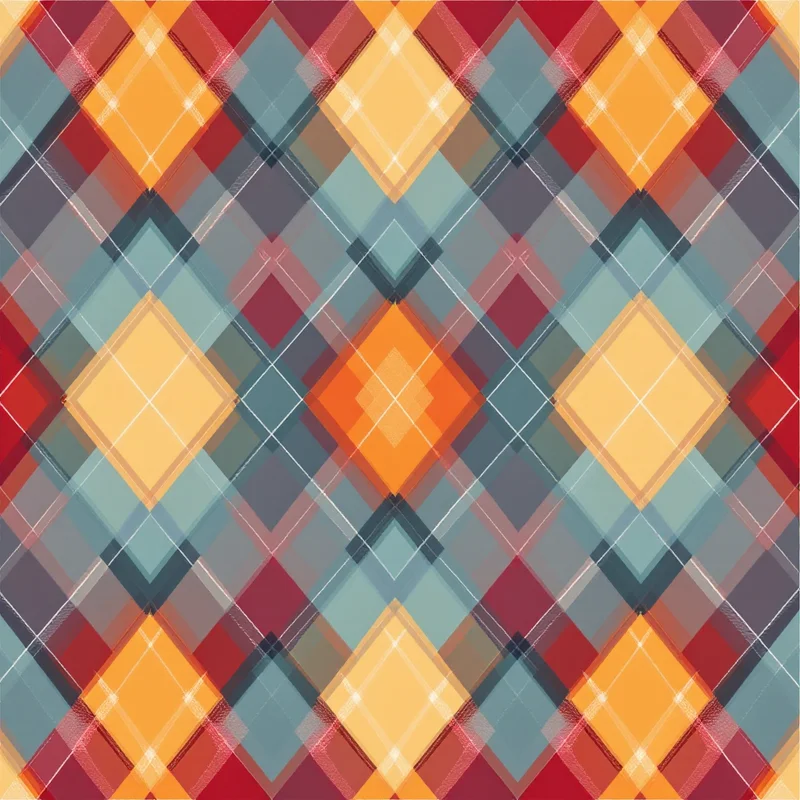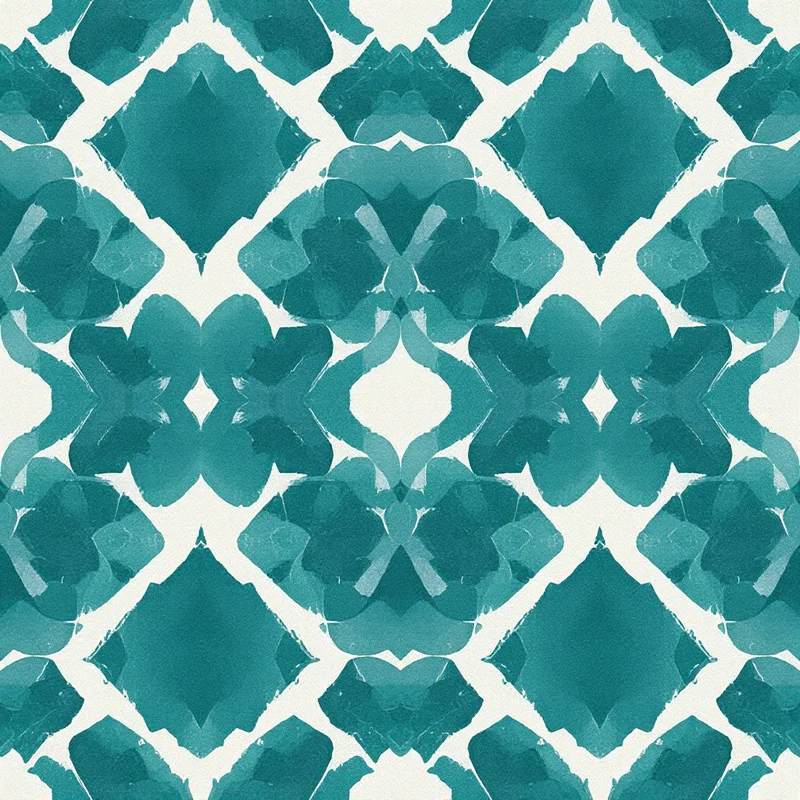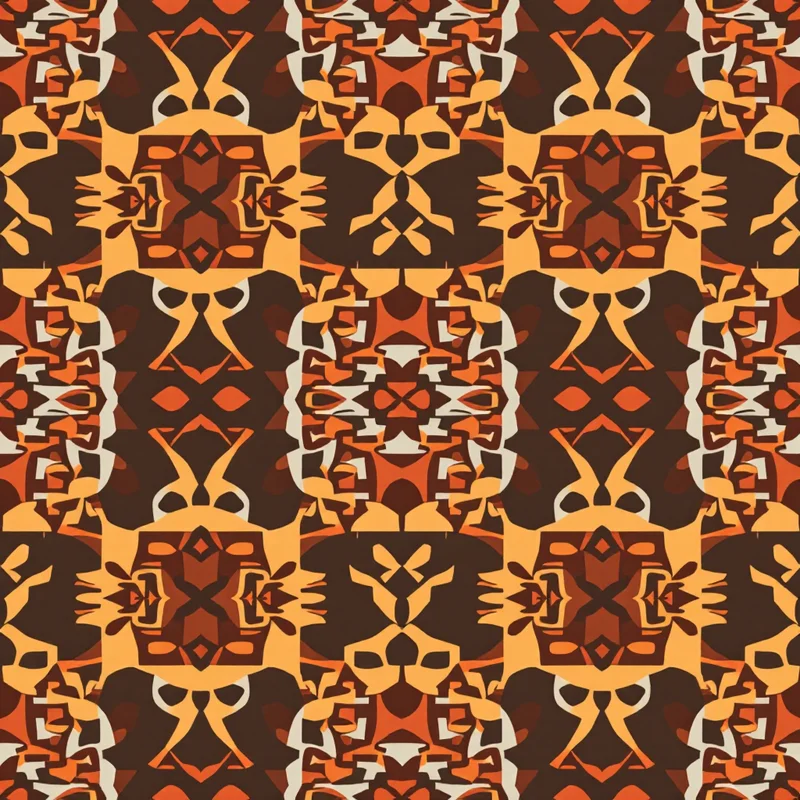
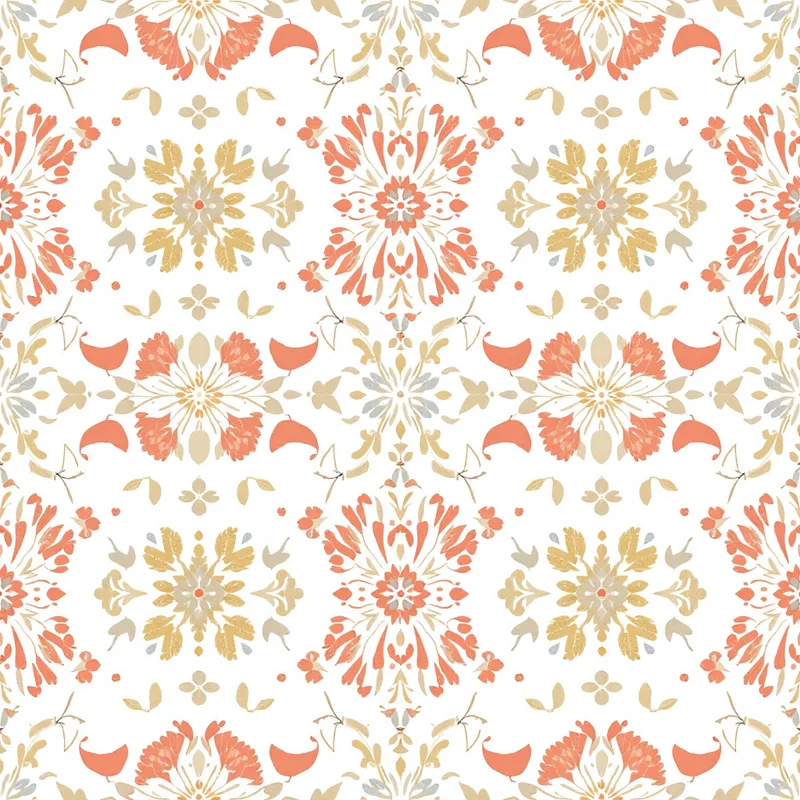
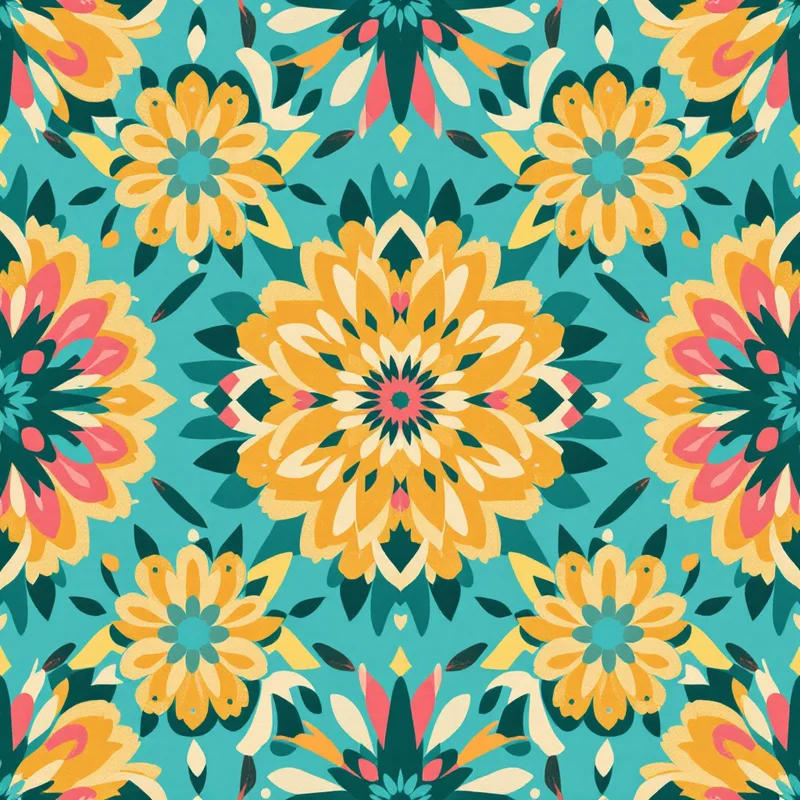
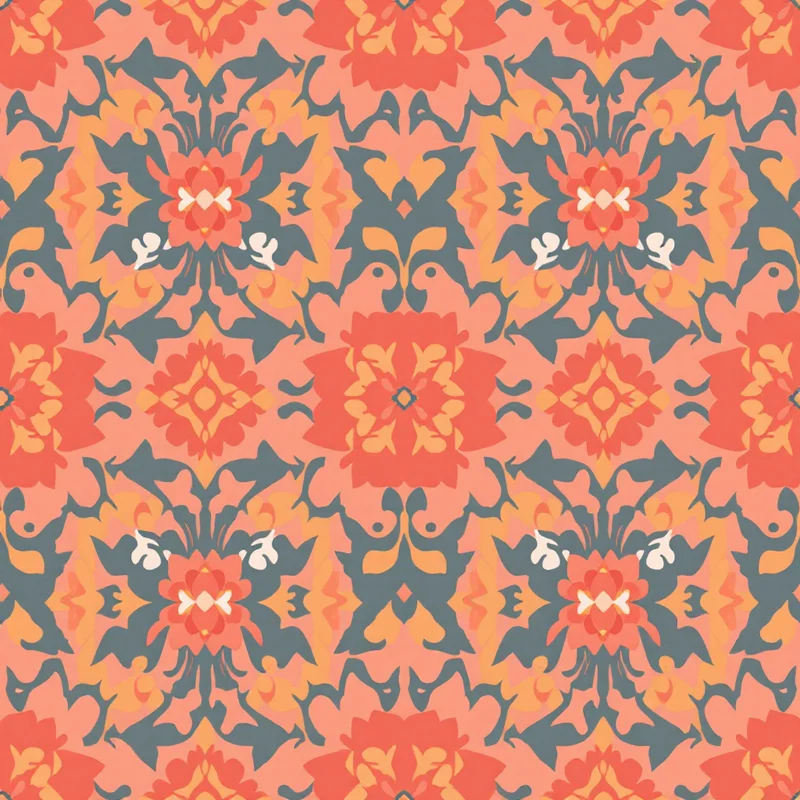
Ankara — also called African wax print, Dutch wax print or simply "wax" in West African contexts — is one of the most visually distinctive and culturally significant traditions feeding contemporary textile pattern design. The fabric is characterised by vibrant, multi-coloured patterns produced through a wax-resist dye process originally developed in Indonesia, brought to West Africa through Dutch colonial trade routes in the nineteenth century, and embraced and transformed by West African societies into a foundational element of regional cultural identity. Today, Ankara appears in fashion, home decor, accessories and surface design across global markets, and the tradition continues to evolve in both West African production centres and international markets.
For practitioners of textile design and surface pattern work, Ankara represents both an enormous source of design vocabulary and a category that demands particular care around cultural respect, attribution and economic equity inside any global textile design practice. The visual conventions are deeply specific, the cultural meanings are real and contemporary rather than historical, and the economic relationship between Ankara-inspired international design and the originating West African producers and traditions involves significant ongoing tensions. This guide examines both the tradition itself and the considerations involved in drawing on Ankara as a design reference.
The Ankara Tradition
The technical origins of the wax print process lie in Indonesian batik, which Dutch colonial traders attempted to mechanise and produce industrially in the nineteenth century. The resulting mechanically-produced wax prints were initially intended for Indonesian markets but were rejected there as inferior to traditional handmade batik. The unsold inventory was redirected to West African markets, where the fabrics were embraced enthusiastically and integrated into existing cultural textile practices.
The fabric became thoroughly West African over the following decades. Patterns were designed specifically for West African aesthetic preferences. Symbolic meanings were attached to patterns and given names that reflected proverbs, social commentary, current events and aspirational concepts. Specific patterns became associated with particular social occasions, political movements, individuals and cultural moments. The fabric production moved from Dutch industrial centres to West African producers, with companies like Vlisco in the Netherlands continuing to produce alongside major West African producers including Akosombo Textile Limited in Ghana, Uniwax in Côte d'Ivoire and Nigeria's massive production sector.
The textile carries deep contemporary cultural significance across Nigeria, Ghana, Senegal, Côte d'Ivoire, Mali, Cameroon, Benin, Togo and other West and Central African societies. Ankara appears in everyday clothing, formal ceremonial wear, funeral attire, wedding outfits and political statements. Specific patterns and pattern combinations carry coded meanings within their cultural contexts. Individual patterns may be named for their visual content (the "shoes pattern", the "umbrella pattern") or for the symbolic meaning attached to them within their region.
The Visual Vocabulary
Ankara patterns share several characteristic visual elements. The colours are vibrant and high-saturation, with strong contrast between elements. Multiple bright colours appear within a single design — five to ten distinct colours is typical, with some designs using more. The visual energy is deliberate and significant; quiet or muted Ankara designs are atypical of the tradition.
The compositional logic typically uses repeating geometric, organic or pictorial motifs distributed across the surface in regular or rhythmic patterns. The repeats are typically medium to large scale, with individual motifs ranging from roughly five centimetres to twenty centimetres or more in major dimension. The scale allows the visual energy of the design to read clearly across the surface of a garment.
The motif vocabulary is enormously varied. Geometric motifs include circles, diamonds, hexagons, abstract shapes, decorative borders and ornamental elements. Organic motifs include florals, leaves, birds, fish, scales and abstracted natural forms. Pictorial motifs include household objects (umbrellas, hands, eyes, shoes, fans), tools, abstracted figures and named symbolic elements. Some designs use abstract patterns that fall outside obvious motif vocabulary.
The colour relationships within Ankara designs follow conventions that are visible across the tradition but allow significant variation. High-contrast colour combinations are common — bright yellow with deep blue, red with green, orange with purple — that would seem clashing in some other design contexts but produce harmonious results within the Ankara tradition. White and black are used both as field colours and as motif elements. Outlines, borders and structural lines are frequently used to define motif edges and create visual rhythm.
Contemporary Design References
Contemporary designers drawing on Ankara have several productive approaches. Direct Ankara-inspired designs preserve the high-saturation palette, the bold motif vocabulary and the rhythmic compositional structure of traditional Ankara while updating specific motifs or adapting compositions for contemporary applications. These designs read clearly as Ankara-influenced while operating in contemporary commercial contexts.
Abstract Ankara interpretations preserve the palette and compositional logic — bold colour, rhythmic motif distribution, strong contrast — while using contemporary or abstract motif vocabulary rather than traditional Ankara motifs. These designs draw on the visual intelligence of the tradition without committing to specific motif vocabulary.
Palette-led Ankara references draw on the colour vocabulary of Ankara (high-saturation multi-colour with strong contrast) while applying these palettes to contemporary motif vocabulary that does not reference Ankara directly. These designs signal the cultural influence through palette while operating in contemporary visual language.
Among these approaches, direct Ankara-inspired design carries the most cultural weight and the most attribution responsibility. The other approaches involve less direct cultural reference and may be more appropriate for designers without specific cultural connection to West African design traditions.
Considerations Around Cultural Respect
The economic and cultural relationship between international design markets and West African Ankara producers and traditions involves significant ongoing tensions. The fabric has become one of the most internationally recognised West African design references, with global fashion brands, home decor companies and surface designers drawing on Ankara visual vocabulary at substantial commercial scale. The proceeds of this international commercial activity rarely return to West African producers, communities or designers.
This economic reality creates particular responsibility for designers drawing on Ankara as a contemporary design reference. The most important practical step is to acknowledge the source tradition openly and specifically in marketing, product copy and brand presentation. Ankara-inspired work that is marketed as if it were an original aesthetic invention rather than drawing on a specific living cultural tradition fails to provide appropriate attribution.
Supporting West African designers and producers materially is the most direct way to participate in this category responsibly. This can take the form of licensing arrangements with West African designers, fair-trade sourcing relationships with West African production centres, collaboration with West African designers on collections, or financial support for design education and production infrastructure in originating communities.
For designers without specific connection to West African design traditions, considering whether the work would be more honourable as an explicit collaboration with West African designers — rather than as inspired-by interpretation produced independently — is worth serious thought. The economic dynamic of inspired-by interpretation typically directs proceeds away from originating communities, while collaboration can produce more equitable economic relationships.
Avoiding direct copying of specific named Ankara patterns is particularly important because individual Ankara patterns are identified, named and culturally significant within their contexts. Reproducing a specific named pattern is not the same as drawing inspiration from the tradition.
Palette Strategy for Contemporary Ankara-Inspired Work
For designers building Ankara-inspired commercial work, the palette structure provides a template. High-saturation multi-colour palette is the foundation. Five to eight colours per design is typical of traditional Ankara and translates effectively into contemporary applications. Strong contrast between colours — including complementary contrast and high-contrast tonal combinations — is the visual character.
Specific palette structures that work in contemporary Ankara-inspired design include bright primary palettes (red, yellow, blue with white and black structural elements), warm jewel-tone palettes (deep red, mustard, emerald, indigo with gold accents), and contemporary high-contrast palettes that maintain the multi-colour boldness while shifting toward contemporary palette conventions.
The risk in contemporary Ankara-inspired work is over-muting the palette to fit contemporary commercial colour conventions. Some commercial markets prefer reduced palette saturation, and designers may be tempted to soften the colours to fit these preferences. The result is often work that signals Ankara reference visually but loses the essential vibrancy that gives the tradition its character. Maintaining the high-saturation palette commitment is part of respecting the tradition.
Applications
Ankara-influenced patterns have strong commercial presence in fashion textiles — dresses, shirts, skirts, accessories and bold statement pieces use Ankara influence extensively across many international markets. The bold visual statement signals confidence and cultural awareness.
Home decor applications include throw pillows, drapery, table linens and statement pieces that use Ankara influence for distinctive visual energy. The category supports both bold statement pieces and more restrained interpretations that integrate Ankara reference into broader decor schemes.
Stationery and paper goods use Ankara influence in distinctive seasonal collections and gift wrap applications. The vibrant palette and bold motif vocabulary support distinctive commercial presence.
Branding and identity design uses Ankara-influenced patterns in contexts where bold cultural reference supports brand positioning, particularly for brands with West African connection or for brands intentionally building on Pan-African design vocabulary.
Practical Approach
For designers building Ankara-inspired commercial work, the practical approach involves deep study of authentic Ankara fabrics, books, academic sources and contemporary West African design practice. Working with motif vocabulary that draws on Ankara conventions without directly copying specific named patterns preserves the distinction between inspiration and reproduction.
Acknowledging the source tradition in marketing and product copy provides appropriate attribution. Considering collaboration with West African designers or licensing arrangements that support originating communities provides economic recognition. Maintaining the palette commitment that makes Ankara distinctive — rather than over-muting for commercial convenience — respects the tradition's essential visual character.
Ankara is a powerful contemporary design vocabulary with deep cultural significance and ongoing economic stakes. Designers who engage seriously with the tradition, provide appropriate attribution and support originating communities can contribute to broader recognition and respect for the tradition while producing distinctive commercial work. Designers who treat Ankara as a quick aesthetic reference to be appropriated without attribution or economic recognition produce work that participates in problematic dynamics around cultural extraction. The choice between these approaches is in the designer's hands, and it has real consequences for the communities and producers who sustain the originating tradition.
Explore related pattern styles
Patterns for