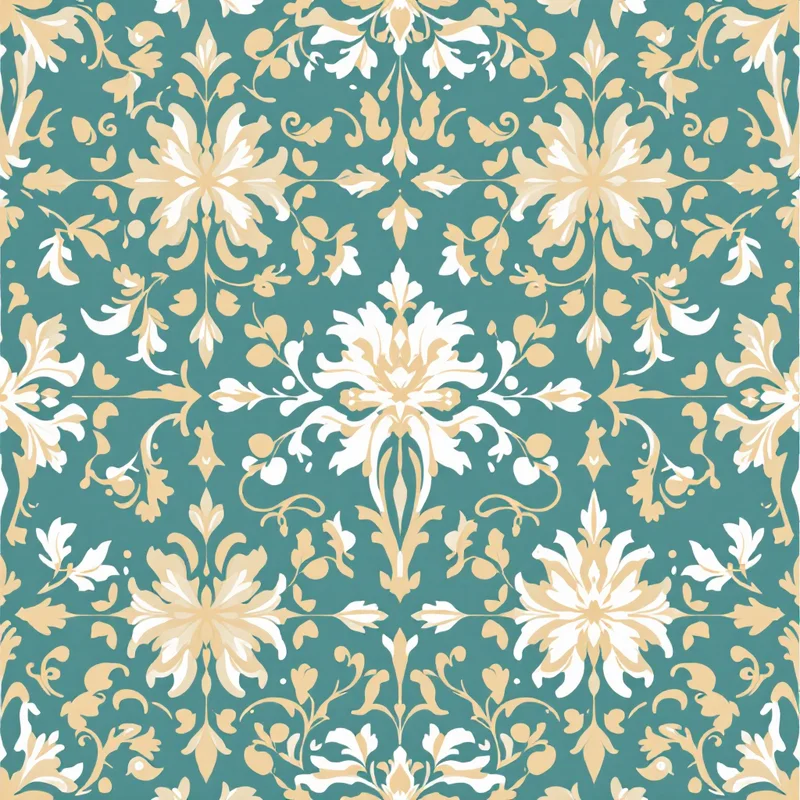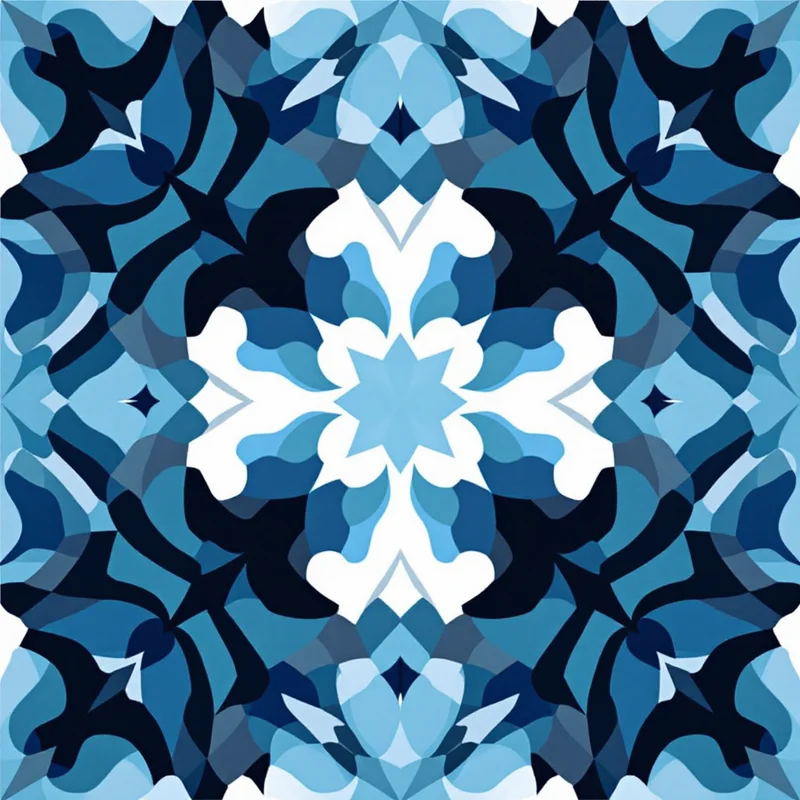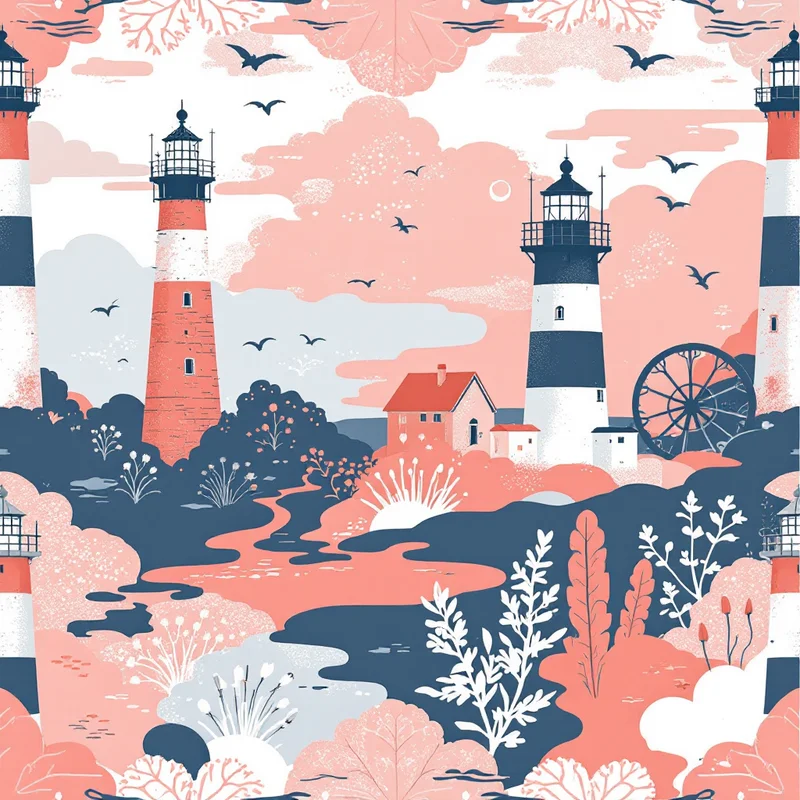
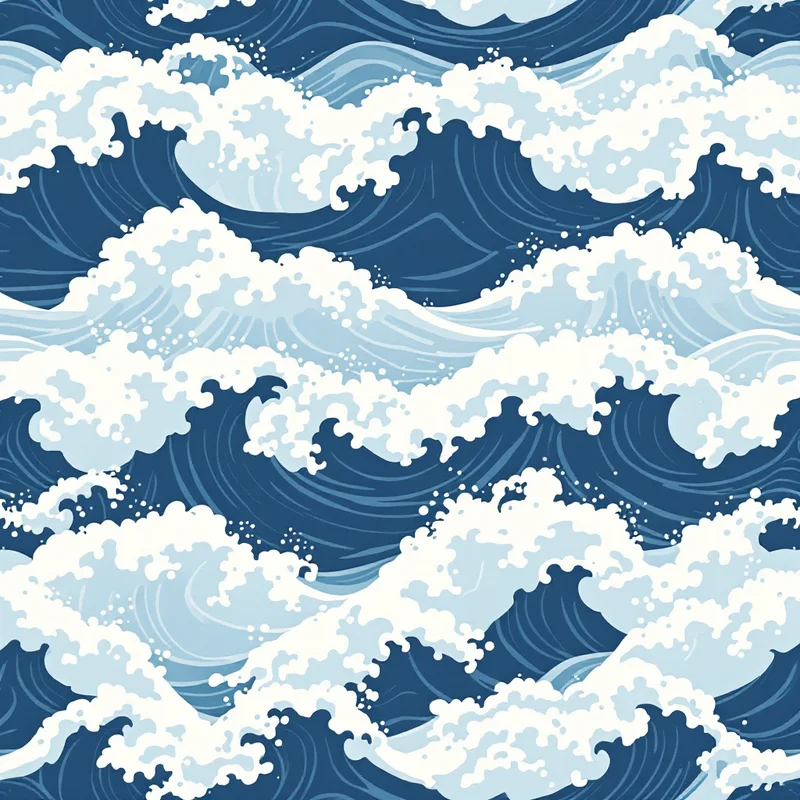
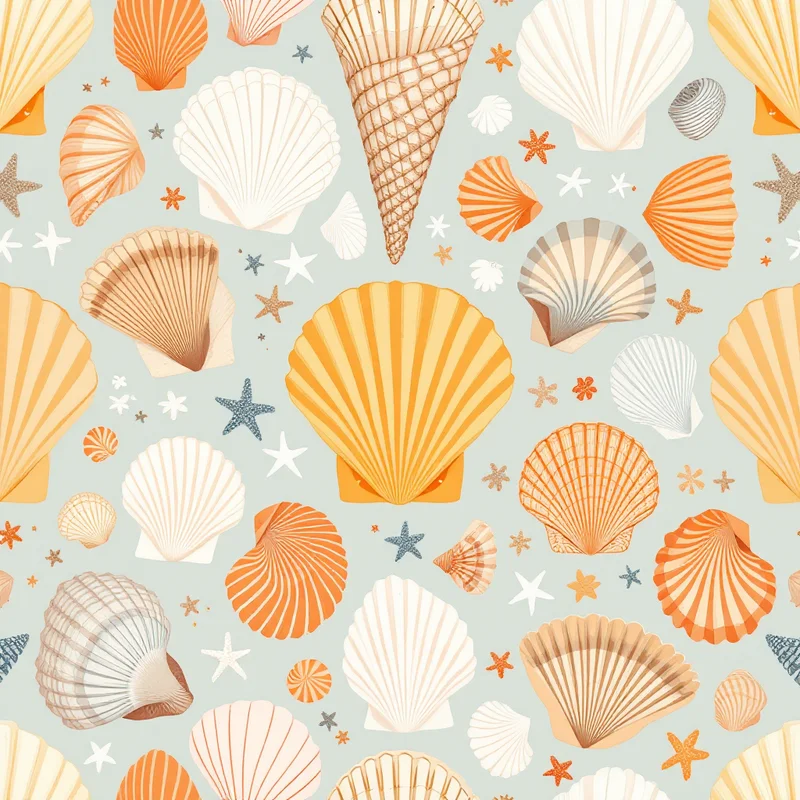
The beach house palette is mostly what's left after sun and salt have taken the color out. A cushion that started navy and ended up the blue of a worn chambray shirt is the look, and you can draw it on purpose instead of waiting for the sun to do it.
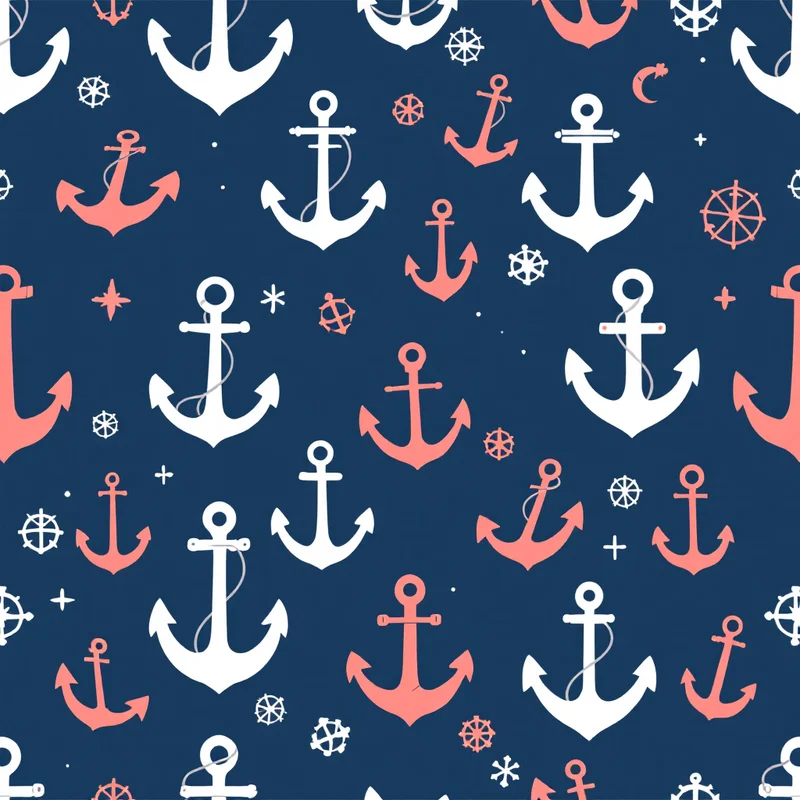
That's the main difference between a beach house and a nautical scheme. Nautical is crisp: navy, white, red, anchors and rope. A beach house is looser, with sea-glass tones, sand, bleached wood and linen, and almost none of the literal symbols.
Faded on purpose
Build the palette in soft, slightly gray-tinted tones.
- Sea glass, #A8CFC4
- Sand, #E8DCC5
- Driftwood gray, #B8B2A7
- Deep water, #1F3B57, in small amounts
- Faded coral, #E58F7A, as a rare accent
- Salt white, #F7F4EC
Keep one dark anchor so the palette doesn't dissolve into mush. Deep water blue does the work that black does elsewhere. The beach wallpaper and ocean patterns categories give you good starting grounds.
Room by room
| Space | Textile | Pattern idea | Repeat scale |
|---|---|---|---|
| Living room | Slipcovers, pillows | Wide faded stripe, washed botanical | 3 to 8 inches |
| Kitchen | Tea towels, café curtains | Line-drawn shells, lemons | 2 to 4 inches |
| Bedroom | Duvet, shams | Ticking stripe, tide-line abstract | 4 to 12 inches |
| Porch or deck | Outdoor cushions, rug | Awning stripe, woven texture | 4 to 10 inches |
| Bathroom | Shower curtain, towels | Small shells, coral outlines | 2 to 5 inches |
| Entry | Door mat, bench cushion | Large graphic wave or stripe | 8 to 14 inches |
Open, bright rooms handle larger repeats than a snug bathroom. If you're unsure, size up one step and test it on a mockup.
Textures that act like prints
Beach interiors rely on texture as much as pattern. Rattan patterns, woven seagrass, jute and rope can be printed as flat textural tiles, which is useful when you can't weave the real thing. A subtle grasscloth look under a wallpaper pattern gives a coastal wall depth, and a printed rattan weave can sit behind a bolder shell drawing.
Other texture sources:
- Driftwood grain, drawn as long, uneven lines.
- Ripples in sand, as soft parallel curves.
- Tide lines, a few irregular wavering stripes in sand colors on cream.
- Chart-style contour lines, a nod to depth maps, in one muted blue.
Stripes are the backbone
Stripes carry a beach house the way gingham carries a picnic. Three types are worth drawing: ticking, a narrow stripe on a natural ground; awning, wide stripes with a clear color; and a "wobble stripe" with a hand-painted waver. The stripe pattern guide covers widths and spacing.
What sun and sand ask of fabric
Beach houses are harsh on textiles. UV fades dyes, salt air is rough on fibers and sand finds every seam.
- Solution-dyed fabrics, where the color goes in before the fiber is spun, resist sun fade better than ordinary prints.
- Slipcovers and washable covers take sand better than fixed upholstery.
- Indoor-outdoor fabrics suit porches, decks and sunrooms.
- Mid-tone prints hide sand and salt marks that a solid white shows.
Rentals and short stays
Many beach houses are vacation rentals, which adds practical needs: fast cleaning, easy replacement and a look that photographs well for listings. Peel-and-stick wallpaper, washable cushion covers and matching sets that can be reordered all serve that market. The hotel and hospitality pattern design post covers the durability side of that work, and home textile trends 2027 shows where color is heading.
Skip the clichés
Anchors, ship's wheels, "Beach Please" slogans and cartoon starfish crowd the shelves. If you use a shell or a starfish, draw it from a real one, with the right number of arms and the actual texture, and give it room.
In Pattern Weaver, "Describe It" lets you write a prompt in your own words, for example "sea-glass green ticking stripe with a hand-painted wobble on linen," and the tile comes back in about 20 seconds.
Explore related pattern styles