# Zebra Print Pattern Design: Bold Stripes for Surfaces
Few motifs make a room or a garment turn heads like a strong zebra print pattern design. Those crisp black-and-white stripes carry instant graphic energy, and when they tile seamlessly across a surface they become one of the most versatile tools in a designer's kit. Whether you are dressing a feature wall, a yard of upholstery fabric, or a run of cosmetics packaging, bold zebra stripes deliver contrast that reads from across the room and still rewards a close look.
This guide breaks down what makes the look work, where it came from, and how to generate your own seamless version in minutes.
What is zebra print pattern design
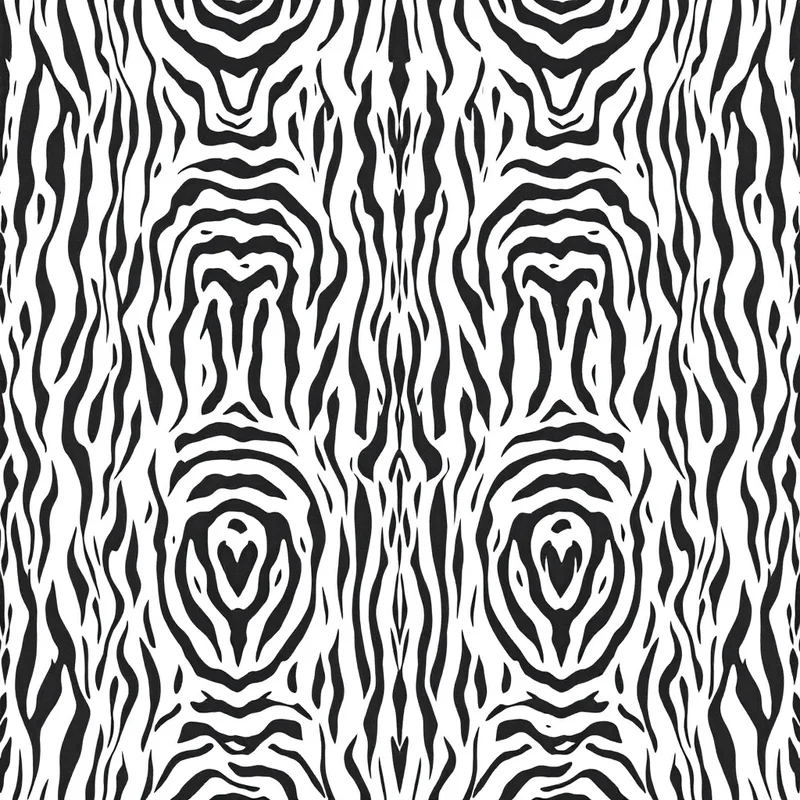
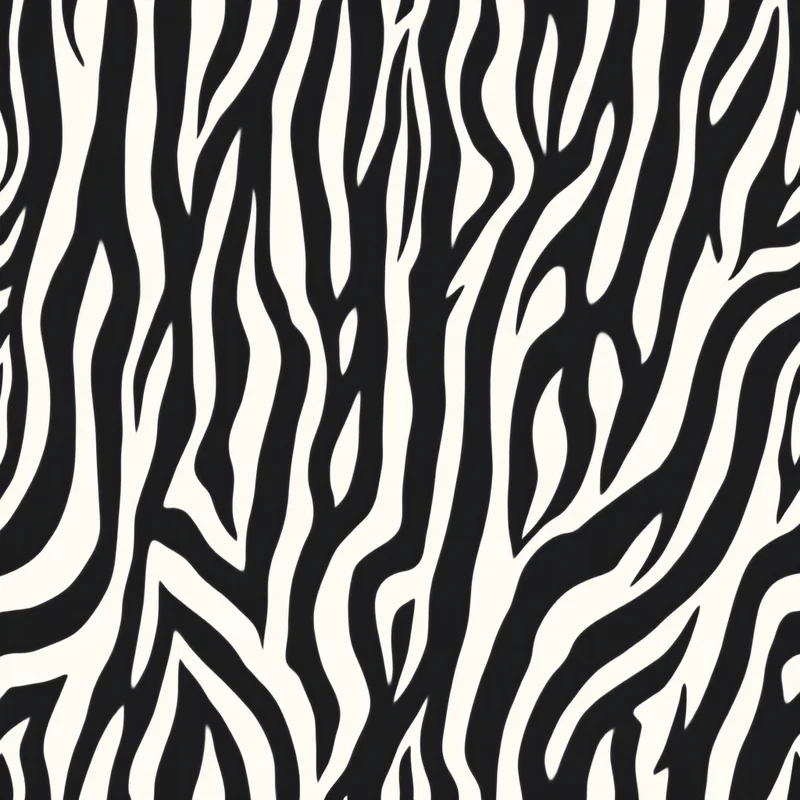
Zebra print pattern design is the practice of arranging bold, organic stripes into a repeating motif inspired by the coat of a zebra. Unlike a simple striped pattern, zebra stripes vary in width, taper to fine points, and occasionally branch or curve, which gives the print its living, hand-painted quality. The classic version is high-contrast black on white, but the same structure carries any two-tone palette.
For surface design, the goal is almost always a seamless tile: a single block of stripes that repeats invisibly in every direction. That lets you scale the print to a tiny phone case or an entire curtain without ever showing a seam.
Origins of the zebra motif
Humans have been fascinated by zebra markings for centuries, and the print entered Western fashion and interiors in earnest during the early twentieth century, when bold animal motifs signaled glamour and adventure. Art Deco interiors embraced graphic black-and-white, and by mid-century zebra had become shorthand for statement style on rugs, chairs, and evening wear.
Each real zebra carries a unique stripe arrangement, almost like a fingerprint, which is part of why the motif feels so striking. Good zebra print pattern design honors that individuality by avoiding mechanical repetition and keeping the stripes lively.
Visual hallmarks of bold zebra stripes
A few qualities separate a convincing zebra print from a generic stripe:
- Varied stripe width. Lines swell and narrow rather than holding one thickness.
- Organic taper. Stripes thin to sharp points, especially where they meet.
- High value contrast. Strong dark-against-light keeps the pattern legible at any scale.
- Subtle flow. Stripes lean and curve instead of running as rigid verticals.
- Occasional branching. A few lines split or merge, mimicking a real coat.
Nail these and your zebra print pattern design reads as authentic rather than synthetic.
How to generate it in Pattern Weaver
Building a seamless zebra print in the studio takes only a few steps.
- 1Open the studio and choose animal print. Head to the studio, start a fresh pattern, and select an animal print or stripe style. Type a prompt describing bold zebra stripes with strong contrast.
- 2Set stripe scale and density. Use the scale slider to control stripe width and the density slider to space the lines. Aim for natural variation rather than perfectly even gaps.
- 3Choose your color palette. Keep it classic black and white for maximum impact, or load a custom two-tone palette while keeping a clear value difference between the tones.
- 4Generate and refine variations. Generate the seamless tile, then compare a few options. Tweak stripe weight, contrast, and orientation until the flow feels organic and lifelike.
- 5Export at print resolution. Export the finished tile in PNG or TIFF at up to 8K (8192x8192) for fabric, wallpaper, or packaging, picking the size that matches your product.
Because Pattern Weaver builds every tile to repeat seamlessly, you skip the tedious manual seam-fixing that usually eats up the most time. For a deeper walkthrough of tiling, see our guide on how to create seamless patterns.
Color palette ideas
Black and white is the icon, but the zebra structure shines in many palettes:
- Charcoal on cream for a softer, vintage feel that suits home textiles.
- Navy on blush for a fashion-forward, slightly unexpected twist.
- Gold on deep teal for luxury packaging and accessories.
- Espresso on camel for a warm, earthy neutral scheme.
- Cobalt on white for a punchy, contemporary statement.
The single rule is contrast: keep enough value difference between the two tones so the stripes stay bold. Drop the contrast intentionally and the same zebra print pattern design becomes a quiet tonal texture, useful for linings and backgrounds.
Best use cases for zebra print
Bold zebra stripes earn their keep across a wide range of surfaces:
- Apparel: dresses, scarves, swimwear, and accent panels.
- Home textiles: cushions, throws, upholstery, and curtains.
- Wallcoverings: statement walls and accent furniture wraps.
- Packaging: cosmetics, candles, and premium gift boxes.
- Stationery and accessories: notebooks, phone cases, and tote bags.
If you sell on print-on-demand platforms, a strong zebra print travels well across many products. Our guide to pattern design for print on demand covers how to prep one tile for an entire catalog.
Pro tips for a better zebra print
- Lean into irregularity. Lower the regularity so stripes are not identical; real coats are never uniform.
- Mind the tile scale. Oversized stripes feel modern and editorial; tighter stripes read as classic texture from a distance.
- Test at final size. Preview the print at the scale of your actual product before exporting.
- Keep a high-res master. Export your largest version first so you can downscale for smaller items later.
- Try a recolor. Generate the black-and-white version, then explore palette swaps to widen your product range.
If you are new to AI pattern tools, our primer on how to make a pattern with AI explains the workflow from prompt to export.
Start designing your zebra print
Bold stripes never really go out of style, and a clean, seamless zebra print pattern design is one of the most reliable additions to any surface design library. Pattern Weaver turns a quick prompt into a print-ready tile, complete with the organic stripe variation that makes the look convincing.
Browse ready-made starting points on the create page, compare plan options on the pricing page, and then jump straight into the studio to make your first zebra print today.