
Suzani is the embroidery tradition of Central Asia — Uzbekistan, Tajikistan, Kazakhstan, Kyrgyzstan and surrounding regions — and one of the most visually distinctive textile traditions in the world. The word itself comes from the Persian "suzan" meaning needle, and the tradition encompasses heavily embroidered cotton or silk panels featuring lush floral compositions, medallions, suns, moons and ornamental motifs rendered in vibrant silk threads. Originally produced as dowry pieces and ceremonial textiles, suzanis have become coveted decorative objects in international design markets and a significant reference point for contemporary surface pattern designers.
For designers building contemporary pattern work, suzani offers a deeply considered design vocabulary with strong commercial resonance. The compositional logic, motif relationships and palette structures of traditional suzani translate effectively into contemporary surface pattern design across many application categories. This guide examines the tradition and the ways contemporary designers draw on it.
The Suzani Tradition
Suzani embroidery developed in the Central Asian regions along the Silk Road, with the production centres of Bukhara, Samarkand, Tashkent and Nurata each developing distinctive regional styles over centuries. The tradition was strongly tied to women's domestic production — the bride's mother and female relatives would begin embroidering a suzani when the daughter was young, often working on the piece for years before her marriage. The completed suzani would be presented as part of the dowry and used in the marital home as bedcover, wall hanging, ceremonial cloth or decorative panel.
The technical execution involves chain stitch, satin stitch and couching techniques applied to natural-fibre ground cloth, typically cotton or silk. The thread is silk, typically dyed in vibrant natural colours that have been refined and standardised over centuries of regional practice. The compositions are usually first drawn on the ground cloth using a paste or thread guide, with the embroidery then executed by multiple embroiderers each working on a section of the larger piece.
The compositions themselves typically feature a central medallion or sun motif surrounded by symmetrical arrangements of floral, geometric and ornamental elements. The motifs draw on a vocabulary that includes pomegranates (representing fertility), tulips (representing wealth and elegance), peacocks, suns, moons, stars, scrolling vines and stylised botanical elements. Each motif carries specific symbolic meaning within the tradition, though the contemporary uses of suzani-inspired design often draw on the visual vocabulary without necessarily preserving the original symbolic associations.
The Visual Vocabulary
Several characteristic visual elements make suzani work immediately recognisable. The compositional structure typically uses a clear central focal point — often a large medallion or sun motif — surrounded by symmetrical or near-symmetrical arrangements of supporting motifs. This focal-plus-supporting structure differs from the more distributed compositional logic of some other folk embroidery traditions and provides the suzani's signature visual presence.
The motif vocabulary blends botanical and geometric elements with consistent stylisation. Pomegranates appear as round fruit forms with characteristic ornamental treatment. Tulips appear as upright stylised flower forms. Scrolling vines connect motifs across the composition. Suns and moons appear as central or anchor motifs. The botanical motifs are rendered as decorative interpretations rather than as botanical illustrations, with internal patterning that emphasises ornamental effect.
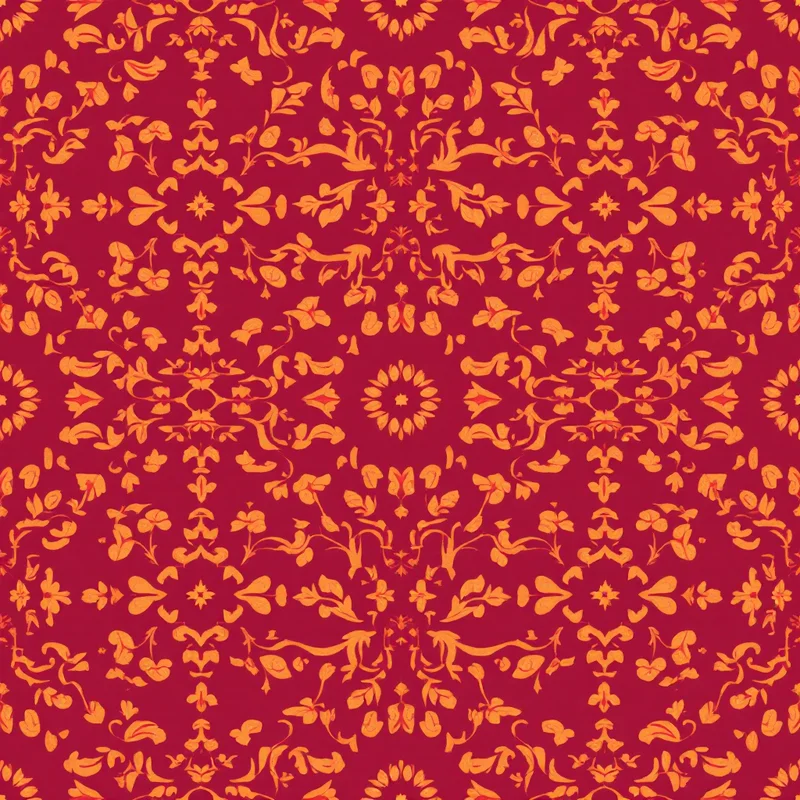
The palette of traditional suzani embroidery has well-established conventions. Rich red — typically a slightly orange-shifted red rather than pure crimson — dominates many compositions and provides the visual anchor. Forest green and emerald appear extensively as complementary colours. Deep blues and indigos appear as accent colours. Gold and yellow appear as highlight colours. Pink, purple and other colours appear in specific regional traditions. The white or natural cotton ground provides the field that allows the bold thread colours to read clearly.
The scale of motifs in suzani compositions tends to be large — the original textiles were intended to be viewed from across a room and used as substantial decorative pieces. The large motif scale combined with the symmetrical compositional logic produces visual presence that translates effectively into wallpaper, large-format textile and wall art applications in contemporary design.
Contemporary Design References
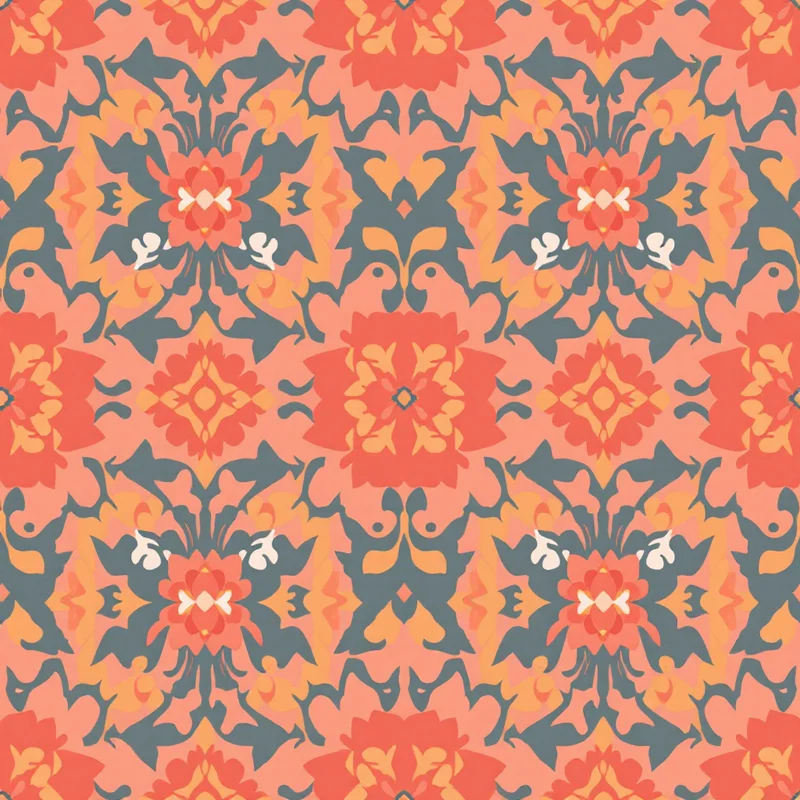
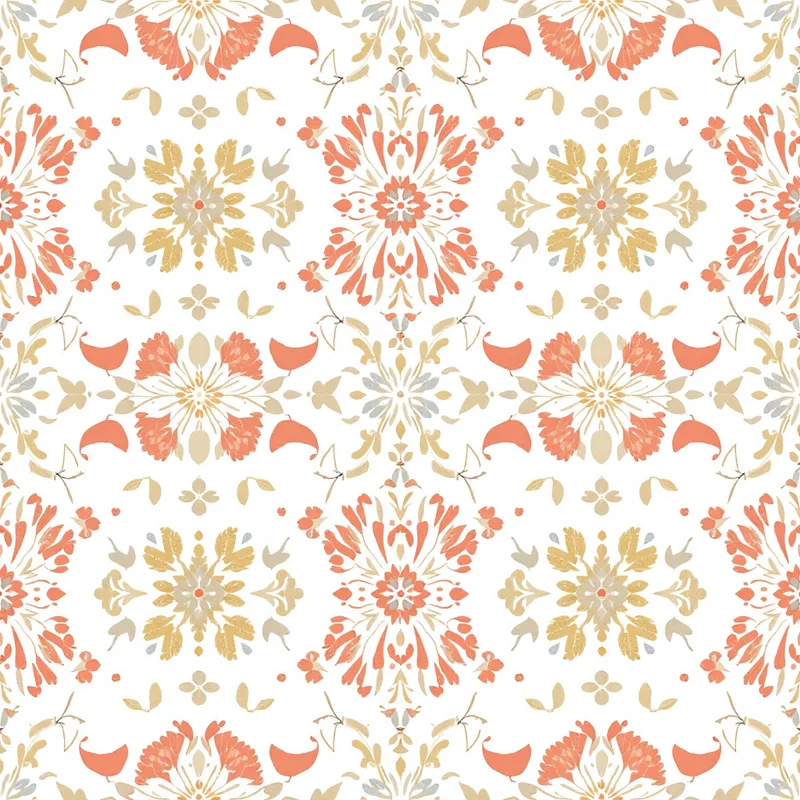
Contemporary designers drawing on suzani influence have several productive approaches. Direct contemporary suzani-inspired designs preserve the compositional structure (central medallion with symmetrical surrounding motifs) and motif vocabulary (pomegranates, stylised florals, scrolling vines) while updating the rendering style and adapting the colour palette to contemporary commercial contexts. These designs read clearly as suzani-influenced while operating effectively in contemporary applications.
Abstract suzani interpretations preserve the compositional logic — central focal motif with surrounding ornamental elements — while replacing the specific motif vocabulary with contemporary or alternative motifs. These designs draw on the suzani structural intelligence without committing to the specific motif tradition.
Palette-led suzani references draw on the colour vocabulary of suzani (rich reds, forest greens, indigo blue, gold accent against cream ground) while applying these palettes to contemporary motif vocabulary. These designs signal the cultural influence through palette while operating in contemporary visual language.
The most commercially successful contemporary suzani-influenced patterns tend to balance recognisable cultural reference with contemporary design sensibility. Direct reproduction of traditional suzani designs has its market but is increasingly niche — sympathetic contemporary interpretation has broader commercial appeal.
Palette Strategy for Suzani-Inspired Work
The palette structure of traditional suzani provides a template that translates effectively into contemporary applications. A primary rich red — slightly warm, slightly muted, with depth and warmth rather than aggressive saturation — serves as the dominant colour. Forest or emerald green provides complementary contrast. Indigo or deep navy blue provides additional structural colour. Gold or warm ochre provides accent and highlight. Cream or off-white ground provides the field colour.
This five-or-six-colour palette structure produces patterns with significant colour interest while remaining commercially controllable. Designers can shift specific colours within the structure — adapting the red toward burgundy for autumn collections, the green toward sage for softer contemporary positioning, the gold toward brass for more vintage feel — while preserving the suzani colour logic.
For contemporary commercial work, designers often simplify the palette further. Two or three colours plus cream ground can produce patterns that signal suzani influence while remaining commercially flexible. Single-colour suzani-influenced patterns on cream ground produce dramatic statement work that reads clearly as suzani-influenced through composition and motif vocabulary alone.
Motif Adaptation for Contemporary Use
The traditional suzani motif vocabulary translates with varying degrees of directness into contemporary applications. The pomegranate motif translates beautifully and has been used extensively in contemporary suzani-inspired design — the round fruit form with ornamental internal treatment offers clear botanical reference and visual richness. The stylised tulip motif translates similarly well and provides additional botanical vocabulary.
Scrolling vine motifs provide connective tissue between focal motifs and translate effectively into contemporary repeat structures. The sun and moon motifs work well as central anchor elements in contemporary designs. The various ornamental geometric motifs — rosettes, stars, decorative borders — provide supporting vocabulary that integrates effectively with the botanical elements.
Contemporary designers often introduce additional botanical motifs not present in traditional suzani — peonies, ranunculus, dahlias, contemporary florals — rendered in suzani style and integrated with the traditional motif vocabulary. This approach extends the suzani vocabulary into broader contemporary application while preserving the cultural reference.
Applications and Markets
Suzani-influenced patterns excel across several commercial categories. Home decor textiles — throw pillows, drapery, upholstery, table linens — have used suzani influence extensively in premium and boutique positioning. The bold colour, rich motif vocabulary and clear cultural reference all support sophisticated commercial presence.
Wallpaper applications in suzani-influenced design have grown substantially. The large motif scale and dramatic compositional structure translate effectively into feature wall applications, and the cultural reference signals considered taste in contemporary interior design.
Luxury and premium fashion applications use suzani-influenced patterns in scarves, accessories and statement pieces. The compositional logic of the central medallion with surrounding ornamental elements translates effectively into the classical luxury scarf format discussed earlier in this blog.
Hospitality and commercial interior design applications use suzani-influenced patterns extensively in boutique hotels, restaurants and curated retail environments where the bold visual statement and cultural reference support distinctive brand positioning.
Respectful Practice
For designers drawing on suzani as a contemporary design reference, several practices support respectful and responsible work. Acknowledging the source tradition openly in marketing and product copy provides appropriate cultural attribution. Studying authentic suzanis in collections, books and academic sources builds the deep familiarity needed to draw on the tradition with understanding rather than surface imitation. Avoiding direct copying of specific traditional motifs preserves the distinction between inspiration and reproduction.
Supporting the originating cultural communities materially — through purchasing authentic suzanis, supporting fair-trade producers, or licensing original designs through fair-trade arrangements — provides appropriate economic recognition for the tradition's living producers.
For designers working at scale in this vocabulary, considering collaboration with Central Asian designers and producers, or licensing arrangements that funnel proceeds back to originating communities, provides the most direct support for the tradition.
Suzani is a deep and powerful design vocabulary that rewards designers willing to engage seriously with its conventions. The compositional logic, motif relationships and palette structures all reflect centuries of refined practice, and contemporary work that draws on this tradition at its best builds on the underlying intelligence rather than imitating the surface vocabulary. The category supports commercial work of significant aesthetic ambition and provides a vocabulary that retains relevance across many commercial categories and trend cycles.
Explore related pattern styles
Patterns for