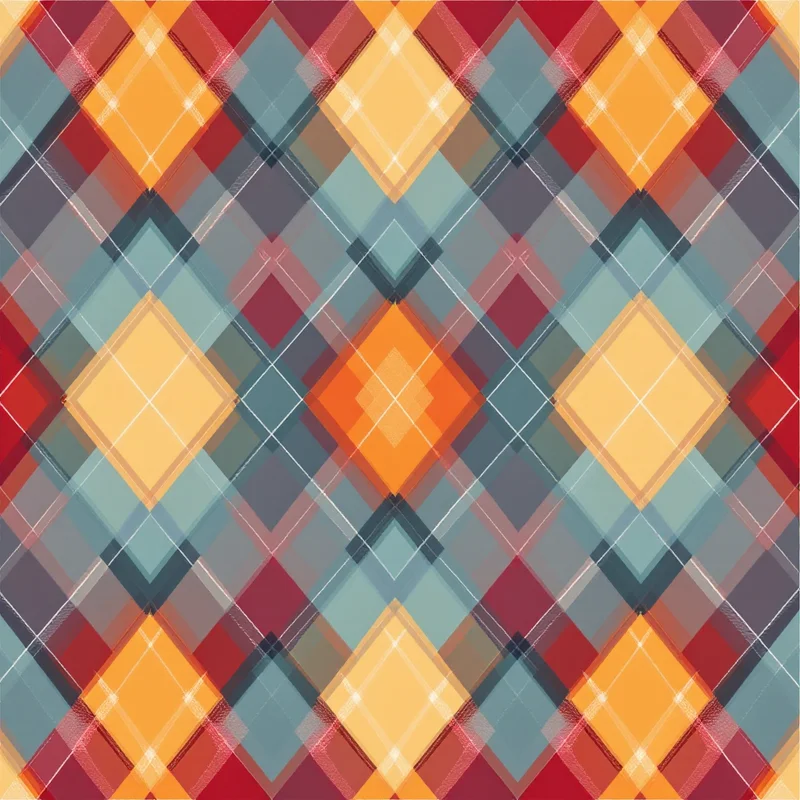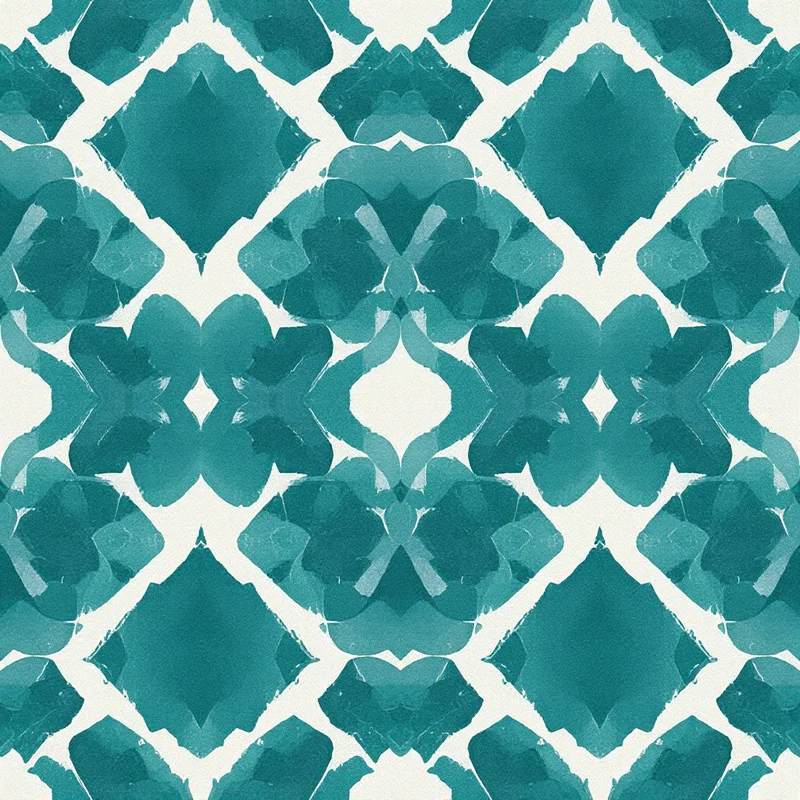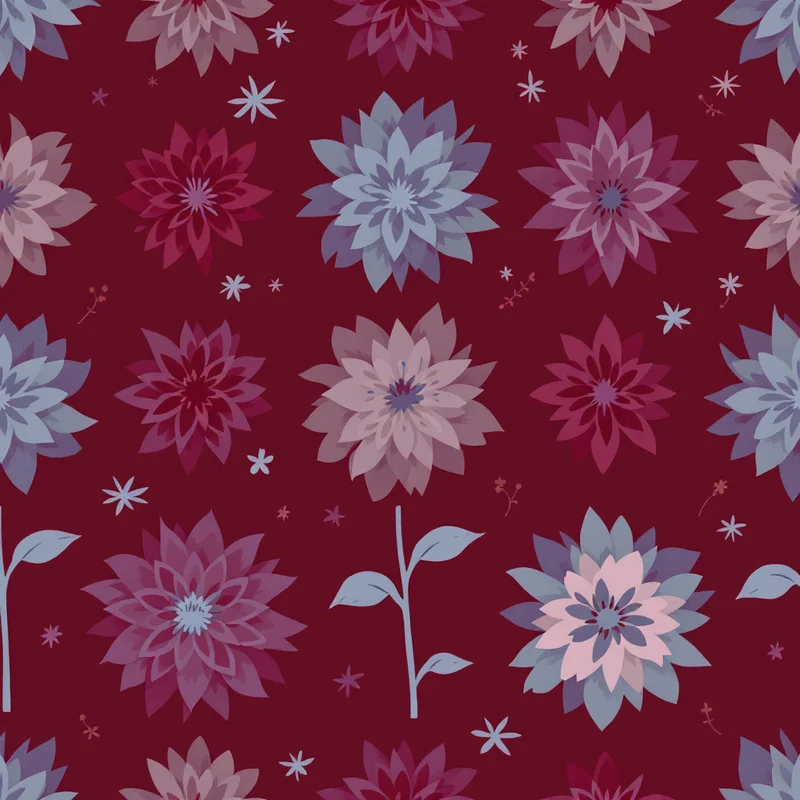

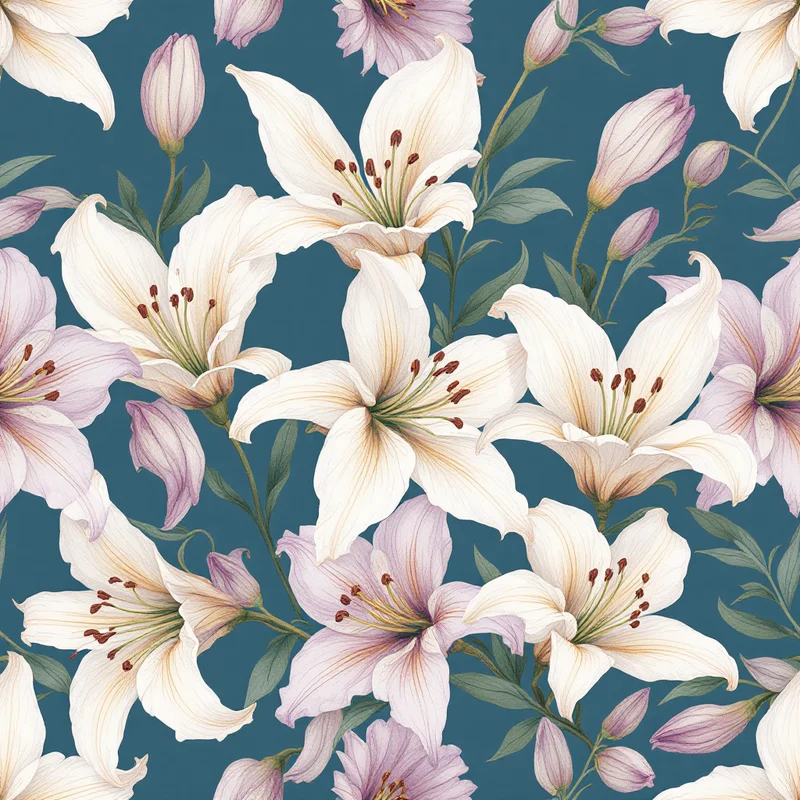
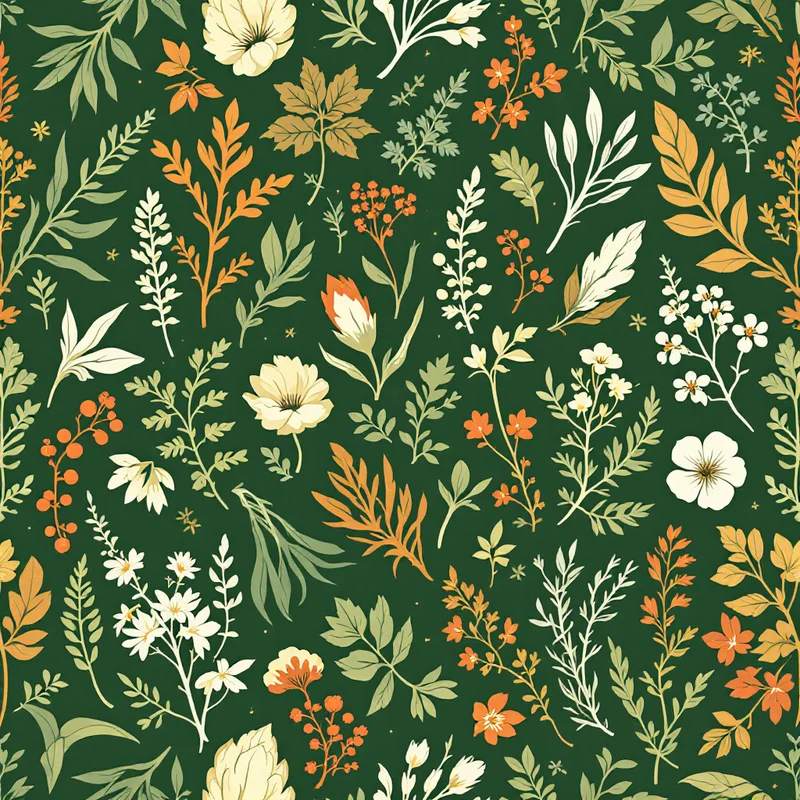
Stationery has quietly become one of the largest and most reliable markets for independent surface pattern designers. The category covers notebooks, journals, planners, sticker books, bullet journals, paper diaries, scrapbook supplies, gift wrap, greeting cards, washi tape, sticky notes and countless other paper-based products. What unites them all is that the pattern on the cover or page is the primary purchasing trigger. Customers do not buy a notebook because of its paper weight. They buy because the cover spoke to them.
This makes stationery a forgiving and lucrative entry point for new pattern designers. The print runs are short, the licensing structures are flexible, the seasonal cycles are predictable, and a single strong pattern collection can generate revenue for years across multiple product applications. But it also means stationery is a category where competition is fierce and where the difference between a pattern that sells and a pattern that languishes in a portfolio comes down to specific commercial considerations that designers from textile or wallpaper backgrounds sometimes miss.
Understanding the Stationery Market
The stationery customer is not the same as the textile customer. They are typically purchasing for personal use rather than gifting, the unit price is lower, and the purchase decision is often made in under thirty seconds in a retail or online environment that is dominated by visual first impressions. This shifts the design strategy. Patterns that read clearly at thumbnail size dominate. Patterns that require close inspection to reveal their charm tend to underperform.
The market also splits along a clear axis between functional and decorative stationery. Functional stationery — planners, work journals, productivity systems — sells on patterns that feel sophisticated enough for an office context but warm enough to encourage daily use. Decorative stationery — gift journals, scrapbooks, premium notebooks — sells on patterns that feel like artwork, often with bolder colour, larger motif scale and more obvious aesthetic commitment.
Within each segment, three customer profiles dominate purchasing. The aesthetic-driven buyer purchases stationery as part of a curated lifestyle aesthetic — minimalist, cottagecore, dark academia, vintage — and these buyers are loyal to specific visual language across many purchases. The functional buyer purchases stationery as a tool and chooses patterns based on whether the cover signals the right kind of work — calm, energetic, organised, playful — for the task. The gift buyer purchases stationery for someone else and chooses patterns that feel universally pleasing rather than personally specific.
Pattern Strategy for Notebook Covers
Notebook covers are the workhorse of the stationery category. They are sold individually, in sets, and in collections, with print runs from one hundred to several million depending on the brand. The dimensions are typically A5 or A4 with some smaller pocket sizes, and the printable area is usually a clean rectangle without the irregular die-cut considerations that complicate greeting card design.
The technical constraint is that the cover is a small, often laminated surface that will be touched and looked at thousands of times during the life of the product. Patterns with very fine line work can lose definition once laminated, particularly with matte lamination which softens edges. Patterns with very high contrast can feel harsh in the hand during use. The sweet spot for most notebook covers is medium-scale motifs with confident colour, soft to medium contrast, and an overall composition that feels balanced rather than aggressively centred.
Spine considerations matter more than most designers initially realise. The spine is a narrow strip — typically one to two centimetres wide for a standard notebook — and the pattern that runs across the spine will often be the visible edge when the book is shelved. A pattern that breaks awkwardly at the spine, or whose key motifs always land in the spine area, will look unfinished. Designers working with brands rather than print-on-demand should always check the spine treatment in the production proof.
Designing for Planners and Bullet Journals
Planners introduce additional considerations because the cover pattern is the public face but the internal pages are the daily use experience. The dominant commercial trend for planners is a strong, brand-defining cover pattern paired with quiet, functional interior pages — usually grid, dot grid, or minimal floral footers — that do not compete with the user's own writing and washi tape decoration.
The cover pattern strategy for planners increasingly leans toward what the industry calls "complete-the-aesthetic" design. The customer is buying a planner for the entire year. They will look at the cover daily. They want the pattern to feel sustainable for that length of relationship — meaning not too trend-specific, not too holiday-locked, and visually rich enough to keep rewarding repeated viewing.
Successful planner cover patterns tend to share several characteristics. They use grounded, slightly muted palettes rather than bright primaries. They feature recognisable motifs — florals, botanical studies, abstract geometrics, painterly washes — rendered with enough specificity to feel artisanal. They avoid hot trend signifiers that will date the planner within months of purchase. And they often work as a complete collection — six to twelve coordinated covers in a single launch — rather than as isolated standalone designs, because planner customers often buy multiples for different purposes.
Bullet journal customers are a related but distinct market. They are typically buying blank dot-grid or grid notebooks and decorating them extensively themselves. The pattern strategy for bullet journals is therefore covers that feel like they want to be customised — gentle, supportive, frame-like designs that the customer can build into with their own colour palette and decorative additions. Aggressive cover patterns underperform in this segment because they fight the customer's own creative intentions.
Gift Wrap and Greeting Cards
Gift wrap is its own category with its own rules. The pattern must repeat seamlessly across a sheet that may be one or two metres long, must read well from medium distance (because gifts are seen from across a room before they are picked up), and must work in two orientations because the wrapping process rotates the paper unpredictably. Non-directional patterns dominate the category for this reason. Stripes are popular but vertical-horizontal stripes risk reading as utilitarian; diagonal stripes and chevrons feel more festive.
For gift wrap, scale is bigger than most designers expect. A motif that reads as medium-scale on a notebook cover reads as small or precious on wrapping paper. A working rule is to roughly double the motif scale you would use for paper goods, and to consider that the wrap will often be obscured by ribbon, tags and folds. Designs with significant negative space tend to outperform busy designs because the customer is using the wrap as a frame for the gift, not as the main visual event.
Greeting cards are a fundamentally different design problem because the dimensions are small, the format is portrait-oriented and the cover often combines pattern with typographic message. The most commercially successful greeting card pattern designs treat the pattern as a background frame for headline lettering — patterns with a clear centred clear zone or a hierarchy that allows lettering to overlay cleanly. Standalone repeat patterns without a designed messaging area limit the card's commercial flexibility because the licensee has to add their own typographic treatment.
Theming and Collection Strategy
The single biggest lever in stationery is collection coherence. A single beautiful pattern sells modestly. A coherent collection of six to twelve coordinated patterns — sharing a palette, a motif family, a thematic anchor — sells multiples per customer and unlocks bundle pricing, gift box configurations and cross-product applications across journals, planners, gift wrap and cards.
Successful collections tend to be built around a clear thematic anchor that the customer can name in one sentence. "Vintage botanical apothecary." "Modern desert minimalism." "Cottagecore mushroom and meadow." "Mid-century kitchen still life." The anchor lets the customer immediately understand what the collection is for and signals to retailers that the collection has shelf-presentation potential as a set.
Within a collection, the pattern range should include three rough tiers. Two or three hero patterns are the bold statements that anchor the collection — these go on the products that need the most visual energy, like gift wrap and statement journal covers. Three or four secondary patterns are calmer variations on the hero theme, designed to coordinate without competing — these handle the planner covers, mid-range notebook lines and complementary card designs. And one or two utility patterns are small-scale, near-neutral designs that act as connective tissue across the collection — these go on smaller accessories, interior pages, washi tape and any product that needs to coordinate without dominating.
Practical Production Notes
Stationery printers vary widely in capability. Premium European producers can handle ten-colour printing with foil stamping and embossed finishes. Bulk Asian producers are typically four-colour CMYK with limited finish options. Print-on-demand stationery platforms are CMYK digital with quality that has improved dramatically but still falls short of offset for fine detail.
Designing across these tiers requires understanding which patterns will translate where. High-contrast graphic patterns survive any printer. Subtle tonal patterns require offset or high-quality digital. Patterns with metallic accents need foil-stamp capability and the metallic must be a separate layer in your file delivery, not a CMYK gold that will print as flat brown.
For files, deliver patterns at 300 DPI in CMYK with embedded ICC profile, plus a high-resolution preview JPG and a coloured swatch document showing each palette colour at its print specification. Most stationery licensees expect a brand-ready delivery package, not just the raw pattern file.
Stationery remains one of the surface design categories where independent designers can build sustainable income across many years. The customers are loyal, the licensors are accessible, the technical constraints are forgiving compared to fabric or wallpaper, and a strong collection has unusual longevity. The designers who thrive in this space treat each collection as a small brand world rather than a set of decorative files, and they earn the long-term licensing relationships that define commercial success in paper goods.
Explore related pattern styles
Patterns for