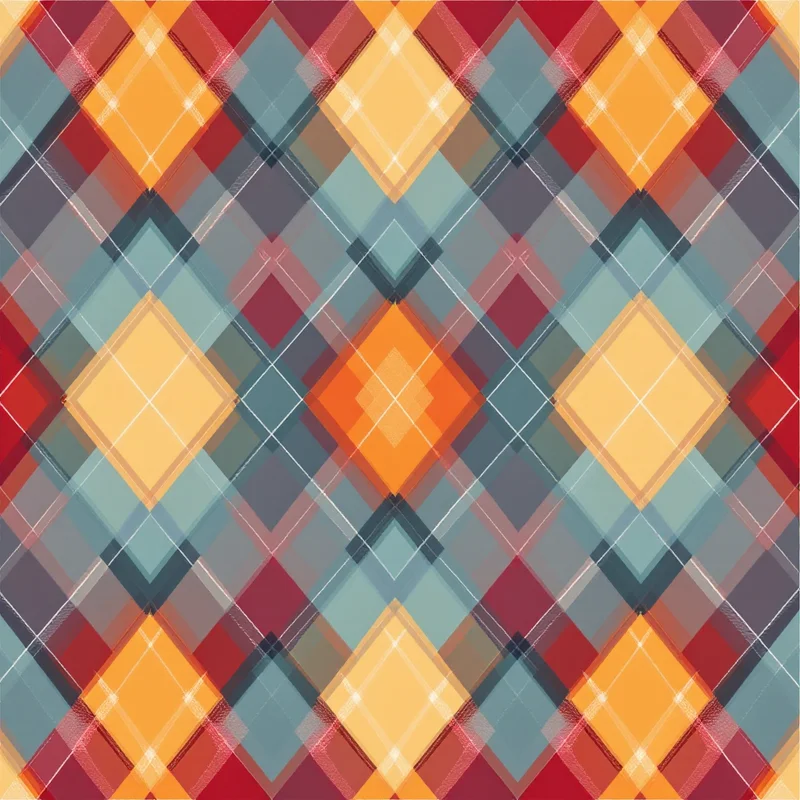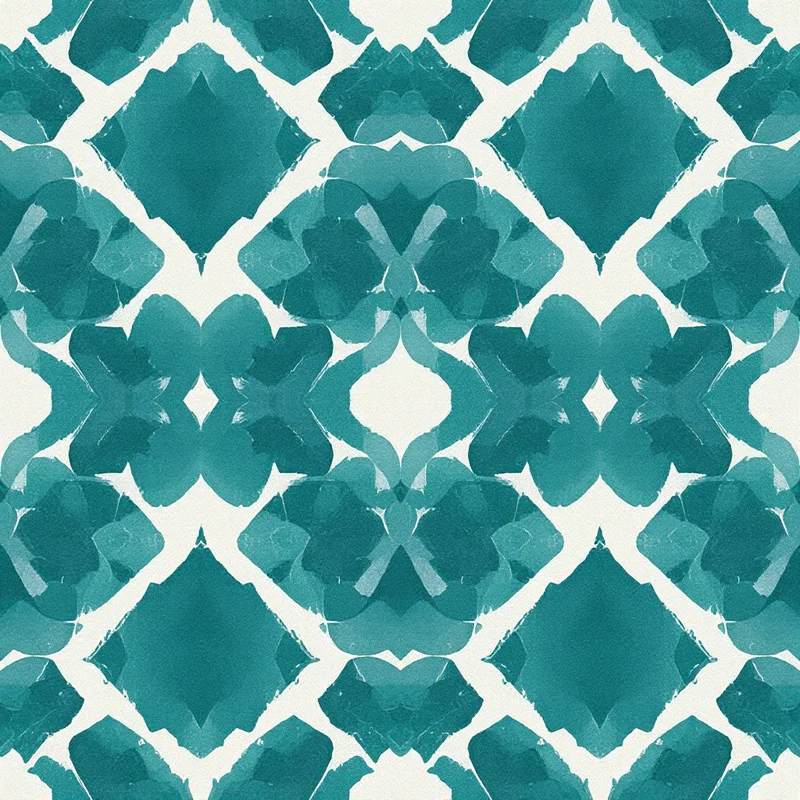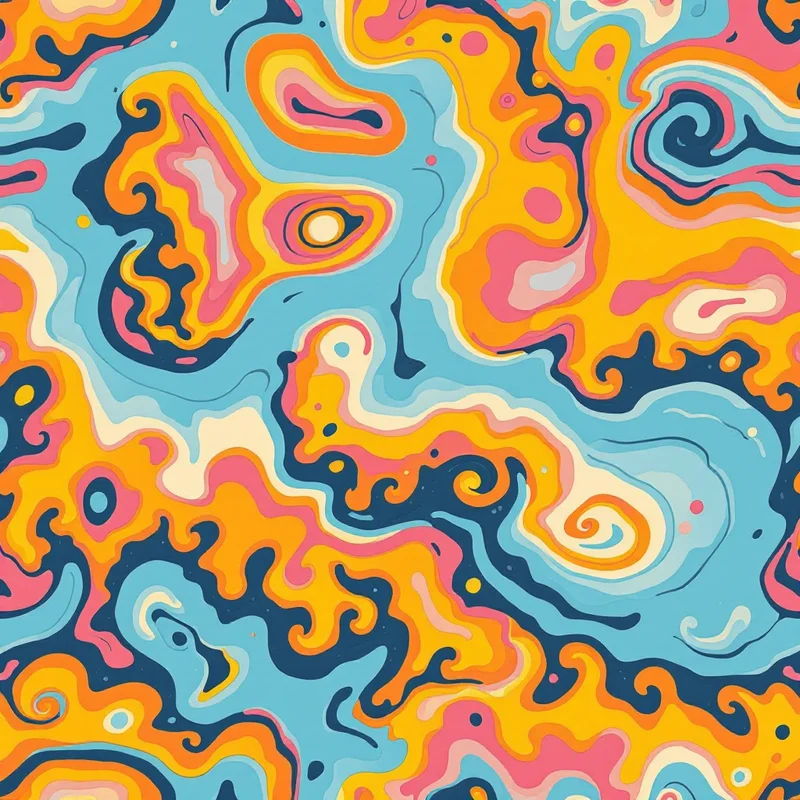
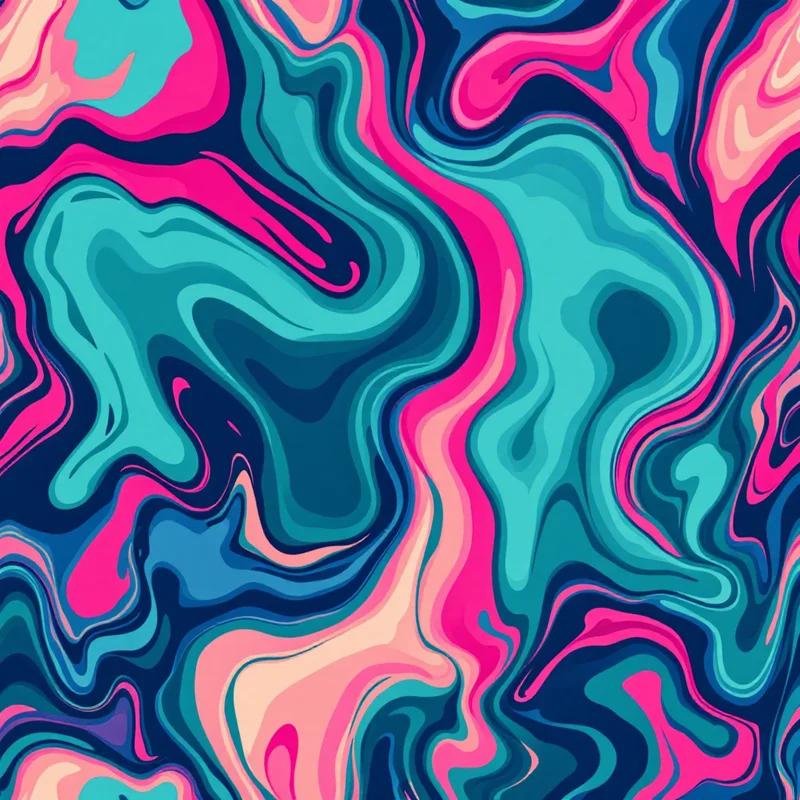
The first time someone sees a properly built psychedelic pattern across a full bolt of fabric, their eyes do something strange. The colors vibrate. The motifs seem to breathe. The seams between tiles dissolve. That effect is not an accident — it is the product of a hundred small craft decisions about hue, contrast, motif scale, and repeat structure. This guide breaks down what a psychedelic pattern actually is, where the style comes from, what makes it work visually, and how to generate strong psychedelic pattern tiles inside Pattern Weaver in under ten minutes.
What is psychedelic pattern?
A psychedelic pattern is a surface design built to evoke altered perception. Saturated colors clash on purpose. Forms swirl, melt, repeat, and overlap. The figure-ground relationship is deliberately unstable so the eye never quite resolves what is foreground and what is background. The intent is sensory overload presented as beauty.
Visually, psychedelic pattern shares territory with op-art, Art Nouveau, biomorphic abstraction, and 1960s poster design — but it is a distinct discipline. A floral is not psychedelic unless the colors fight and the curves warp. A paisley is not psychedelic unless the boteh distorts and the palette goes acid. The style is defined as much by what it does to the viewer as by what it depicts.
Where psychedelic pattern comes from
The look crystallized in San Francisco between 1965 and 1969. Poster artists like Wes Wilson, Victor Moscoso, Stanley Mouse, Alton Kelley, and Rick Griffin were designing concert posters for the Avalon Ballroom and the Fillmore, and they needed to make work that grabbed attention in cluttered street windows. They borrowed from Art Nouveau lettering (Alphonse Mucha's swirling type), op-art (Bridget Riley's vibrating geometry), Vienna Secession poster design, and the new full-spectrum offset printing technology that could finally hold saturated inks side by side without muddying.
The result was a visual language that spilled out of poster art into album covers, fashion textiles, wallpaper, and home furnishings within five years. By 1969 Marimekko, Liberty of London, and dozens of American textile mills were producing psychedelic pattern yardage at scale.
The style has cycled back into fashion every twelve to fifteen years since. Tom Ford for Gucci in 1999, the entire indie sleaze era around 2008, and the 2020s mushroom-wellness aesthetic have all leaned hard on psychedelic pattern vocabulary. The look is not nostalgia. It is a working commercial style that comes back when culture wants to feel maximalist again.
Visual hallmarks of psychedelic pattern
Five traits separate genuine psychedelic pattern from generic colorful design.
Saturated, clashing palettes. Magenta against lime. Electric orange against cobalt. The colors are at full saturation and chosen to vibrate against each other, not to harmonize.
Curving, organic line work. Straight lines are rare. Forms bulge, swirl, drip, and warp. The motifs feel like they were drawn while the artist was watching something invisible.
High motif density. The tile is busy. Negative space, when it exists, is itself colored and patterned rather than neutral. The eye has nowhere to rest.
Unstable figure-ground. Foreground and background swap depending on which color the eye latches onto. This is the op-art inheritance, and it is what makes psychedelic pattern feel alive.
Loose symmetry. Bilateral or radial symmetry is common but never strict. Repeats vary slightly so the surface reads as organic rather than mechanical.
How to generate psychedelic pattern in Pattern Weaver
The studio handles psychedelic pattern as a first-class style. The workflow below takes about ten minutes from start to export.
1. Pick the psychedelic style. Open the Pattern Weaver studio and choose Psychedelic from the style menu. Select a substyle — 1960s poster, liquid light show, or biomorphic op-art — to anchor the visual direction before tuning anything else.
2. Build a high-contrast palette. Set four to six colors that fight each other on the color wheel. Pair magenta with lime, electric orange with cobalt, or hot pink with turquoise. Avoid muted tones — psychedelic pattern lives or dies on saturation.
3. Push density and scale. Dial density to medium-heavy so the surface stays busy without becoming mud. Scale motifs medium-large so curves and swirls remain readable when the tile repeats across a yard of fabric or a wallpaper panel.
4. Generate and iterate. Run the generator, then refine. Lock the palette you like and re-roll the composition, or lock the composition and try a different colorway. Two or three iterations usually land a strong tile.
5. Export at the right size. Once the tile reads cleanly at thumbnail size, export at up to 8K (8192×8192 px) in PNG, JPG, WEBP, TIFF, PDF, or SVG. Use TIFF for textile printing, SVG for vector apparel, PNG for digital mockups.
For more on the underlying seamless workflow, the seamless pattern guide walks through the tiling math in detail.
Color palette ideas for psychedelic pattern
Strong psychedelic pattern palettes break a few rules at once. Five combinations that work commercially:
Acid sunset: electric orange, hot pink, deep purple, lime accent. Reads festival and 1960s rock poster.
Liquid light: magenta, turquoise, sun yellow, black halo. The Joshua Light Show palette — saturated and tropical.
Mushroom realm: deep teal, mustard, rust, blush, ivory. The 2020s wellness psychedelic palette, less aggressive than the 1960s reference but still recognizably psychedelic.
Op-art classic: pure black, pure white, hot pink. Three colors, maximum vibration.
Rave revival: UV green, electric blue, white, hot magenta. 1990s second-wave psychedelic, useful for streetwear and club merch.
Best use cases for psychedelic pattern
The style sells in specific commercial categories.
Apparel. T-shirts, hoodies, festival wear, swimwear, scarves, sneakers. Streetwear brands like Online Ceramics, Aries, and Stüssy build entire seasonal collections around psychedelic pattern.
Wallpaper. Maximalist interior design has brought psychedelic wallpaper back into both residential and hospitality projects. Restaurant powder rooms and boutique hotel lobbies are the dominant end-uses.
Packaging. Cannabis, wellness, vinyl reissues, craft beer, and natural wine all use psychedelic pattern on packaging to signal counterculture credibility.
Accessories. Phone cases, tote bags, yoga mats, water bottles, skateboard decks. The print-on-demand category leans heavily on psychedelic pattern because the look photographs well in product mockups.
Home decor. Throw pillows, duvet covers, shower curtains, area rugs. The trend pieces of any maximalist interior.
The print-on-demand pattern guide covers the file specs and licensing details for each of these channels.
Pro tips for stronger psychedelic pattern repeats
A few moves separate strong psychedelic pattern from amateur attempts.
Limit the palette to four colors before adding a fifth. Most failed psychedelic patterns have too many hues fighting at once, with no hierarchy.
Push one element extra-large and let it dominate. Even distribution of motifs reads as wallpaper. One dominant form reads as design.
Use black or white outlines selectively. A thin halo around key motifs sharpens contrast and pulls the design out of the muddy zone.
Test the tile at thumbnail size. If the repeat is readable at 200 pixels wide, it will work on apparel, packaging, and product mockups. If it dissolves into noise, the motif scale is wrong.
Mix one unexpected element. A typographic fragment, a photographic texture, or a single realistic object inside an otherwise abstract psychedelic pattern keeps the design from feeling like a costume.
For more on the AI-assisted side of pattern development, the AI pattern workflow breaks down the brief-writing and iteration loop.
Generate your own psychedelic pattern
Pattern Weaver was built so designers can stop hand-drafting repeats and start shipping production-ready surface design files at speed. The Psychedelic style is one of dozens of first-class motifs the studio supports, with substyles, palette presets, density and scale controls, and exports up to 8K in PNG, JPG, WEBP, TIFF, PDF, and SVG. Commercial license is included on all paid credit packs.
Browse the full catalog of pattern categories at /create/, see what fits the budget on pricing, or jump straight to the studio and start building. The first few tiles take a minute or two each. By the tenth tile, the rhythm clicks and a full collection comes together inside a single afternoon. Whether the end-use is a hoodie drop, a wallpaper line, or a packaging refresh, the psychedelic pattern aesthetic rewards designers who commit to saturation and density — and Pattern Weaver gives that commitment somewhere to land.