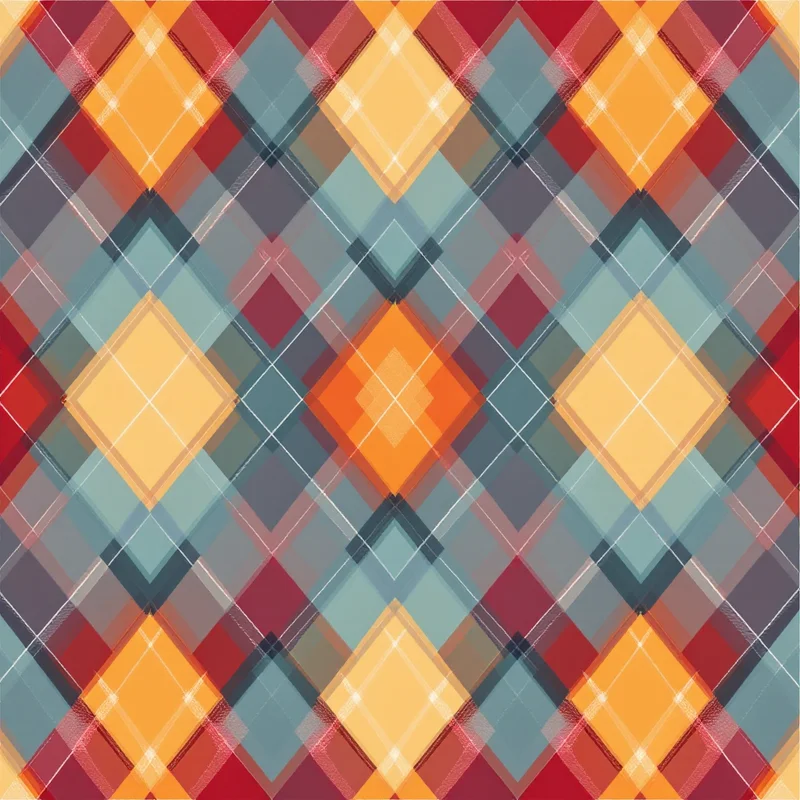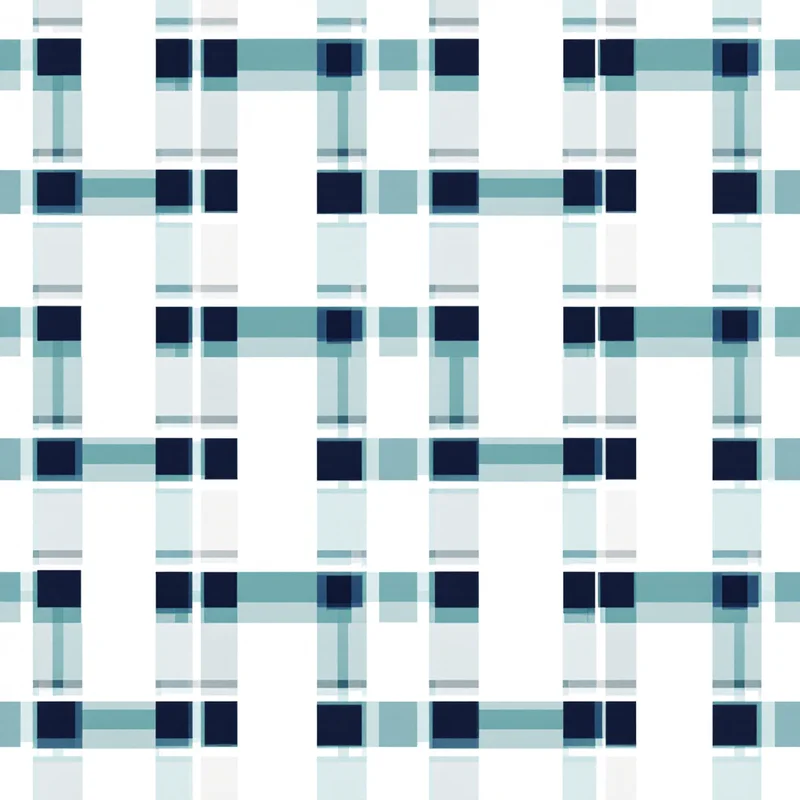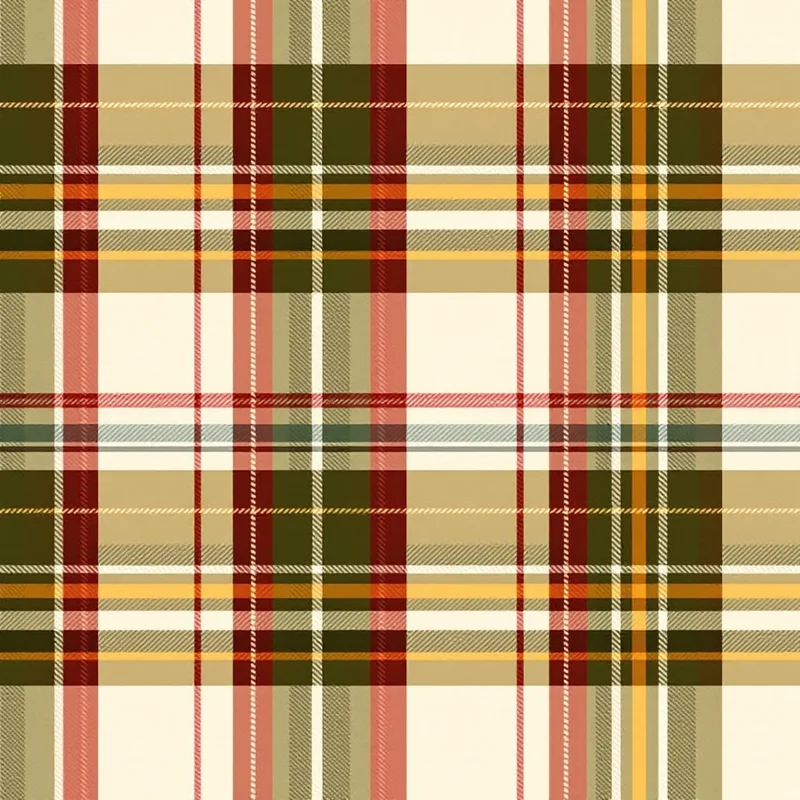
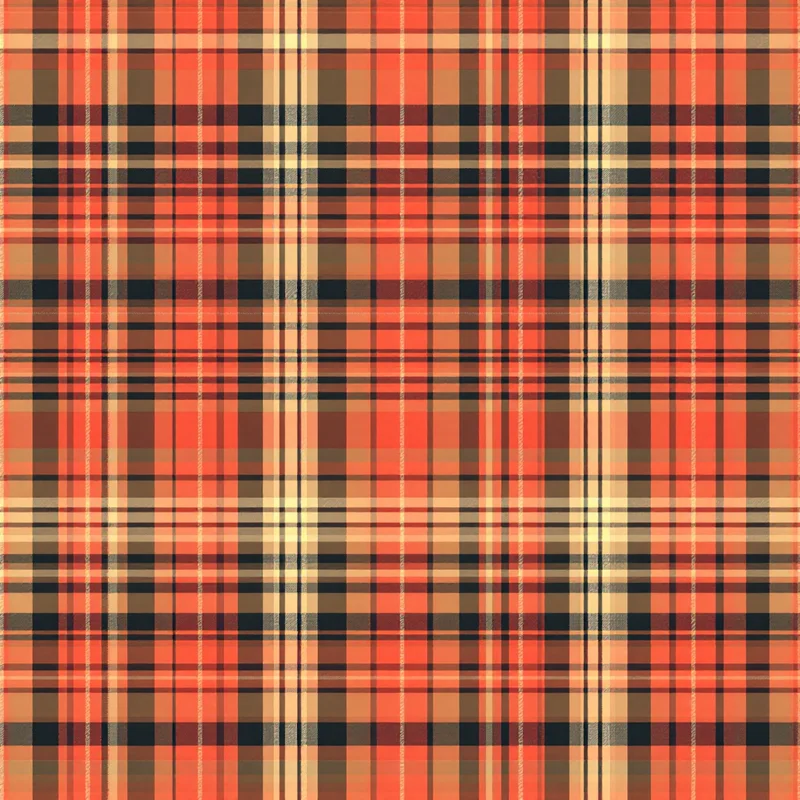
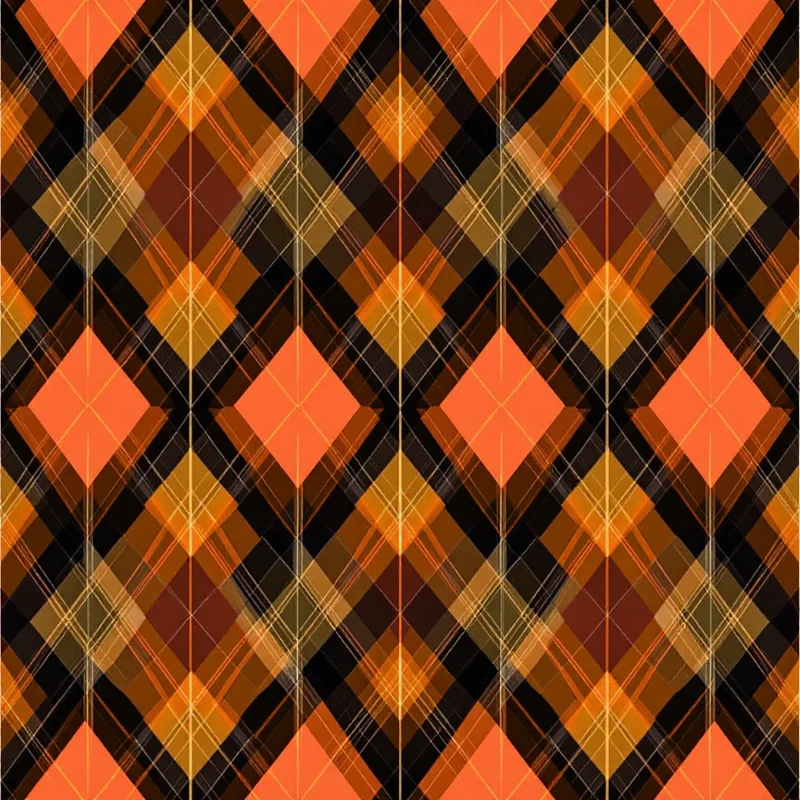

Plaid and tartan are among the most structurally complex pattern vocabularies in textile design. The interlocking system of horizontal and vertical stripes in multiple colours produces patterns that range from simple two-colour buffalo plaid to the intricate registered tartans of Scottish clan heritage. Each plaid or tartan represents a specific design system with rules about which colours appear, how they intersect, what proportions they use and how they relate to other elements within the pattern. Understanding the underlying anatomy of these patterns is what separates plaid and tartan designs that read as authentic from generic stripe-intersection designs that read as cheap imitations.
The category carries deep cultural associations particularly around Scottish heritage tradition, but plaid vocabulary extends well beyond Scottish tartan into a broader textile tradition including American buffalo plaid, French madras, Japanese tartan, Indian madras and contemporary fashion plaid. This guide examines the underlying anatomy of plaid and tartan patterns and the strategic decisions that produce successful contemporary work.
The Structural Anatomy
Plaid and tartan patterns are built from a specific structural logic. The pattern consists of stripes arranged vertically (warp direction) and horizontally (weft direction) in a repeating sequence. Each stripe sequence defines the pattern's "sett" — the basic repeating unit that contains all the colours and proportions of the design. The sett is then repeated across the fabric surface to produce the full plaid pattern.
The visible pattern emerges from the intersections of warp and weft stripes. Where two different colours intersect, the resulting square shows an optical mixing of the two colours. In traditional woven tartan, this optical mixing is produced by the actual woven thread structure. In digital and printed plaid designs, the mixing must be simulated through deliberate design choice — typically by including the intermediate mixed tones explicitly in the design file.
This optical mixing structure is essential to authentic plaid character. Designs that omit the mixing tones — using only the original stripe colours without their intersections — read as basic intersecting stripes rather than as plaid. The intermediate mixed tones provide the visual depth and woven character that gives plaid its distinctive appearance.
The proportional relationships between stripes affect the pattern's character significantly. Even-proportion plaids (all stripes the same width) read as regular and somewhat utilitarian. Variable-proportion plaids (stripes of different widths arranged in deliberate sequence) read as more designed and culturally specific.
The colour count affects character. Two-colour plaids (buffalo plaid, simple checks) read as bold and graphic. Three-colour plaids introduce more visual complexity. Four-or-more-colour tartans read as historically specific and sophisticated.
Tartan Specifically
Tartan is the specific subset of plaid associated with Scottish Highland clan tradition. Each registered Scottish tartan represents a specific design — colour combinations, stripe widths, sett structure — that historically identified a specific clan, family, region or institution. There are thousands of registered tartans in the Scottish Tartans Authority register, with new designs continuing to be registered.
Working with tartan in surface design contexts requires care around the cultural and trademark associations of specific registered tartans. The MacDonald tartan, the Royal Stewart tartan, the Black Watch tartan, the Dress Stewart tartan — these and many others are recognised designs with specific associations. Direct copying of registered clan tartans for unauthorised commercial use raises both legal and cultural questions.
For contemporary designers wanting to work in tartan-influenced vocabulary, several productive approaches exist. Designing original tartan patterns that draw on the structural conventions without copying specific registered tartans produces work that signals tartan influence while remaining clearly original. Working with public-domain traditional tartans that have widely-recognised commercial use (like Black Watch, which has been used commercially for centuries) provides a more confident foundation. Collaborating with Scottish tartan designers or registering original tartans through the Scottish Tartans Authority provides direct cultural engagement.
The structural conventions of tartan provide a strong framework even for original designs. The interlocking warp and weft stripes, the optical mixing at intersections, the proportional rhythm of stripe widths, the careful balance of colours across the sett — all of these can be applied to original colour combinations to produce contemporary tartan-influenced work.
Buffalo Plaid
Buffalo plaid is the simplest plaid vocabulary and one of the most commercially successful. The classical buffalo plaid uses two colours — traditionally red and black, but increasingly green and black, navy and white, or other variations — arranged in equal-width stripes with even spacing. The intersection of the two colours produces a third tone (red-and-black mixing to a deep brown-red, for example) that provides the optical mixing structure.
Buffalo plaid carries strong association with American outdoor culture, lumberjack aesthetic, mid-century cabin and ranch design and contemporary casual fashion. The pattern continues to support significant commercial presence in seasonal collections (particularly autumn and winter), in casual fashion across many demographics, and in home decor textiles for distinctive Americana positioning.
For contemporary buffalo plaid design, the strong cultural associations make palette choices significant. Traditional red-and-black reads as classical Americana. Green-and-black reads as outdoor and forest associations. Other palette variations open up contemporary design possibilities while preserving the structural simplicity that gives buffalo plaid its character.
Madras
Madras plaid emerged from the Indian textile tradition centred in the city of Madras (now Chennai). The original madras textiles used naturally-dyed cotton in vibrant multi-colour plaids that became commercially popular in international markets through colonial trade routes. Contemporary madras retains the multi-colour palette character with significant variation in colour combinations.
Madras plaid is typically more colourful and more variable than Scottish tartan. The palettes often include unexpected combinations — bright pink with lime green and orange, yellow with violet and turquoise — that produce designs with distinctive joyful character. The stripe widths are often more varied than tartan, with both narrow and wide stripes arranged in irregular sequences.
For contemporary madras-influenced design, the palette variability and structural irregularity provide significant creative latitude. The cultural reference is important to acknowledge, particularly for designers without specific connection to Indian textile traditions.
Palette Systems
Tartan palettes have well-established conventions that translate effectively into contemporary work. Hunting tartans — using earth tones, deep greens, browns and muted blues — produce patterns with grounded sophisticated character. Dress tartans — using brighter colours and more white field — produce patterns with formal celebratory character. Ancient tartans — using slightly muted versions of the standard palette — produce patterns with vintage refined character. Modern tartans — using deeper, more saturated versions — produce patterns with contemporary visual energy.
Designers can apply these palette categorisations to original tartan-influenced work. A "hunting" palette of forest green, navy, ochre and cream produces contemporary plaid with grounded character. A "dress" palette with white field and bright accent colours produces patterns with celebratory character.
Buffalo plaid palettes work most reliably with strong contrast between the two field colours. Red-and-black is the foundational palette. Green-and-black, navy-and-white, and other strong contrast combinations work effectively.
Madras palettes work with deliberate multi-colour intensity. Three to six saturated colours arranged in irregular sequences produces the characteristic madras vibrancy.
Contemporary plaid palettes have expanded significantly. Tonal plaids — multiple values of a single colour family arranged in plaid structure — produce designs with subtle sophistication. Monochromatic plaids — black, white and grey only — produce contemporary minimalist statements. Earth-tone plaids — terracotta, ochre, sage, cream — produce designs with grounded contemporary character.
Contemporary Applications
Fashion textiles use plaid and tartan extensively. Menswear suiting, jackets, accessories and ties have used tartan as foundational vocabulary for centuries. Womenswear uses plaid in skirts, dresses, jackets and accessories across many positioning. Children's wear uses plaid extensively, particularly in school uniforms and preppy positioning. Contemporary fashion uses plaid in oversized statement pieces, casual flannel and seasonal collections.
Home decor textiles use plaid across throw pillows, blankets, drapery, table linens and upholstery. The category supports the full range from traditional Scottish tartan through buffalo plaid Americana to contemporary minimalist plaid statements.
Wallpaper applications include both traditional plaid wallpaper and contemporary oversized statement applications. The category has grown as design-forward homeowners use plaid wallpaper for distinctive seasonal and feature applications.
Stationery and paper goods use plaid for seasonal positioning (particularly autumn and winter) and for cultural reference applications. Gift wrap, greeting cards and journals in plaid have consistent commercial presence.
Practical Production Notes
Plaid patterns require careful attention to alignment and registration. Both horizontal and vertical stripes must align precisely at intersections, and any misalignment reads as amateurish even when other elements are correctly handled.
For file delivery, plaid patterns should be specified at sufficient resolution to maintain the precision of the stripe edges and intersection tones. Multi-colour tartan designs may require separate colour layers for production with specific colour matching, particularly for textile licensing into traditional tartan producers.
The intermediate intersection tones should be specified deliberately rather than treated as automatic mixing effects. The specific mixing tone affects the overall character of the design, and explicit specification ensures the production output matches the design intent.
Plaid and tartan reward designers who respect the underlying structural conventions and the cultural traditions that have refined these patterns over centuries. The interlocking stripe logic, the optical mixing at intersections, the proportional rhythm and the palette structure all contribute to designs that read as authentic rather than as generic. The reward for careful attention to these conventions is access to one of the most commercially successful vocabularies in textile design and a tradition that continues to support significant contemporary commercial work across many application categories.
Explore related pattern styles
Patterns for