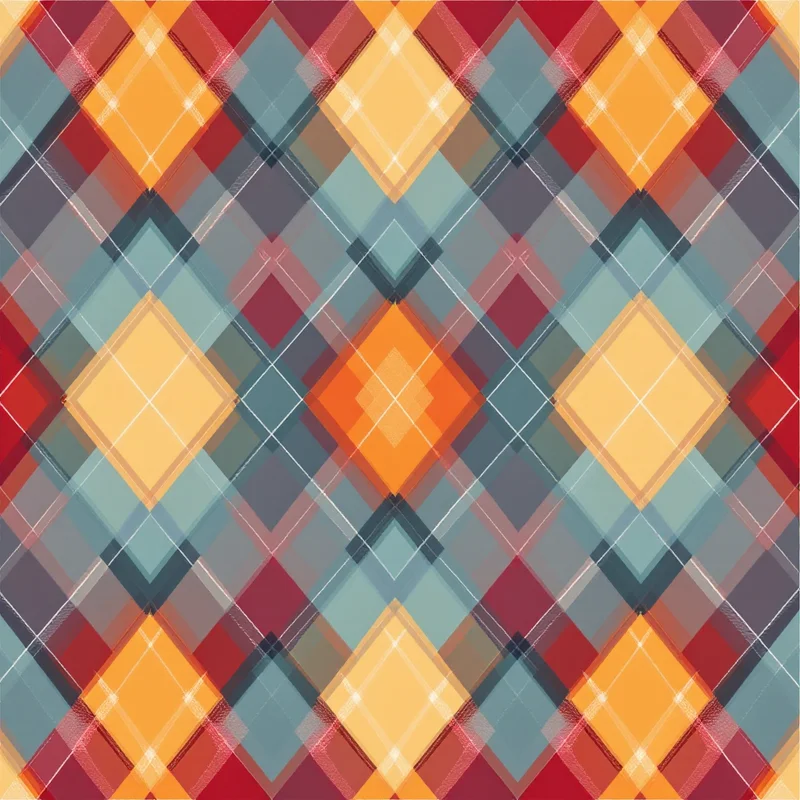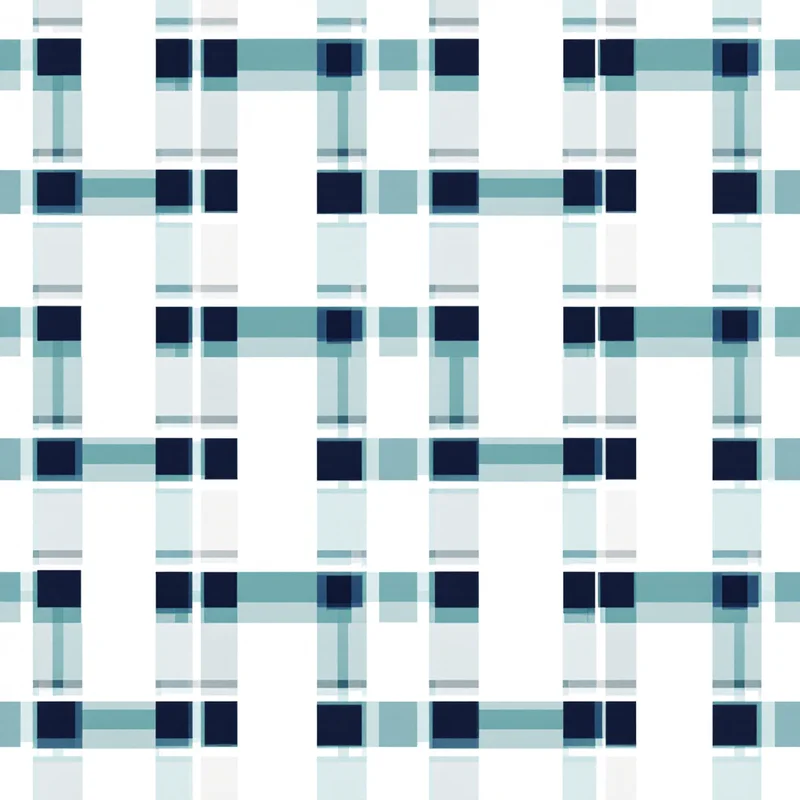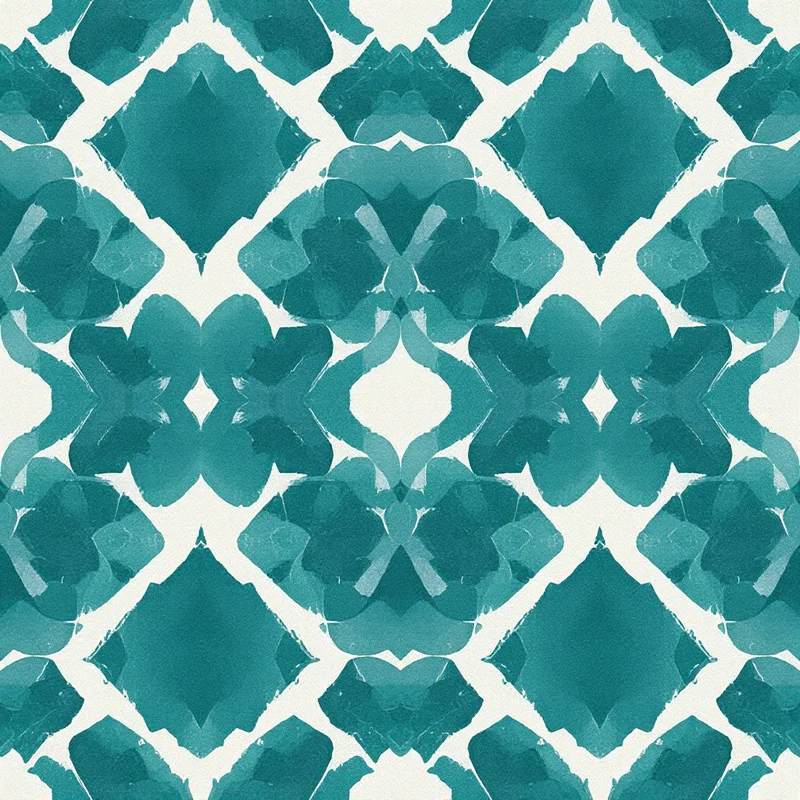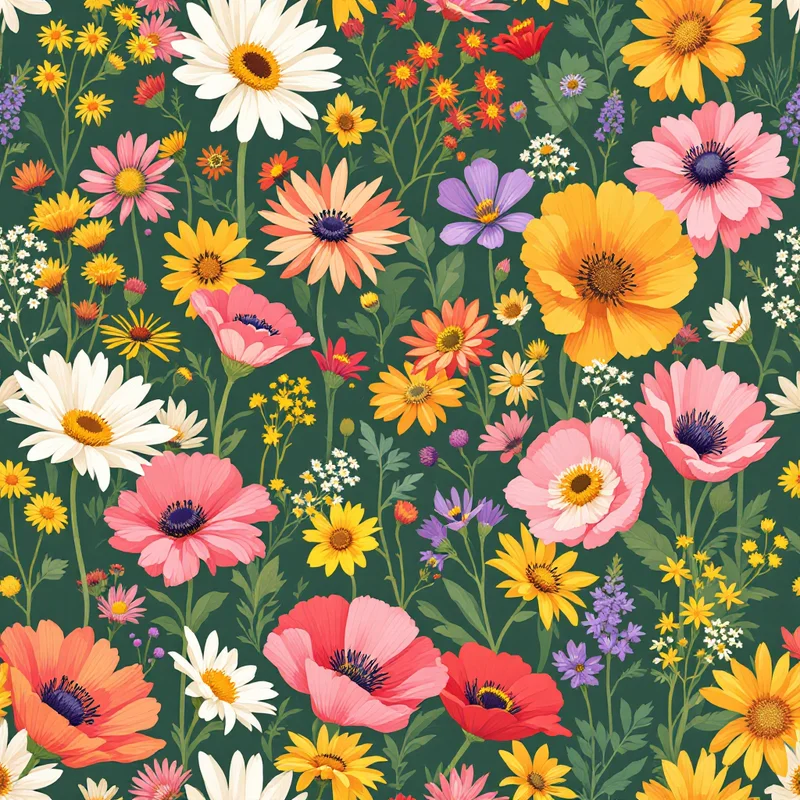
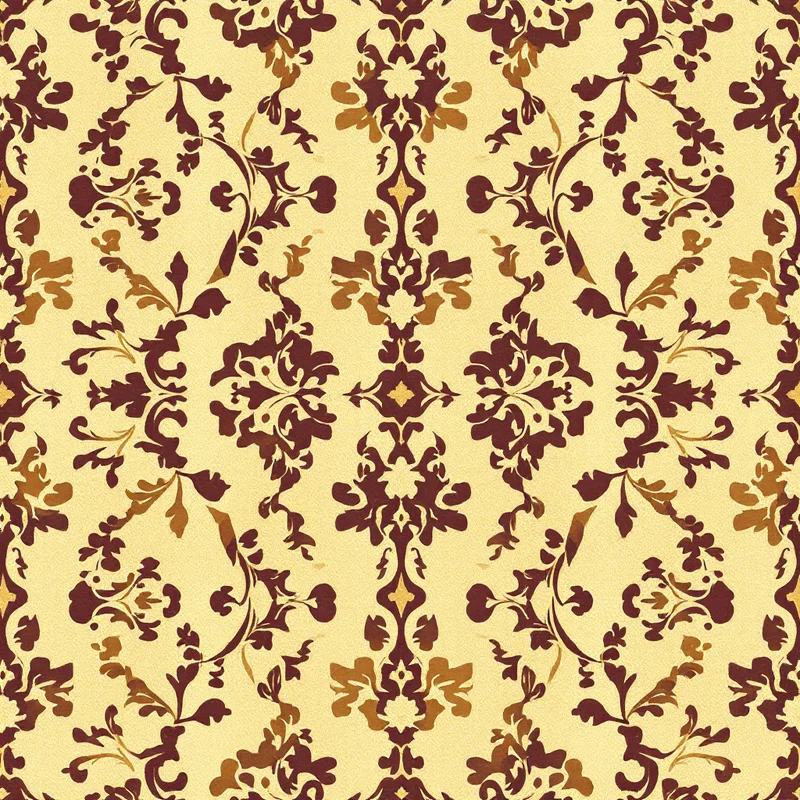
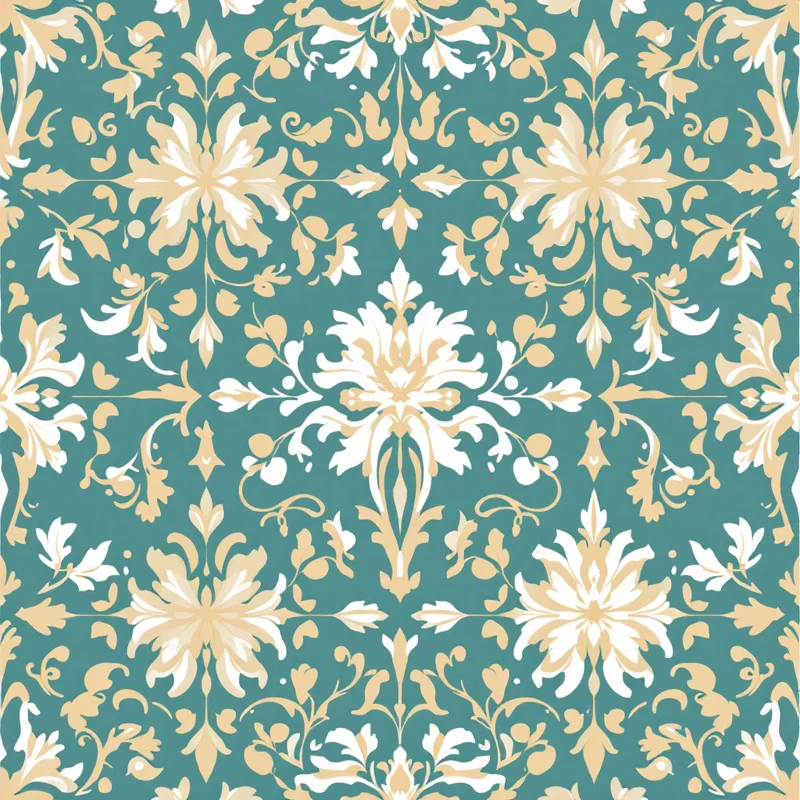
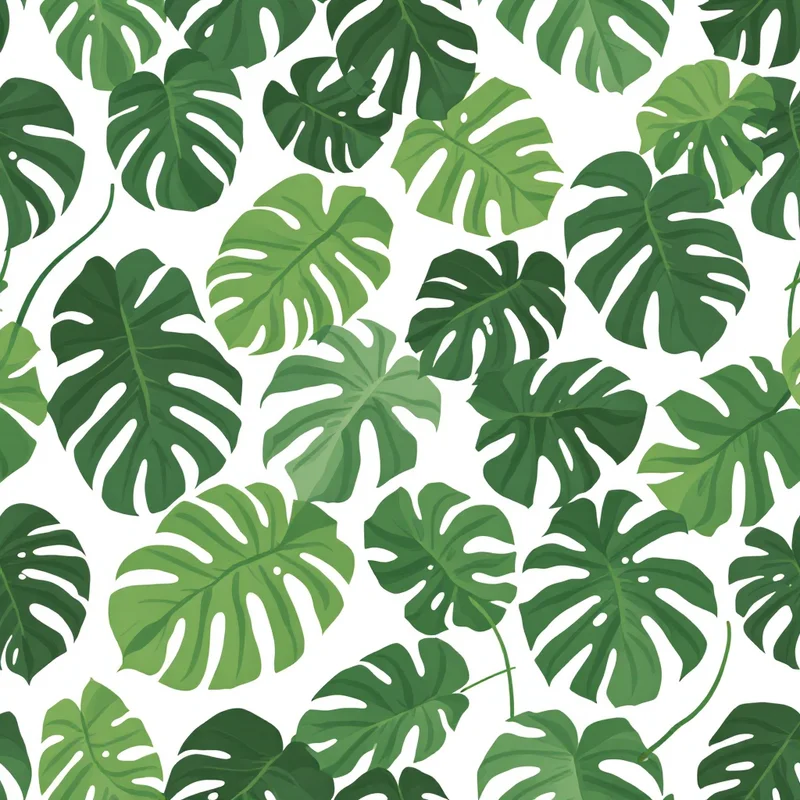
Patterned wallpaper is having the loudest decade it has seen since the 1970s. After roughly twenty years of magnolia-painted walls dominating Western interiors, designers and homeowners have rediscovered that a room with patterned wallpaper on at least one surface has more character, more warmth, and more visual interest than the same room in flat paint. The shift is being accelerated by peel-and-stick formats that remove the commitment of traditional pasting, and by AI design tools like Pattern Weaver that let anyone generate a custom seamless repeat in minutes rather than commissioning a designer or trawling sample books.
This guide covers fourteen patterned wallpaper directions worth generating at home, what makes each one work, the rooms they suit, and how to take a single tile from screen to finished wall.
What is patterned wallpaper?
Patterned wallpaper is any wallcovering whose surface carries a repeating motif. The repeat can be tight and graphic — a Greek key, a micro-floral, a stripe with detail — or loose and painterly, like a watercolor botanical or an abstract brushstroke. What separates patterned wallpaper from a mural is the seamless tile: the same artwork tiles horizontally and vertically across any wall size without visible joins.
The modern category covers traditional pasted papers, non-woven substrates, peel-and-stick vinyl, fabric-backed wallcoverings, and grasscloth. Digital printing has flattened the cost of customization, which is why a one-off bespoke patterned wallpaper is now within reach of most home renovation budgets.

Where patterned wallpaper comes from
Patterned wallpaper as a mass-market product dates to mid-18th century England and France, where block-printed papers replaced expensive tapestries and painted linen as the wallcovering of choice for the rising middle class. Early designs imitated more expensive materials — damask weaves, embossed leather, Chinese hand-painted silk. The Industrial Revolution brought continuous-roll printing in the 1840s, dropping prices and opening patterned wallpaper to ordinary households.
The Arts and Crafts movement, led by William Morris in the 1860s and 70s, pushed patterned wallpaper into serious design culture. Morris's botanical repeats — Willow Bough, Strawberry Thief, Pimpernel — defined what a "good" patterned wallpaper looked like for a century. Art Nouveau, Art Deco, and mid-century modern each contributed their own visual vocabulary. The 1980s pushed patterned wallpaper to a maximalist peak, then the minimalist 1990s and 2000s erased it almost entirely. Its current revival started around 2017 and has not slowed.
Visual hallmarks of patterned wallpaper
Strong patterned wallpaper shares a few traits regardless of style. The repeat is invisible at room distance — the eye reads the wall as a whole, not as a grid of tiles. The motif scale is matched to the room: small tight repeats for bathrooms and hallways, large bold repeats for feature walls. The color palette has enough contrast to register from across the room but enough restraint to live with daily.
Most failed patterned wallpaper fails on one of three counts: the scale was wrong for the room, the colors fought with the furniture and lighting, or the repeat had an obvious horizontal seam that the eye locks onto. Generating in Pattern Weaver removes the third problem entirely — the engine builds seamless tiles by design — and the scale slider plus live palette preview address the first two.
How to generate patterned wallpaper in Pattern Weaver
The studio workflow takes about ten minutes from first idea to exportable file.
- 1Pick a style direction. Open the studio and choose a category that matches the room — botanical, damask, art deco, geometric, chinoiserie, or abstract. The style sets the engine's composition rules and motif vocabulary.
- 1Set palette and scale. Pick three to five colors that match the room's existing tones. Set the scale slider — small for tight ditsy repeats, large for bold accent walls. Both choices preview live before you spend a credit.
- 1Generate and refine. Run the generator. Review the seamless tile preview, regenerate with adjusted density or motif emphasis until the rhythm feels right. Save promising variants to your library for side-by-side comparison.
- 1Export at 8K. Export the final tile at 8K resolution (8192×8192 px) in PNG or TIFF. These formats preserve sharp edges for wall-scale printing. Avoid JPG for tight geometric repeats — compression artifacts show up badly at room scale.
- 1Send to a print service. Upload the tile to a print-on-demand wallpaper service or local digital printer. Most accept a single seamless tile and handle wall-scale tiling themselves. Order a sample swatch before committing to a full room.
A walkthrough of the underlying tile construction sits in how to create seamless patterns for readers who want to understand what the engine is doing behind the scale slider.
Color palette ideas for patterned wallpaper
Fourteen directions worth generating, with the palettes that tend to work in real rooms:
- 1Deep emerald botanical — emerald, forest, soft cream, brass accent. Reads luxe in dining rooms and studies.
- 2Powder room chinoiserie — soft blush, sage, charcoal line work, gold leaf. Ideal for half-baths and dressing rooms.
- 3Art deco fan geometric — black, ivory, brass, blush. Suits entryways and bar areas.
- 4Modern Morris-inspired florals — sage, ochre, terracotta, cream. Warm without being twee, and one of the most versatile floral wallpaper directions to start from.
- 5Bauhaus primary geometric — primary red, blue, yellow on cream. Strong in playrooms and studios.
- 6Ditsy meadow floral — soft pinks, lavender, sage, butter yellow. Bedrooms and nurseries.
- 7Japanese-inspired indigo wave — deep indigo, cream, raw linen. A calm blue wallpaper scheme for bathrooms and meditation spaces.
- 8Italian terrazzo abstract — warm stone, terracotta, sage, charcoal flecks. Kitchens and laundry rooms.
- 9Tropical jungle leaf — deep green, fern, banana yellow, parrot accent. Conservatories and sunrooms.
- 10Vintage damask in modern colors — navy and blush, sage and rust, charcoal and butter. Formal living rooms.
- 11Painterly brushstroke abstract — neutrals with one bold accent. Hallways and stairwells.
- 12Block-print Indian floral — madder red, indigo, mustard, undyed cotton. Reading rooms and snugs.
- 13Mid-century atomic geometric — teal, mustard, walnut, cream. Studies and home offices.
- 14Moody dark florals — black ground, deep botanicals, single bright bloom. Bedrooms and dining rooms.

Best use cases for patterned wallpaper
Patterned wallpaper is the obvious application, but the same generated tile can run further than the wall. Accent walls, full feature rooms, ceiling papers, the back of bookshelves and built-ins, inside wardrobes and drawer linings, custom roller blinds, lampshades, upholstery panels, headboards, fabric for cushions, and stair risers all take a Pattern Weaver tile directly.
Designers running small interiors businesses often generate a coordinating range — one large-scale wallpaper, one mid-scale upholstery print, one small-scale cushion print — from the same palette and motif family. The result is the kind of curated bespoke scheme that used to require a designer-commissioned print collection.
For wider commercial use beyond wallpaper, pattern design for print-on-demand covers fabric, packaging, and gift-wrap workflows.
Pro tips for stronger patterned wallpaper repeats
A few habits separate generated tiles that print beautifully at wall scale from ones that disappoint.
Test the scale at room distance. What looks correct on a 27-inch monitor often reads tiny or chaotic on a 2.7-metre wall. Print a single A4 swatch first, tape four copies to the wall in a 2×2 grid, and step back. If the repeat is obvious or the scale feels off, regenerate before ordering rolls.
Keep contrast under control. High-contrast patterned wallpaper looks striking on screen but exhausts the eye in rooms you sit in for hours. Pull the highest and lowest values closer together for living rooms and bedrooms. Save maximum contrast for entryways and powder rooms.
Watch the directional cues. Florals and figurative motifs have an up-direction. Generate with that orientation in mind — a tile that looks fine as a square crops awkwardly when tiled at 8 ft tall.
Sample before scaling. Almost every digital wallpaper printer offers small sample sheets at low cost. Order one before committing to a 40 sq m order. Color shifts between screen and substrate matter more than most designers expect.
A deeper look at the AI-side workflow is in how to make a pattern with AI, which covers prompting, refinement loops, and palette discipline in more detail.
Generate your own patterned wallpaper
Pattern Weaver was built so designers, homeowners, and small interior brands can produce custom patterned wallpaper without commissioning a print artist or licensing from a stock library. Browse the full motif library at create for inspiration, then open the studio to generate, refine and export your own seamless tile in minutes. The Free tier lets you test the workflow; paid credit packs on pricing — Starter, Pro, and Max — unlock 8K export, commercial license, and the higher generation volumes that production-ready wallpaper work requires.
Whether the goal is one accent wall in a new flat, a coordinated room scheme, or a small wallpaper brand running on print-on-demand, the workflow is the same: pick a style, set a palette, generate, refine, export, print. The wall takes care of the rest.