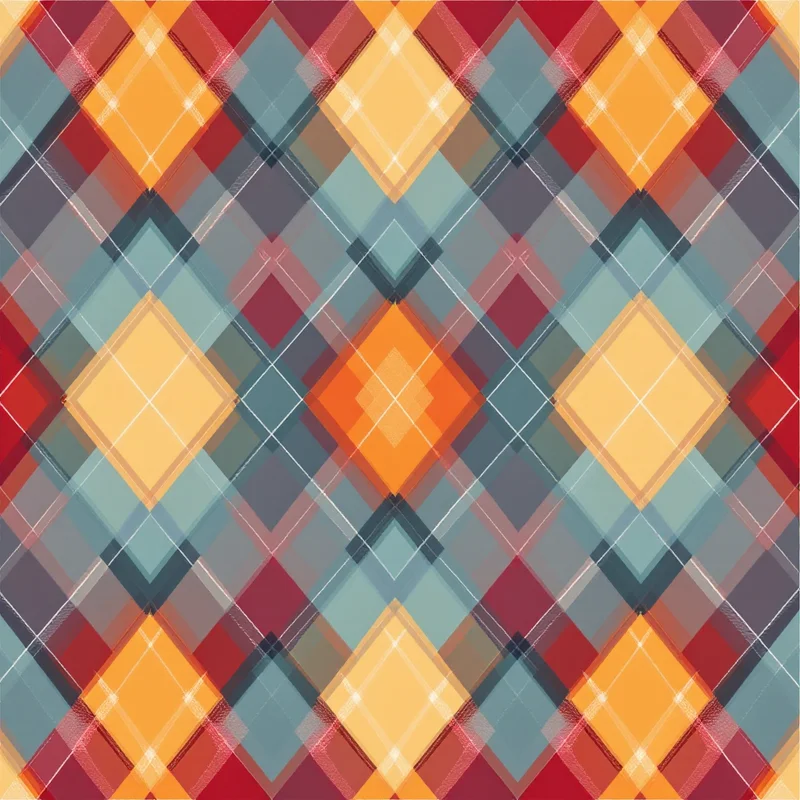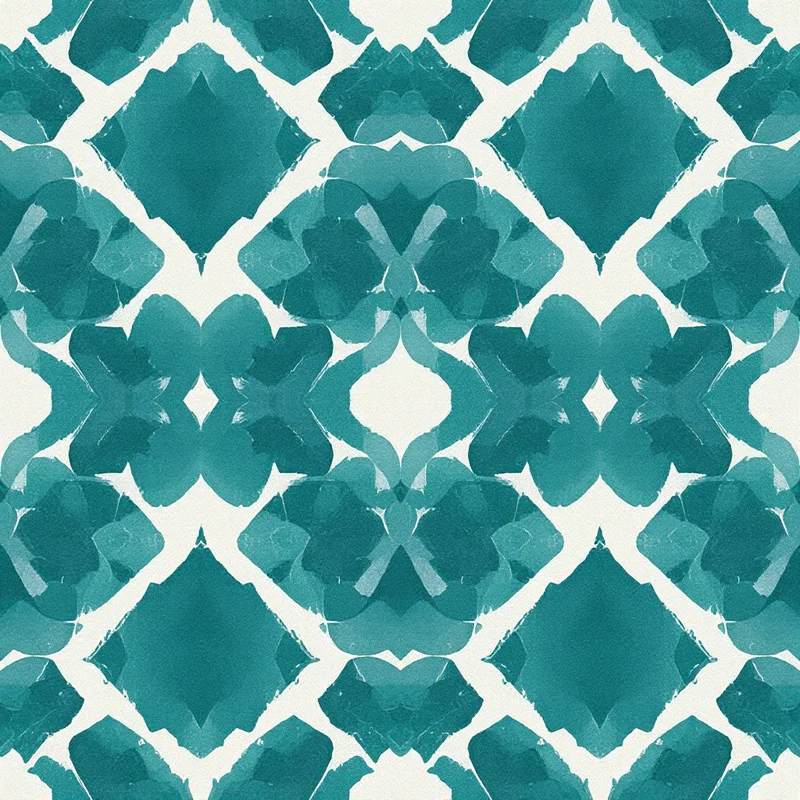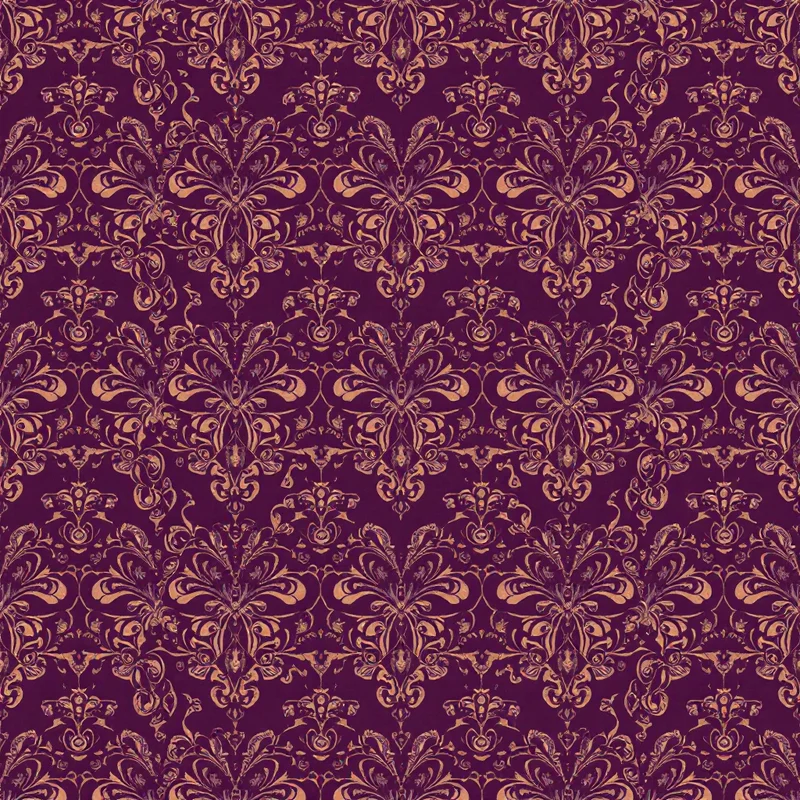
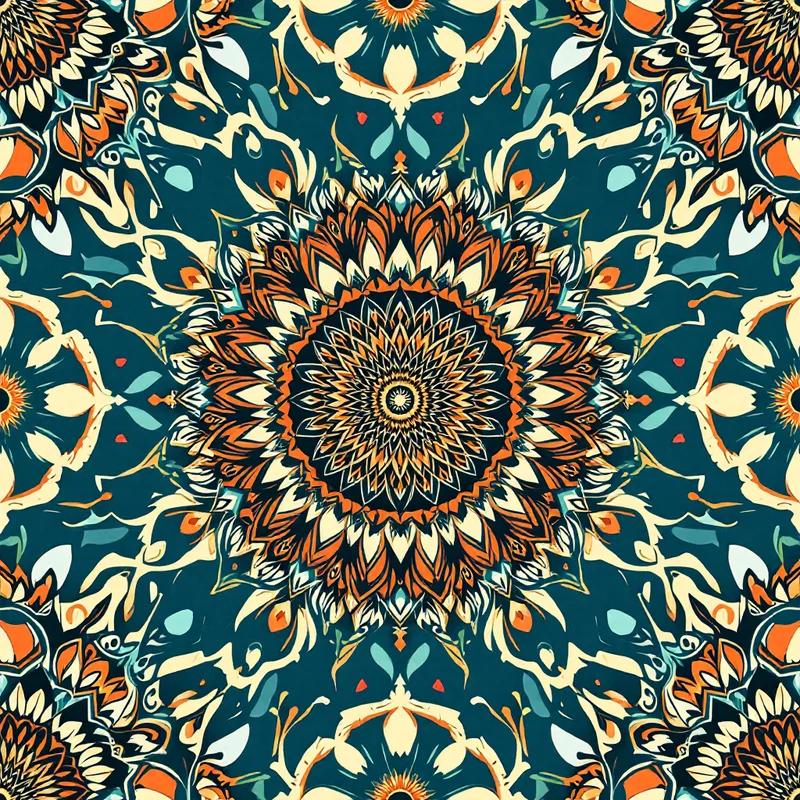
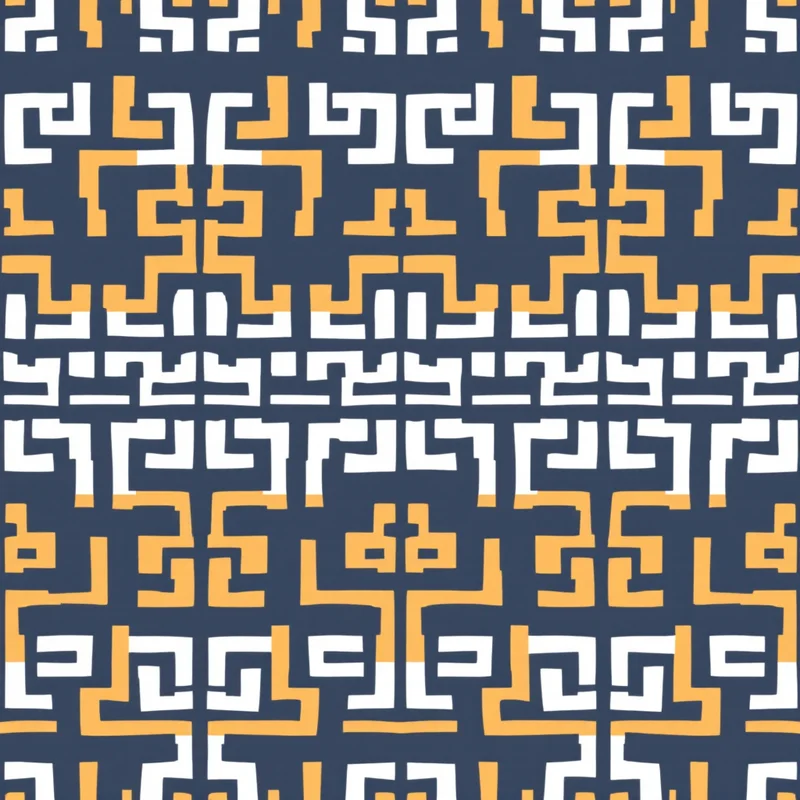
Rug and carpet pattern design operates under a genuinely different set of constraints than wall-based textile design, mostly because of how a floor actually gets looked at and walked on.
Why floors favor radial symmetry
A rug is viewed from every angle as people walk around it, sit near it, and approach it from different directions — unlike a wall, which is almost always viewed from one general direction. This is exactly why the traditional medallion-and-border rug layout has persisted for centuries: a centered, radially symmetric motif reads correctly no matter which side of the rug you're standing on, which a strongly directional all-over pattern simply doesn't.
The medallion-and-border convention
Most historically-rooted rug traditions, particularly Persian rug design, use a layered structure: a central medallion, surrounded by one or more border patterns framing the edge. This isn't just decorative convention — it's a genuinely functional response to the floor's multi-angle viewing problem, giving the design a stable center regardless of viewing direction while still using the border to define the rug's edges clearly.
Scale for a surface people stand on
Rug motifs are typically viewed from a shorter, more consistent distance than wallpaper — standing or sitting nearby, rather than across a large room — which favors moderate-scale, balanced motifs over the very large single-direction statements that work well on a wall. A motif that would read correctly on a feature wall from ten feet away can feel oversized and disorienting underfoot at a two-foot viewing distance.
Color choices that actually hold up to wear
Mid-tone, slightly varied or textured colors hide foot traffic wear, soiling, and fading meaningfully better over time than either very light solid colors (which show dirt) or very dark solid colors (which show fading and lint unevenly). A busy, multi-tonal pattern is a genuinely practical choice for a high-traffic rug, not just an aesthetic one.
Rug and carpet patterns — including centered medallion layouts with matching borders — can be designed and previewed at true scale before production. Start in the free pattern maker with 3 free credits, or browse pattern styles for the full range.
Explore related pattern styles