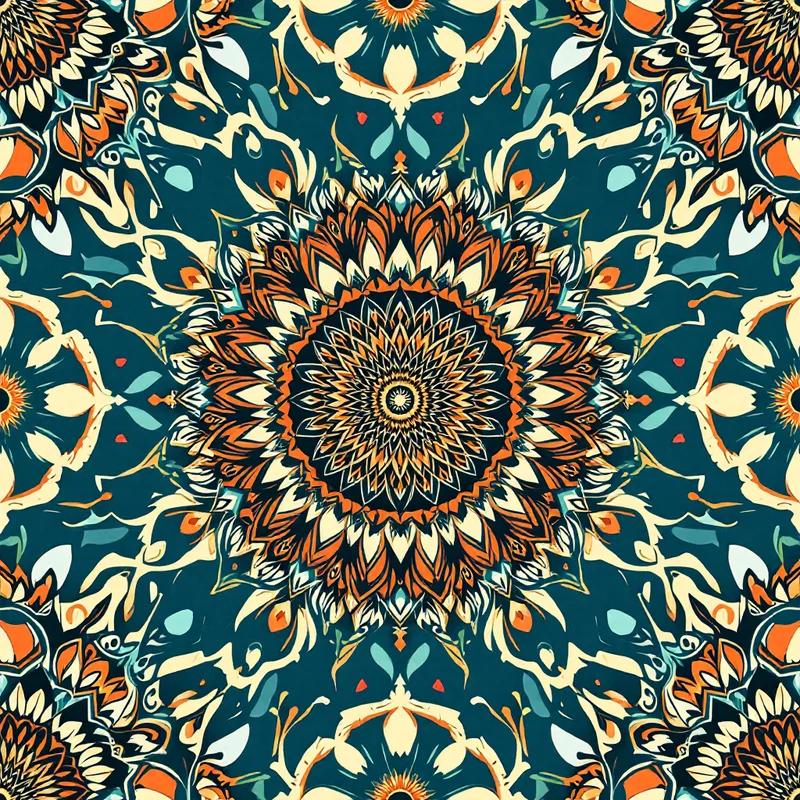
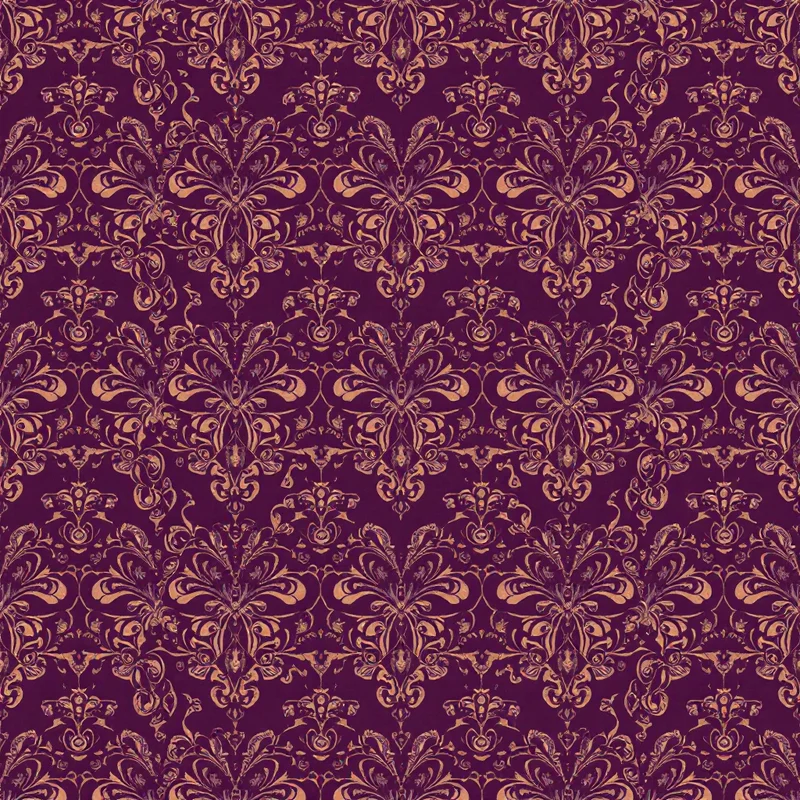
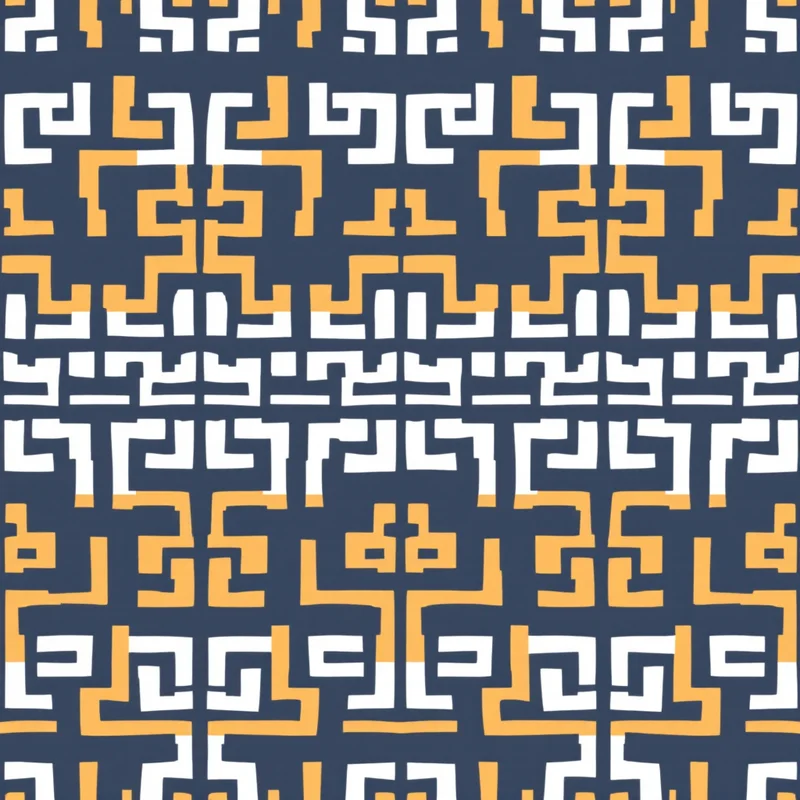
Medallion patterns work differently from almost everything else in this guide series — they're built to be a single focal point, not a uniformly repeating field, which changes how you design and use one.
What makes a medallion pattern distinct
A medallion is a centered, radially symmetric motif, frequently built from concentric rings of increasing detail moving outward from the center. Unlike an all-over floral or geometric repeat, a medallion is designed to be the visual center of a specific surface — a rug's centerpiece, a ceiling's decorative plaster medallion, a plate's central motif — rather than tiled uniformly.
Medallion versus mandala
The two share the same underlying radial-symmetry structure and can look visually similar. The practical difference is context and association: medallion is more associated with rug design, architectural ceiling detail, and European decorative traditions, while mandala carries specific South Asian religious and spiritual meaning. Worth knowing the distinction even when the visual structures overlap.
Where medallion patterns are used
Rug design is the most common home for medallion motifs — a centered medallion surrounded by one or more border patterns is one of the most enduring rug layouts in commercial use, closely tied to Persian and related textile traditions. Ceiling medallions in plaster or paint follow the identical radial-focal-point logic in an architectural rather than textile context.
Designing a medallion as a focal point, not a repeat
Because a medallion is built to be singular rather than repeated, the design considerations differ from most patterns covered in this series — proportion relative to the surface it centers on matters more than tileability, and the surrounding border or field pattern needs to be considered as a deliberate frame for the medallion rather than an independent repeat competing with it for attention.
Medallion motifs and the border or field patterns that frame them can both be generated with full control over scale and detail. Start in the free pattern maker with 3 free credits, or browse pattern styles for the full range.
Explore related pattern styles