
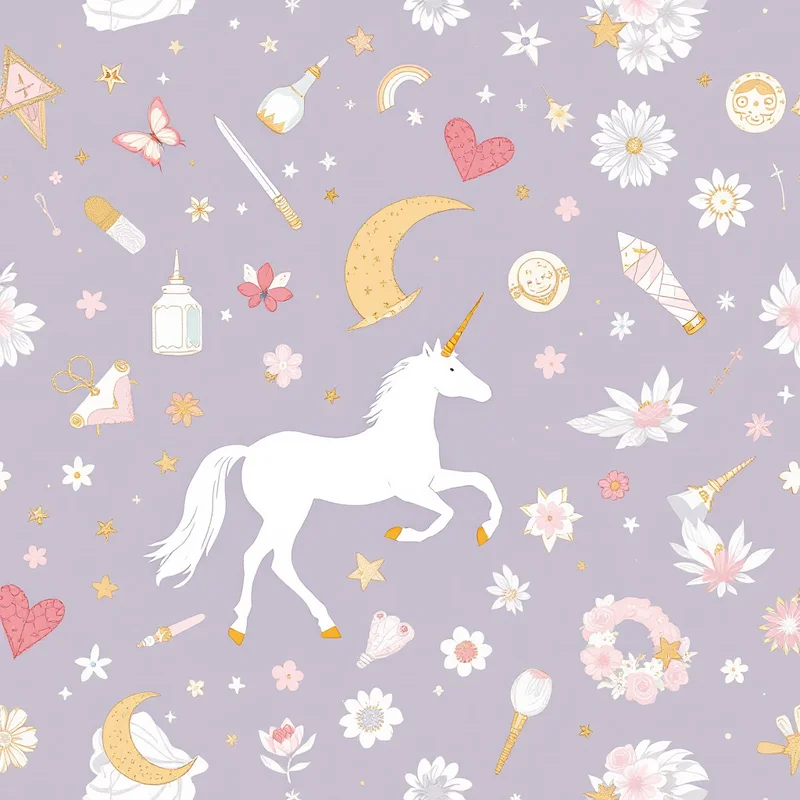
In a nursery, the person choosing the print is not the person living with it. An adult picks the wallpaper and the crib sheet, a baby who cannot give feedback sleeps beside them, and the room is often seen at three in the morning by someone very tired. That reality shapes what works in nursery design, and it is why this forecast is separate from the broader kids' pattern trends for 2027, where bolder color and nostalgia lead the story.
The directions below are forecasts to watch, not measured results.
Warm neutrals replace cool pastels
Cool baby blue and pink are not disappearing, but warm, slightly smoky neutrals look set to take more of the room: oat (#E4D8C3), clay pink (#D9B4A3), faded apricot, butter, and a soft sage (#B7C2A8) as a counterpoint. The point is contrast. Keep it low enough that a pattern settles into the background of the room, the way a cotton blanket does.
The pastel patterns category is a good starting palette source. Pull the colors, then desaturate them slightly and add one deeper accent so the print has a floor.
Quiet animals, drawn simply
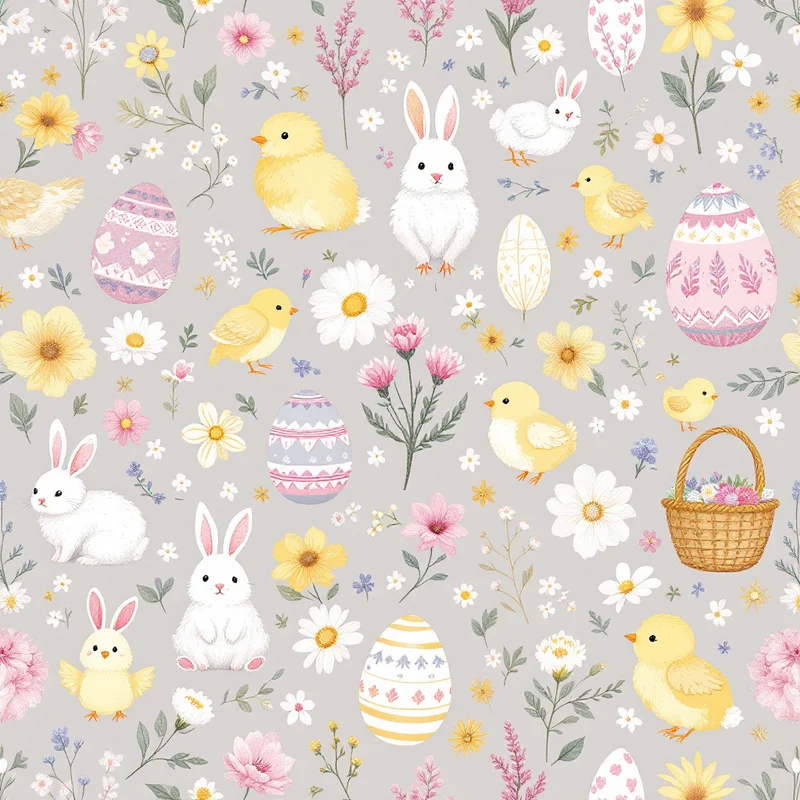
Bunny patterns are the classic nursery motif, and they remain well suited to the 2027 mood if the drawing stays quiet: a sleepy bunny in a single color, a half-turned bear, a lamb reduced to a few curved shapes. Expect a move away from busy storybook scenes and toward single, simplified silhouettes spaced generously in a half-drop layout. See the half-drop repeat guide for how that structure keeps a motif scatter from forming obvious rows.
Other motifs that fit the mood: moons, clouds, wheat stalks, tiny stars, rainbows drawn in beige and clay instead of primary colors, and stylized hot-air balloons with soft stripes.
Texture and the hand-drawn
A quiet nursery relies on touch more than graphic punch: muslin, waffle weave, boucle, quilting. Prints that imitate or sit well with those textures, such as soft crayon outlines, watercolor washes, block-printed marks and uneven hand-cut shapes, feel at home. Slight imperfection is part of the appeal, but keep the repeat clean so the tile doesn't show seams. The nursery and baby pattern design guide covers how to build these motifs in more detail.
One pattern, many surfaces
Nursery design tends to be a system: wallpaper behind the crib, a fitted crib sheet, a swaddle, a muslin blanket, a wall print and maybe a mobile. A single pattern family helps. Make one hero print, then derive a smaller companion and a tonal version. Scale to the surface:
| Surface | Scale suggestion |
|---|---|
| Accent wallpaper | Larger motifs, about 4 to 8 inches (10 to 20 cm), generous spacing |
| Crib sheet | Mid-size scatter, since it wraps a mattress and gets stretched |
| Swaddle or muslin | Small to mid repeat that still reads when folded |
| Wall art | A single motif from the pattern, framed alone |
Browse the nursery wallpaper category for ideas on the wall side of this system.
What parents may ask about fabric
For infant products, expect buyers to look beyond appearance. Organic cotton, undyed natural tones and tested dyes tend to matter more in this category than in most. Certifications such as GOTS (for organic textiles) and OEKO-TEX Standard 100 (for tested fabrics) are real and recognizable. They are also specific, so only reference one if your supplier can document it. A print that looks soft but arrives on fabric you can't describe will not reassure anyone.
Also consider washability. Nursery textiles are laundered often, so test a print for fading after repeated washes before putting it on a product page.
Gifts matter too
Nursery prints double as gift prints: baby showers, new arrivals, christenings. A boxed set of a swaddle, a bib and a small blanket in a coordinated pattern is a natural gift format.
A quiet first draft
Start with one hero print. Browse Styles in Pattern Weaver lets you pick from 44 categories and 5,700+ styles, and Restyle changes the finish of a pattern you already like, which is one way to build a quieter companion print. New accounts get 5 free credits.
Explore related pattern styles