Lunar New Year is celebrated by over a billion people across China, Korea, Vietnam, Singapore, Malaysia, Taiwan, Thailand and the global Chinese, Korean and Vietnamese diaspora. The festival — called Chunjie or Spring Festival in Chinese tradition, Seollal in Korean tradition, and Tet in Vietnamese tradition — marks the start of the lunar calendar year and represents one of the most significant cultural and commercial festivals in the global calendar. The visual richness of the celebration provides extraordinary inspiration for surface pattern design across textiles, home decor, gift wrap, stationery, fashion and many other applications.
For pattern designers building Lunar New Year work, the festival offers deep visual vocabulary while requiring serious cultural understanding. The motifs and conventions carry significant cultural and historical meaning across many centuries of refined practice. Approaching Lunar New Year pattern design with awareness of cultural context produces work that honours the traditions while serving the substantial commercial market for festival-themed products.
The Cultural Context
Lunar New Year occurs between mid-January and mid-February depending on the lunar calendar. The festival traditionally extends for fifteen days, ending with the Lantern Festival (Yuanxiao) which features distinctive paper lantern decoration and food traditions. The exact timing, length and specific traditions vary across the different cultural traditions celebrating Lunar New Year.
The Chinese tradition is the largest in terms of global cultural reach and commercial scale. Chinese New Year traditions include thorough house cleaning before the festival to sweep away bad luck and welcome good fortune, the hanging of red couplets (chunlian) with auspicious phrases on doorways, the distribution of red envelopes (hongbao) containing money to children and unmarried adults, extensive food traditions with symbolic dishes, fireworks and lion dances, and family gatherings that often involve travel home for elaborate reunions.
The zodiac animal cycle is central to Chinese New Year visual vocabulary. Each year is associated with one of twelve zodiac animals — Rat, Ox, Tiger, Rabbit, Dragon, Snake, Horse, Goat, Monkey, Rooster, Dog and Pig — with each animal carrying specific symbolic associations and cultural meaning. The zodiac cycle provides distinctive seasonal vocabulary that shifts each year, creating annual commercial opportunity for zodiac-themed designs.
The Korean Seollal tradition focuses on family gatherings, ancestral rites, traditional games and the wearing of hanbok (traditional Korean clothing). Visual vocabulary includes distinctive Korean patterns and palettes that differ from Chinese vocabulary in specific ways while sharing broader East Asian aesthetic foundations.
The Vietnamese Tet tradition combines elements of Chinese New Year tradition with distinctive Vietnamese cultural and visual elements. The festival includes specific Vietnamese food traditions (banh tet, banh chung), traditional Vietnamese decorative elements and palette conventions that differ from Chinese tradition.
For designers working with Lunar New Year visual vocabulary, distinguishing between these traditions rather than collapsing them into generic "Asian festival" aesthetic respects the specific cultural identities involved.
Visual Motifs and Symbols
Several motifs recur across Lunar New Year visual tradition and provide foundational pattern design vocabulary.
The zodiac animal of the current year is perhaps the most commercially active motif each year. Patterns featuring the zodiac animal — rendered with cultural respect and considered execution — sell strongly during the festival season. The specific traditional rendering of zodiac animals in Chinese decorative tradition involves considered conventions about pose, accompanying elements and stylisation that distinguish authentic representations from generic interpretations.
The dragon is particularly significant in Chinese culture, representing power, strength, good fortune and imperial authority. Dragon motifs appear throughout Chinese decorative tradition not only in dragon years but as general auspicious imagery. The traditional Chinese dragon has specific anatomical conventions — serpentine body, four claws, distinctive head with horns and whiskers — that differ from European dragon imagery.
The phoenix represents balance, harmony, virtue and is paired with the dragon in many traditional decorative compositions. The phoenix carries imperial associations particularly with the empress.
The peony is the king of flowers in Chinese tradition, representing wealth, prosperity, honour and feminine beauty. Peony motifs appear extensively in traditional Chinese decorative arts and provide important floral vocabulary for Lunar New Year designs.
The lotus represents purity, perfection and divine beauty. Lotus motifs in Chinese tradition often appear with specific symbolic associations.
The plum blossom represents perseverance, hope and the arrival of spring. Plum blossom imagery is particularly associated with the timing of Lunar New Year as the festival of the new spring.
Bamboo represents flexibility, resilience, integrity and good fortune. Bamboo motifs appear throughout Chinese decorative tradition.
Calligraphic elements — particularly auspicious characters like 福 (fu, meaning fortune or good luck), 春 (chun, meaning spring), 寿 (shou, meaning longevity) and 喜 (xi, meaning happiness) — are central to Chinese New Year decoration. The double happiness character (囍) is particularly used in weddings and celebration.
Cloud motifs (yun wen) — stylised swirling cloud patterns — are traditional decorative elements that appear in ceramics, textiles and pattern work.
Red envelopes (hongbao), traditional fans, lanterns and various festive objects provide additional motif vocabulary.
Colour Symbolism and Palette
Red is the central colour of Chinese New Year, representing good fortune, joy, happiness and warding off evil. The traditional Chinese red — slightly orange-shifted, with depth and warmth — appears throughout Lunar New Year decoration. Red couplets, red envelopes, red lanterns, red clothing and red decorative elements all carry the festival's essential energy.
Gold represents wealth, prosperity, good fortune and divine light. The combination of red and gold is iconic for Chinese New Year and produces patterns with maximum festive impact.
Other colours carry specific symbolism. Yellow represents royalty and earth element. Green represents health, harmony and the spring season. Blue represents healing and trust. White represents mourning in Chinese tradition and is typically avoided in celebratory contexts.
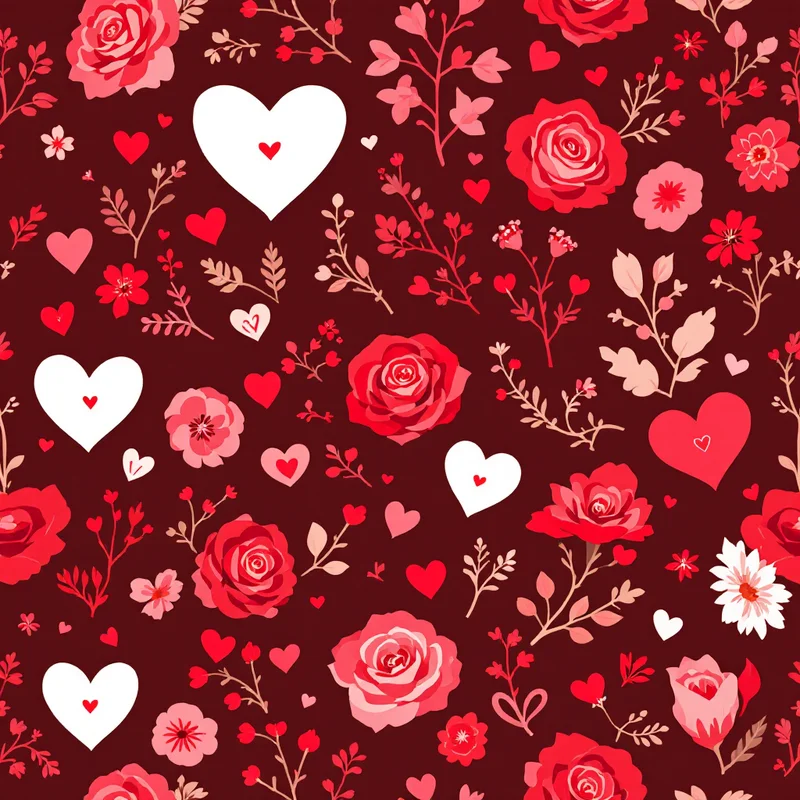
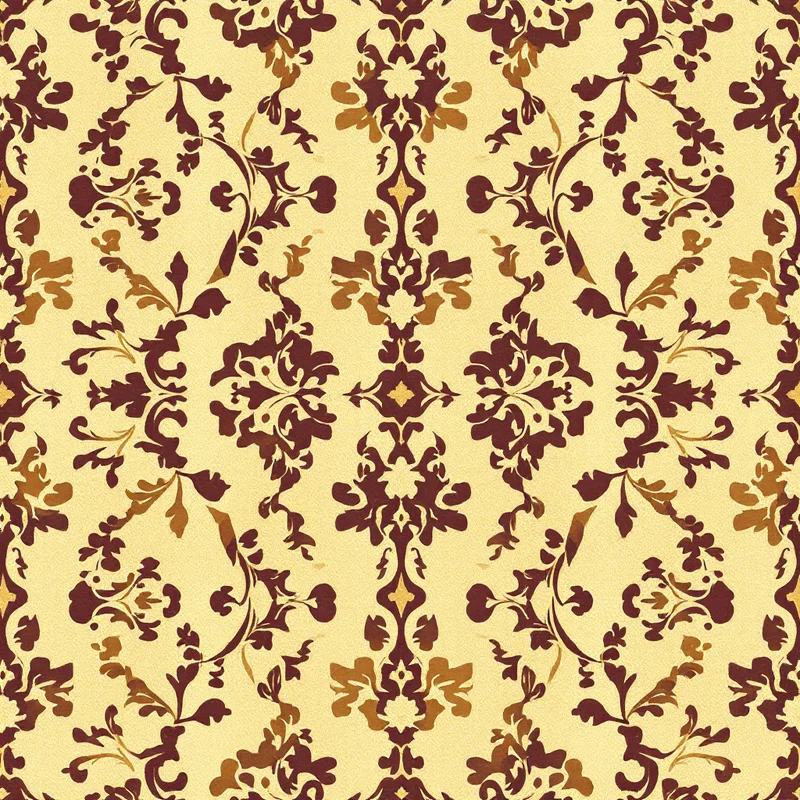
The contemporary palette for Lunar New Year design has expanded while preserving the traditional foundation. Deeper red variations (burgundy, oxblood, deep crimson) read as sophisticated contemporary interpretation. Soft pink with gold reads as feminine modernised festive aesthetic. Earth tones with gold accents provide contemporary sophisticated festive vocabulary.
For pattern designers building Lunar New Year collections, the red and gold foundation matters. Designs that abandon this foundation typically lose the essential festival character. Contemporary interpretation works within this palette tradition rather than departing from it.
Compositional Approaches
Several compositional approaches work effectively for Lunar New Year pattern design. Central focus compositions feature a primary motif — zodiac animal, peony, dragon, fish — surrounded by supporting decorative elements. This approach produces patterns with significant visual presence and clear cultural reference.
All-over festive compositions distribute motifs across the surface in regular or rhythmic patterns. Repeated peony patterns, scattered cloud patterns, repeated lantern patterns all support this compositional approach.
Border-and-field compositions use ornamental borders framing simpler central fields. This approach is traditional for many Chinese decorative arts and provides useful structure for contemporary applications.
Symmetric medallion compositions feature symmetric arrangements of decorative elements around a central focal point. This compositional logic appears throughout Chinese traditional decorative work.
Calligraphic compositions integrate Chinese characters with decorative elements, producing patterns that combine the symbolic power of the characters with visual decorative richness.
Contemporary Applications
Lunar New Year pattern design has strong commercial presence across many categories. Home decor textiles for Lunar New Year — table linens, throw pillows, decorative pieces — represent significant seasonal sales. The category supports both traditional vibrant designs and more contemporary sophisticated interpretations.
Gift packaging for Lunar New Year is essential to the festival's gift-giving tradition. Red envelopes, gift boxes, wrapping paper and ribbons all support significant commercial design work each year.
Greeting cards for Lunar New Year have strong commercial presence. The category supports designs integrating festive visual vocabulary with auspicious greetings in Chinese, Korean or Vietnamese.
Fashion textiles for Lunar New Year — particularly traditional Chinese clothing including qipao, cheongsam, hanfu — represent significant commercial market. Contemporary fashion collections also feature Lunar New Year-themed pieces during the festival season.
Stationery and paper goods use Lunar New Year vocabulary for seasonal collections. Journals, planners, calendars (particularly featuring zodiac animals) all support significant commercial design work.
Restaurant and hospitality design uses Lunar New Year vocabulary for seasonal menu design, decoration and promotional materials throughout the festival season.
Respectful Contemporary Practice
For non-Chinese, non-Korean or non-Vietnamese designers working with Lunar New Year pattern design, several practices support respectful work. Distinguishing between Chinese, Korean and Vietnamese traditions — rather than collapsing them into generic "Asian festival" vocabulary — respects the specific cultural identities involved.
Studying the specific cultural conventions of the tradition you are referencing produces work with appropriate depth. The visual vocabulary, palette conventions, motif execution and compositional logic of each tradition has specific characteristics that distinguish authentic work from generic interpretation.
Acknowledging the source tradition specifically in marketing and product copy provides appropriate attribution. Work marketed as generic "Chinese New Year" when actually drawing on broader pan-Asian vocabulary, or marketed as generic "Asian" when specifically Chinese in reference, fails to provide accurate attribution.
Avoiding sacred or religious imagery for casual commercial use respects the spiritual significance of certain elements. Imperial dragon imagery, certain calligraphic characters and specific religious iconography require particular care or avoidance.
Considering the zodiac animal accuracy is important for zodiac-themed work. The traditional rendering of zodiac animals follows specific cultural conventions, and contemporary work should respect these rather than treating zodiac animals as generic animal illustration.
Supporting Chinese, Korean and Vietnamese designers and producers materially through collaboration, fair-trade sourcing and financial support provides meaningful engagement with the originating cultures.
Lunar New Year pattern design rewards designers who engage seriously with the cultural foundations of the festival traditions, respect the historical depth of the visual vocabulary, and produce work that contributes to broader recognition and celebration of these traditions. The commercial market for Lunar New Year products is enormous and growing globally, and provides meaningful commercial opportunity for designers who approach the work with the respect it deserves.
Explore related pattern styles
Patterns for