

Kitchen textiles are one of the most accessible entry points for surface pattern designers. The products are small, the print runs are short, the price points are friendly, the gift market is enormous, and the customer is buying primarily on visual appeal rather than technical performance. Tea towels, aprons, oven mitts, dish cloths, tea cosies and pot holders generate substantial annual revenue across mass-market retail, premium boutique channels and direct-to-consumer platforms. The category sustains many independent pattern designers as the foundation of their licensing income.
What makes kitchen textiles interesting commercially is also what makes them rigorous design-wise. Each product type has its own format, its own functional constraints, and its own colour and pattern conventions. A pattern that works beautifully on a tea towel may fail on an apron. A palette that succeeds on an oven mitt may feel wrong on a dish cloth. Designing for the category requires understanding the specific commercial logic of each product format and the broader thematic conventions that organise the kitchen textile market.
The Kitchen Textile Market
The kitchen textile market is segmented along several axes. Mass-market kitchen textiles — sold at supermarkets, big box stores and budget retailers — favour bright, cheerful, often literal patterns at low unit price points. Premium kitchen textiles — sold at boutique homewares retailers, specialty kitchen stores and curated online shops — favour distinctive, artisanal patterns at higher price points. Print-on-demand kitchen textiles through platforms like Spoonflower, Society6 and Redbubble sit in between with quality and pricing that has improved markedly in recent years.
Across all segments, the customer is purchasing kitchen textiles for two main reasons: personal home use and gifting. Personal use buyers tend toward palettes that coordinate with their existing kitchen colour scheme. Gift buyers tend toward thematic patterns that signal occasion, hobby or personality — coffee themes for the coffee lover, garden themes for the gardener, vintage florals for the traditional aesthetic, modern geometrics for the contemporary aesthetic.
This dual market shapes commercial pattern strategy. Patterns aimed primarily at personal use benefit from palette flexibility — versions in several colour ranges so customers can match their kitchen. Patterns aimed primarily at gifting benefit from thematic clarity — designs whose subject is immediately readable so the gift purchase decision is fast.
The strongest collections cover both. A coffee-themed pattern can be released in three palette variants (warm browns, soft sage and brown, modern black and white) so it works as personal-use coordination for many kitchens while still functioning as a coffee-themed gift in any variant. A botanical floral can be released in spring, autumn and winter variants so it adapts to seasonal gifting cycles.
Tea Towel Pattern Design
Tea towels are the workhorse of the kitchen textile category. The standard format is roughly 50 by 70 centimetres, with some smaller sizes for novelty products and some larger sizes for premium options. The fabric is usually 100% cotton, often with terry, linen or honeycomb textures. The product is hung, folded and displayed when not in use, which makes the visual appeal of the design directly tied to its commercial success.
Tea towel pattern strategy splits along two axes: all-over repeat patterns versus framed compositional designs. All-over repeats are seamless tiles that cover the entire towel surface in continuous pattern. They sell strongly for everyday personal use, coordinate well with broader kitchen colour schemes, and work well across thematic categories. Framed compositional designs include central illustrations, scenic vignettes, vertical strip designs and bordered compositions that treat the towel as a single illustrated piece. They sell strongly as gifts and as decorative display pieces.
For all-over repeats, motif scale should be calibrated against the towel's folded display dimensions. When folded for retail display or kitchen storage, only a portion of the design is visible. Patterns with very large repeats may show only one or two motifs in the visible folded area, which can read as visually empty. Patterns with very small repeats may fragment into texture rather than reading as distinct motifs. The sweet spot is medium scale — motifs in the four to ten centimetre range — that allows two to four full motifs to be visible across a folded display.
For framed compositions, the design needs to consider hanging orientation. Most kitchen tea towels are hung from a central hook or hanging point, which means the visible area is typically the lower two-thirds of the towel. Designs that place all visual interest at the top of the towel lose impact when hung. Designs that distribute interest across the lower and middle areas, with the top providing context or supporting elements, hold their visual presence in functional use.
Apron Pattern Design
Aprons add complexity because the product is fitted to the body and includes structural elements — neck strap, waist ties, pockets, sometimes ruffles or panels — that fragment the printable area. The dominant apron format in contemporary kitchen textile markets is the full-coverage apron with crossback straps, but bib aprons, half aprons and bistro aprons all have their own design considerations.
The single biggest design shift for aprons is accounting for the body in the wearer position. A pattern designed flat on the apron template will distort and reposition itself when the apron is worn. Pockets create natural focal points that visually centre the design. Strap placement crops the upper portion. Waist tie placement creates horizontal banding.
For full-coverage aprons, the practical strategy is medium-scale all-over patterns that read well across the worn surface and tolerate the visual interruptions of straps and ties. Heavy centred compositions tend to feel awkward on the body. Strong directional patterns can read elegantly or awkwardly depending on the body shape of the wearer, which makes non-directional designs more commercially flexible.
Apron pocket designs are a small but specific consideration. The pocket is typically sewn from the same fabric as the apron body, which means the pocket pattern appears as a slight visual interruption against the body pattern. Some designers compensate by aligning pocket placement against the repeat structure of the design; others embrace the slight interruption as a hand-made feature. The mass-market apron makers usually do not align pocket placement with print repeat, so designers selling into that segment should design patterns that look right with random pocket positioning.
Oven Mitt and Pot Holder Considerations
Oven mitts and pot holders are small format products — typically 18 by 25 centimetres or thereabouts — printed on heavy quilted cotton or linen. The visible surface area is small, the product gets handled with possibly dirty hands, and the design needs to read clearly at small size and survive repeated washing.
The scale strategy here is similar to greeting card design: fewer motifs, larger size, clear silhouettes, strong contrast. Patterns that work beautifully on tea towels often need scale-up adjustments to translate effectively to oven mitts. Some patterns simply do not adapt — intricate small-scale designs lose their identity when blown up enough to read on a mitt-sized surface.
Pot holders allow for slightly more decorative complexity because the product is purely decorative rather than worn. Quilted appliqué designs, embroidery-style patterns and richer motif compositions can work well at pot holder scale where they would feel impractical on an apron or oven mitt.
Thematic Conventions
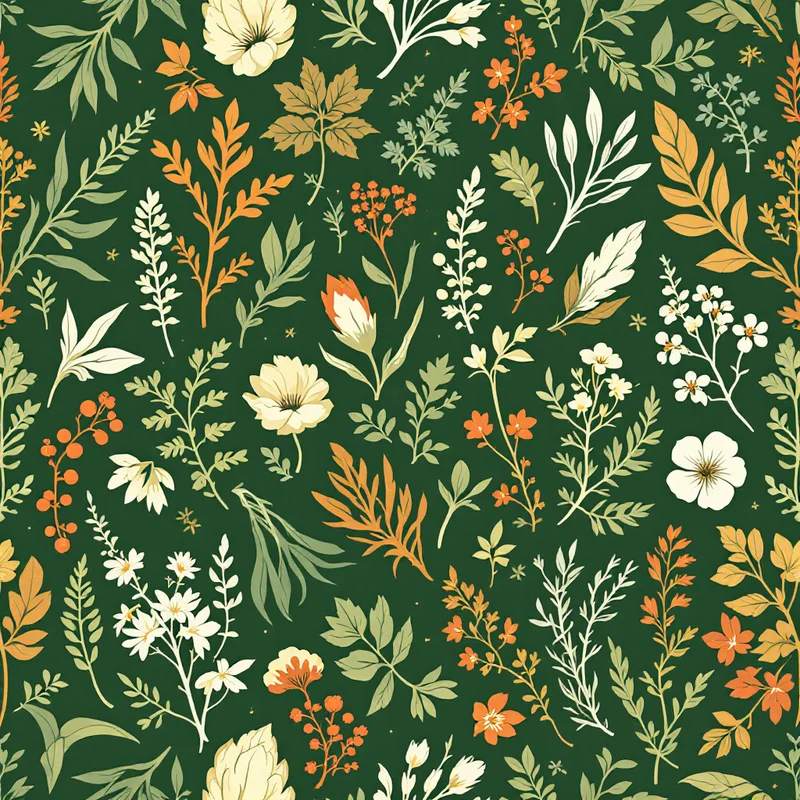
Kitchen textile patterns organise around recognisable thematic categories that the commercial market has settled into. Coffee, tea and beverage themes — coffee beans, mugs, tea pots, espresso paraphernalia — are perennial gift performers. Cooking and baking themes — utensils, ingredients, baking equipment, vintage cookware — work for both personal use and gift markets. Garden and produce themes — fruits, vegetables, herbs, garden flowers — coordinate with food-positive lifestyle aesthetics and work across cuisines and seasons.
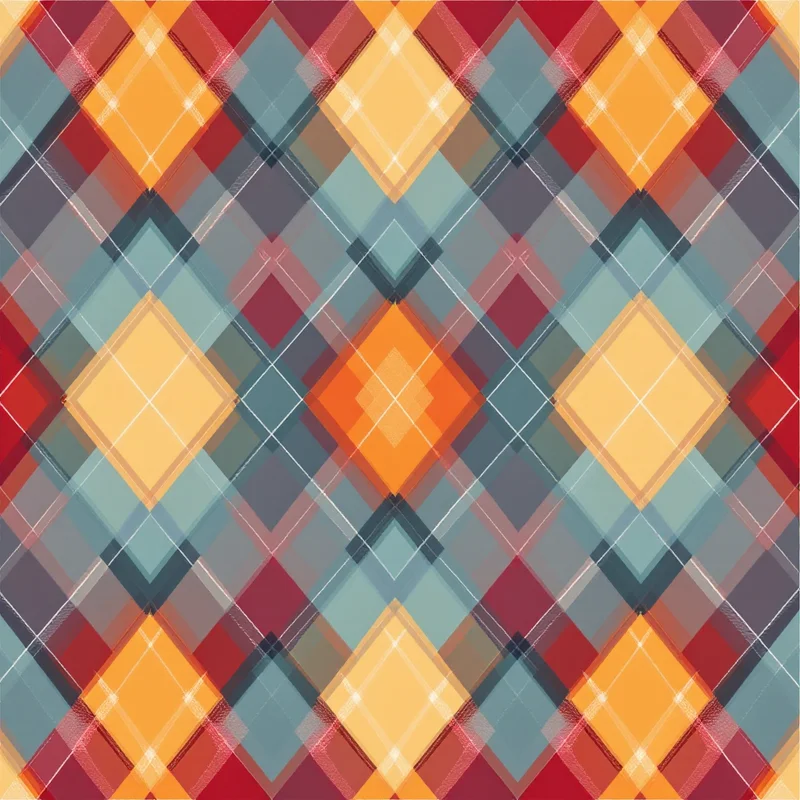
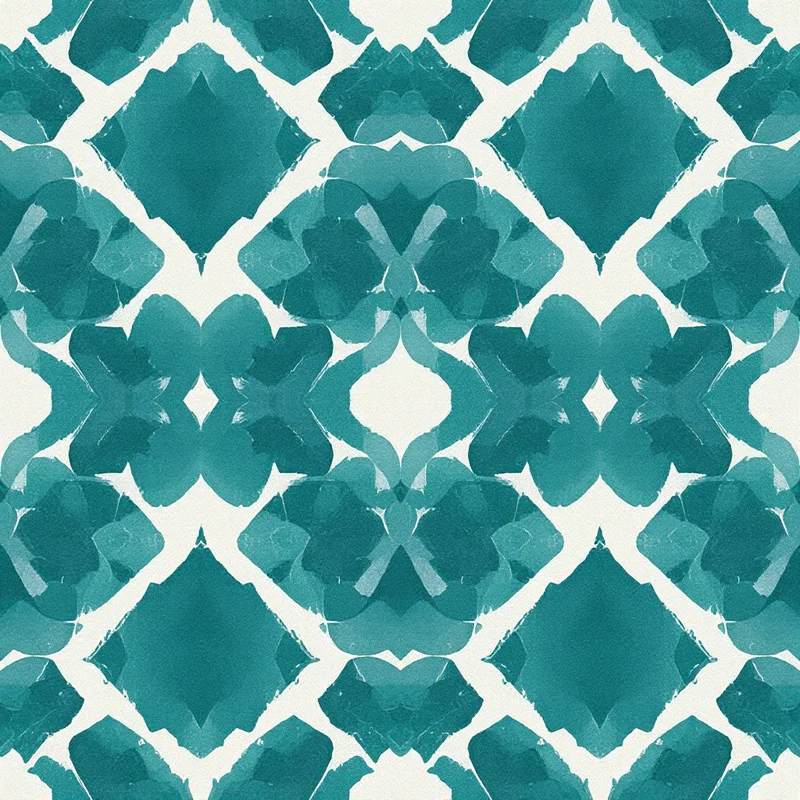
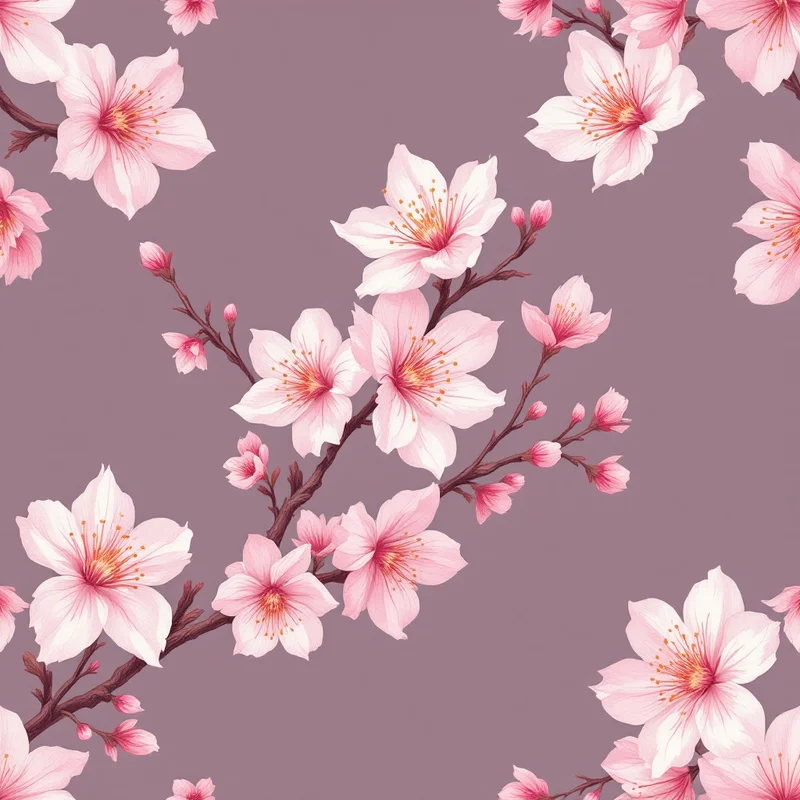
Vintage and traditional themes — mid-century kitchen scenes, retro produce illustrations, traditional florals — dominate certain demographic segments and have strong long-tail commercial life. Modern and minimalist themes — abstract geometrics, line-drawn motifs, monochrome compositions — sell strongly into contemporary kitchens and coordinate with current kitchen design trends.
Seasonal themes — Christmas, Easter, summer harvest, autumn — drive significant gift season sales. Designers building a kitchen textile portfolio benefit from having strong seasonal collections in rotation alongside their year-round bestsellers.
Speciality and hobby themes — wine and cheese, baking, barbecue, coffee culture, tea ceremony, baking sourdough — serve smaller but loyal niches with high gift-purchase rates. These themes work well when designed with enough cultural specificity to feel insider-knowing rather than generic.
Production Notes
Kitchen textile production is divided between traditional textile printing (typically pigment or reactive dye on cotton) and digital direct-to-fabric printing. Traditional textile printing produces excellent colour fastness and durability but requires palette and motif considerations that respect the production process. Digital printing offers more colour and design flexibility but the wash durability and colour fastness varies by quality of equipment and ink.
For file delivery, deliver patterns at 300 DPI in either CMYK (for traditional textile printing) or RGB (for digital direct-to-fabric printing, with the platform converting internally). For framed compositional designs, deliver the design at the actual product dimensions with appropriate bleed, plus a separate seamless tile if the same design will be used for any all-over applications.
Kitchen textiles remain one of the most reliable categories for surface pattern designers building licensing income. The products are accessible, the customer base is broad, the seasonal cycles are predictable and the design rewards designers who understand both the functional realities of the product format and the thematic conventions of the broader kitchen textile market. A strong portfolio of kitchen textile designs can support a designer's licensing income across many years with relatively modest ongoing maintenance.
Explore related pattern styles
Patterns for