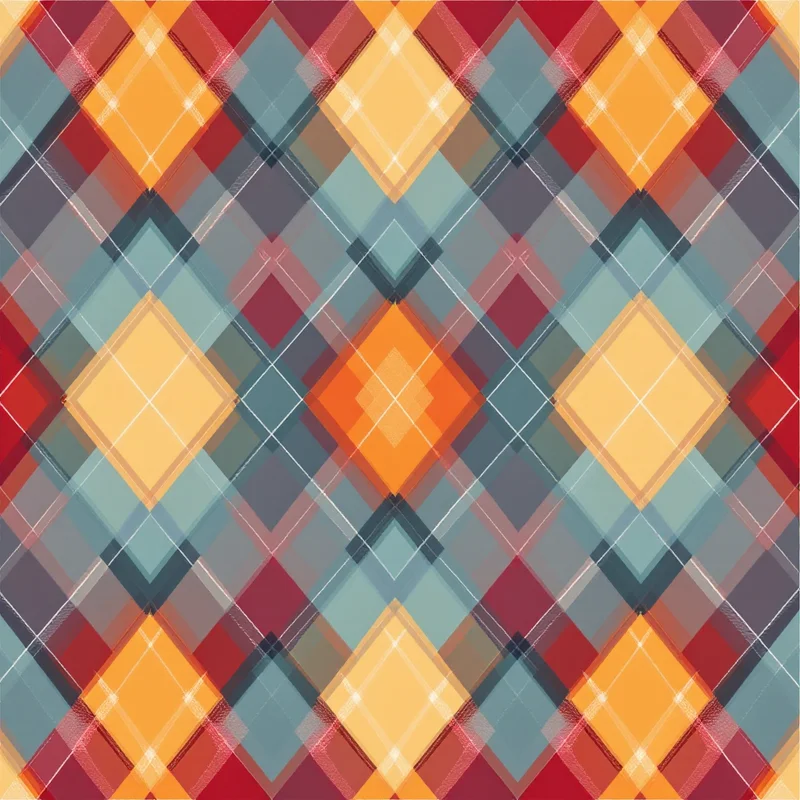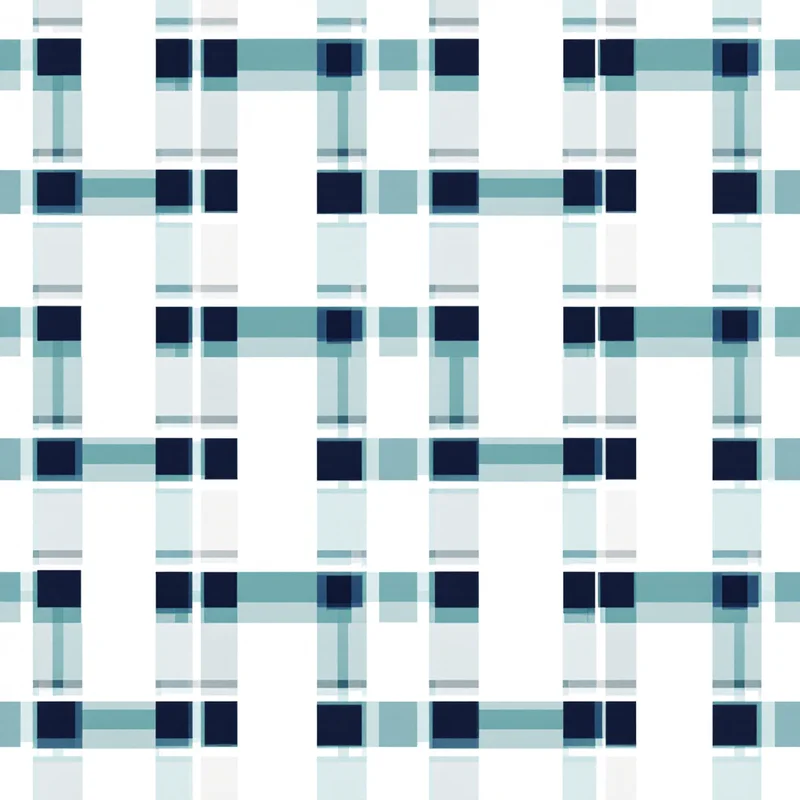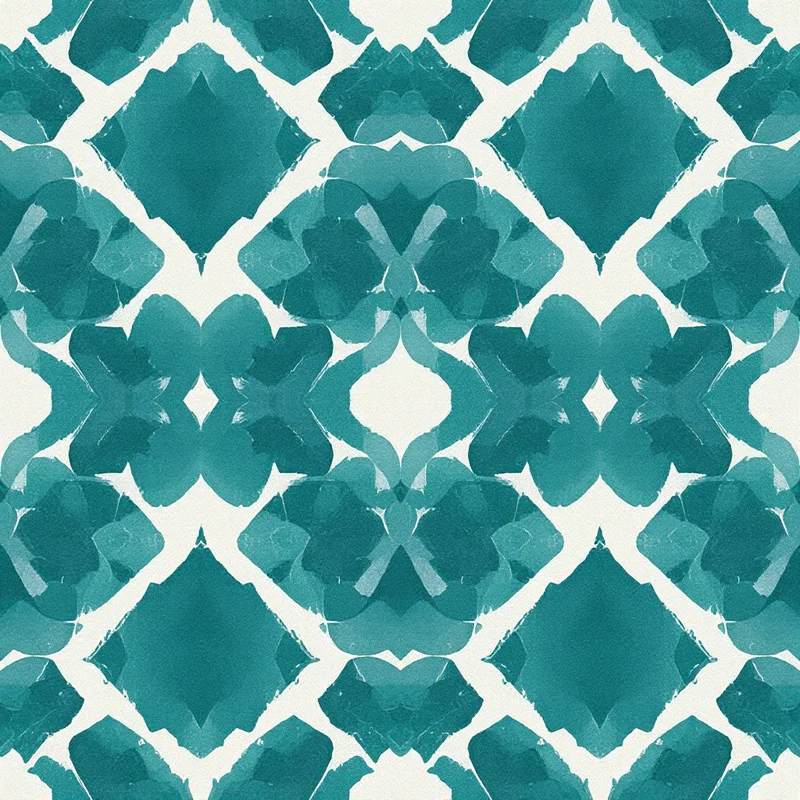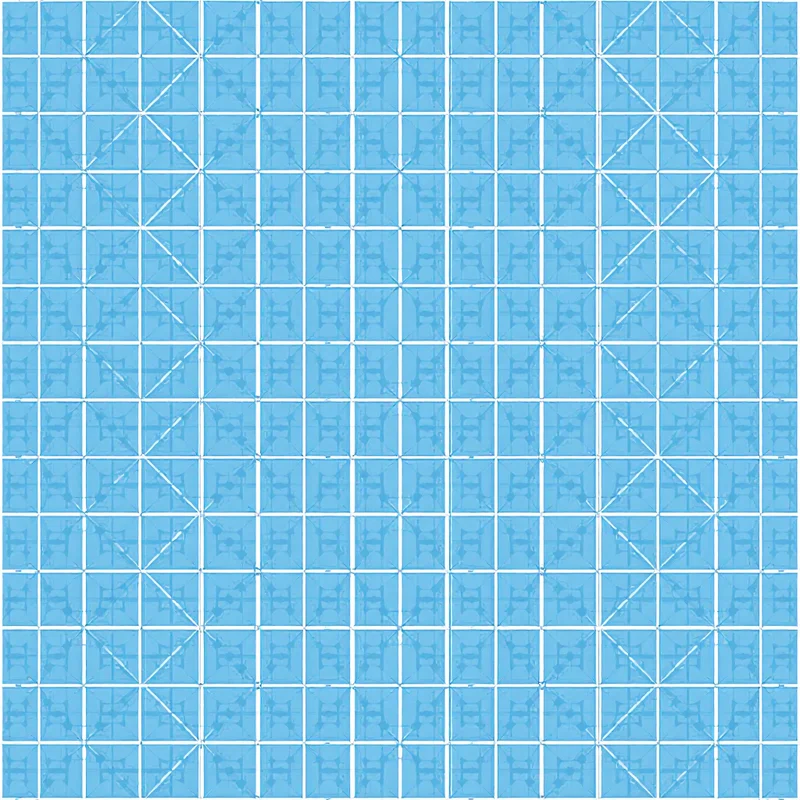
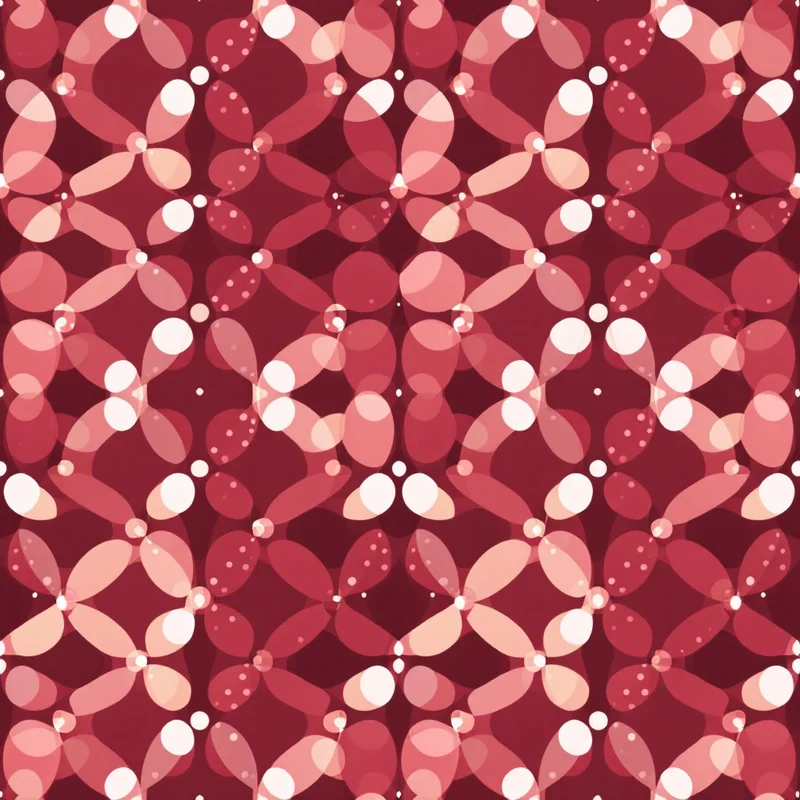
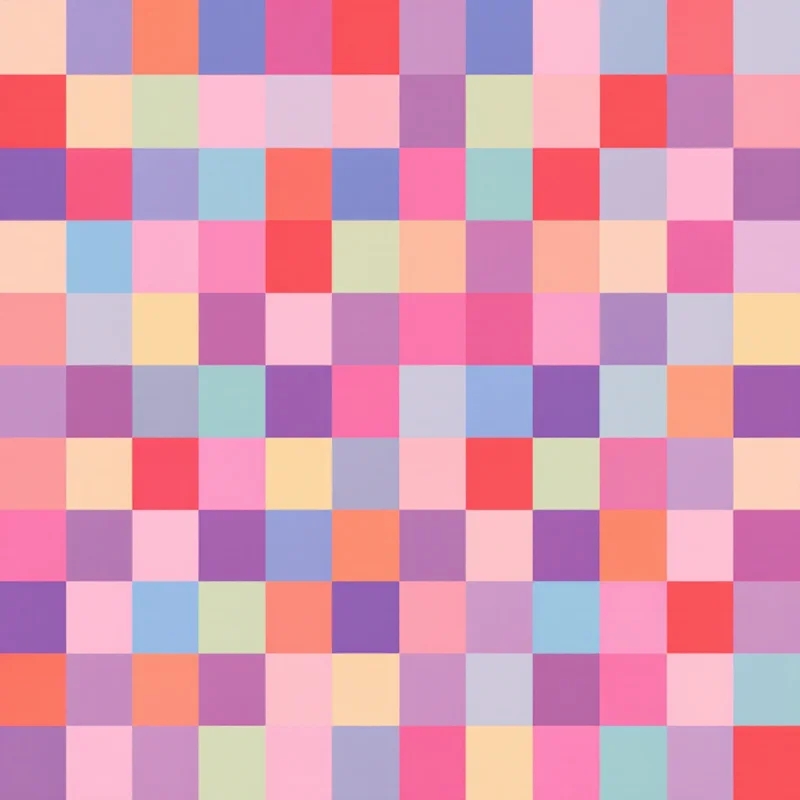

A grid patterned design is one of the oldest and most useful structures in surface design — a regular lattice that holds motifs at predictable intersections, scaling from a tiny pinpoint dot grid on shirting cotton up to a metre-wide architectural wallcovering without losing its logic. The phrase "grid patterned" covers an enormous stylistic range, from mid-century modular wallpaper to brutalist editorial design to contemporary packaging systems, and the underlying skeleton is the same in all of them. This guide is for designers who want to build grid patterned repeats that hold up in production, not just look good on a moodboard.
What is grid patterned?
A grid patterned design is built on a regular underlying lattice — square, rectangular, diamond, or hex — where the visual content sits at predictable intersections rather than floating freely across the surface. The lattice is what makes the work read as grid patterned rather than as tossed, all-over, or scattered. The lattice can be drawn in (visible lines between cells) or implied (motifs landing on the grid points without any connecting lines), and both approaches produce work that registers as grid patterned to the eye.
The category is broader than people assume. Checks and plaids are grid patterned. Polka dots laid on a strict lattice are grid patterned. Modular motif systems where each cell holds a different icon are grid patterned. Even broken or distressed grids — where the lattice deliberately fragments — still belong to the family as long as the structural memory of the grid is visible.
Where grid patterned comes from
Grid patterned surface design predates printing. Woven cloth is inherently grid patterned at the structural level — warp and weft cross at right angles, and any pattern built into a weave snaps to that lattice. The earliest preserved checked textiles come from Bronze Age Europe and Asia, and the visual language has been continuous since.
Print and tile expanded the grid vocabulary. Islamic geometric tilework brought rotational grid patterned systems into the architectural mainstream around 1000 AD. Japanese kimono fabrics codified small-scale grid patterned work — kasuri and ichimatsu among them — that still influence contemporary work. European wallpaper picked up grid patterned modular design through Arts and Crafts and Art Deco. Mid-century modern took the grid into chair fabrics, curtain prints, and graphic design simultaneously, and the visual language hardened into a default for "modern" that still holds.
Contemporary grid patterned work owes most to the modular thinking of the 1960s — Vignelli, Gerstner, the Swiss school — and to the brutalist revival of the 2010s that pulled the grid back into editorial and web design. The lattice is older than any of these movements. The styling on top is what changes.

Visual hallmarks of grid patterned
A working grid patterned design usually has four visible traits. The lattice is regular — cells repeat at consistent intervals, even if the contents of each cell vary. The intersections carry weight — either through visible grid lines, through motifs anchored at the crossings, or through color shifts that draw the eye to the structure. The repeat is short — grid patterned work usually tiles in small increments because the lattice itself is the repeat unit. And the rhythm reads at both close and far viewing distance — strong grid patterned designs hold their structure whether seen from 30 cm or 3 metres.
Weak grid patterned work usually fails at the rhythm test. A grid that looks correct on screen at 100% can collapse into mush when scaled down for a small accessory, or feel mechanical and dead when scaled up for wallpaper. The fix is almost always variation inside the cells — different motif rotations, weight changes, color shifts — not changes to the lattice itself.
How to generate grid patterned in Pattern Weaver
Building a grid patterned repeat in Pattern Weaver takes four steps.
Step one: choose Geometric and pick a grid substyle. Open the studio and select the Geometric style category. Pick a grid substyle that matches the target mood — clean modular, hand-drawn grid, broken grid, dotted lattice, or motif grid all sit in this family. The substyle choice locks the underlying lattice so every motif generated downstream snaps to that structure.
Step two: set color and density. Pick two to four colors that hold contrast against each other at small scale. Set density between medium and dense for grid patterned work — sparse grids tend to read as scattered dots rather than as a lattice. Scale should match the end use: small for apparel, medium for stationery, large for wallpaper.
Step three: generate and review the repeat. Run the generation. The studio produces a seamless tile that repeats cleanly in all four directions. Review the result at the tile-preview view to confirm the grid reads as intended at both close and far viewing distance. Regenerate with adjusted density or scale if the lattice feels too tight or too loose.
Step four: refine motifs and colorways. Generate colorway variations to test the same lattice in different palettes. Strong grid patterned work usually goes through three to five refinement passes before the final file is ready.
Step five: export at production resolution. Export in PNG, JPG, WEBP, TIFF, PDF, or SVG at up to 8K (8192×8192 px), matched to the end use.
For more on the seam-handling side of repeat construction, the seamless patterns guide covers the technical details.
Color palette ideas for grid patterned
Grid patterned designs read strongest when the palette respects the structure rather than fighting it. A few palette directions that work reliably:
Two-color graphic. Black on white, navy on cream, ink on bone. Maximum contrast, lattice reads clearly, the design carries from far distance. Good for editorial, packaging, and modern apparel.
Tone-on-tone. Three close shades of the same hue — cool grey lattice, mid-grey motif, warm grey cell fill. The grid stays present but quiet. Good for upholstery, neutral wallpaper, and luxury packaging.
One accent. Neutral lattice with a single saturated accent color landing on every fourth or sixth grid intersection. Adds rhythm without breaking the structure. Good for kids' apparel, gift wrap, and stationery.
Full color modular. Each cell holds a different color from a tight 6 to 8 color palette. Reads as joyful and intentional rather than chaotic because the lattice holds the structure. Good for homewares, accessories, and packaging.
The palette decision is downstream of the end use. Wallpaper tolerates softer palettes because the viewing distance is longer. Small accessories need higher contrast to read at the smaller scale.
Best use cases for grid patterned
Grid patterned designs work across almost every surface category, with some pairings stronger than others.
Apparel — shirting, dresses, kidswear, and accessories all carry grid patterned work well. Small-scale grids hold their structure on moving fabric better than tossed prints do.
Wallpaper — grid patterned wallpaper is one of the most reliable categories in interior design. Modern brands lean on grid structures for the same reason mid-century brands did — the lattice scales cleanly to any room size.
Packaging — modular grid patterned systems give brands a flexible visual identity. Each SKU can sit on the same lattice with different motifs or colors, producing a coherent shelf presence.
Stationery and gift wrap — small grid patterned work reads beautifully at notebook and wrap scale. The repeat is short enough that no awkward seams show on a single sheet.
Home decor — cushions, throws, tea towels, and table linen all carry grid patterned work well. The structure plays nicely with the geometry of household objects.
The print on demand guide covers how grid patterned work specifically performs across the major POD product categories.
Pro tips for stronger grid patterned repeats
Working designers refine grid patterned work with a few reliable tactics.
Vary the cell contents, not the lattice. The lattice is the spine of the design. Variation belongs inside the cells — different motifs, weights, or rotations — not in the spacing of the grid itself.
Test at production scale early. A grid patterned design that looks balanced on screen at 100% can collapse at small scale or feel sparse at large scale. Export a test tile at the actual production size and view it from the actual viewing distance before committing.
Soften mechanical repeats with hand-drawn motifs. A perfectly geometric grid filled with perfectly geometric motifs can feel cold. Filling the cells with hand-drawn or AI-generated motifs that have slight irregularities warms the work without breaking the structure.
Plan for colorways from the start. Grid patterned designs almost always ship in multiple colorways. Designing the base tile with palette flexibility in mind — clean separation between lattice, motif, and background — makes colorway expansion straightforward later.
For more on the AI-assisted side of generating motifs that vary within a fixed lattice, the pattern with AI guide covers the prompt and control tactics that work for structured repeat construction.
Generate your own grid patterned
Pattern Weaver's studio builds production-ready grid patterned files in minutes, with the lattice locked and seamless tiling handled automatically. Browse the full set of style categories at create to see where grid patterned work sits alongside florals, abstracts, cultural patterns, and the rest of the surface design library. Credit packs and the comparison of Free, Starter, Pro, and Max sit on pricing, with commercial license included on every paid pack and exports up to 8K (8192×8192 px) in PNG, JPG, WEBP, TIFF, PDF, and SVG.
A grid patterned design is one of the most flexible structures in a working designer's toolkit — small enough to anchor a notebook cover, large enough to wrap an entire wall, and confident enough to carry a packaging system across a product line. Open the studio, pick Geometric, and generate a grid patterned tile that holds up in production from the first export.