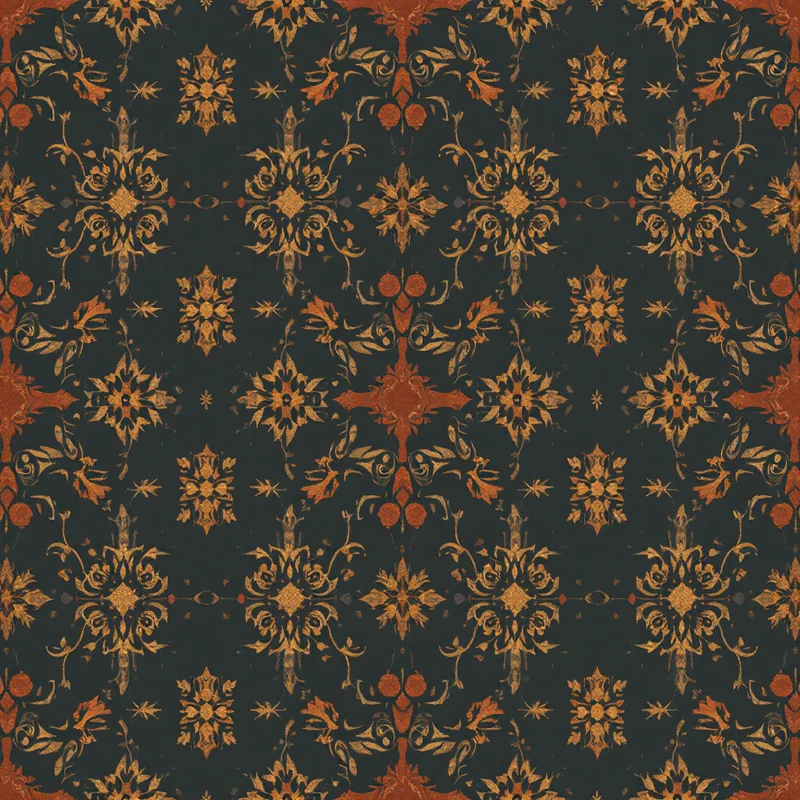
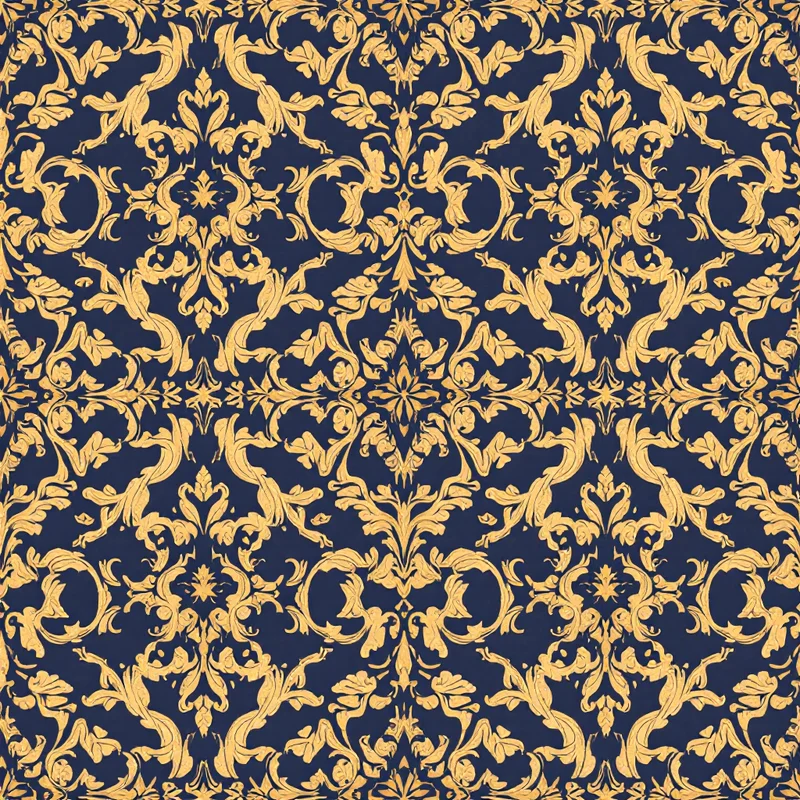
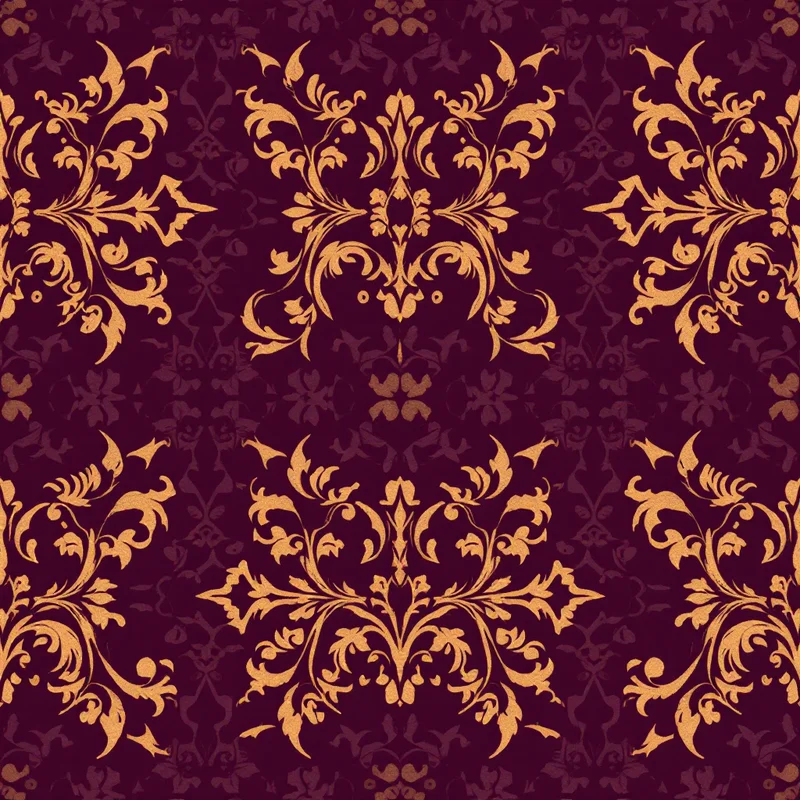
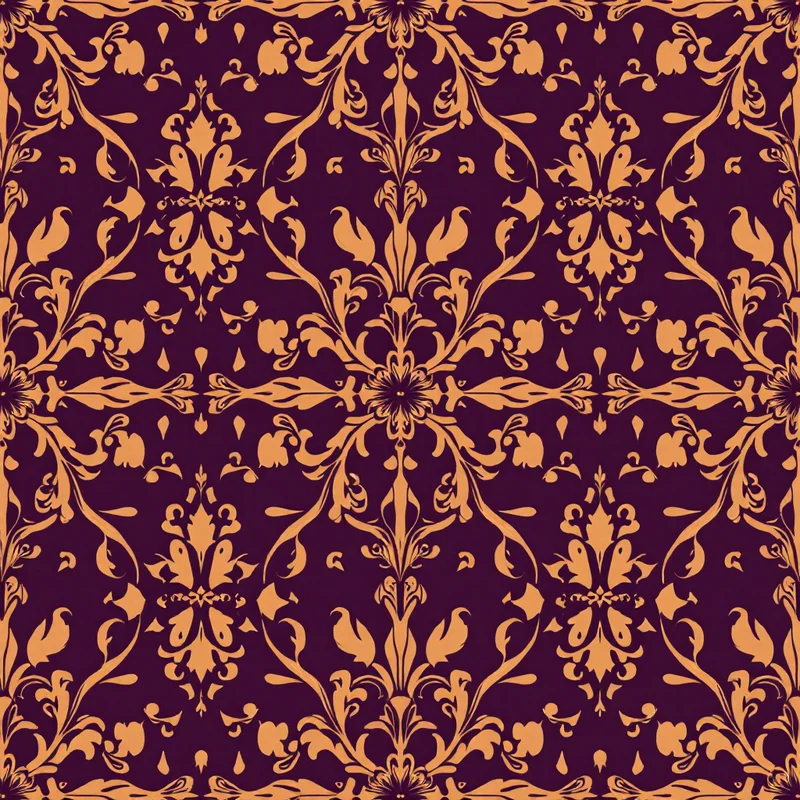
Dark academia has moved decisively from TikTok subculture into mainstream surface design. The aesthetic's appeal is the opposite of most viral trends — instead of saturated brightness and immediate gratification, dark academia signals restraint, scholarship, and a quiet obsession with beauty that feels earned. For pattern designers, that opens up a rich territory of antique-inspired motifs, moody palettes, and products that command premium pricing.
Key takeaway: Dark academia is defined by its reversal of standard pattern design — dark grounds with lighter motifs, desaturated colors with gold accents, and an insistence that every element feels like it came from a place and time.
The Dark Academia Palette
The palette is narrow and committed. Oxblood (a deep, warm burgundy). Aged gold (metallic but dull, like old book-edge gilding). Charcoal black (softer than pure black, with a slight warm undertone). Deep olive green (the color of old leather book spines). Parchment cream (the lightest color, used sparingly for contrast).
Optional accent colors include muted navy, dusty rose (for a more romantic dark academia variant), and forest green. Every color should feel aged rather than fresh. If a color looks vibrant on a bright screen, desaturate and darken until it feels like it could have been printed a hundred years ago.
Antique Botanical Motifs
Botanical illustrations drawn from 18th and 19th-century scientific plates are the foundation of dark academia patterns. Fern fronds, specimen flowers with latin labels, mushroom studies, anatomical plant cross-sections, and herbarium pressings all translate beautifully to repeating patterns.
The trick is rendering. Hyperrealistic botanical illustrations feel out of place — too literal. The sweet spot is engraved or woodblock rendering on dark grounds, where the botanical feels like it was printed from an antique copper plate. Try botanical patterns with the pen-ink or lithograph render styles.
Tartan and Heritage Plaids
Dark academia rewrote the rules on tartan. Classic preppy tartans (bright reds and greens) read as too American-prep for the aesthetic. Instead, dark academia tartans use burgundy, forest green, charcoal, and deep navy in traditional tartan structures — Black Watch, Royal Stewart in muted colorways, and invented "academy" tartans featuring oxblood crossed with gold.
Tartan patterns work at a wide range of scales — micro-scale for stationery, medium for apparel, and oversized for upholstery or wallpaper. Explore tartan patterns and plaid patterns.
Celestial Charts and Constellations
Old astronomical charts, constellation diagrams, phases of the moon, and zodiac wheels feature heavily in dark academia visual culture. The look is specifically antique — mapping conventions from the 1700s and 1800s rather than modern space imagery. Gold constellations on black or deep navy grounds, rendered with the precision of an old engraving.
See cosmic patterns paired with dark color palettes. Avoid saturated blues and bright whites — the palette should feel like paper yellowed by time.
Ornate Frames and Borders
Picture frames, decorative borders, heraldic shields, and cartouche elements add architectural structure to dark academia patterns. These function as grid elements enclosing smaller motifs — a botanical illustration inside an ornate gold frame, repeated across a deep burgundy ground.
This kind of composition rewards the art-deco patterns and damask patterns categories when paired with the right palette and render style.
Typography as Pattern
Dark academia is one of the only aesthetics where typography functions regularly as pattern. Latin phrases, antique serif text blocks, library catalog numbers, and calligraphic flourishes can form the core of a pattern rather than being decorative additions. Repeating vertical text columns on a parchment ground create bookish, literary patterns that sell extraordinarily well in stationery and journal markets.
Product Categories for Dark Academia
Journals and stationery are the strongest category. Leather-bound journal covers, notebook endpapers, bookmark designs, wax-seal stickers, and letter-writing sets all command premium prices when designed in authentic dark academia style. See the stationery guide.
Home textiles — throw pillows, velvet cushions, table runners, and curtains in dark academia patterns bring the aesthetic into interior spaces. The market is smaller than cottagecore but less saturated, which means better margins for designers who commit to the aesthetic.
Apparel — especially blouses, scarves, and pocket squares. Dark academia is one of the few aesthetics where clothing design has a durable, identifiable style tribe with consistent demand. Pocket squares specifically are a low-competition category where unique patterns can dominate niche markets.
Wallpaper — feature walls in libraries, home offices, and studies. Explore the wallpaper guide for specs.
Digital products — phone wallpapers, desktop backgrounds, and digital planner inserts. Sells consistently on Etsy and Creative Market.
Render Styles That Work
The most effective dark academia patterns use render styles that create the illusion of age. Engraved, woodcut, pen-and-ink, and lithograph render styles all work. Watercolor and vector styles generally do not — watercolor feels too soft, vector too modern. See the full list of render styles to compare.
The one exception is a very specific pastel chalk render style against a dark ground, which can evoke old chalkboard lettering or fresco paintings. Use sparingly.
Building a Dark Academia Collection
Like most aesthetic-driven work, dark academia sells best as coordinating collections rather than standalone designs. A classic dark academia collection includes:
- A hero pattern (antique botanicals in engraved style)
- A tartan or plaid blender
- A small-scale celestial or typography pattern
- An ornate frame/border pattern
- A solid-look texture (linen, parchment, or leather)
All five sharing a single palette — oxblood, aged gold, charcoal, and parchment. That's a complete dark academia collection from a single design session.
Open the pattern studio to start building, or read the pattern color palette guide for more on building committed palettes.
Explore related pattern styles
Patterns for