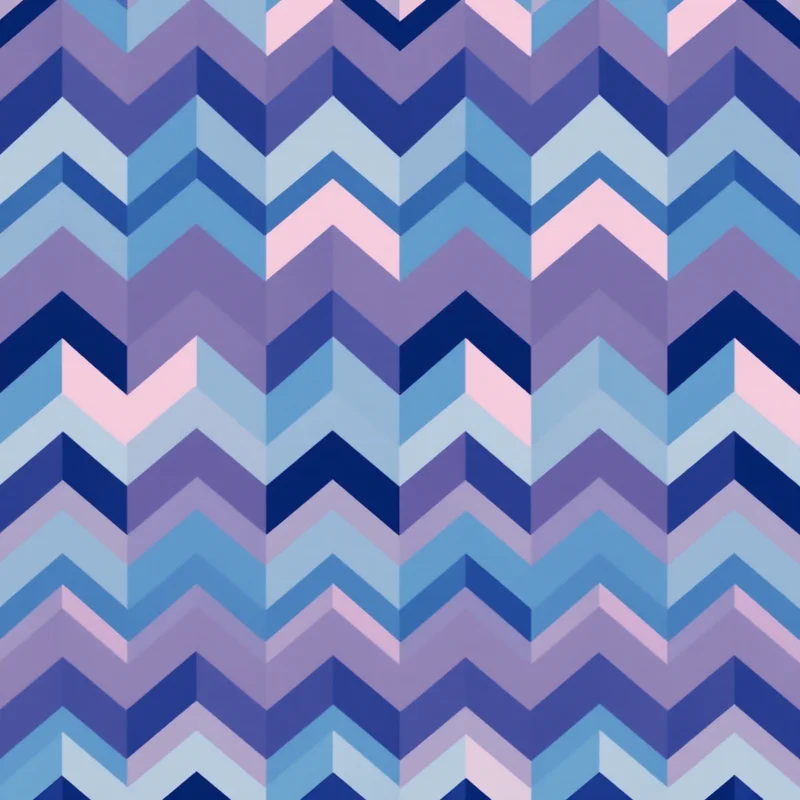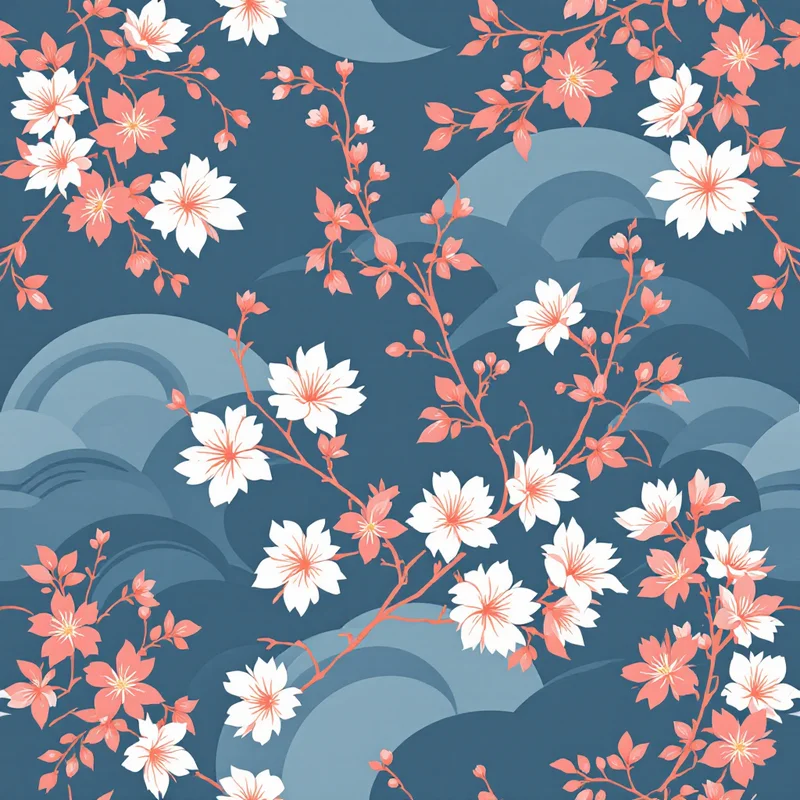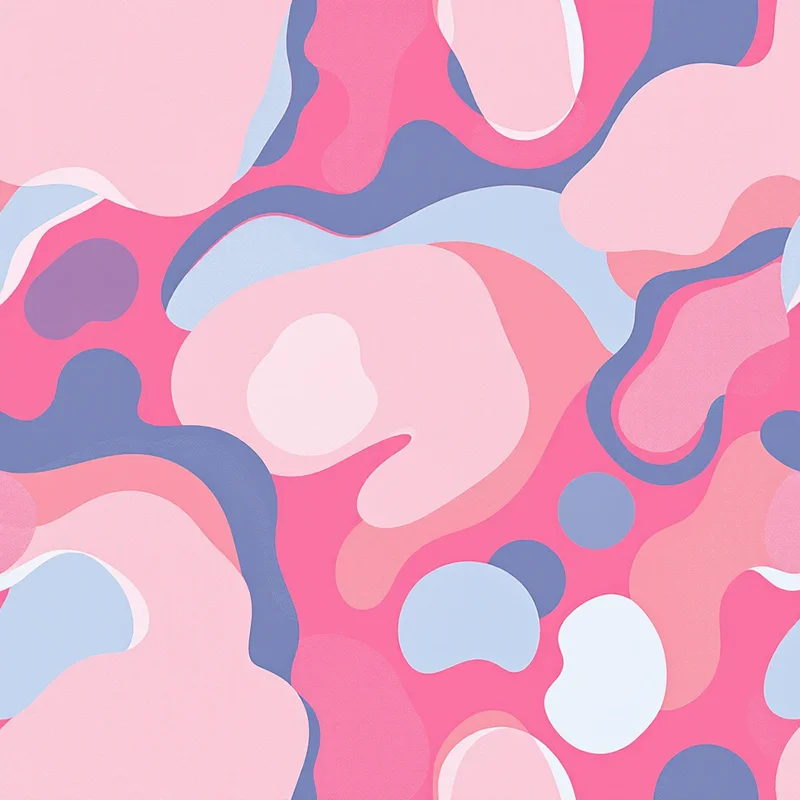
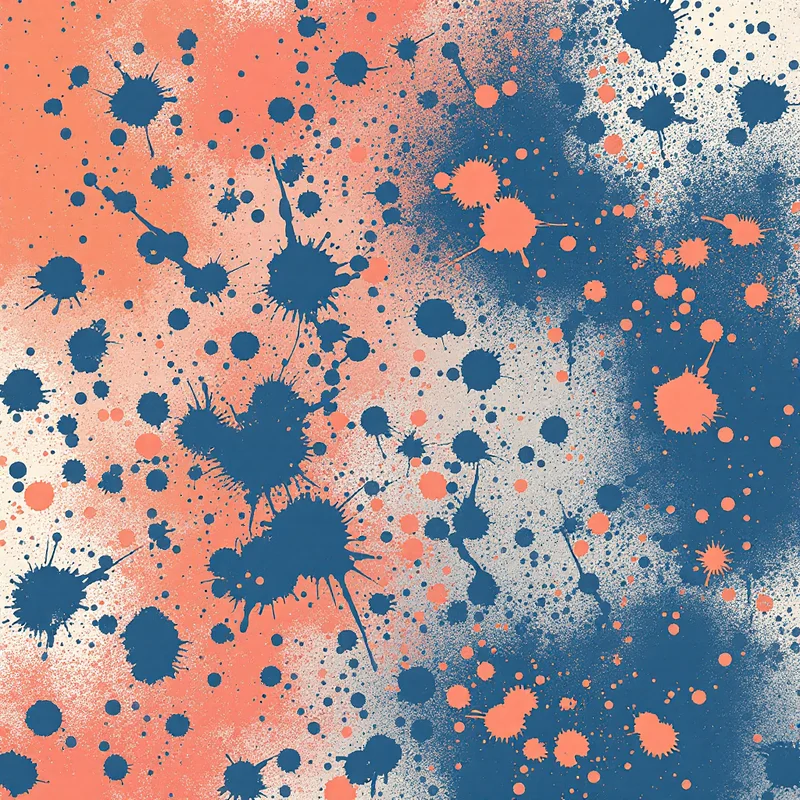

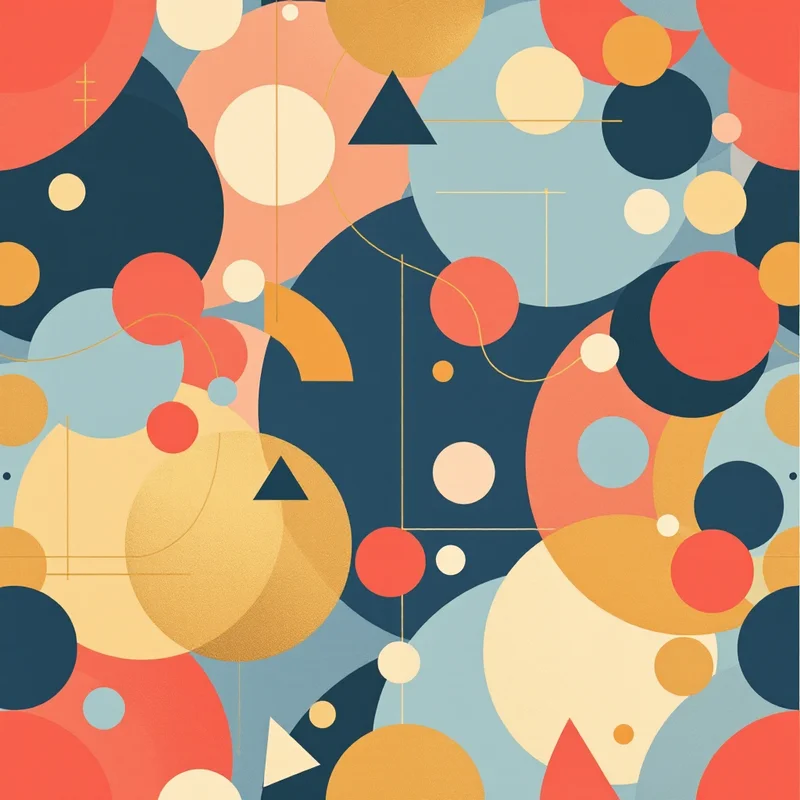
Color palette decisions in pattern design carry more weight than in most other design disciplines. A poster or illustration is seen once. A pattern is repeated — sometimes across an entire wall, a full bolt of fabric, or a product line. Colors that look vibrant and exciting in a single tile can become overwhelming when tiled across a large surface. Colors that feel subtle in a small swatch can vanish entirely on a finished product.
Pattern-specific color strategy is different from generic color theory. This guide skips the basics you already know (complementary, analogous, triadic) and focuses on the decisions that matter specifically when your design repeats.
How Many Colors: The Economics and Aesthetics
The number of colors in your pattern is not just a design choice — it has commercial implications that affect production cost, market appeal, and versatility.
Two-color patterns
Two colors (motif + background) are the most commercially versatile patterns in existence. They are cheaper to print in traditional processes (screen printing, rotary printing), easier to recolor for different markets, and more likely to coordinate with other products in a collection.
Two-color patterns succeed when the design relies on form, rhythm, and contrast rather than color variety. Geometric patterns are natural candidates: a navy and white herringbone, a black and gold grid, a terracotta and cream abstract motif.
The limitation is obvious — reduced visual richness. Two-color patterns need stronger compositional design to compensate for the lack of color complexity. The motifs themselves must carry the visual interest.
Three-color patterns
Three colors hit the practical sweet spot for most commercial applications. You have enough palette depth to create foreground/background separation, value contrast, and a focal accent, without the production cost or visual complexity of larger palettes.
A reliable three-color formula: dark value + medium value + light value. This creates natural depth and readability at any scale. The dark value typically serves as the primary motif, the medium value as secondary elements or ground, and the light value as background or highlight.
Four to five colors
This range is standard for digitally printed textiles, print-on-demand products, and wallpaper — applications where color count does not significantly affect production cost because the printing process handles unlimited colors equally.
Four to five colors allow for nuanced botanical patterns with distinct leaf and petal colors, geometric patterns with layered elements, and designs with both warm and cool components. This is the range where patterns start feeling illustrative rather than graphic.
Six or more colors
Beyond six colors, you are entering territory where the palette itself becomes a design element. This works for maximalist styles, watercolor patterns, and designs intended to feel painterly or complex. But more colors create more challenges: harder to maintain harmony, harder to recolor for variations, and the risk of visual chaos increases with each addition.
For print-on-demand and digital products, there is no production cost penalty for more colors. But for traditional textile printing, each additional color can add $100+ per screen to production setup costs. Know your output method before designing.
Building Palettes That Work at Repeat Scale
The fundamental challenge of pattern color: what looks balanced in one tile may look different across a full repeat field. Here is how to account for that.
Dominant color ratio
In a tiled pattern, the color that occupies the most area dominates the visual impression of the entire surface. A pattern with 70% deep green background and 30% pink florals reads as "a green pattern with pink flowers" — not as "a pink and green pattern." When tiled across a duvet cover, the room impact is primarily green.
This means your background color is usually the most important color decision in the palette. It sets the tone for the entire surface. Motif colors are accents playing within the field the background establishes.
Test this: Fill a full screen with your tiled pattern and step back. The color that registers first from a distance is your dominant color. Make sure it is the color you intend to dominate.
Value distribution
Value (lightness/darkness) matters more than hue in pattern readability. A pattern with three distinct values — light, medium, dark — will read clearly at any distance. A pattern with three colors of similar value will blur into an undifferentiated field from across a room.
Check value distribution by converting your pattern to grayscale. If the motifs disappear into the background in grayscale, your colors have insufficient value contrast. The pattern might look colorful on screen, but it will lack definition in real-world viewing conditions.
Saturation consistency
Mixing highly saturated and desaturated colors in the same pattern creates visual tension. One screaming magenta among dusty muted tones will pull the eye to every instance of that color across the entire repeat field — creating a visual polka-dot effect that may not be intentional.
Keep saturation levels within a consistent range. Either commit to muted/tonal or to vibrant/saturated. If you mix ranges, do it deliberately with clear hierarchy: muted base, one saturated accent used sparingly (less than 10% of the pattern area).
Trending Palettes by Industry
Color trends differ significantly between industries because the end use, buyer expectations, and product lifespan differ.
Fashion textiles
Fashion color cycles faster than any other industry. Current strong palettes for 2026 pattern design:
- Warm earth tones: terracotta, clay, sand, olive. Performing strongly in both casual and elevated fashion.
- 90s revival: forest green, burgundy, mustard. Cycling back through nostalgic palettes.
- Soft contrast: chalk white with any single bold color — cherry red, cobalt, emerald. Clean and photogenic for the social media era.
- Tonal dressing palettes: monochrome patterns in head-to-toe color ranges (all blues, all greens) reflecting the tonal dressing trend.
Home decor and wallpaper
Home palettes move slowly because products live in spaces for years. Current strength:
- Warm neutrals: moving away from cool grays toward warm whites, creams, taupes, and warm stone tones.
- Nature-derived greens: sage, moss, eucalyptus. The biophilic design movement continues driving demand for botanical patterns in green-dominant palettes.
- Rich and moody: deep navy, forest, aubergine backgrounds with lighter motifs. Dramatic wallpaper patterns for accent walls.
- Pale and airy: very light palettes (blush, sky, vanilla) for spaces that need to feel open and calm.
Packaging
Packaging color must communicate brand positioning instantly. Pattern palettes in packaging tend toward:
- Premium/luxury: black, deep navy, gold/copper metallics, monochrome
- Natural/organic: kraft, sage, terracotta, cream — earthy palettes that signal sustainability
- Playful/youth: bright primaries, unexpected color combinations, high saturation
- Clean/modern: limited palette, white-dominant, one or two accent colors
Print-on-demand
POD pattern palettes are driven by what photographs well (important for marketplace listings) and what appeals to the broadest buyer base:
- Dark backgrounds consistently outperform on products like phone cases, laptop skins, and apparel
- High contrast patterns get more clicks in search results because they read clearly at thumbnail size
- Trend-reactive colors matter more here than in slower-moving industries — POD buyers follow aesthetic trends more closely
CMYK vs RGB: When It Matters
If your patterns will only exist digitally — screen wallpapers, digital products, web use — RGB is your only consideration. But the moment your pattern touches physical production, the CMYK question becomes relevant.
The critical differences for pattern designers
Saturated blues and purples shift the most between RGB and CMYK. A vivid electric blue in RGB will appear duller and slightly purple in CMYK print. If your pattern relies on intense cool tones, you will be disappointed by the printed output unless you design with CMYK limits in mind.
Neon and fluorescent colors do not exist in standard CMYK. Patterns that use hot pink, electric green, or bright orange will lose their vibrancy in print. Some printers offer spot color or extended gamut printing, but at increased cost.
Black richness varies. RGB (0,0,0) converts to a four-channel CMYK black that prints richer and deeper than using only the K (black) channel. For patterns with black backgrounds, discuss rich black vs pure black with your printer.
Practical approach
Design in RGB for maximum creative flexibility. Before sending to print, convert to your printer's recommended CMYK profile and review. Adjust any colors that shifted unacceptably. For patterns intended for fabric printing, request a color proof before full production — screen-to-fabric color matching is unreliable without proofing.
For print-on-demand platforms (Redbubble, Spoonflower, Society6), design in RGB. These platforms handle their own color management, and uploading CMYK files usually results in unnecessary double-conversion.
Testing Palettes at Different Scales
A palette that works at one scale may fail at another. Always test your color decisions across the full range of intended applications.
Thumbnail test
View your pattern at thumbnail size (the size it appears in marketplace search results or website galleries). Do the colors maintain enough contrast to read? Do the dominant hues still represent the pattern accurately? Patterns with subtle, closely valued palettes often disappear at thumbnail size — a problem for discoverability.
Full-surface test
Tile your pattern across a large area — ideally at the physical size of the intended product. Colors that feel balanced in a single tile can become monotonous or overwhelming when repeated 30 times across a bedspread. The dominant color intensifies with area. If your background is a medium green, it will feel like a lot of green at full duvet scale.
Adjacent product test
If your pattern is part of a collection, place it next to the other patterns in the collection. Do the palettes coordinate? Are there enough differences to make each pattern distinct while maintaining collection cohesion? Place coordinate patterns side by side and squint — they should feel related but not identical.
Seasonal Color Strategy
If you sell patterns commercially, timing your palette choices to seasonal demand cycles increases relevance and sales.
- Spring (upload January-February): pastels, fresh greens, soft florals, light and airy backgrounds
- Summer (upload March-April): bold tropicals, vivid blues, coral, high-saturation palettes
- Autumn (upload July-August): warm rusts, deep oranges, burgundy, olive, mustard
- Winter/Holiday (upload September-October): deep reds, evergreen, gold, metallics, rich darks
Build your core palette library around evergreen colors that sell year-round (navy, cream, sage, black, blush), then layer seasonal accent palettes on top. Using Pattern Weaver, you can generate color variations of the same pattern quickly — creating a spring, summer, autumn, and winter version of your best-selling floral or geometric design from a single base composition.
The designers who build sustainable pattern businesses treat color as strategy, not decoration. Every palette decision should be traceable to a specific product context, audience, and commercial objective. Taste matters, but informed taste — taste shaped by understanding production, trends, and buyer behavior — is what produces patterns that sell.
Explore related pattern styles
Patterns for