African pattern design spans a continent of hundreds of distinct textile traditions, each with its own history, meaning, and regional specificity. The visual richness is extraordinary — but so is the potential for cultural appropriation when designers approach "African patterns" as a generic aesthetic rather than a collection of specific traditions with their own cultural contexts. This guide aims to both inform designers about the core traditions and outline respectful approaches to working within them.
Key takeaway: "African patterns" is not a single style. Kente, mudcloth, ankara, adinkra, and dozens of other traditions each have specific histories, meanings, and regional origins. The respectful designer learns the source rather than generalizing.
Kente Cloth (Ghana)
Kente originated among the Asante and Ewe peoples of Ghana and has become globally recognized as a symbol of African heritage and celebration. The distinctive woven bands combine vivid colors — gold, green, red, blue, black — in geometric patterns with named meanings. Each color has traditional associations: gold for royalty, green for spiritual renewal, red for sacrifice and struggle, blue for harmony.
For pattern design, kente-inspired repeating patterns work beautifully but should be approached with awareness of the tradition's cultural weight. Kente is not decorative "ethnic" pattern — it's a specific cultural textile with sacred and ceremonial uses in its original context.
Look to cultural patterns paired with striped compositions and bold color palettes.
Mudcloth / Bogolan (Mali)
Mudcloth (bogolanfini in Bambara) is a hand-dyed cotton fabric from Mali, traditionally produced by Bamana women using fermented mud as the dye medium. The patterns are graphic — rust, ochre, and cream in geometric motifs including diamonds, crosses, concentric squares, and repeating linear elements.
Mudcloth has been widely adopted in contemporary interior design and fashion, and mudcloth-inspired patterns translate extremely well to home textiles, upholstery, and apparel. The aesthetic works in both rustic and modern contexts because the color palette is consistently earthy and the compositions are structurally strong.
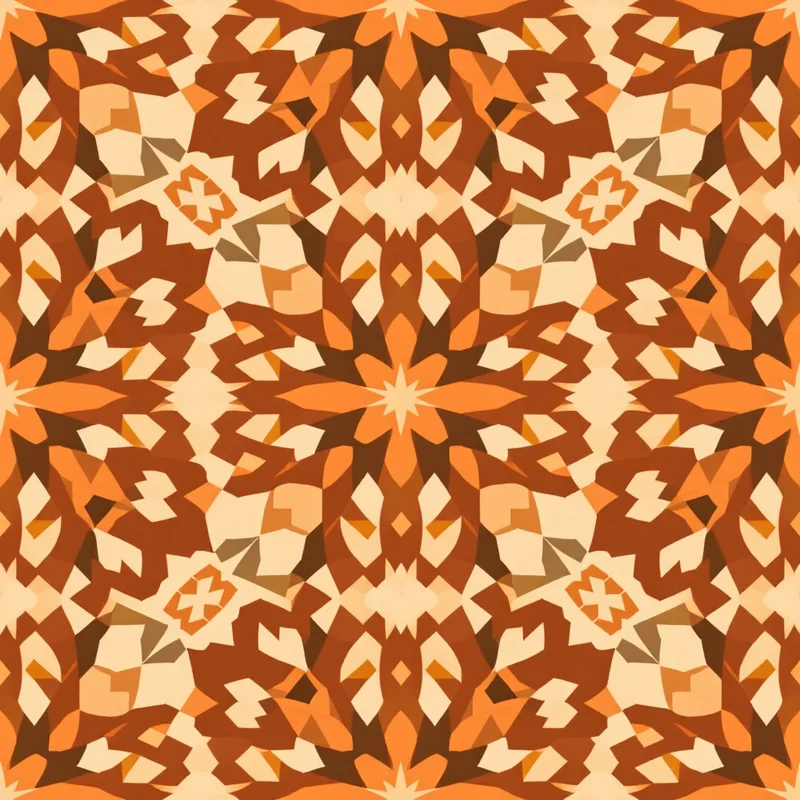
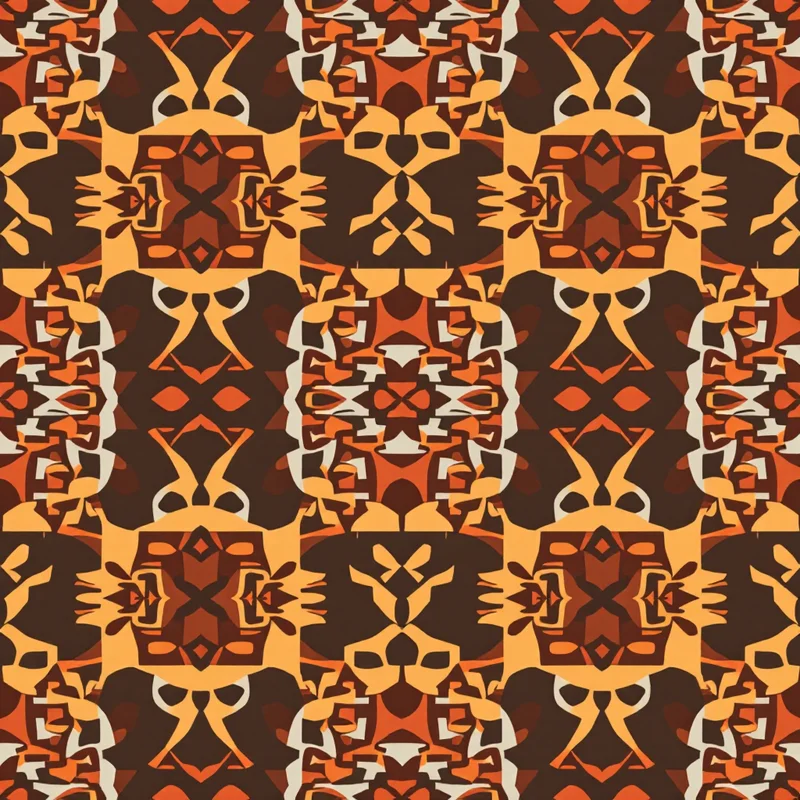
Try tribal patterns or geometric patterns with warm earth palettes. The hand-drawn render style captures the authentic hand-painted quality.
Ankara / Wax Prints (West Africa)
Ankara — the bright, bold wax-printed cottons of West Africa — has a complex history. The technique originated with Dutch attempts to mass-produce Indonesian batik in the 19th century; when the European market rejected the results, manufacturers sold to West African markets where the fabrics became foundational to regional fashion and identity.
Ankara patterns are characterized by high-saturation colors (royal blue, red, yellow, green), bold graphic compositions (often featuring symbolic objects — fans, birds, geometric shapes), and a distinctive slightly-imperfect registration that results from the wax-resist printing process.
For pattern generation, ankara-inspired designs combine cultural substyles with high-contrast, saturated palettes and bold graphic motifs. The look is unmistakably West African and performs exceptionally well in fashion applications.
Adinkra Symbols (Ghana)
Adinkra are symbolic ideograms from the Akan peoples of Ghana. Each symbol has a specific meaning tied to proverbs, philosophical concepts, or cultural values. The Sankofa bird (looking backward to move forward), the Gye Nyame (supremacy of God), the Adinkrahene (greatness and leadership), and dozens more form a visual vocabulary that can be combined into pattern work.
For commercial pattern design, decorative adinkra-inspired compositions work well, but designers should avoid using sacred or religious-context symbols without understanding their meaning. The respectful approach is to either select symbols with secular decorative use or credit the specific Akan origins when marketing products.
Other Regional Traditions
Ndebele geometric designs (Southern Africa) — the bold geometric house paintings of Ndebele women, featuring vivid colors in strict geometric arrangements. Often recognized by their characteristic linear compositions and saturated palettes.
Berber and North African patterns — overlap with Moroccan traditions but extending across the region. See the Moroccan pattern design guide.
Zulu beadwork patterns (Southern Africa) — geometric beadwork traditions with color-coded meanings.
Ethiopian cross patterns — religious and cultural cross motifs with strong pattern potential.
Contemporary African Fashion Influence
African fashion designers have reshaped how the broader world understands African pattern traditions. Designers like Stella Jean, Duro Olowu, Deola Sagoe, and Studio 189 have brought African pattern design into global fashion weeks at the highest levels. The aesthetic has moved from "ethnic" niche into mainstream luxury fashion.
For pattern designers today, this means African-inspired patterns have broader commercial pathways than a decade ago — but also that buyer expectations for authenticity and quality have risen.
Render Approaches
Authentic-feeling African patterns benefit from hand-drawn rendering that evokes the original making processes. Hand-drawn, linocut, woodcut, and screen-print renders all produce appropriate results. Flat vector rendering can work for contemporary interpretations but loses some of the tradition's character.
Product Categories
Fashion textiles — the largest market. Dress fabrics, scarves, headwraps, and accessories. Ankara-inspired prints especially perform well here. See fashion use-case.
Home textiles — mudcloth-inspired throws, pillows, and wall hangings have become a significant interior design category. See home decor.
Wallpaper — kente- and mudcloth-inspired wallpaper work well for feature walls and accent spaces. See wallpaper.
Stationery — African-inspired patterns in stationery (notebook covers, greeting cards, journals) perform consistently well, especially when the specific tradition is credited. See stationery.
Approaching the Work Respectfully
Commercial pattern design in the African tradition requires care. A few principles:
- Specify the tradition you're drawing from rather than calling work generically "African" or "tribal."
- Avoid using sacred or ceremonial symbols (specific adinkra with religious meaning, ritual mudcloth patterns) for decorative commercial products.
- Consider collaborating with or licensing from African designers when working in traditions with strong contemporary practitioners.
- In marketing copy, credit the specific regional or ethnic tradition that inspired the design.
The strongest contemporary work in this space treats the traditions as living design languages with their own heritage, not as aesthetic raw material.
Building a Collection
A strong African-inspired mini-collection:
- A mudcloth-style linear pattern
- A bold ankara-inspired graphic
- A geometric kente-inspired stripe
- A smaller-scale symbolic motif pattern
- A solid earth-tone ground
Open the pattern studio to begin.
Explore related pattern styles
Patterns for