Cowhide pattern is one of those designs that looks completely natural and is genuinely difficult to do well. The spots seem random, but a sloppy random reads as fake within seconds. Authentic cowhide pattern has a logic to it — shape size, edge softness, distribution rhythm, color warmth — that the eye registers without consciously naming. This guide breaks down that logic, walks through generating a production-ready cowhide pattern in Pattern Weaver, and covers the palette and use-case decisions that separate a working surface design from a costume-shop knockoff.
What is cowhide pattern?
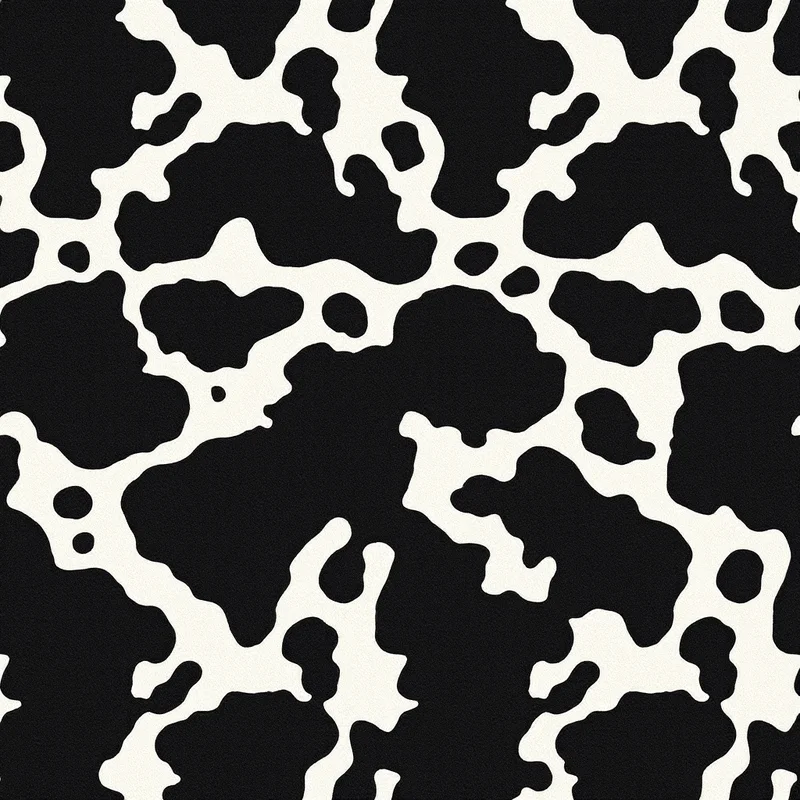
Cowhide pattern is a surface design that imitates the irregular spotting of a cow's natural hide. The defining traits are large soft-edged organic shapes, irregular distribution with no grid, and a two-color palette where dark spots sit on a cream or warm-white ground. Unlike leopard or cheetah, the shapes are not small repeating rosettes — they are big asymmetric blobs, often with peninsulas and inlets, sometimes connecting into larger landmasses across the surface.
The pattern carries strong cultural associations: Western Americana, ranch aesthetics, dairy farming, Scandinavian farmhouse, and country-rustic interiors. Those associations make it powerful when matched to the right product and clumsy when mismatched.
Where cowhide pattern comes from
The use of actual cowhide as a decorative surface is ancient — preserved hides covered floors, walls, and seating across cattle-raising cultures from medieval Europe to the American West to the Argentine pampas. The hide pattern entered mainstream surface design in the early 20th century as Western-themed interiors spread beyond ranching regions, and again in the 1990s when Pottery Barn and similar retailers brought cowhide rugs into mainstream home decor.
The printed imitation — cowhide as pattern rather than as material — became dominant once digital printing made high-fidelity reproduction affordable. Today cowhide pattern is more often printed on cotton, polyester, vinyl, or paper than sourced from actual hides, which has freed the design to take on colorways and scales that natural hide cannot.
Visual hallmarks of cowhide pattern
A convincing cowhide pattern follows a few unwritten rules. Shape sizes vary widely within the same composition — some spots are large landmasses covering 15% of the visible area, others are small islands the size of a thumbprint. Edges are soft and irregular, never circular or geometric. Spot distribution avoids both uniform spacing and obvious clustering — natural hide has rhythm but not pattern.
The two-color rule is strong. Authentic cowhide is high-contrast — a dark color against a light ground — and three-color cowhide reads as designed rather than natural. The ground color is almost never pure white. Natural hide carries warmth, so cream, bone, ivory, or linen reads more honestly than #FFFFFF.
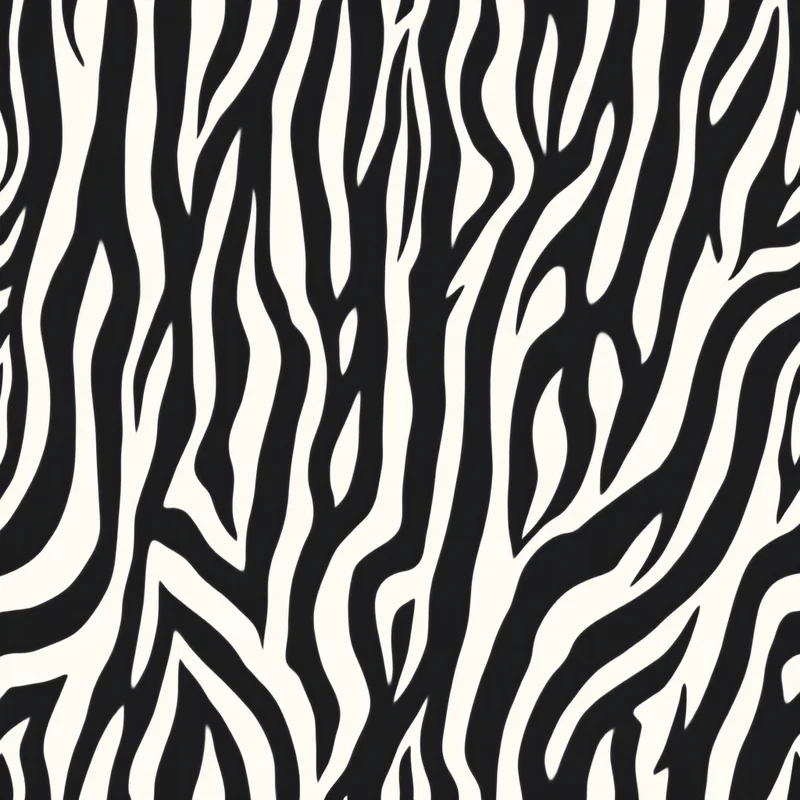
Browse the animal print and natural pattern categories to see how cowhide sits next to leopard, zebra, and giraffe in the broader animal-print family.
How to generate cowhide pattern in Pattern Weaver
The studio handles the irregular-distribution logic automatically, so the work shifts from drawing spots to directing the brief.
- 1Open the studio and choose Animal Print. Sign in to Pattern Weaver's studio, select Animal Print as the top-level style, then pick Cowhide as the substyle. This loads the spot-shape logic, irregular distribution rules, and natural-edge softness that distinguish cowhide from leopard, cheetah, or zebra.
- 1Set your palette. Choose the breed-style color combination. Default to black on cream for Holstein, brown on cream for Hereford, or pick a custom two-color palette for a contemporary off-palette version.
- 1Adjust density and scale. Density controls how much of the tile the spots cover. Medium density (around 50–60) reads as authentic cowhide. Scale controls the size of each spot — larger for upholstery and rugs, smaller for apparel.
- 1Generate and preview the tile. Hit Generate. When the design returns, switch to the four-up tile preview to check that spot shapes flow across tile edges without visible seams and that no single silhouette repeats in adjacent tiles. Regenerate if the seam reads.
- 1Export at production resolution. Once the pattern reads natural, export at the resolution that matches the end use — 2K for digital, 4K for most print, 8K for large-format wallpaper or upholstery.
For more on the seamless-tile mechanics that sit behind step 4, the seamless pattern guide covers edge-blending in depth.
Color palette ideas for cowhide pattern
Classic Holstein black-on-cream is the safest commercial choice and the most recognizable as cowhide pattern. Chocolate brown on cream reads as Hereford and feels warmer — better for living rooms, kids' spaces, and Scandinavian-influenced interiors. Caramel on ivory pushes the palette toward Western boho and pairs naturally with leather, rattan, and warm metals.
For fashion-forward briefs, off-palette versions work surprisingly well: indigo on bone for denim-adjacent collections, terracotta on stone for desert-modern interiors, sage on linen for botanical home decor, oxblood on cream for luxury packaging. The cowhide silhouette is strong enough to read as cowhide pattern even when the colors leave the literal Western palette.
Pure white grounds are the most common mistake. Natural hide is always slightly warm — leaving the ground at #FFFFFF makes the pattern feel printed rather than hide-like.
Best use cases
Cowhide pattern earns its keep across a wide range of products:
Home decor. Area rugs, throw pillows, upholstery, accent wallpaper, lampshades, and ottomans. Cowhide pattern reads especially well on large surfaces where the irregular spot rhythm has room to breathe.
Fashion. Western-influenced apparel, boots, jackets, handbags, and accessories. Smaller-scale cowhide pattern suits scarves and lining; larger scale suits coats and statement pieces.
Packaging. Bourbon, tequila, ranch-brand foods, leather goods, and Western-themed gift retail. The pattern carries authenticity associations that mass-market brands lean into.
Kids and nursery. Farm-themed nurseries and ranch-style kids' rooms. Softer colorways like caramel on cream work better here than high-contrast black.
Branding. Logos, business cards, and packaging for ranches, equestrian businesses, Western boutiques, and farm-to-table restaurants.
Stationery and gift wrap. Greeting cards, journals, gift wrap, and planners with Western or farmhouse themes.
The print-on-demand guide covers which surfaces handle cowhide pattern best across services like Spoonflower, Printful, and Society6.
Pro tips for stronger cowhide pattern repeats
A few things separate a working cowhide pattern from a generic spot print:
Vary shape sizes aggressively. If every spot is roughly the same size, the pattern reads as polka dots, not hide. Push for at least a 4:1 ratio between the largest and smallest shapes in the same tile.
Avoid obvious silhouettes. Spots that look like recognizable objects — a heart, a fish, the United States — pull the eye out of the pattern. Regenerate if a silhouette starts a conversation.
Soften the edges. Hard vector edges read as designed. Subtle softness at the spot perimeter reads as natural.
Watch the negative space. The cream ground between spots should also feel irregular. Long straight channels of ground color give the pattern a grid feel.
Check seam continuity. The four-up tile preview is the single best tool here. Cowhide pattern seams hide best when shapes break across tile edges and resume in the next tile.
For deeper technique on AI-assisted pattern work, how to make a pattern with AI covers the briefing and editing workflow that applies to cowhide and every other animal print.
Generate your own cowhide pattern
Whether the end use is a Western boot collection, a ranch-house wallpaper, or a tequila brand's gift box, cowhide pattern rewards designers who treat it as a craft rather than a default. The shape logic, palette warmth, and seam discipline covered here apply whether the work is generated, hand-painted, or hybrid.
Open the studio, brief a cowhide pattern with the breed-style and color combination that fits the product, preview the tile in the four-up view, and export at the resolution the print run demands. Pattern Weaver runs on a credit-pack model — pay for the credits the project needs, no recurring charges — and commercial license is included on every paid pack. The pricing page lays out Free, Starter, Pro, and Max side by side. Pattern Weaver was built for working surface designers, and cowhide is one of the styles where the studio's irregular-distribution logic does the heaviest lifting.
Browse more pattern categories at Pattern Weaver's create hub to see how cowhide pattern sits alongside the other animal prints, geometric grids, and botanical surfaces in the broader catalog.