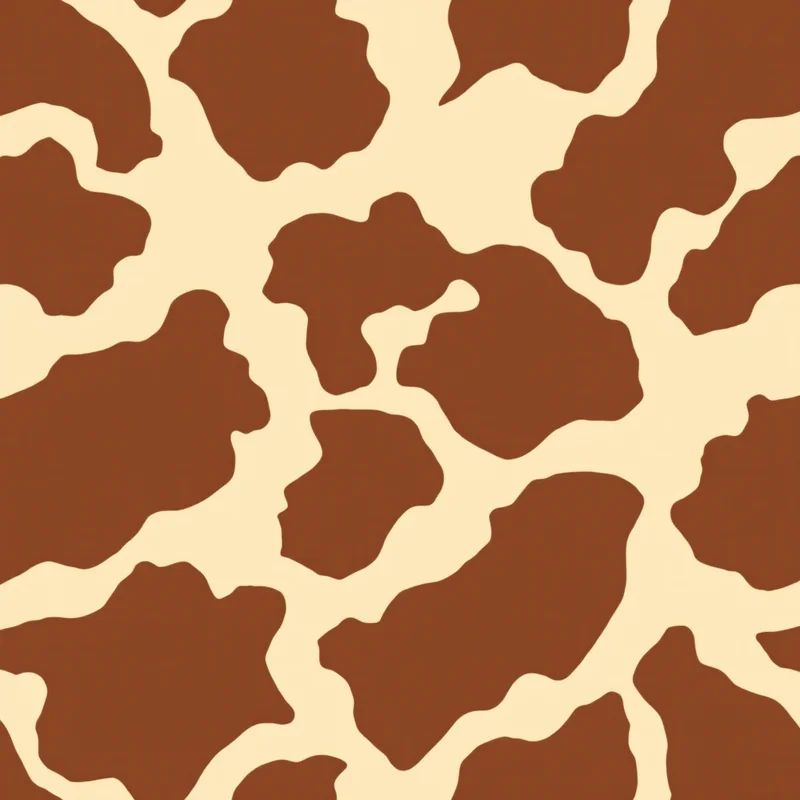
Few prints have survived as many trend cycles as cow print pattern. From 1980s Western wear, through Y2K mall fashion, into the cottagecore and coastal cowgirl moments of the early 2020s, the same irregular black splotches on a cream field keep coming back. The reason is simple: cow print pattern reads as bold neutral, which is a rare and useful position in any wardrobe. It carries personality without competing with color, which is why designers reach for it whenever a collection needs a statement piece that still plays nicely with the rest of the line.
This guide breaks down what makes a cow print pattern read as cow, the historical and cultural roots of the print, the visual hallmarks production teams should know about, and a practical walkthrough for generating a production-ready cow print pattern in Pattern Weaver in under five minutes.
What is cow print pattern?
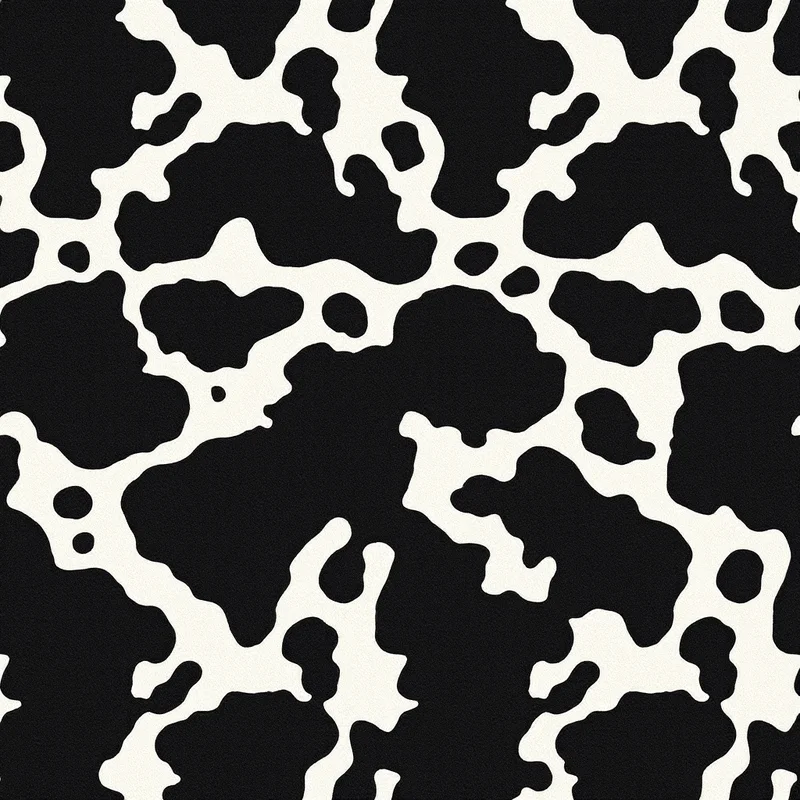
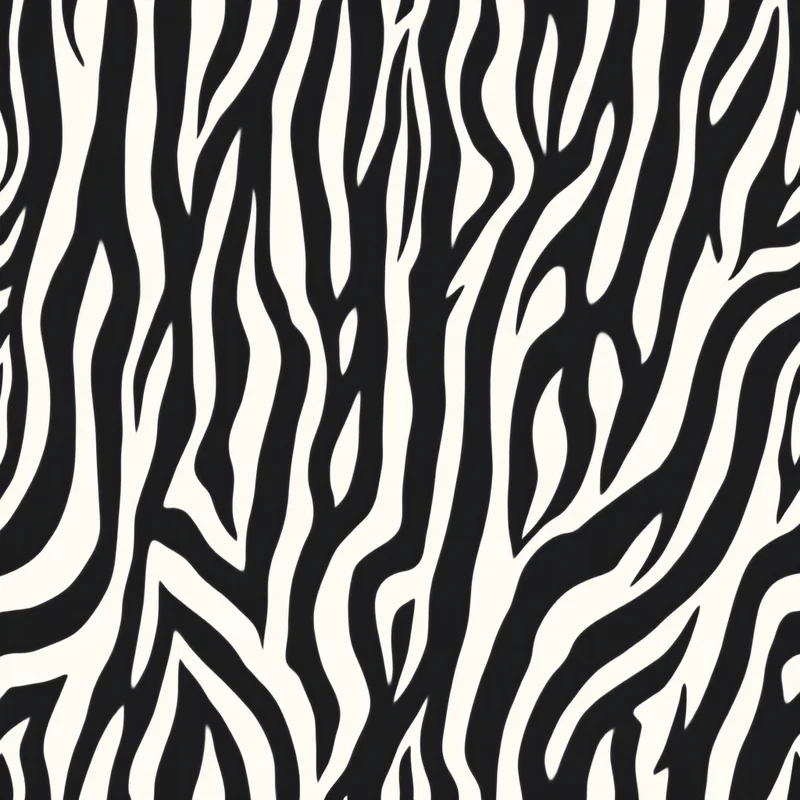
Cow print pattern is the family of two-tone organic splotch designs derived from the natural coats of dairy and beef cattle, most famously the black-and-white Holstein. The defining feature is irregularity. Unlike leopard's structured rosettes or zebra's parallel stripes, cow print has no internal logic — each splotch is a unique shape, drawn freehand by genetics, with soft edges that bleed slightly into the background field.
The print sits in a useful design category called "graphic neutrals" — a pattern that behaves like a solid color from across a room and reveals its detail up close. That dual reading is why it works on garments that need to hold their own without dominating an outfit.
Where cow print pattern comes from
Cow print pattern entered fashion vocabulary through American Western wear in the postwar era, when rodeo costuming and country-music stage outfits adopted the Holstein silhouette as shorthand for ranch life. Hollywood took it next — 1960s Westerns and 1980s sitcoms cemented cow print as visual code for both authentic country and kitschy country, depending on the styling.
The print broke into mainstream fashion in the late 1980s through designers like Moschino, who used cow print ironically alongside cartoon florals. Versace returned to it in the 1990s with luxury fabrications that took the print upmarket. The 2010s cottagecore movement and the 2020s coastal-cowgirl wave brought cow print back into emerging-brand collections, where it has remained steady ever since.
Globally, cow print pattern also borrows from older cultural surfaces — Belted Galloway cattle from Scotland inspired reverse-banding designs, Jersey cattle from the Channel Islands gave designers the caramel-and-cream palette, and East Asian Wagyu inspired darker fawn-on-charcoal interpretations.
Visual hallmarks of cow print pattern
A few specific features separate strong cow print pattern from weak imitations.
Asymmetric splotch shapes. No splotch should mirror or rotate to match another. Real bovine coats have unique markings, and a print that uses copied splotches reads as fake immediately.
Variable splotch size. A good cow print tile has splotches ranging from small accents up to dominant feature splotches roughly three to five times larger. Uniform sizing kills the print.
Soft splotch edges. The ink-meets-cream boundary should have a slight bleed, never a hard vector edge. This is what gives cow print its tactile, hide-like quality.
Two-value palette, not two-color. Classic cow print uses one warm dark and one warm light. Pure black on pure white reads costume; soft ink on cream reads luxury.
Coverage in the 30 to 50 percent range. Below that and it reads as polka dots; above that and it reads as camouflage.
For a broader look at how organic motifs sit alongside other animal-inspired surfaces, browse the full pattern library at Pattern Weaver.
How to generate cow print pattern in Pattern Weaver
A clean cow print pattern takes about five minutes from sign-in to export. Open the studio and follow these four steps.
Step 1: Choose Animal Print and Cow. Pick Animal Print from the style menu, then select Cow as the substyle. This loads the bovine-specific motif logic so the splotch shapes read as cow rather than abstract blob.
Step 2: Set palette and contrast. Choose your two-color palette. Classic Holstein uses warm black on cream. For Hereford, swap black for chestnut brown. For modern fashion variations, try pastel or neon combinations. Set contrast to medium-high so the splotches read clearly at finished garment scale.
Step 3: Dial scale and coverage. Set splotch scale to medium for apparel or large for outerwear. Push coverage to roughly 35 to 45 percent — too sparse reads as polka dots, too dense reads as camouflage. Enable variable splotch sizing so the tile has visual rhythm.
Step 4: Generate and check the seamless tile. Generate the pattern. Use the tile preview to confirm splotches do not cut symmetrically at the edges and that left-right density matches. Regenerate or nudge parameters if any edge feels rigid.
Step 5: Export at production scale. Choose 4K PNG or TIFF for most apparel runs, 8K for outerwear and home textiles, or SVG when the splotches need to scale to wallpaper without pixelation.
The seamless construction is handled automatically — for more on how the studio builds tileable repeats, see how to create seamless patterns.
Color palette ideas for cow print pattern
The two-tone structure of cow print makes it a sandbox for palette experimentation. A few directions worth testing:
Classic Holstein. Warm ink (#1a1614) on warm cream (#f4ede0). The default for a reason — it sells.
Hereford. Chestnut brown (#6b3a1f) on ivory (#f1e8d6). Reads vintage Americana.
Jersey caramel. Caramel (#a87344) on soft cream (#f5ecd9). Quieter and warmer than Holstein.
Pastel cow. Sage (#9aae8d) or lavender (#b9a8c8) on cream. Kidswear and emerging streetwear love this combo.
Neon cow. Electric pink (#ff4daf) on near-black (#0d0d0d). Direct-to-consumer streetwear in 2025–2026.
Tonal cow. Two values within 20 percent of each other, like taupe on stone. Reads luxury and subtle.
Palette swaps in Pattern Weaver are instant — change the colors without regenerating the underlying motif and ship six colorways in the time it would take to repaint one.
Best use cases for cow print pattern
Cow print pattern earns its keep across more categories than most animal prints.
Apparel. Western shirts, oversized jackets, midi skirts, bucket hats, and statement T-shirts are the staples. Cow print also reads well on swimwear and athleisure when scaled down.
Accessories. Scrunchies, scarves, tote bags, phone cases, and hair clips all carry cow print well at small scale. Belt designs benefit from edge-to-edge medium scale.
Home decor. Throw pillows, blankets, accent rugs, and tea towels are reliable sellers. Wallpaper works at large scale in entry halls, powder rooms, and feature walls.
Packaging. Beauty brands, dairy-adjacent food products, and Western-themed gift items use cow print on boxes, tags, and tissue paper.
Kidswear. Pajamas, onesies, and crib sheets in small-scale cow print are a perennial print-on-demand favorite. The print-on-demand guide covers fulfillment specs in detail.
Pro tips for stronger cow print pattern repeats
A few details separate amateur cow print pattern from work that prints clean at scale.
Avoid splotch symmetry. If any splotch is left-right or top-bottom symmetric, it reads as fake. Re-roll until none of them are.
Mind the rotation logic. Real cattle have splotches that flow along the body. Even on a flat tile, building in a subtle directional bias makes the print read as more authentic.
Watch for unintended faces. Cow print's irregular shapes can accidentally form recognizable faces or animals. Inspect every tile at full size before exporting.
Test at finished scale. Print a strike-off or order a sample swatch. Cow print at the wrong scale reads completely different from the same print at the right scale.
Build a colorway library. Save three to six palettes once and apply them across collections. The AI pattern workflow guide covers palette systems in more depth.
Generate your own cow print pattern
Cow print pattern is one of the rare designs that earns its place on every season's mood board — bold enough to anchor a collection, neutral enough to play well with others. Pattern Weaver makes it fast to produce a finished, production-ready cow print pattern in any palette, scale, and coverage configuration a brief might call for, with commercial license included on every paid credit pack and exports up to 8K.
Open the studio and generate your first cow print pattern in under five minutes. Compare Free, Starter, Pro, and Max credit packs on the pricing page — the entry pack covers a full seasonal mini-collection, and the larger packs handle ongoing print-on-demand or wholesale production without the per-print cost compounding. Pattern Weaver is built for working designers who need to ship, not just sketch.