# Cheetah Print Pattern Design: Spots, Scale, and Color
Cheetah print pattern design comes down to three decisions: the shape of the spots, the scale you set them at, and the color contrast between spots and base. Get those three right and you have a clean, recognizable print that works on a scarf, a sofa cushion, or a phone case. Get them wrong and the print either looks muddy or stops reading as cheetah at all. This guide walks through each variable and shows how to build a seamless cheetah print pattern design from scratch.
What is cheetah print pattern design
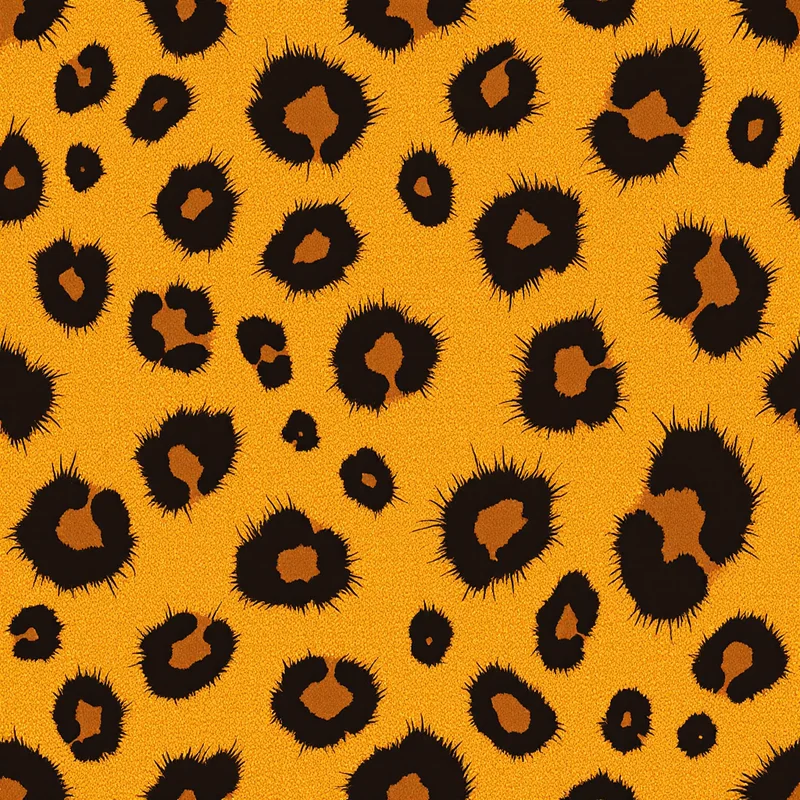
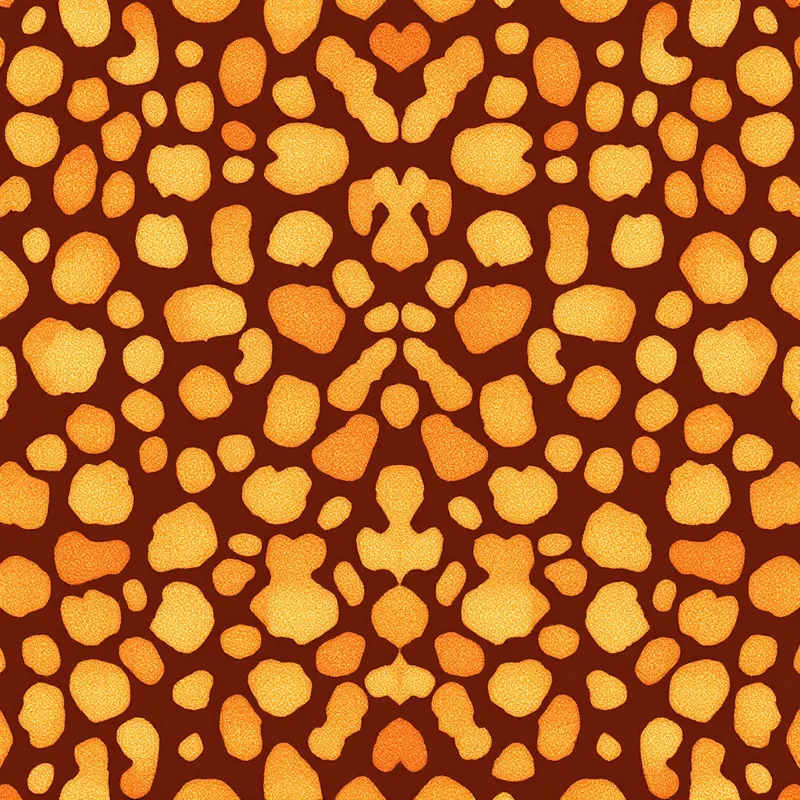
Cheetah print is an animal print built from solid, round-ish dark spots scattered over a warm tan field. It is one of the most recognizable patterns in fashion and surface design precisely because the spots are simple. There are no rings, no clusters, no fades. Each spot is a filled dot, and the eye reads the whole field as a smooth, even rhythm.
Cheetah print pattern design is the work of arranging those spots so the print feels natural rather than mechanical, and so it repeats seamlessly across a surface. The challenge is balance: spots that are too uniform look like polka dots, and spots that are too irregular start to look like leopard. The sweet spot is gentle variation in size and spacing that still reads as one coherent print.
Origins
The pattern takes its cue directly from the cheetah's coat, where solid black spots provide camouflage across open grassland. Designers have borrowed that look for decades, and cheetah print has cycled through fashion as both a bold statement and a neutral. Because the base color sits in the tan-to-gold family, cheetah print pairs with denim, leather, black, and cream the way a neutral does, which is part of why it never fully leaves the trend cycle.
Today the print shows up well beyond apparel: stationery, packaging, nail art, wallpaper, and tech accessories all use cheetah print pattern design as a quick way to add energy without a busy multi-color motif.
Visual hallmarks
A few features separate good cheetah print pattern design from a generic dot field:
- Solid spots, not rosettes. This is the single biggest tell. Cheetah spots are filled. If you see open rings with a darker center, that is leopard.
- Warm base. Tan, gold, sand, or beige is the traditional ground. The base reads as the "skin" between spots.
- Gentle size variation. Real coats are not uniform. Spots vary a little in size and roundness, which keeps the print from looking like a manufactured dot grid.
- Breathing room. Enough base shows between spots that the pattern feels open, not crowded.
- High contrast. Dark spots sit clearly against the lighter base so the print holds up from across a room.
How to generate it in Pattern Weaver
Here is the workflow, start to finish. You can follow along in the studio at /app/studio/.
- 1Choose an animal print style. In the studio, pick a spotted or animal print style. This tells our AI engine you want solid cheetah-style dots rather than the open rosettes of leopard. Starting from the right style saves you from fighting the look later.
- 2Set spot scale. Use the scale slider to size the spots for your surface. Medium spots suit apparel and scarves, larger spots carry across curtains and bedding, and smaller spots fit accessories like phone cases and notebooks.
- 3Tune density. Adjust density so spots cluster closely enough to read as cheetah but leave enough tan base showing between them. Too dense and the print turns muddy; too sparse and it loses its identity.
- 4Pick your colors. Set a warm tan base with dark brown or near-black spots for the classic look, or swap in a modern base color while keeping the spots high-contrast.
- 5Preview and export. Run the seamless preview to confirm spots flow across every tile edge with no cut-off seam, then export a high-resolution file up to 8K (8192x8192) in your chosen format.
That is the whole loop. If a tile is close but not quite right, change one setting and regenerate rather than starting over.
Color palette ideas
Color is where cheetah print pattern design gets to be expressive. A few palettes to try:
- Classic coat. Golden tan base, dark brown spots, optional faint lighter halo. Instantly readable and always in style.
- Soft modern. Blush or oatmeal base with charcoal spots. Reads as a neutral, great for nursery decor and minimalist apparel.
- Monochrome graphic. Light grey base with black spots. Sharp, editorial, and prints beautifully on packaging.
- Bold brand. A saturated base in your brand color with near-black spots. Keep contrast high so the spots survive at small sizes.
- Sage and espresso. A muted green base with deep brown spots for a grounded, earthy home-decor feel.
Whatever palette you choose, test it small. A combination that looks great at full size can collapse into a flat blob when shrunk to a label or button.
Best use cases
Cheetah print pattern design earns its keep on:
- Apparel: dresses, scarves, leggings, and linings where medium-scale spots photograph well.
- Home decor: throw pillows, curtains, and rugs that want large-scale rhythm visible across the panel.
- Accessories: phone cases, tote bags, and hair accessories, using smaller spots so several fit in view.
- Stationery and packaging: notebooks, gift wrap, and labels where a graphic monochrome version pops.
- Print-on-demand products: a single strong cheetah tile can carry an entire product line across mugs, totes, and tees.
Pro tips
A few things that separate a passable print from a polished one:
- Vary, do not randomize. A little size and rotation variation looks natural. Total randomness looks chaotic.
- Mind the contrast at distance. Squint at your tile. If the spots blur into the base, raise the contrast.
- Match scale to product. Resize and re-preview for each surface rather than reusing one scale everywhere.
- Keep the base doing work. The tan ground is part of the design, not empty space. Do not crowd it out.
- Export big. For fabric and wallpaper, export at the largest resolution your plan allows so detail survives the print process.
If you are new to seamless work, the seamless pattern tutorial explains why edge-matching matters, and the print-on-demand guide covers file prep for manufacturers.
Start your cheetah print
Cheetah print pattern design rewards small, deliberate choices: solid spots, the right scale, and strong color contrast. Pattern Weaver handles the seamless repeat so you can focus on those creative calls instead of the math. Browse starting points at /create/, open /app/studio/ to build your first tile, and check /pricing/ to see which export sizes and formats fit your project. Make one cheetah print today, then remix the color and scale into a whole collection.