"Knit pattern" can mean two different things: the stitches that give a sweater its texture, or the colors that give it a design. The most useful way to sort knit patterns is by how they are made, because the technique decides what the pattern can look like.
Texture stitches: pattern made from shape
These patterns use only one color. The design comes from how the loops sit.
- Stockinette. Smooth rows of little V shapes on the front, bumpy on the back. It is the default knit look.
- Garter stitch. Every row knit, producing horizontal ridges. Cozy, squishy, common in scarves and blankets.
- Rib. Columns of knit and purl stitches (1x1, 2x2). It stretches and pulls in, so you see it on cuffs and hems.
- Seed and moss stitch. Knit and purl alternate in a checkerboard of tiny bumps. It lies flat and has a pebbled texture.
- Cable. Groups of stitches cross over each other to look like braided rope. Cables are usually combined with plain columns around them. The Aran sweater, named for the Aran Islands off Ireland, is the best-known cable garment.
- Bobbles and popcorns. Small clusters of stitches that pop out of the surface.
- Entrelac. Little diamond blocks knit in rows, giving a basketweave look.
Colorwork: pattern made from yarn
Fair Isle (stranded). Two colors per row, with the one not in use carried behind. Bands of small motifs, usually crosses, diamonds and stars, run in horizontal stripes. It is named for Fair Isle in Shetland. The Fair Isle knitting patterns guide covers charts and bands in detail.
Nordic stranded work. A related tradition, with eight-pointed stars, snowflakes and reindeer on a stitch grid. The Selbu rose, an eight-petal star from Selbu in Norway, is a well-known motif of the style. For the visual language, browse Norwegian patterns.
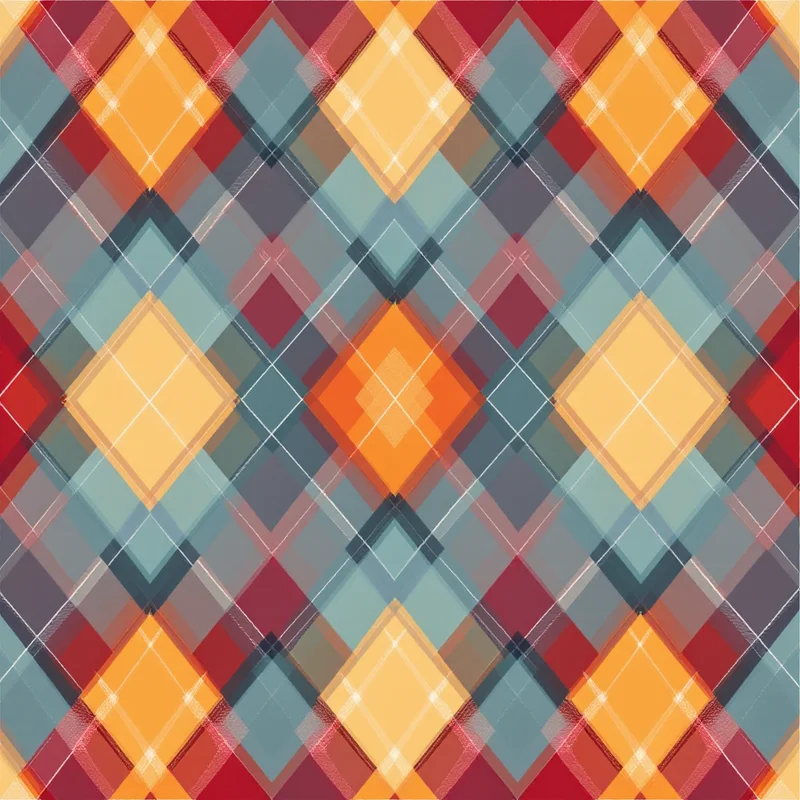
Intarsia. Separate yarn lengths for each block of color, with no floats behind. Argyle diamonds are classic intarsia. Argyle takes its name from the Campbell tartan of Argyll, and the diamond check with its thin diagonal overcheck is explained in the argyle pattern guide.
Jacquard (knit). Machine-made multicolor patterns, often large and complex, used on commercial sweaters and fabric.
Brioche. A two-color technique with deep, squishy, reversible ribs.
Lace knitting
Lace knits use yarn-overs (deliberate holes) paired with decreases to make eyelet patterns such as leaves, shells and diamonds. They look airy and open, often in a fine yarn. Do not confuse them with true lace, which is made by a different method. For true lace see types of lace patterns.
Drawing a knit-look print
- 1Draw the stitch. A stockinette V is two slanted lines that meet at a point. Repeat it in columns, offset by half a row, and you have the knit face.
- 2Fix the proportions. Stitches are wider than tall. Draw each V a little wider than it is high.
- 3Add shadow. A soft, darker edge under each V suggests depth and keeps the surface from looking flat.
- 4Place the cables. Draw a twisting braid of three or four strands, then flank it with plain columns for contrast.
- 5Keep color options small. Knit colorwork rarely uses more than two or three colors per row, so limit your palette to match the logic.
Palettes for knit looks
| Style | Colors |
|---|---|
| Oatmeal cable | #D9CDB4, #B8A98C, #7C6F58 |
| Nordic red and cream | #B3262E, #F4EEE0, #2B3A55 |
| Heather argyle | #5A6B84, #A5B1C2, #EDE7DA |
| Cozy forest | #2F4A3A, #7B9A6E, #E8E0CC |
Where knit prints work
Knit-look prints are good for printed blankets, throw pillows, mugs and winter packaging, where you want warmth without stitching. They also work for holiday projects, and the types of Christmas patterns guide shows how Fair Isle and Nordic stars are used there. Browse blanket patterns for more.
To try a Nordic or knit-look idea, Browse Styles in Pattern Weaver lets you pick from 44 categories and 5,700+ styles, and each tile comes back seamless in about 20 seconds.
Explore related pattern styles