

The first spring swap in most homes is the heaviest thing in the room: the chunky throw on the sofa. People lighten before they brighten, which tells you something useful about the order buyers shop in and the order a spring collection should be designed in.
Swap lightest-first
Think of spring decor as a ladder of effort. The easiest changes get bought first, and they are the ones to design first.
| Item | Replaces | Repeat scale | Fabric feel |
|---|---|---|---|
| Pillow covers | Velvet, wool, faux fur | 4 to 8 inches | Linen, cotton canvas |
| Throw or blanket | Chunky knit | 6 to 10 inches | Cotton weave, waffle |
| Table linens and tea towels | Dark runners | 1 to 3 inches | Cotton, linen blend |
| Curtains | Heavy lined drapes | 8 to 14 inches | Light linen, cotton voile |
| Duvet cover | Flannel, dark solids | 6 to 12 inches | Percale, cotton sateen |
| Rugs and door mats | Wool, shag | 6 to 10 inches | Low-pile, flatweave |
These scales are starting points. Test the real piece, because a large floral that looks gorgeous on a curtain can disappear on a 16-inch pillow. Our home textile trends 2027 post covers where the wider market is heading on color and weight.
Three palettes that read as spring
Spring doesn't have to be pastel. Three palettes for different homes:
- Garden fresh: tulip red (#D63A3A), leaf green (#5E9B4A), cream (#F7F1E3). Bold and clean.
- Soft and buttery: butter yellow (#F3E19A), powder blue (#BFD7EA), white (#FFFFFF). Calm and light. The butter yellow guide covers keeping the yellow from going acidic.
- Muted woodland: sage (#A9BFA2), clay pink (#D9A89B), oatmeal (#E8DFCF). Quiet and earthy.
One anchor neutral in each palette lets a household drop the new pieces among what they already own.
Tulips, and what sits beside them
Tulips are the signature spring flower and a safe lead, with a strong, simple silhouette that reads at every scale. Draw them as a closed cup, a half-open cup and a fully open bloom, with long blue-green leaves that curve and cross. The tulip patterns category is a good starting base.
Beside them, a spring collection draws on:
- Gingham and checks, which suit tablecloths and kitchen textiles, as covered in our gingham pattern guide.
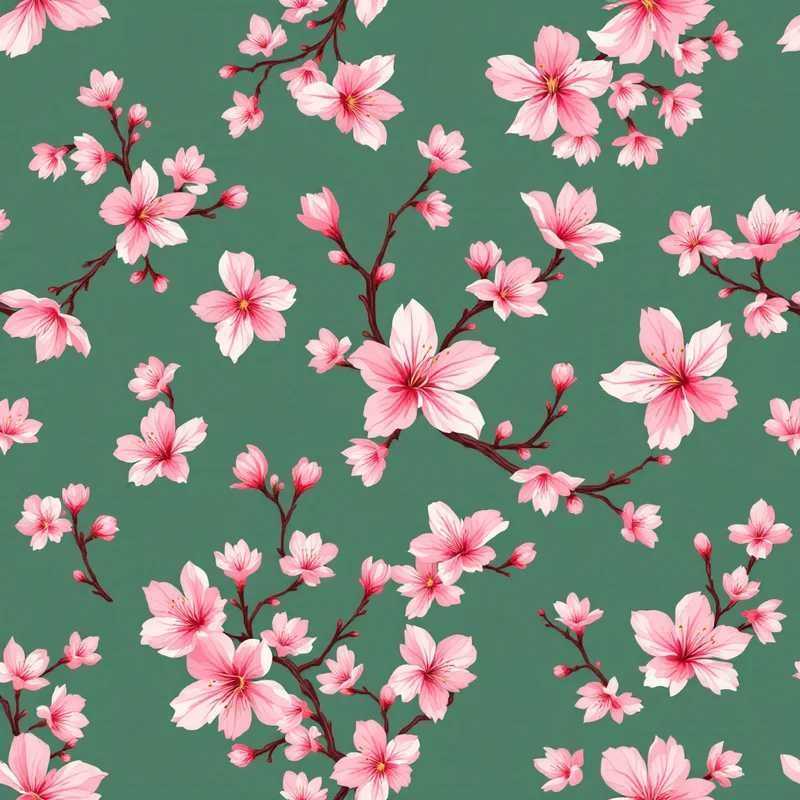
- Daffodils, blossom branches and bird-and-branch scenes.
- Eyelet and embroidery looks, drawn as flat white-on-white texture.
- Awning stripes in a single bright color.
Mix one large, one small, one stripe
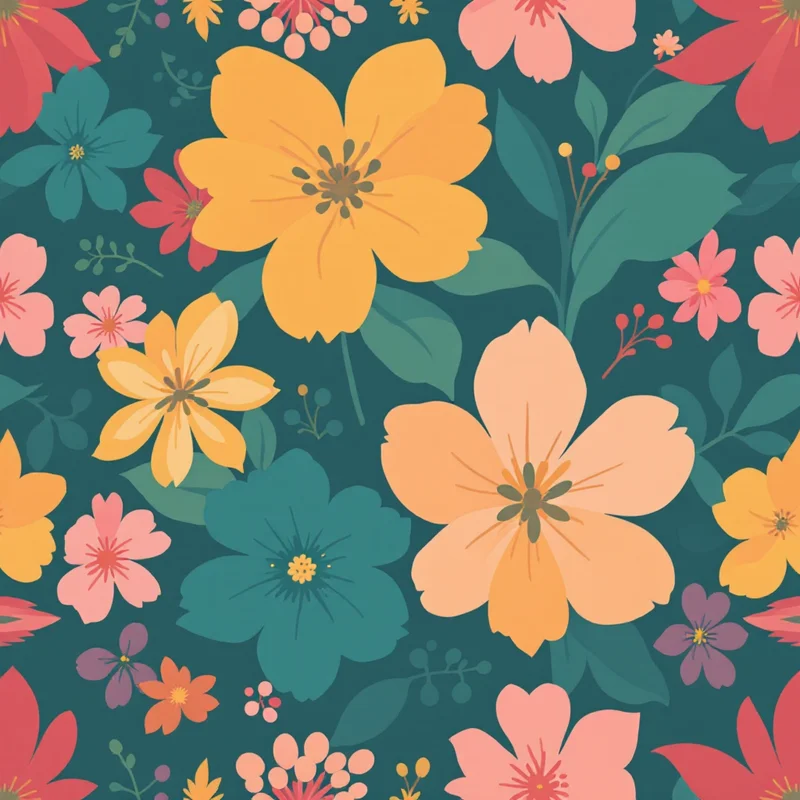
A simple formula for a room, and for a collection that looks coordinated: one large-scale floral, one small-scale ditsy or geometric, and one stripe or check, all within the same three or four colors. Designers can use it to build a three-print capsule in which every print works alone and every pair works together.
Sell it as a swap kit
Shoppers rarely redo a whole room, but they will buy a small bundle. A spring swap kit might be two pillow covers, a table runner and two tea towels in matching prints. Design the prints as a set, build every product at its own scale, and show them in a styled scene. The pillow patterns category is a good place to begin.
Timing
Spring decor starts to sell in February and carries through May, a longer window than any single holiday. Aim to list by late January. Because it isn't tied to a date, you can also use it as the base palette for Easter and Mother's Day, then recolor.
Pattern Weaver's Product Mockups are free and show a pattern on 20 products, which turns checking a tulip repeat on a pillow, a runner and a duvet cover into a quick look rather than a guess.
Explore related pattern styles