A silk scarf is the rare product where the print is the whole product. There is no seam to hide it, no garment shape to interrupt it, and often no repeat at all: a classic 90 by 90 cm square (about 35 inches) is drawn as one composition, like a small poster you can wear. That changes how a scarf trend should be read, and it is why the directions below focus on layout as much as motif.
These are forecasts, directions to watch rather than measured results.
The anatomy of a square
Most square scarves follow a three-part layout:
- 1The border, a frame running around all four edges, often 5 to 8 cm (2 to 3 inches) wide.
- 2The field, the large center area, which can be a repeat, a single scene, or a medallion.
- 3The corners, where the border turns; corner motifs hide the fact that four straight lines meet.
If you have ever looked at a Persian rug, you have seen the same logic: a central medallion, corner pieces and a layered frame. The scarf format borrows from it directly, which is partly why Persian patterns suit it so well.
Engineered borders are moving to the front
The border is the part of the scarf that shows when it is folded, tied or knotted, so it carries the identity of the piece. Expect borders that do more work in 2027: thicker bands, a second inner line, rope or chain motifs, and borders in a contrasting color to the field. A double border, one wide and one thin, gives a fold-over scarf a deliberate edge.
For the field, a calmer choice looks stronger than a busy one. A tonal repeat in a close color lets the border do the talking.
Heritage motifs, redrawn
Three historical vocabularies are worth watching:
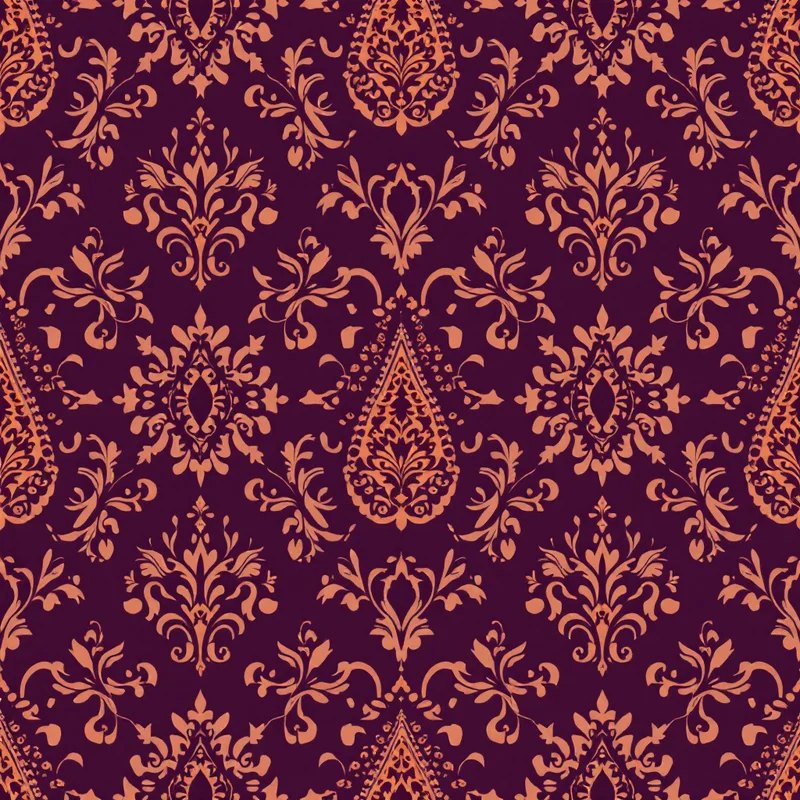
- Baroque scrollwork. Acanthus leaves, cartouches and curling ribbons give a scarf a sense of occasion. Baroque patterns work best at large scale, with a limited palette such as oxblood (#6B1F2A), gold and ivory.
- Equestrian motifs. Stirrups, bridles, saddle straps and chain links have been scarf subjects for a long time. The horse patterns direction looks set to shift from the horse itself toward the tack, which reads more graphic and less literal.
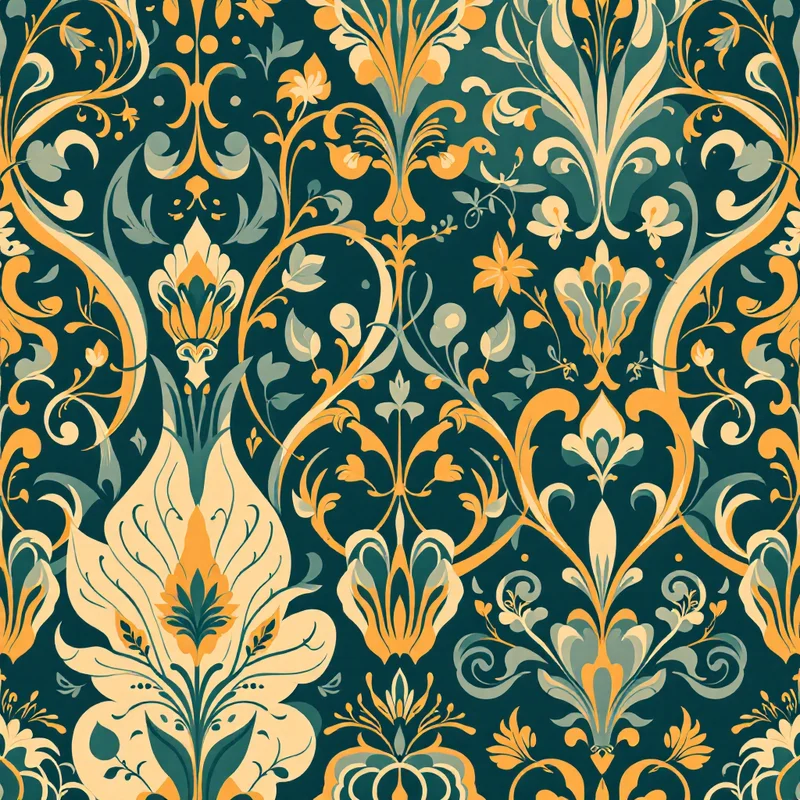
- Persian-inspired medallions. A central star or lobed medallion with corner spandrels, tied to a heritage palette of indigo, madder and cream. See the Persian pattern design guide for the structure behind it.
Keep cultural references accurate and respectful. Draw from the structure of the tradition rather than copying a specific named design, and check that any symbol you borrow means what you think it means.
The scarf as accessory, not neckwear
One of the more interesting shifts to watch is where scarves are worn. Tied to a bag handle, knotted in a ponytail, wrapped as a headband or folded into a belt, the scarf is used as a small accent rather than a full neck piece. That favors prints that are strong at a small visible portion: a tight pattern within a border, or a high-contrast scroll that still reads when only a 10 cm (4 inch) strip is visible.
It also favors smaller formats, such as the narrow twilly strips and the 70 cm square, where the whole composition is condensed.
Production notes
Silk twill gives a smooth, crisp surface for detailed scrollwork; lighter weaves such as crêpe de chine drape softer and lose some line sharpness. Traditional screen printing uses one screen per color, so a limited palette is cheaper, while digital printing removes that limit and suits painterly or photographic fields. Ask for a printed proof, since the same file looks different on each silk. Hand-rolled hems are the classic finish and add to the look, but they take space from the edge of the artwork, so keep key detail slightly away from the border.
The guide on scarf and accessory pattern design goes deeper on formats. For the bag side of this trend, see bag and accessory print trends.
Field and border, separately
Generate the field and the border as separate pieces, then place them yourself. Browse Styles in Pattern Weaver lets you pick from 44 categories and 5,700+ styles for a baroque or Persian-inspired field, each seamless tile takes about 20 seconds, and Pro exports up to 8K for large prints.
Explore related pattern styles