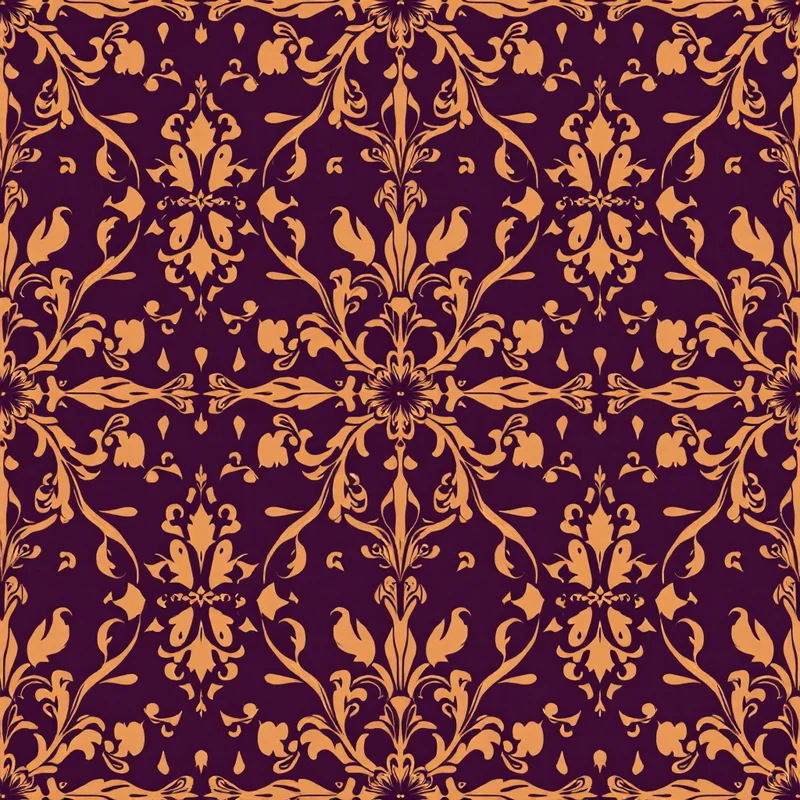
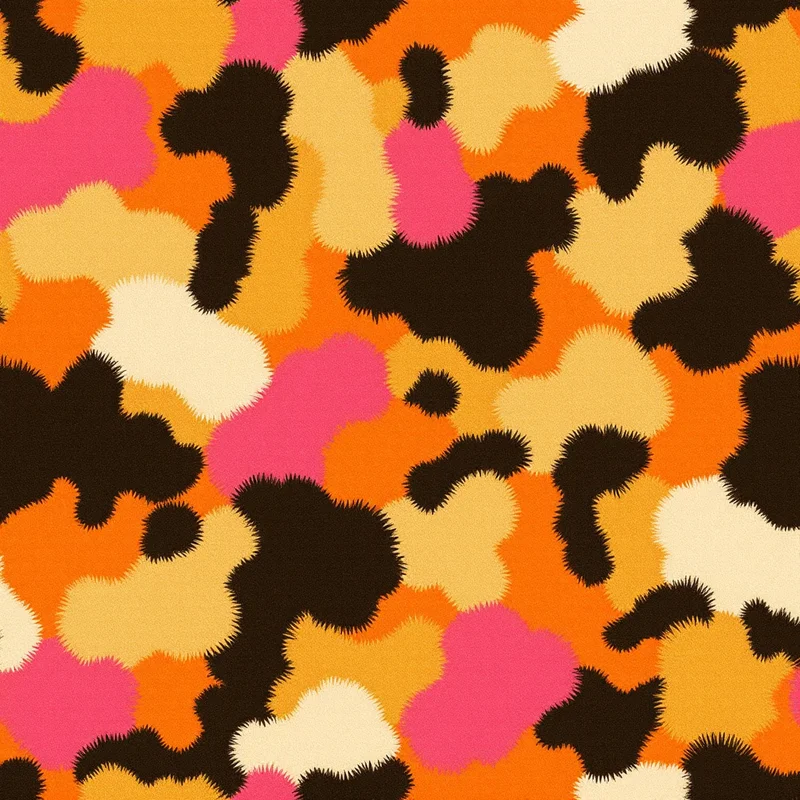
A quilter will take your carefully composed repeat and cut it into squares, triangles and strips, sew them next to forty other fabrics, and judge it by how it behaves next to its neighbors. Quilting cotton is a print category that is cut up on purpose, so the best quilt fabrics are designed for fragments, not for the whole yard.
That's the lens for the 2027 directions below, which are forecasts to test, not measured results.
Design for the cutting mat
Most quilting cotton is around 44 inches (112 cm) wide, and a quarter-inch seam is the standard. A fat quarter, a half-yard cut split in two, is roughly 18 by 22 inches. Common precut sizes are 2.5-inch strips, 5-inch squares and 10-inch squares. Keep those numbers in your head when you scale a print:
- A motif bigger than the smallest patch gets chopped into unreadable pieces.
- A directional print, such as a row of tilted flowers, can look chaotic once patches are rotated.
- A highly contrasting print draws all the attention, which makes it hard to combine.
Quilting designers tend to build in a range of scales on purpose: one large, one medium, one small, and a blender that reads almost solid.
Low-volume prints keep rising
Low-volume fabrics, with pale backgrounds and tiny, soft marks such as dots, scribbles, text-like squiggles and tiny sprigs, give a quilt breathing room. Expect more of them, drawn with greater personality than a basic tone-on-tone: hand-inked cross-hatching, faded botanical outlines, small text-free "newsprint" textures. A palette of ivory, oat and a trace of pale blue or sage (#C7D2C0) is easy to mix.
Scrappy, with a plan
Scrappy quilts, made from many different fabrics, are not new, but the direction to watch is the controlled version: a limited palette across many prints. Five or six colors in different scales and moods, such as rust, mustard, indigo, cream and olive, feel scrappy yet coherent. For designers, that means producing a collection of related prints in a fixed palette, not a single hero fabric. The how to match colors across a collection guide shows how to keep a set cohesive.
Solids with prints
Modern quilting often pairs solids or near-solids with a small number of prints, letting the pattern of the quilt carry the design. Expect more solid-and-print collections: a run of solid colors designed alongside a handful of prints, with the prints picking up exactly the same shades. The solid tones make the print fabrics look more sophisticated, and the quilter can play with negative space.
Calico, but not your grandmother's
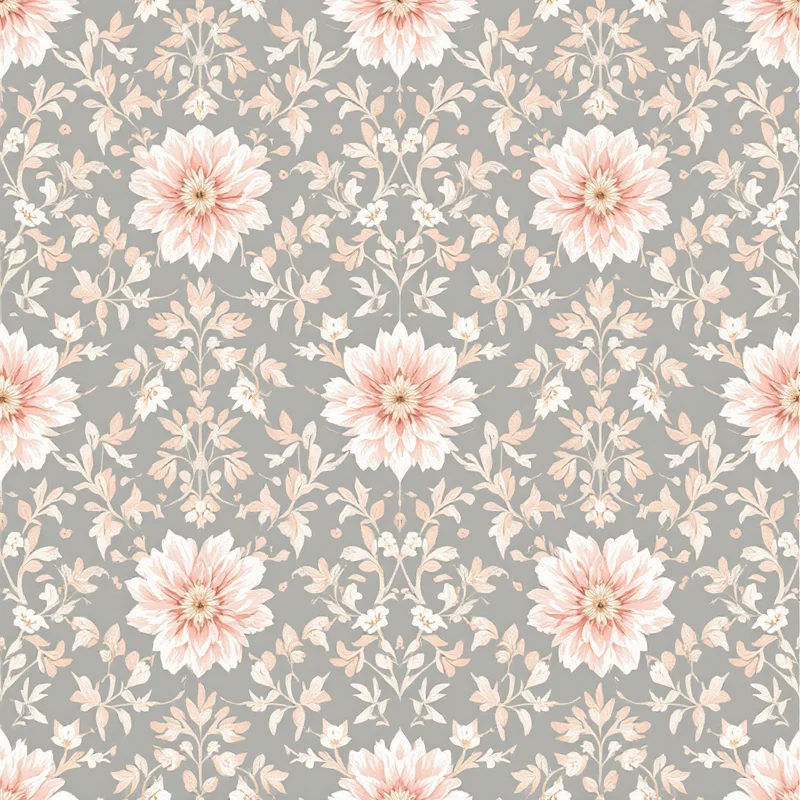
Calico, a small-scale printed cotton with a densely packed floral or geometric motif, has deep roots in American quilting. The calico patterns direction to watch is the revival in fresh palettes: tiny flowers in dusty pink and sage, or blue and butter, drawn a little looser than the traditional version. Drawn at a quarter-inch to half-inch, it works as a blender and carries color without shouting.
Motifs for fussy cutting
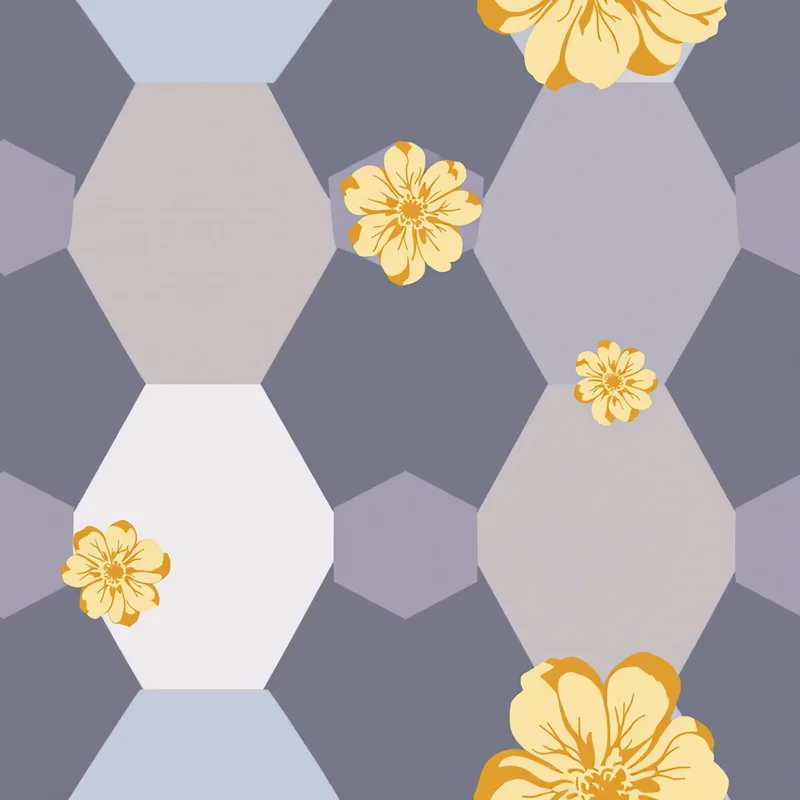
Fussy cutting depends on well-spaced, clearly drawn motifs. If you want quilters to cut your print this way, leave space around each motif so a patch can fit around it, and keep the background simple. Small objects work especially well: a mushroom, a teacup, a bee, a lemon. A common approach is to use a sparse scatter with a consistent distance between motifs, so each cut falls squarely around one.
Patchwork on the fabric itself
There is also a counter-trend: printed fabric that imitates patchwork, giving the look of a quilt without sewing. Patchwork patterns printed as a single repeat can be used for bags, cushions or apparel. Note that this is a different product for a different buyer. A quilt shop customer wants fabric to cut up; a fashion customer wants the finished look.
If you design quilt blocks and layouts, see the quilt block pattern design guide and types of quilting patterns. The quilted patterns category is a place to look for texture ideas.
Build the collection
A collection needs a family of scales. Browse Styles in Pattern Weaver lets you pick from 44 categories and 5,700+ styles, and each seamless tile takes about 20 seconds, so drafting a low-volume blender, a calico and a fussy-cut scatter does not take long.
Explore related pattern styles