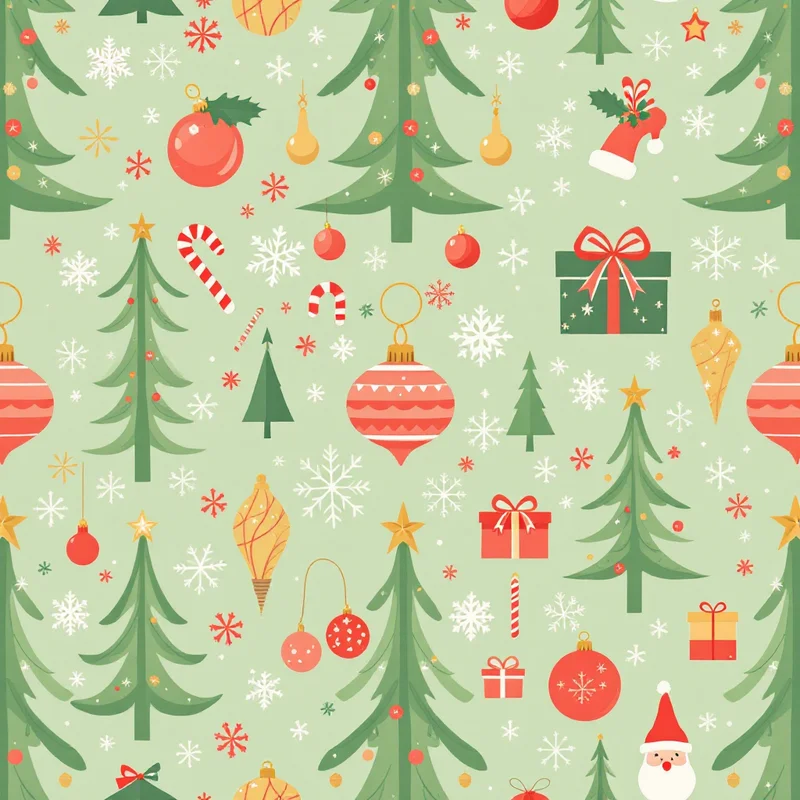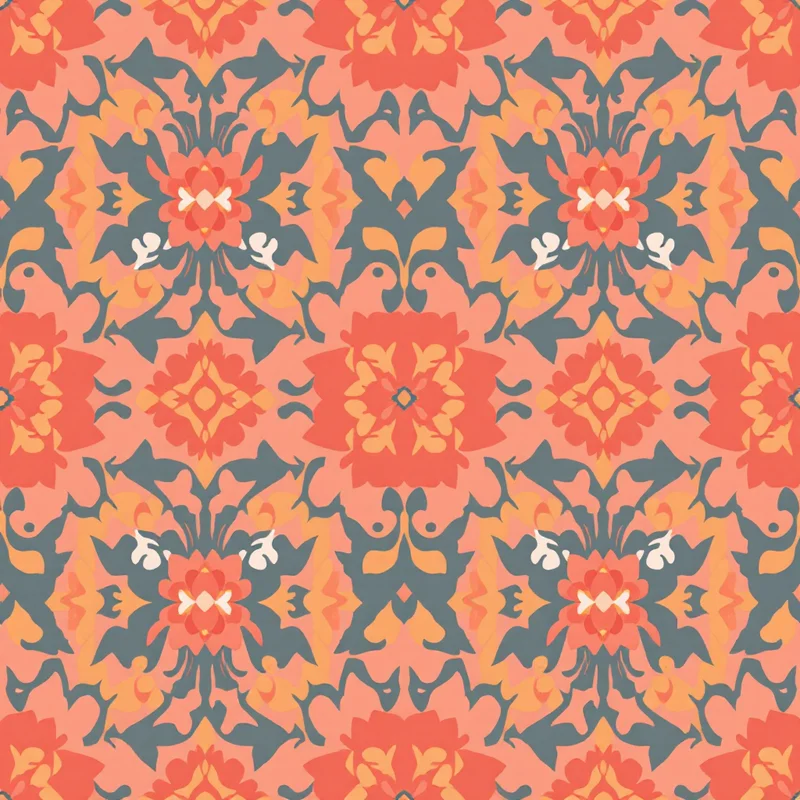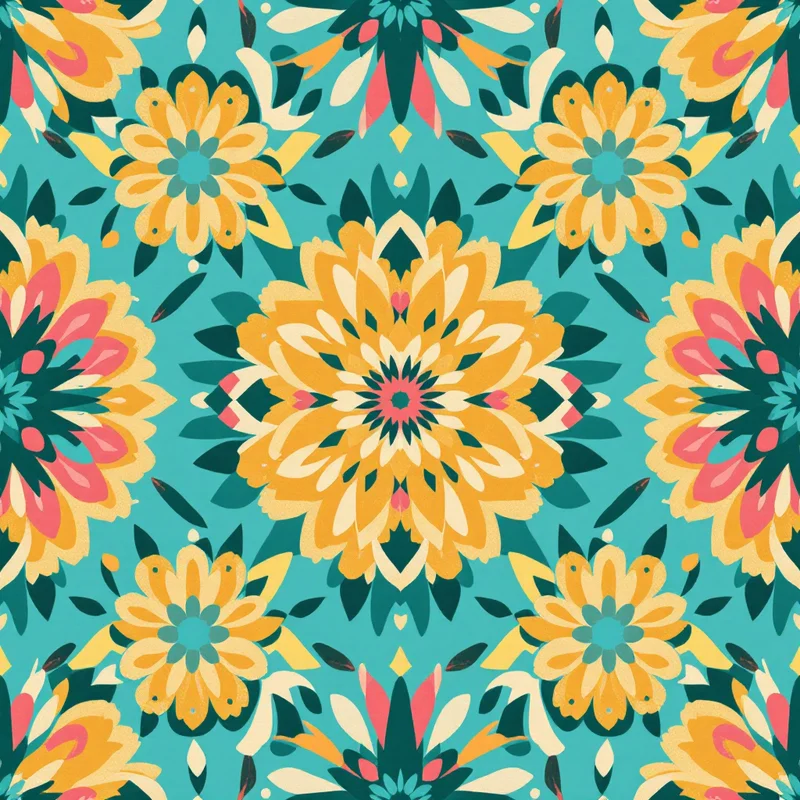
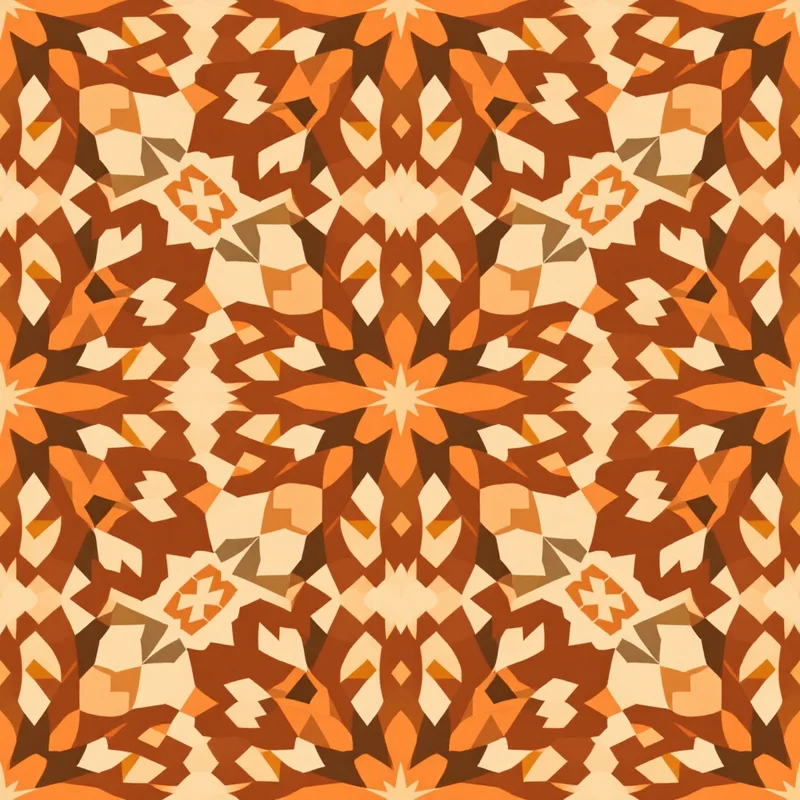
In Mexico the Christmas season does not start on December 25. It starts on December 16, with the first of nine nights of Las Posadas, and it runs well past Christmas Day. A pattern that respects that rhythm has more to draw from than a poinsettia and a sombrero, and the poinsettia is the only part of that sentence you should keep.
The traditions, briefly
Las Posadas (December 16 to 24). Nine nights that recall Mary and Joseph's search for lodging. Neighbors walk from house to house with candles and songs, and each night ends with food, treats and often a piñata.
Nochebuena (December 24). The main family celebration: a late dinner with tamales, ponche (a hot fruit punch), bacalao or other family dishes, and for many, midnight Mass.
The nacimiento. The nativity scene set up in homes, often elaborate, with moss, small houses and clay figures.
Día de Reyes (January 6). Three Kings Day, marked with a ring-shaped bread, the rosca de reyes. It closes the season for many families.
Posadas and the nacimiento are Catholic devotional traditions. Treat them as sacred, not as decoration, and don't reduce the Holy Family to a novelty print.
Motifs you can draw
- Flor de Nochebuena. The poinsettia, native to Mexico. See poinsettia pattern design for its anatomy and layouts.
- Star piñata. The traditional star-shaped piñata with cone points and tissue fringe. A strong, graphic hero motif.
- Papel picado banners. Strings of cut-paper flags. A pattern can imitate the cut-paper look, with scalloped edges and layered cutout shapes.
- Candles and lanterns. Simple, warm, and tied to the processions.
- Food. Tamales in their husks, a pot of ponche with cinnamon sticks, and buñuelos on a plate. These suit tea towels and aprons.
- Stars and flowers. Simple folk-style blooms, stars and doves.
Papel picado: how the look works
Papel picado is traditionally cut with chisels through stacks of tissue paper, then strung across streets, patios and altars for many celebrations, not only Christmas. It is a craft with its own makers and meanings, so describe your design as inspired by papel picado, and don't pass it off as the real thing.
If you want the look in a pattern:
- Design as positive and negative space, where the shapes are the holes
- Keep every shape connected with thin bridges, as if it had to hold together as paper
- Use symmetry, usually mirrored left to right
- Finish the bottom edge with a scalloped or fringed border
- Repeat flag-sized panels in a row, 6 to 8 inches wide, to form a banner
Palette
Papel picado banners are famous for color. For a Navidad print, try:
- Magenta `#D6247E`
- Orange `#F28C28`
- Turquoise `#1FB5B0`
- Yellow `#F6C945`
- Poinsettia red `#C21F2E` and leaf green `#2D5A3B`
Give each flag in a banner one color and alternate them. For a calmer print, use red and green on a cream ground and let the cut-paper shapes show as tone-on-tone. The red patterns category is a good source for managing a design that leans on one hue.
Layouts to try
- 1Banderitas border. A row of colored flags along a trim edge, each with a different cutout, over a plain field.
- 2Star toss. Piñata stars at 2 to 3 inches, tossed on a deep teal or cream ground with small dots between them.
- 3Poinsettia and star. Alternate rows of poinsettia blooms and stars on a half-drop.
- 4Kitchen set. Tamales, ponche and buñuelos in a flat style, for aprons, towels and table runners.
- 5Posada night. A calm nighttime print of candles, stars and lanterns in deep blue and warm yellow.
Design with care
- Avoid caricature. Skip sombreros, mustaches and cactus jokes. They are stereotypes, not Christmas traditions.
- Don't mix up holidays. Papel picado and marigolds appear at Día de Muertos too. Keep a Navidad print free of skull imagery.
- Check any Spanish. "Feliz Navidad" and "Felices Fiestas" are safe. Anything longer should be reviewed by a native speaker.
- Learn from makers. If you can, buy from or commission Mexican artists, and credit what inspired you.
For the bigger picture, Christmas patterns around the world compares traditions from several countries, and cultural patterns and festive patterns are the broader style categories.
Making it
In Pattern Weaver, "Describe It" lets you write the motif list in your own words, such as "star piñatas and poinsettias in magenta, orange and turquoise on cream, flat folk style." Each seamless tile takes about 20 seconds, so you can try a bright banner palette against a calm red-and-green one. New accounts get 5 free credits.
Explore related pattern styles