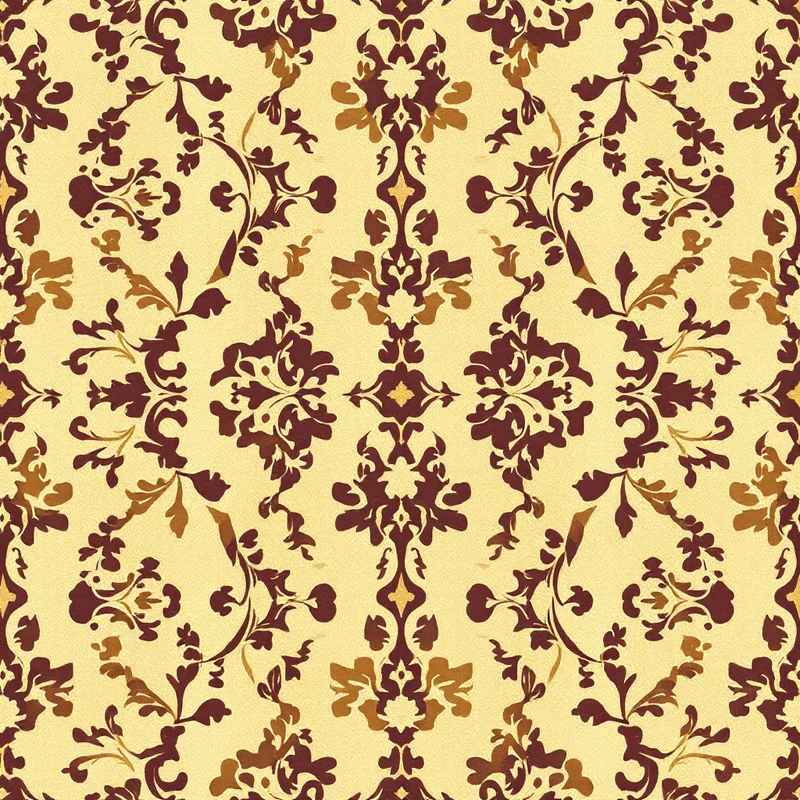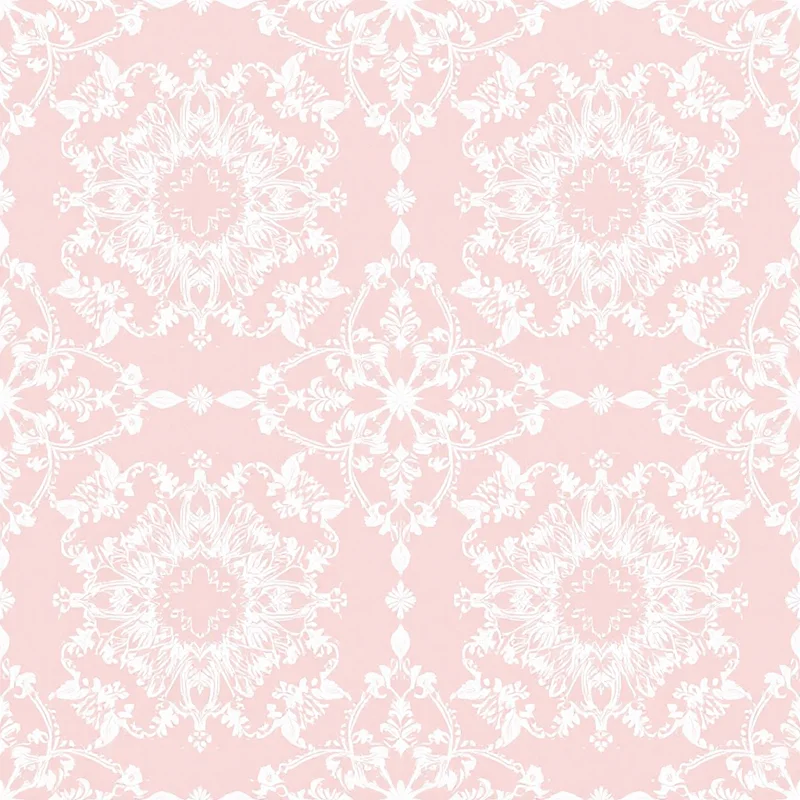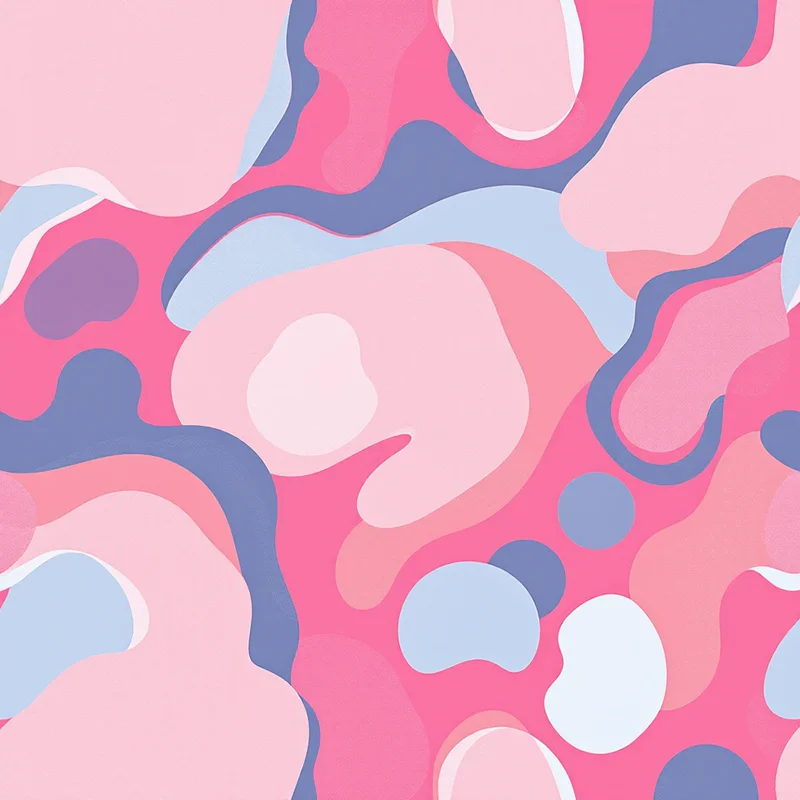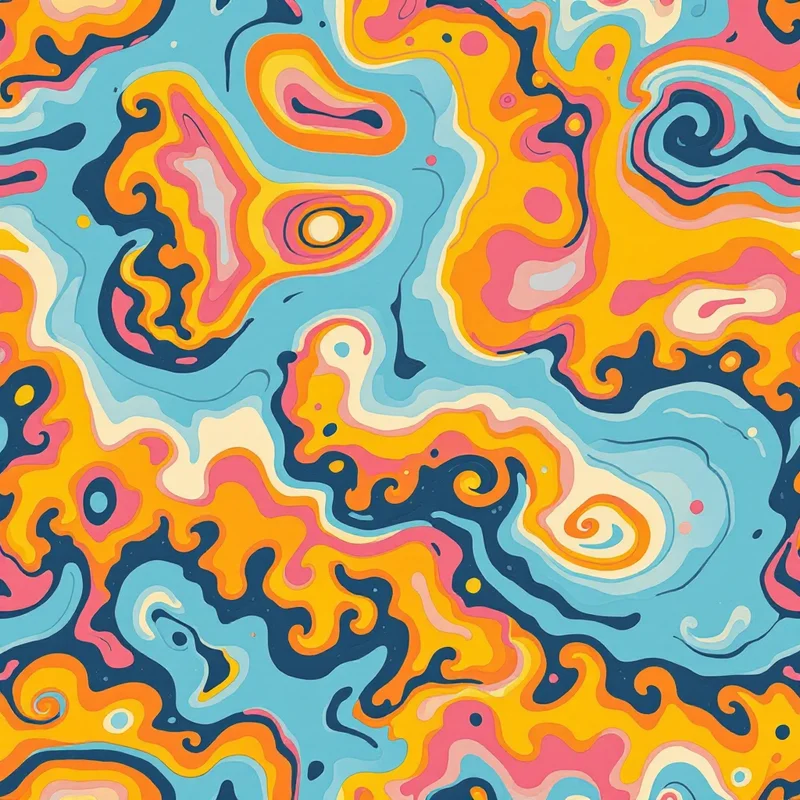

A hotel corridor carpet is designed to be forgiven. People roll suitcases over it, spill coffee on it, and walk its length at all hours while barely looking down. Hospitality interiors are the category where a pattern has to look beautiful in a photo, survive a decade of use and satisfy a fire specification, in that order of difficulty. That lens shapes the directions below.
They are forecasts to watch, not measured results.
Art deco comes back with softer edges
The sunburst, the fan, the stepped skyline and the geometric trellis are already familiar from earlier deco revivals. The direction to watch for 2027 is a softer, more tactile version: rounded corners, brushed gold (#B89B5E) instead of mirror shine, and deep greens, burgundy and charcoal as grounds. The art deco wallpaper category is a good source for structure. The art deco pattern design guide covers the original style in more depth.
Deco suits bars, lobbies and dining rooms, where a bold repeat can set the mood without competing with furniture.
Velvet, and what it does to a pattern
Velvet banquettes and lounge chairs add depth to a restaurant, but they also change what a pattern can do. Pile catches light and flattens fine detail, so velvet patterns rely on color and sheen more than line work. Expect solid or tonal velvets, large soft geometric cut-pile shapes, and jewel colors like sapphire (#1F3A6B), emerald and plum for seating. If a print is needed, keep the motif large, simple and well-spaced.
Wall murals as the destination
A restaurant mural can be the single image a guest photographs. Expect large-scale, dense, immersive wall designs: oversized botanicals, painterly landscapes, repeating deco forms or abstract color fields that run behind banquettes and bars. The key difference from residential wallpaper is distance and traffic. Details need to read from across a room, and the wall has to survive bags, chairs and guests leaning against it.
The wallpaper design trends forecast goes deeper on large-scale walls. Design the artwork so it can be panelled and cut around doors, windows and fixtures without losing its focal point.
Carpets that work hard
Hospitality carpets often sit in places where staining and traffic are heavy, so the pattern is part of the maintenance plan. Dense, non-directional repeats with mid-range contrast tend to hide wear better than plain fields or high-contrast stripes. Expect to see:
- Tonal geometrics with a subtle second color.
- Organic, cloud-like abstracts that avoid visible repeats.
- Fine trellis or lattice patterns with a tight, regular grid.
- Border-and-field layouts for guest rooms, where the border frames the bed.
Carpet construction (woven, tufted, printed) shapes how detailed the design can be, so brief the maker early.
Headboard walls and guest rooms
In guest rooms, a patterned wall behind the bed is a lower-risk way to add personality. Expect to see botanical, deco or tonal textured designs concentrated on that one wall, so the rest of the room stays calm. Luxury patterns are best used sparingly here: a single area of richness is more convincing than all four walls.
The specifier's checklist
| Question | Why it matters |
|---|---|
| Fire rating | Commercial fabrics and wallcoverings often have to meet safety requirements |
| Abrasion or wear | Seating and corridors take heavy use |
| Cleanability | Restaurants need wipeable surfaces |
| Repeat size | Affects waste and cost on large installations |
| Colorfastness | Light from windows and spotlights can fade color over time |
| Lead time | Custom prints take longer than stock |
Your supplier and the project specifier should confirm these, not the designer alone. The pattern design for hotels and hospitality guide covers the commercial workflow in more detail.
For the concept board
Concept boards for hospitality clients sell the atmosphere first and the specification second. Describe It in Pattern Weaver takes a prompt such as "emerald and brushed gold deco fan repeat, large scale", and Pro exports up to 8K for large-format walls.
Explore related pattern styles