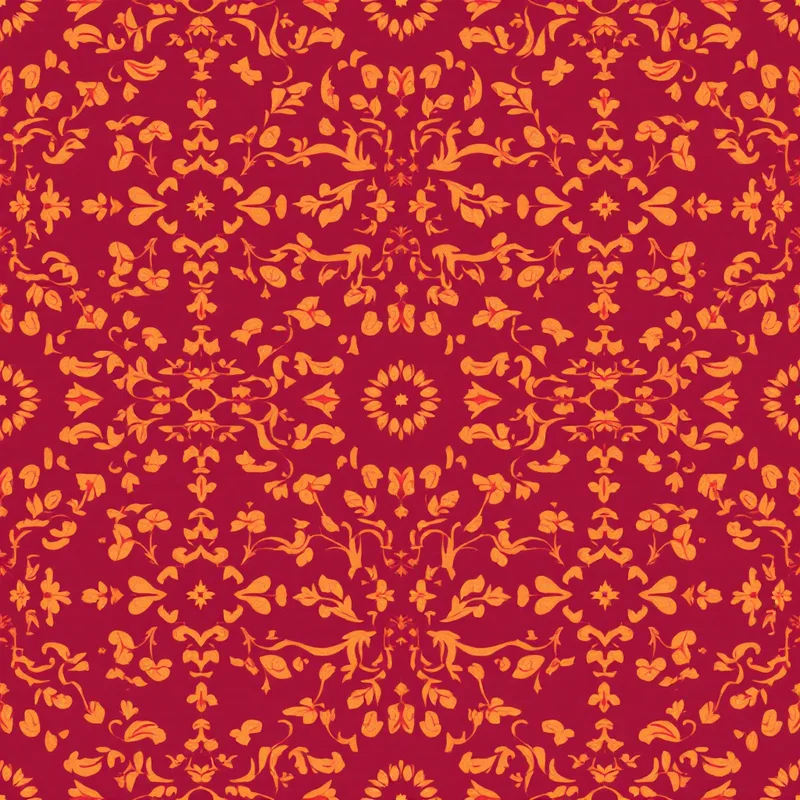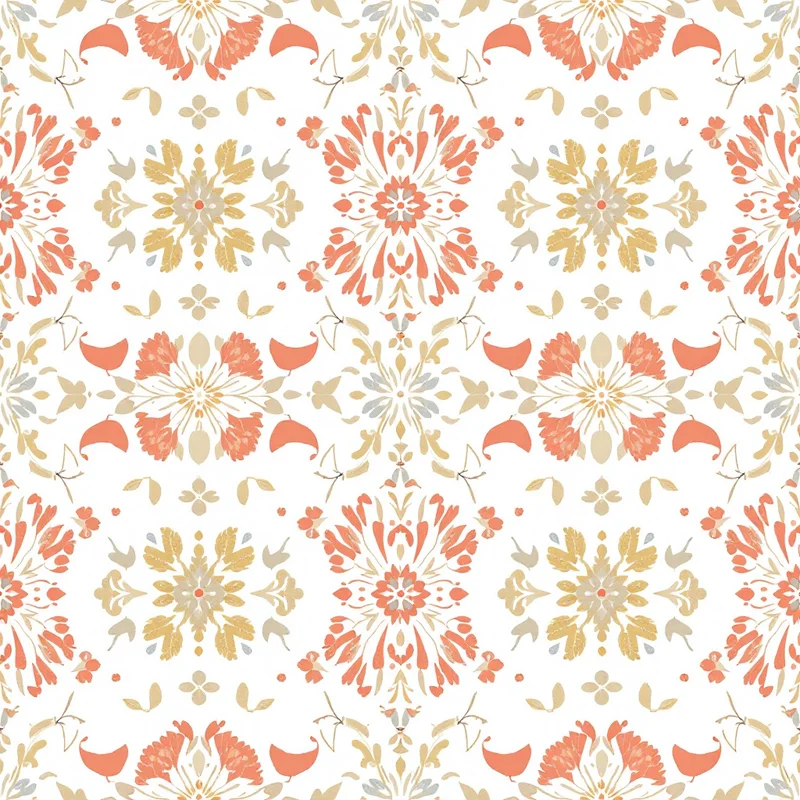
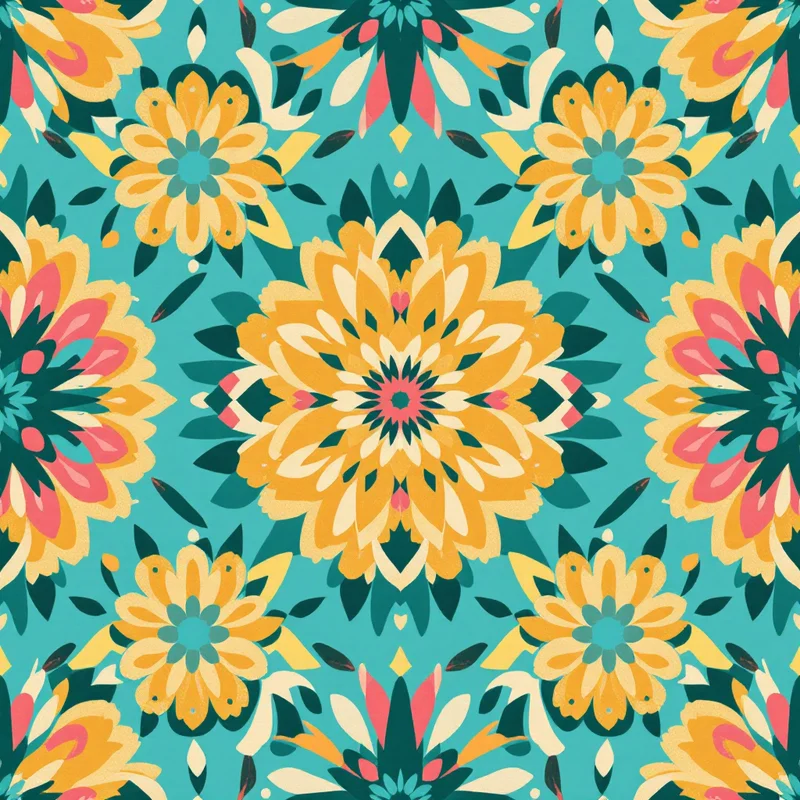
A Byzantine mosaic is not a picture on a wall; it is thousands of small pieces of glass and stone, set at slight angles so the surface flickers as you move. The Byzantine Empire was the eastern Roman Empire, with its capital at Constantinople, and it lasted until 1453. Its decoration, in churches, silks, enamels and manuscripts, built a visual language of gold, jewel color, circles and borders that still reads as luxury.
Mosaics: the tesserae look
Mosaic pieces are called tesserae. Gold tesserae were made by sandwiching gold leaf between layers of glass, and they were often used for the glittering ground behind figures. Hagia Sophia in Constantinople was completed in 537, and the church of San Vitale in Ravenna has mosaics from the mid-sixth century. Venice's St Mark's Basilica later carried Byzantine mosaic traditions into the Italian lagoon.
Two traits matter for a designer:
- Line follows form. Mosaicists lay rows of tesserae to follow the contour of a shape, a flowing arrangement known as andamento, so the grout lines become part of the drawing.
- Variation in the gold. The golds are never uniform; some tesserae are warmer, some paler, some tilted.
Silk roundels
Byzantine silks, woven in imperial workshops, are known for their roundels: circles, often with a beaded or pearled border, enclosing paired animals, hunters or a symmetrical tree. Lions, eagles, griffins and peacocks recur. Persian Sasanian silks had shown the same idea of paired animals in circles, and Byzantine weavers developed it. Between the circles, small filler motifs such as flowers or heart shapes fill the gaps.
Purple had special weight. Imperial purple cloth was associated with the court, and the title "born in the purple" described the emperor's children.
Borders and trims
| Border | How it is drawn |
|---|---|
| Guilloche | Two or three twisting strands that form a chain of circles |
| Meander | A repeating key or maze; see the Greek key pattern guide |
| Pearl border | A row of small circles, often around a roundel |
| Acanthus scroll | A flowing vine with scalloped leaves |
| Wave scroll | A continuous rolling curve with leaves |
Byzantine enamel work, where colored glass was fused within gold wire cells (cloisonné), carried the same love of outlined color. It is related to the filigree tradition in our filigree pattern design guide.
Common motifs
Many Byzantine motifs are Christian: the cross, the Chi-Rho monogram, peacocks, doves, fish and grapevines. Treat them with care. Used decoratively and accurately they work well, but avoid placing sacred figures or inscriptions on casual items.
A palette
- Gold #C9A227
- Imperial purple #5A1E5E
- Deep red #7A1F1F
- Lapis blue #1F3A7A
- Emerald #2F6B4F
- Ivory #F2E9D0
Designing three Byzantine-style repeats
1. Roundel silk. Draw a circle with a ring of small beads. Inside it, place two mirrored animals on either side of a stylized tree. Arrange the roundels in rows and offset every other row by half a circle, so the circles nestle together. Fill the leftover gaps with small four-petal flowers. For a seamless tile, use a half-drop; see the half-drop repeat guide.
2. Tesserae texture. Fill a shape with small squares about 1/8 inch (3 mm) across at print scale, with slightly irregular edges and thin dark grout. Use three golds: #C9A227, #E3C565 and #A8801C. Let the rows follow the outline of any motif.
3. Guilloche trim. Draw two sine waves a half cycle apart so they cross, and fill the loops with two alternating colors. Use it as a border, or repeat it vertically for a stripe.
The medallion pattern design guide covers the circle-in-a-repeat idea in general. For categories, see Byzantine patterns, gold patterns and medieval patterns.
If you want a quick test, Describe It in Pattern Weaver lets you write a prompt in your own words, such as "Byzantine silk roundels with beaded borders and mirrored peacocks in purple and gold", and each pattern comes back as a seamless tile in about 20 seconds.
Explore related pattern styles