The bathroom is the room where a textile is expected to get damp within minutes of being hung. A towel is wrung, a curtain is splashed, a mat is stepped on with wet feet. That makes bathroom soft goods a practical, forgiving category for color but a demanding one for fine detail, and it explains why the 2027 directions below favor clear shapes over delicate ones.
They are forecasts to test, not measured results. This post covers bathroom soft goods only; for tile, see the separate tile and ceramic pattern trends.
Shower curtains: big shapes that survive the folds
A shower curtain hangs from rings, so it pleats into soft vertical folds. A common size is 72 by 72 inches (183 by 183 cm), a large flat canvas that is rarely seen flat. Fine, closely packed prints turn muddy in the folds, while large simple shapes read as clear bands of color.
Two directions to watch:
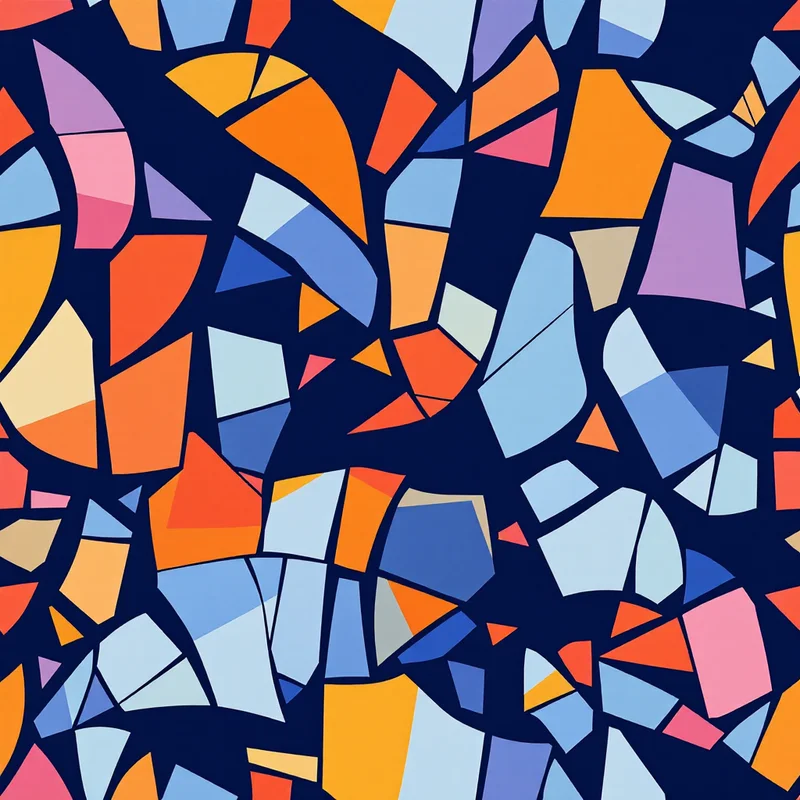
- Terrazzo. Terrazzo patterns, with chips of color scattered across a pale ground, suit curtains well because the chips are irregular and have no up or down. Warm versions in oat, terracotta, sage and charcoal chips are easier to live with than rainbow confetti. Chips of about 1 to 3 inches (2.5 to 7.5 cm) read from across a bathroom.
- Blue and white, enlarged. Blue and white patterns look set to keep a place in bathrooms, drawn bolder than the delicate porcelain-style repeats: wide stripes in deep cobalt (#1E4C9B), big wave or ogee shapes, or an oversized floral outline.
Watch the bottom hem, where a curtain bunches, and the top row of grommets, where the fabric is punched. A plain border strip at both ends gives a clean finish.
Towels: woven borders and printed velour
Towel construction decides the print method. Standard terry has uncut loops, which makes printing fuzzy: the ink sinks into the loops and the edge of a design blurs. Many printed towels use a sheared, velour-style face, which has a smoother surface for sharper detail. The alternative is to weave the design as a jacquard, where the pattern is built into the pile or border.
Because of that, towel patterns tend to work best in a few forms:
- A tonal woven border, in a thin stripe or a small geometric, near the hem.
- A printed all-over on the velour face of a beach or hand towel, with bold shapes.
- Embroidered or woven motifs, such as a small wave or leaf, on the corner.
Expect the quieter option to lead: tone-on-tone borders in cream, stone or soft green, with color reserved for guest or beach towels. Guest towels are the place for small, friendly prints.
Bath mats: texture first, print second
Bath mats are tufted cotton, chenille, microfiber or foam, and most of them can only hold a bold, simple pattern. A mat is roughly 17 by 24 inches (43 by 61 cm) in a common size, so fit one clear shape, such as a wavy arch, stripe or checker, and avoid a repeat with fine lines.
Directions to consider: a rippled stripe in two close tones, a scalloped edge printed or tufted in a contrasting color, or an arch-and-sun shape in warm neutrals. Check that the print and the non-slip backing are both described accurately on the product page.
The set effect
Bathrooms tend to be styled as a set: a curtain, two towels, a mat. Choose one hero print and two supporting scales. A terrazzo curtain pairs with a plain towel and a mat in one of the chip colors, so the effect looks coordinated without being matchy.
The same logic is covered in the home textile trends forecast, which looks at bedding and curtains in the same way. For kitchen soft goods, see the kitchen and table linen forecast.
Quick tests before you order
- Judge your artwork with pleats in mind, not just flat on the screen.
- Print a swatch on the real fabric and wet it.
- Ask whether the colors are suitable for frequent washing.
See it hung
Product Mockups are free and put a pattern on 20 products, a good way to preview a terrazzo curtain or a towel set before ordering. Describe It in Pattern Weaver takes a prompt such as "terrazzo chips in oat, terracotta and sage, large scale".
Explore related pattern styles