
Design characteristics
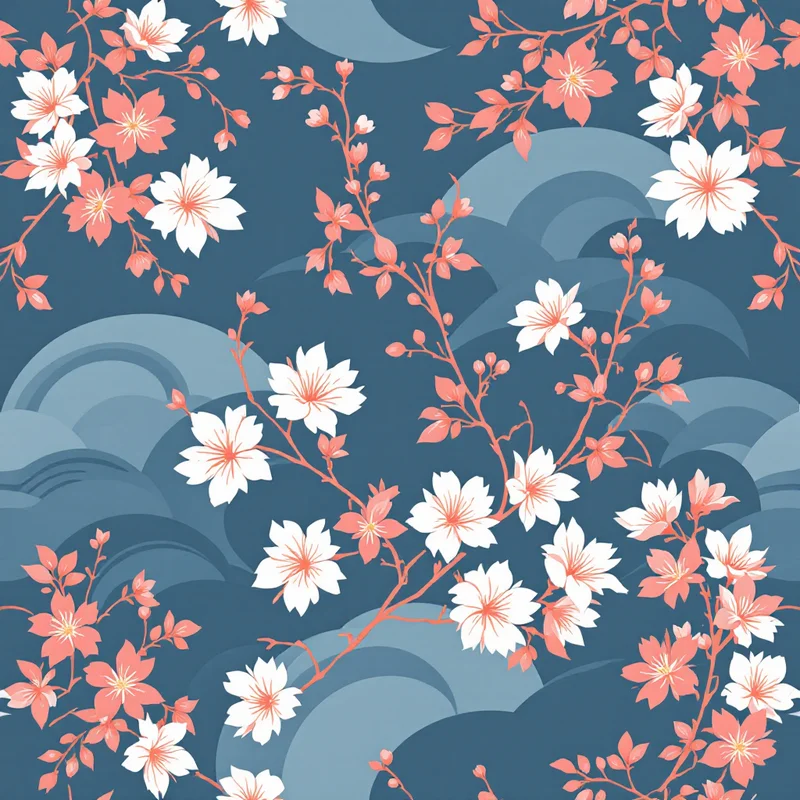
The historical roots run deep. Chinese cobalt-on-porcelain wares of the Yuan and Ming dynasties set the template, which traveled along trade routes into Dutch Delftware, Portuguese azulejo tiles, English transferware, and French toile de Jouy. Each tradition kept the same two-tone discipline but changed the subject: pastoral vignettes in toile, scrolling foliate borders in Delft, geometric interlace in Moroccan and Turkish tilework, and the resist-dyed indigo florals of Japanese katazome and West African adire. A modern blue and white pattern can borrow any of these vocabularies while staying instantly recognizable as part of the same family.
Commercial applications
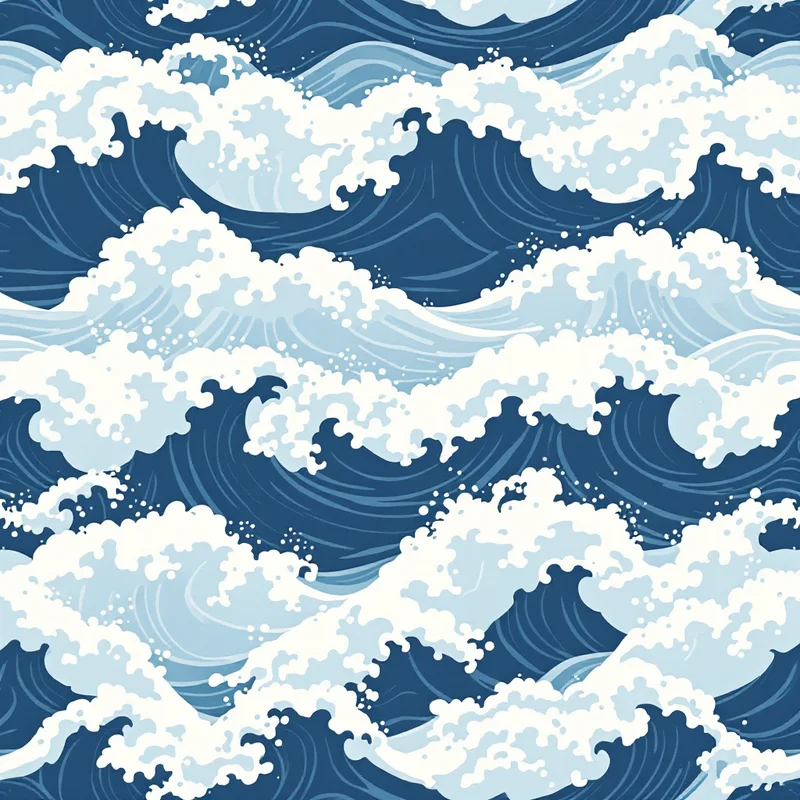
Typical motifs include chinoiserie landscapes, ginger-jar florals, ogee and quatrefoil lattices, ikat and shibori smears, ditsy sprigs, stripes, gingham checks, and nautical anchors and ropes. Because blue carries strong associations with calm, water, sky, and trust, designers reach for it when a product needs to feel fresh, clean, or coastal without going loud. The white ground keeps everything breathable, which is part of why the combination photographs so well and prints so cleanly.
Where to use blue and white patterns for print and surface design patterns
Commercially, blue and white is one of the most versatile palettes a designer can stock. It anchors home decor collections through wallpaper, cushions, table linen, ceramics, and bedding; it carries fashion lines from summer dresses and resort wear to menswear shirting and accessories like scarves and espadrilles. It is a default choice for clean, trustworthy packaging in skincare, food, and homewares, and it scales down beautifully for stationery, tote bags, and gift wrap. The same repeat can move from a large hero wallpaper to a small label without losing legibility.
Customization & export
Pattern Weaver lets you build these patterns motif-first, then tune them to the product. Slide density from an airy scattered sprig to a dense allover, adjust scale so a damask reads as a bold feature wall or a fine apparel print, and dial the blue itself from soft chambray to inky navy while the studio keeps the repeat seamless. You can lean classic with toile and Delft-style florals or push contemporary with geometric ogees and loose watercolor indigo.
When the design is right, export production-ready files at up to 8K (8192x8192) in PNG for transparency and web mockups, TIFF for print and textile mills, or PDF for vector-clean layouts and press handoff. Every output tiles edge to edge, so blue and white patterns drop straight into repeat across yardage, rolls, and packaging dielines without visible seams.