
An Advent calendar has 24 doors and one real rule: the person opening it has to be able to find number 17. Everything else in the design (the pattern, the motifs, the colors) should help them find it, not compete with it.
What you are actually designing
Two layers sit under a numbered grid.
- 1A background pattern, which is a normal seamless tile that fills the space between and behind the doors.
- 2A set of 24 motifs, one behind each door, which are not a repeat but a family.
Treat them separately. The background is quiet. The motifs are where the personality goes.
A note on context: Advent is the Christian season of preparation before Christmas, and in 2026 it begins on Sunday, November 29 in the Western church calendar. Calendars with 24 doors counting from December 1 are common and have a German heritage, and many are fully secular. If you are designing for a church or family audience, a four-candle Advent wreath is a respectful motif. For general retail, a theme like woodland or village works for anyone.
Pick a grid
| Grid | Best for | Feel |
|---|---|---|
| 4 columns by 6 rows | Posters, portrait cards | Classic, easy to read |
| 6 columns by 4 rows | Landscape boards, banners | Wide, panoramic |
| 3 columns by 8 rows | Tall banners, door hangers | Narrow and vertical |
| Village street | Illustrated scenes | Doors are windows or house doors |
On a 12 by 18 inch poster with a 4 by 6 grid and 0.75 inch margins, each cell is roughly 2.6 by 2.75 inches. That is plenty of room for a numeral about an inch tall. For more on grid-based layouts, grid patterns and the grid pattern design guide are good places to start.
Numbers that can be found
- Scatter the order. Mixed numbers turn opening the calendar into a small game.
- Use one numeral style, set at the same size and position within every door. Consistency is how readers learn where to look.
- Give numerals a calm patch. A solid circle, banner or lighter panel behind each number protects it from the pattern.
- Test contrast first. If the number is hard to read at arm's length, change the backing, not the numeral.
A background that stays out of the way
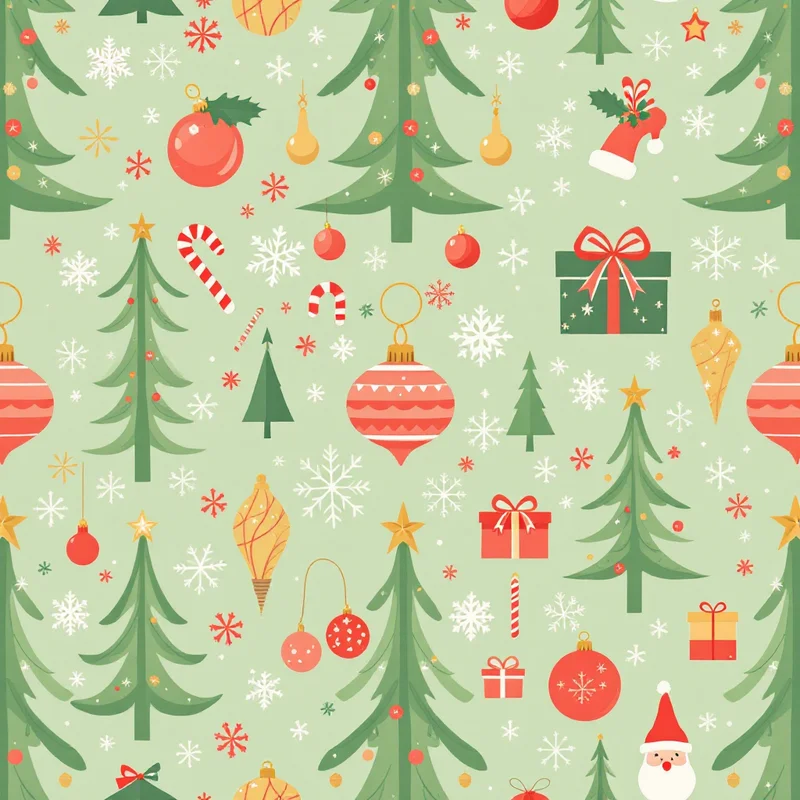
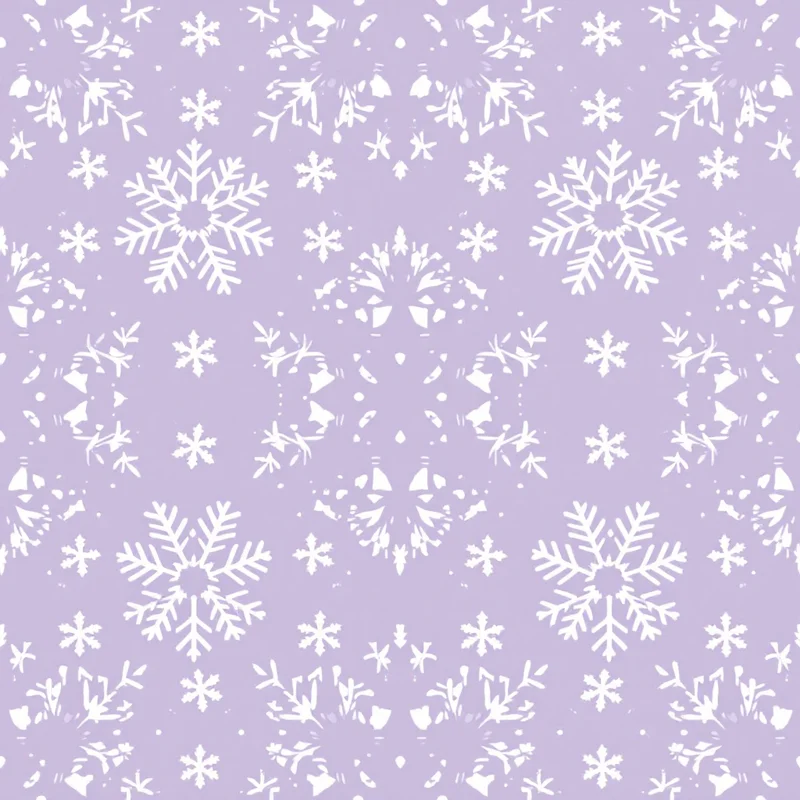
Use a small, low-contrast tile: tiny stars, dots, fir tips or snow. Keep its value range tight so it reads as texture. If it competes with the numerals, the calendar fails, however pretty it is. The Christmas pattern design ideas post can help you choose a direction for this layer.
24 motifs, one family
The common failure is 24 motifs that look as if 24 different people drew them. Before drawing, fix four rules:
- Line weight: one stroke thickness, or none for flat shapes
- Palette: five colors for the whole calendar, no exceptions
- Fill: each motif occupies about two-thirds of its door
- Viewpoint: all front-on, or all side-on
Then divide the 24 into four families of six. A woodland calendar might be:
| Family | Six motifs |
|---|---|
| Animals | fox, owl, hare, deer, hedgehog, squirrel |
| Plants | fir, holly, pine cone, mushroom, mistletoe, berries |
| Objects | lantern, mitten, scarf, sled, candle, kettle |
| Sweets | gingerbread, candy cane, cocoa, cookie, pear, star biscuit |
Give each family a small accent color so the grid has a rhythm even when the numbers are scattered. Spread the families across the grid so no cluster of identical types forms.
Print and production notes
- For physical doors, keep cut lines on their own layer, and hold artwork back from the door edge by at least an eighth of an inch so a slightly off die doesn't slice a motif.
- For printable calendars, export at 300 DPI at the finished size.
- For fabric pocket calendars, put the numeral on the pocket and design the background fabric as a plain or tonal repeat.
- For tea, candle or chocolate sets, treat each box as its own tile with the number on top. The pattern design for packaging guide covers the details.
Timing
Most calendars are opened from December 1, so a design needs to be live before then. If you want to launch a printable version, this month is the time.
Making it
Pattern Weaver is best used here for the background layer. "Describe It" lets you write the tile in your own words, such as "tiny fir tips and stars, low contrast, deep green and cream," and each pattern is a seamless tile in about 20 seconds. You can also generate a tile for each motif family and use it as a reference sheet while you draw the doors. New accounts get 5 free credits, and a Christmas patterns start gives you a base to work from.
Explore related pattern styles