


Design characteristics
Education is a strong market. Schools, libraries, and educational publishers use cartographic patterns on classroom decor, book covers, learning materials, and promotional items. Geography, history, and social studies curricula all benefit from visually engaging surface designs that connect students to the subject matter. A topographic pattern on a geography textbook cover. A globe motif on a library's reading program materials.
Commercial applications
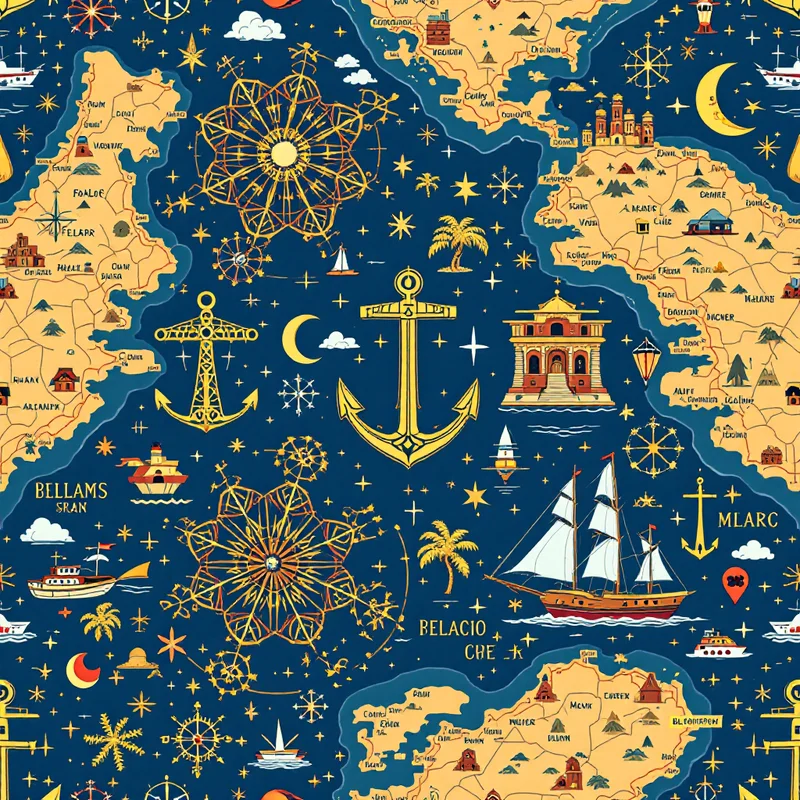
The travel and exploration market uses geography patterns to communicate a spirit of discovery. Adventure brands, outdoor equipment companies, and travel agencies use cartographic motifs across merchandise, packaging, and marketing materials. A compass rose on an outdoor brand's shopping bag. A map pattern on a travel journal cover. Topographic lines on a hiking accessory. These patterns speak to consumers who value exploration and worldly curiosity.
Where to use geography patterns
Stationery with map-inspired patterns performs well across retail and print-on-demand channels. Journals, planners, notebooks, and desk accessories with cartographic motifs appeal to a specific buyer segment — travelers, academics, and geography enthusiasts — who buy these products as both functional items and identity expressions. The market is niche but loyal and consistent.
Customization & export
For interior design, geography patterns create environments that communicate intellectual curiosity and global awareness. Map wallpaper in a home office. Topographic line art in a modern study. Antique cartographic prints in a library. These patterns add visual depth and conversation-starting interest to spaces designed for thinking and work.
You set the cartographic era and style. Antique hand-drawn maps with decorative borders for romantic appeal. Clean modern topographic lines for contemporary applications. Simplified globe icons and compass symbols for branding. Every pattern tiles seamlessly and exports production-ready.