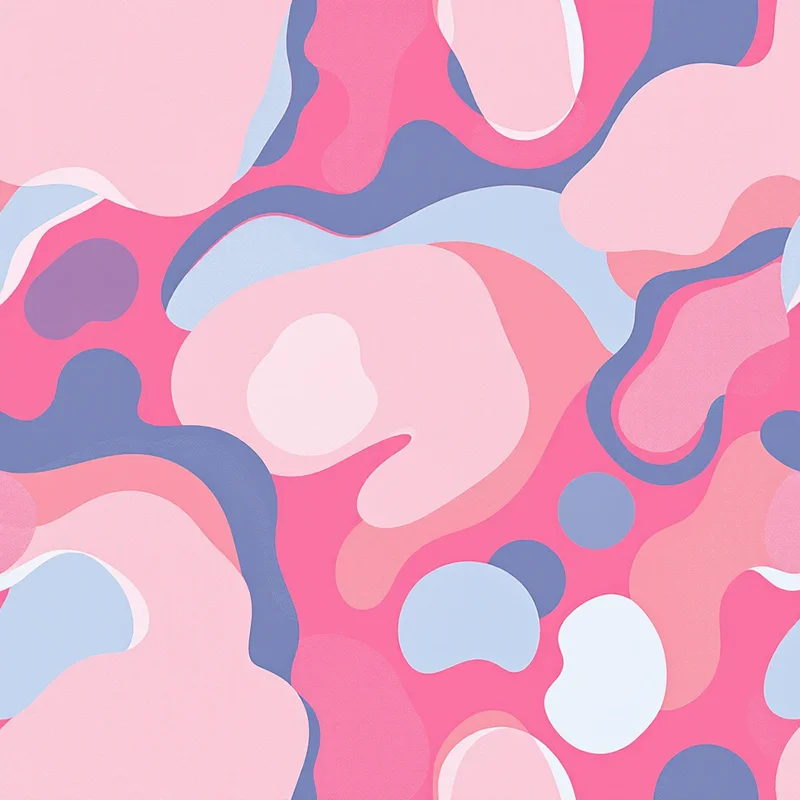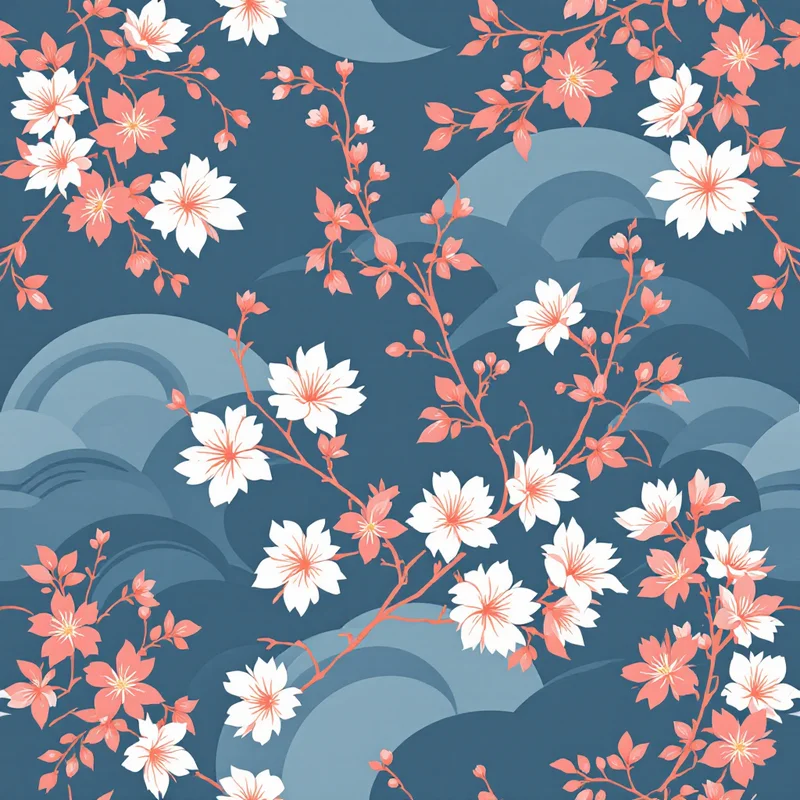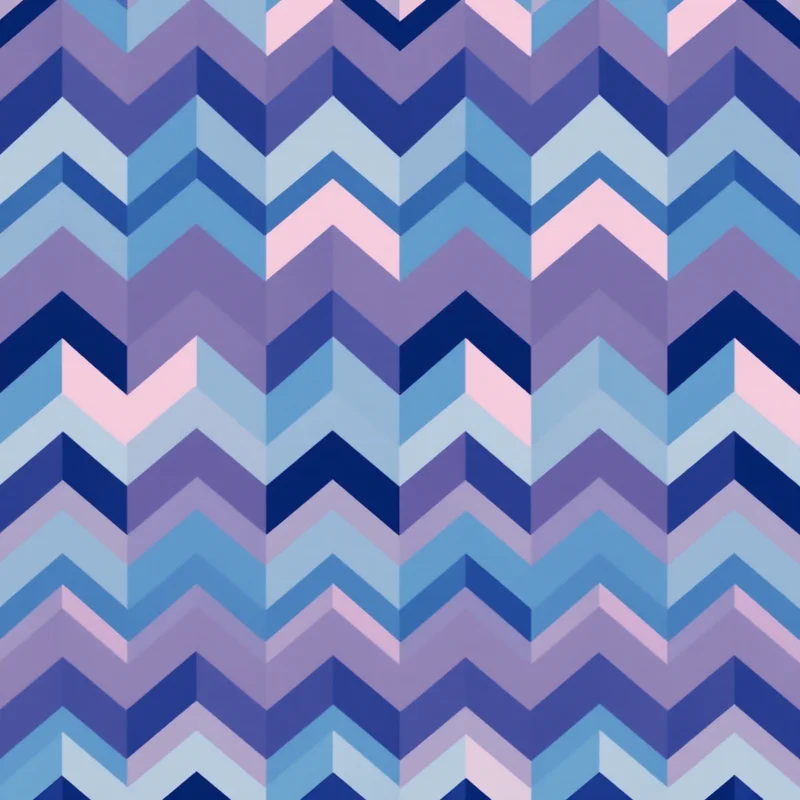
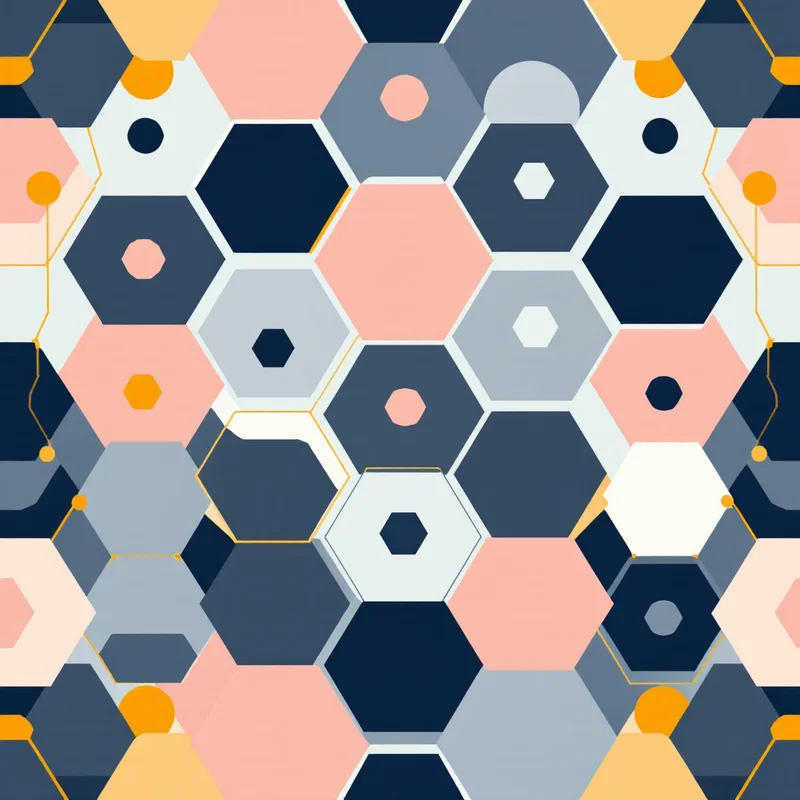
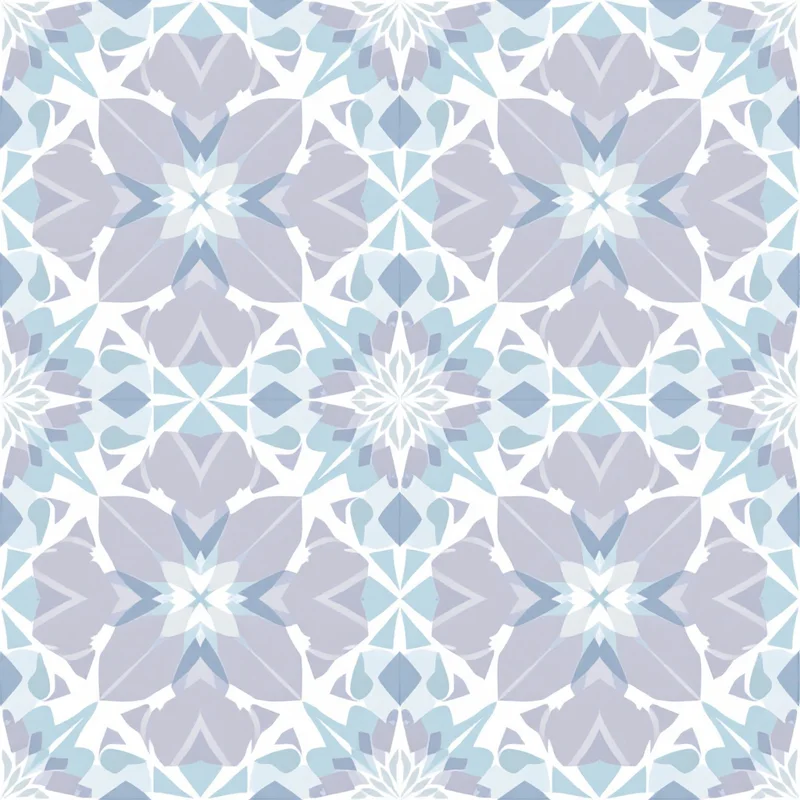

Every patterned shirt, roll of wallpaper, and sheet of wrapping paper starts with a single tile. That tile is called a repeat — and understanding how repeats work is the first step to designing patterns that look professional.
What Is a Repeat Pattern?
A repeat pattern is a rectangular design unit that tiles across a surface without gaps or visible edges. When placed next to copies of itself in a grid, the edges match so precisely that the overall design appears continuous — one unbroken field of pattern covering any area.
This single tile is everything. A fabric printer needs one tile to print 100 meters of fabric. A wallpaper manufacturer needs one tile to cover every wall in a house. The entire commercial surface design industry is built on the repeat.
The Four Main Repeat Types
Straight Repeat (Block Repeat)
Tiles are placed in a simple grid — each copy directly adjacent to the last, with no offset. This is the simplest and most predictable repeat type. It works well for geometric patterns where the grid structure is part of the design, like gingham, plaid, or tile-inspired patterns.
The drawback is visibility. Because every tile lines up perfectly, the human eye can easily spot the repeat. For organic or naturalistic patterns, this grid effect works against you.
Half-Drop Repeat
Every other column shifts down by exactly 50% of the tile height. This offset breaks up the visible grid and makes the repeat much harder to detect. Half-drop is the most widely used repeat type in commercial textile design — it is the default choice for florals, botanical patterns, and any design where you want the motifs to feel scattered naturally rather than locked into rows and columns.
Brick Repeat (Half-Brick)
The horizontal equivalent of half-drop: every other row shifts sideways by 50% of the tile width. Named after the way bricks are laid in a wall. Brick repeats work well for patterns that have strong horizontal movement or wide motifs.
Mirror Repeat
Alternating tiles are flipped horizontally, vertically, or both. This creates built-in symmetry in the tiled output — each motif faces its mirror image at the tile boundary. Mirror repeats are fundamental to damask, art deco, and many traditional weave patterns. They create a formal, structured quality that works for upholstery, wallpaper, and luxury textiles.
What Makes a Repeat Work?
Invisible seams. When tiled, the edges should disappear completely. No color shifts, no cut-off motifs, no misaligned lines.
Even distribution. Motifs should be spread across the entire tile, including the edges and corners. A common beginner mistake is clustering motifs in the center and leaving the edges empty — this creates visible "rivers" of empty space when tiled.
Balanced density. The spacing between motifs matters as much as the motifs themselves. Too tight and the pattern looks claustrophobic. Too loose and it looks sparse. Preview at multiple scales to find the right density.
Background continuity. The background color and texture must be perfectly uniform at all edges. Even a slight color variation at a seam becomes obvious when tiled.
Creating Your First Repeat
The Traditional Method
Draw your design, then cut the tile in half vertically. Swap the left and right halves. Now fill the gap in the middle with new motifs. Repeat the process horizontally. This guarantees that whatever exits one edge re-enters on the opposite edge. It works but takes hours of careful alignment, even for experienced designers.
The AI Method
A dedicated pattern generator skips the manual edge-matching entirely. Describe the pattern you want — or pick from a style menu — set your colors and density, and the AI generates a seamless tile in seconds. The algorithm handles edge continuity by design. If any seams are still visible, a tiling correction tool can blend them.
The AI approach is not just faster — it lets beginners create production-quality repeats without years of technical training. You focus on the creative decisions (what style, what colors, what mood) and the tool handles the engineering.
Resolution and File Formats
The right export settings depend entirely on the end use:
- Web and digital — 512px to 1K, PNG or JPG, RGB color space
- Print-on-demand platforms — 4K, PNG, RGB, at the platform's recommended DPI (usually 150-300)
- Professional fabric printing — 4K to 8K at 300 DPI, TIFF format, CMYK color profile
- Wallpaper and large-format — 8K at 300 DPI, TIFF or PDF, with bleed margins
When in doubt, export at the highest resolution your tool supports. You can always downscale later, but you cannot add resolution after the fact.
Next Steps
The best way to learn repeats is to make them. Start simple — a polka dot, a stripe, a basic geometric grid. Preview every design at 3x3 minimum before calling it done. Pay attention to the patterns around you in daily life: on clothes, packaging, restaurant walls, phone cases, and book covers. Once you start looking, you will see repeats everywhere — and you will start seeing how they are constructed.
Explore related pattern styles
Patterns for