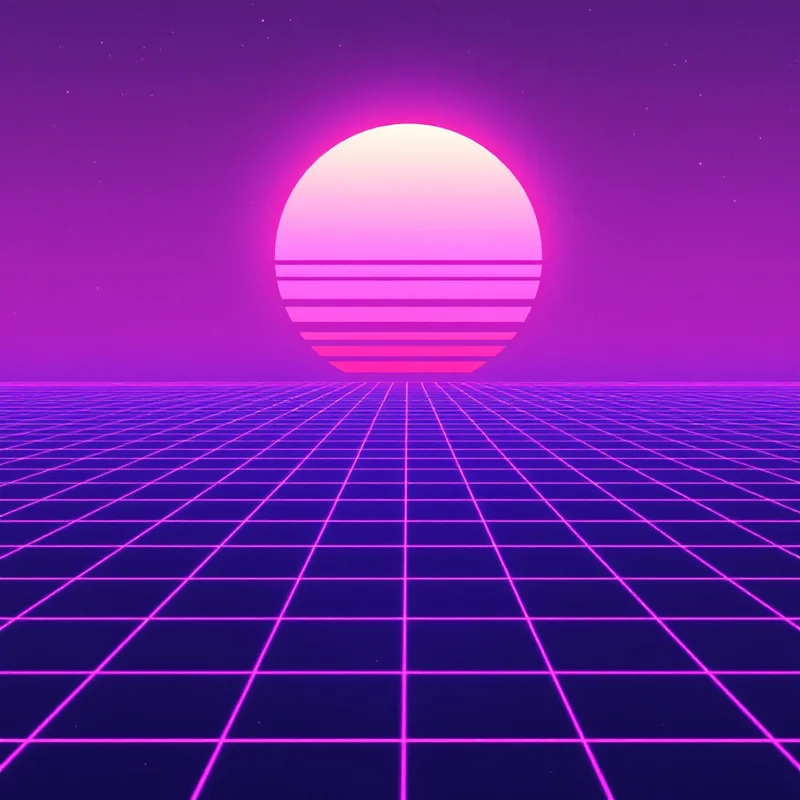
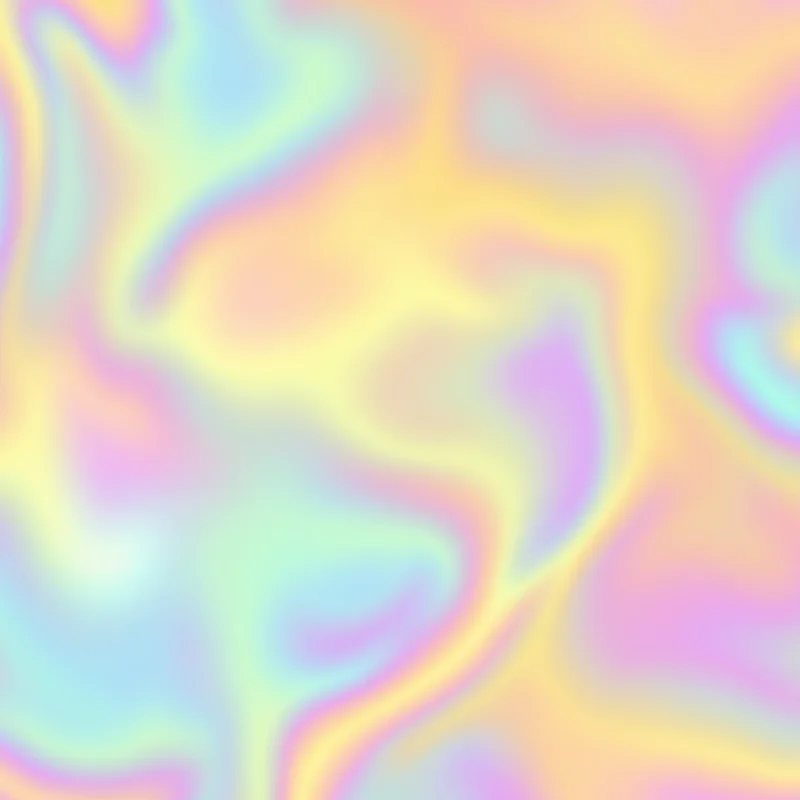
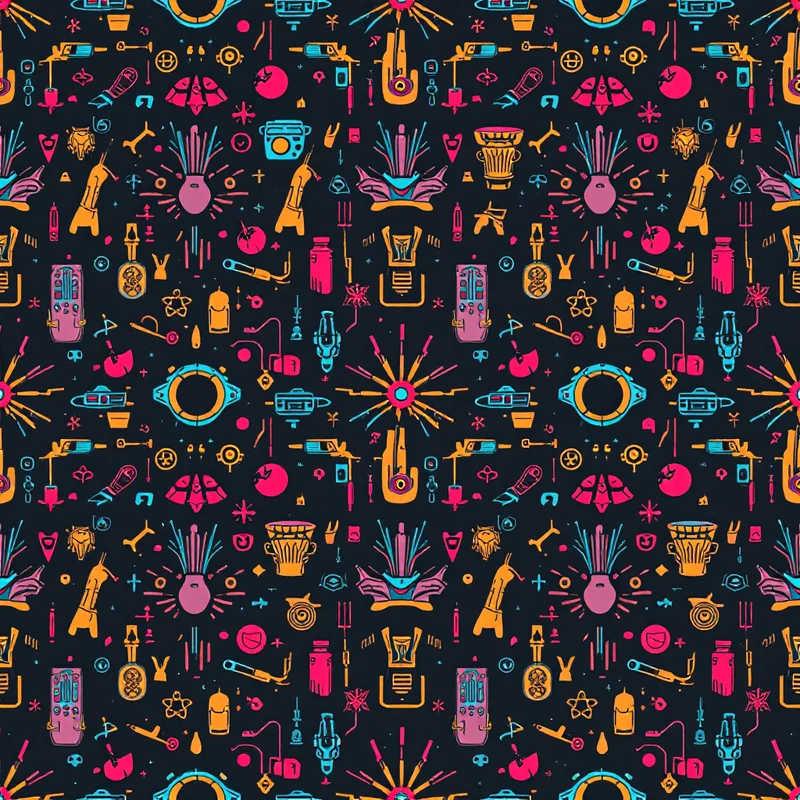
The y2k pattern revival has stopped being a trend and started being a permanent fixture in surface design. Chrome butterflies, frosted-glass bubbles, low-poly stars, and tribal swooshes that defined 1999 to 2003 are back on baby tees, lip gloss packaging, claw clips, festival merch, and feature walls. The aesthetic that looked dated a decade ago now reads as optimistic, plastic, and unapologetically synthetic — exactly the antidote to a decade of beige minimalism. This guide breaks down what a y2k pattern actually is, where the visual vocabulary came from, and how to build period-correct repeats in Pattern Weaver without the manual filter stacking that defined the original era.
What is y2k pattern?
A y2k pattern is a repeating surface design built from the visual language of the millennium changeover — roughly 1999 through 2003. The motif library is specific: chrome lettering, holographic foil, butterflies, low-poly stars, pixelated hearts, frosted-glass bubbles, cyber grids, tribal swooshes, and the occasional alien head or Y2K-themed icon. The palette leans on baby blue and silver, bubblegum pink and magenta, lime green and iridescent foil, with translucent pastels that look frozen behind frosted glass.
What separates y2k pattern from generic retro is the combination of optimism and synthetic gloss. Mid-century patterns feel handmade. Y2k patterns feel rendered, plastic, and proudly digital. The era believed in technology in a way that has not really come back, and the surface design reflected that belief.
Where y2k pattern comes from
The aesthetic emerged from a narrow window of software and hardware capabilities. Photoshop 5 through 7 introduced layer styles that made chrome gradients, bevel-and-emboss, and plastic wrap one-click affairs. Bryce 3D and Poser made low-poly rendering accessible to teenagers with a CD-ROM. Macromedia Flash filled the web with vector animation that prized gradient swooshes and rounded everything. The first generation of mobile phone screens, especially Nokia and Motorola flip phones from 2001 onward, established the pixelated-heart and tribal-swoosh visual grammar that defined Y2K SMS culture.
Fashion absorbed it instantly. Von Dutch trucker hats, Ed Hardy tribal prints, Juicy Couture velour with chrome lettering, Roxy butterfly graphics, and Baby Phat rhinestone work all pulled from the same well. By 2003 the look saturated mall retail. By 2007 it felt dated. By 2021 TikTok edits and McBling revival accounts had pulled it back into rotation.
A modern y2k pattern is a deliberate recreation of that window, not a continuation of it. The cultural distance is what makes it readable as a style.
Visual hallmarks of y2k pattern
A strong y2k pattern usually combines four ingredients. The first is a chrome or metallic surface treatment — chrome lettering, silver bevels, holographic foil, or gunmetal gradients. The second is a low-poly or vector geometry — rounded swooshes, lens flares, beveled stars, faceted hearts. The third is a translucent layer — frosted glass bubbles, gel buttons, plastic-wrap highlights, or the early Aqua interface look. The fourth is a saturated pastel palette that anchors the whole composition without going beige.
The composition tends toward scattered placement rather than strict grids. Y2k patterns rarely repeat in tight diamond or brick layouts; they prefer floating motifs that drift across the surface with apparent randomness. The randomness is engineered, of course — a working repeat still needs seam math — but the visual impression is loose and playful rather than ordered.
How to generate y2k pattern in Pattern Weaver
The studio compiles the y2k pattern vocabulary into a named substyle so the entire palette and motif library load with a single selection. The walkthrough is short.
- 1Pick the y2k substyle. Open the studio and choose Retro Futurism as the main style, then select Y2K as the substyle. This loads the chrome, butterfly, low-poly star, and frosted-glass motif library and locks the palette to period-correct pastels and metallics.
- 1Lock the palette. Pick a hero color — baby blue, bubblegum pink, or lime green are the classic choices — and pair it with a chrome accent. Add a deep anchor color like navy or aubergine. Three to four colors is the sweet spot for a y2k pattern that reads clean at small scale.
- 1Set density and scale. For apparel and accessories, use medium density and medium scale so motifs are recognizable at a glance. For wallpaper and packaging, drop to light density and larger scale so the y2k pattern breathes across the surface.
- 1Generate and refine. Run the generation, review the tile preview at 4K, and regenerate if motifs feel too literal or the chrome reads flat. Two or three iterations usually land a y2k pattern that ships.
- 1Export production files. Once the tile reads correctly, export at 8K (8192×8192 px) in PNG for print-on-demand, TIFF for textile mills, or SVG when motifs are vector-friendly. Commercial license is included on all paid credit packs.
The repeat math is built into the engine, so any y2k pattern generated this way tiles cleanly across yardage, wallpaper drops, and packaging surfaces without manual seam fixing.
Color palette ideas for y2k pattern
Five palettes that read as period-correct y2k pattern without tipping into pastiche:
Cyber baby blue. Baby blue (#A8D8EA), chrome silver (#C5C7CA), hot pink accent (#FF4FCA), deep navy anchor (#1B1F3B). The classic Y2K instant-messenger palette.
Bubblegum chrome. Bubblegum pink (#FFB6E1), iridescent foil (#E8C8FF), lime green (#B4FF6A), aubergine anchor (#3B1B3F). Reads as 2002 mall storefront.
Frosted glass mint. Mint (#B8F2D8), frosted white (#F0F8FF), lilac (#D4B8FF), gunmetal anchor (#3A3A4A). The Aqua interface translated to textile.
Hyperpop lime. Acid lime (#C8FF4F), magenta (#FF2D95), chrome silver (#C5C7CA), black anchor (#0B0B12). Festival-merch energy.
Holographic lilac. Lilac (#D4B8FF), pearl pink (#FFD4E8), aqua (#A8E8FF), navy anchor (#1B1F3B). Reads softer and works for bedding and stationery.
Best use cases for y2k pattern
Y2k pattern is producing real revenue across several adjacent categories.
Apparel. Baby tees, cropped hoodies, mesh tops, velour tracksuits, and low-rise pants are the obvious targets. Print-on-demand platforms accept 8K PNG exports directly. For deeper guidance on the production side, the print-on-demand guide covers file specs and platform-specific gotchas.
Accessories. Phone cases, claw clips, nail wraps, scrunchies, and tote bags carry y2k pattern especially well because the small surface area lets one or two hero motifs land cleanly.
Beauty packaging. Lip gloss boxes, blush compacts, and mascara tubes have absorbed the y2k pattern aesthetic across emerging indie brands. Holographic foil printing pairs naturally with chrome motifs.
Home decor. Wallpaper, bedding, throw pillows, and shower curtains work when restrained — a single accent wall or one bedding set rather than a fully themed room.
Stationery and gifting. Wrapping paper, greeting cards, and stickers move quickly in y2k pattern formats because the aesthetic photographs well for social.
Browse the full set of pattern categories at create to see how y2k pattern sits alongside related styles.
Pro tips for stronger y2k pattern repeats
A few specific moves separate a y2k pattern that ships from one that reads as off-period.
Avoid pure white. The era preferred slightly tinted whites — a blue-white, a pink-white, a frosted-glass white. Pure white reads as 2015 minimalism and breaks the mood instantly.
Keep chrome edges sharp. Soft, blurry chrome reads as 2010 luxury branding. Y2k chrome was crisp, high-contrast, and slightly cheap-looking in a way that worked. Lean into the contrast.
Mix two motif scales. A hero motif at full scale plus a secondary motif at half scale creates the floating-composition impression that defines the era. Single-scale grids feel too contemporary.
Use one piece of typography sparingly. A single chrome word — "Princess", "Angel", "Cyber", "Y2K" — anchors a y2k pattern in a way that no motif can match. Two or more words usually crosses into kitsch.
Test at room scale before committing. A y2k pattern that reads as fun on a 1080p screen can go claustrophobic on a 9-foot wall. The tile preview at 8K in Pattern Weaver shows the room-scale reality before the printer commits.
For deeper coverage on seam math, the seamless patterns guide explains the repeat structure underneath every working tile. For a broader look at AI-driven pattern workflow, the making patterns with AI piece covers the full pipeline.
Generate your own y2k pattern
Pattern Weaver maintains y2k pattern as a permanent substyle with its own motif library and palette presets, which means a period-correct chrome-butterfly tile is one click away rather than the result of an hour of layer-style stacking. Free credits get the first few y2k pattern generations done at no cost. Paid credit packs add commercial license, 8K exports, and unlimited regeneration — the full breakdown sits on pricing.
Open the studio and pick Y2K from the Retro Futurism substyle list to start. Three or four iterations usually land a tile that ships to print-on-demand, wallpaper, or packaging without further editing. The aesthetic is back for the long run, and Pattern Weaver makes the production side fast enough to keep up with it.